There’s one thing Karlheinz Weinberger never did: think of himself as a photographer. By day, he was an ordinary man: a warehouse worker at Siemens in Zurich, clocking in year after year from 1955 until his retirement in 1986. By night, he was something else entirely.
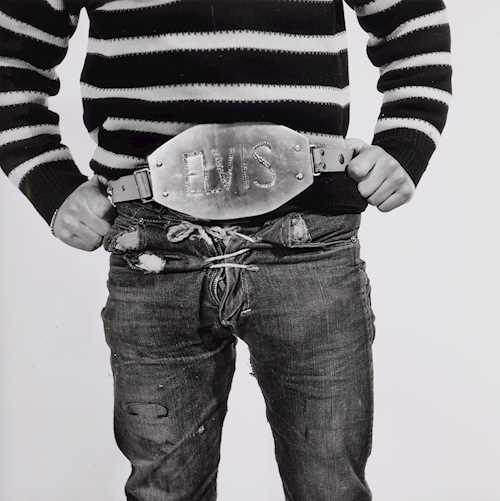
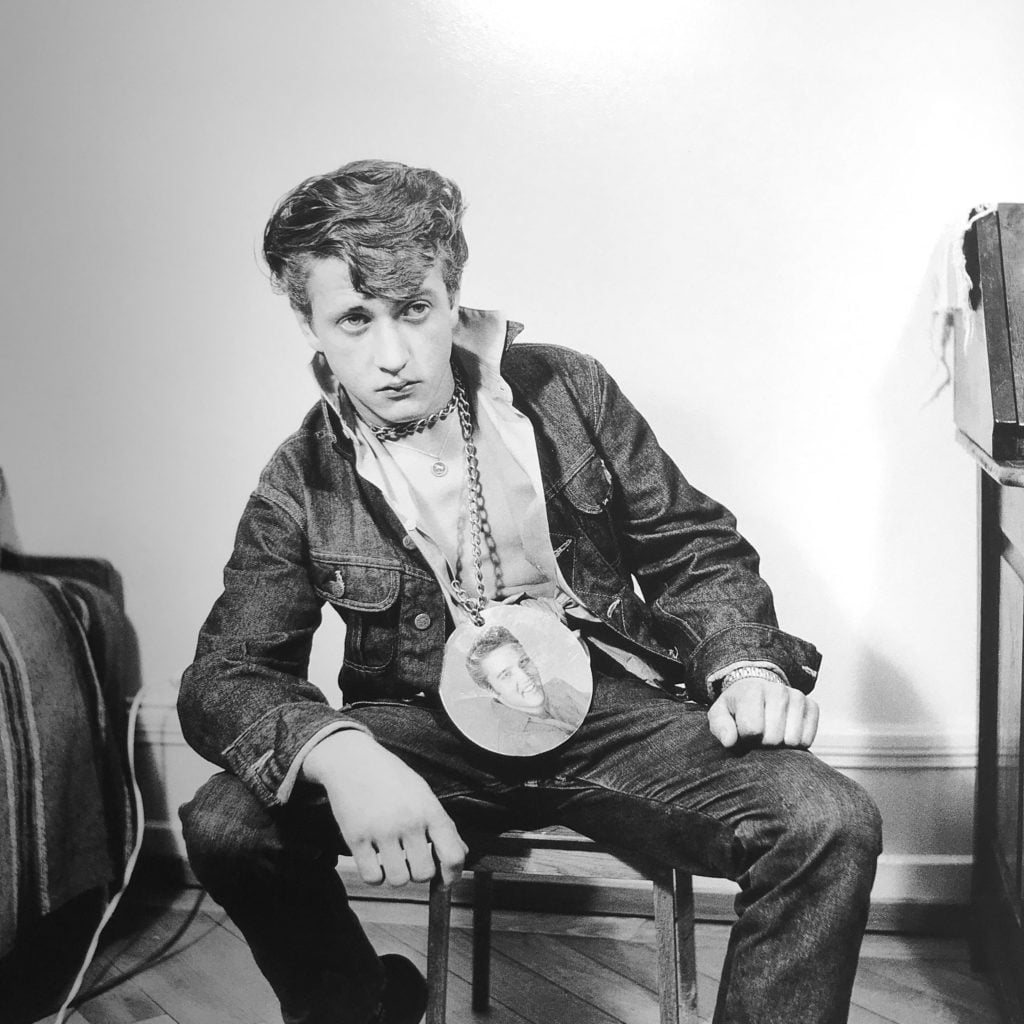
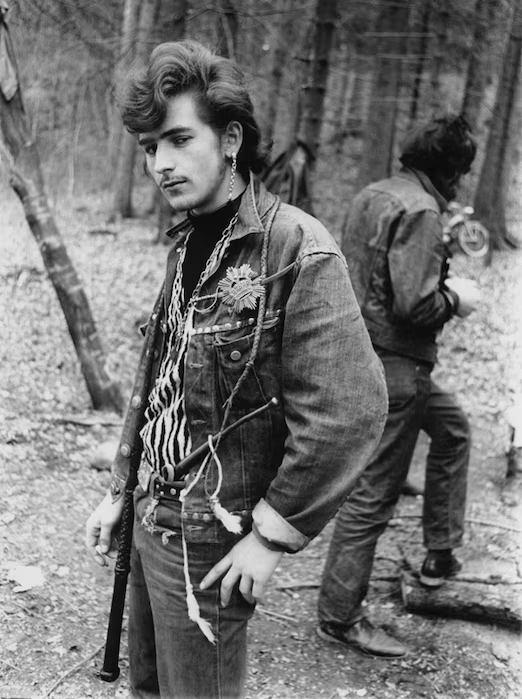
In the 1950s, while bourgeois Switzerland looked the other way, Weinberger began following through the streets of Zurich a group of boys impossible to ignore: slick pompadours, tight jeans, leather jackets, oversized belt buckles engraved with Elvis’s face. They were the Halbstarken — literally “the half-strong” — the first postwar youth subculture in Europe. Emerging on the margins of Germany, Austria, and Switzerland, they drew inspiration from Marlon Brando, James Dean, and the rock’n’roll arriving from America like static interference on a forbidden frequency.
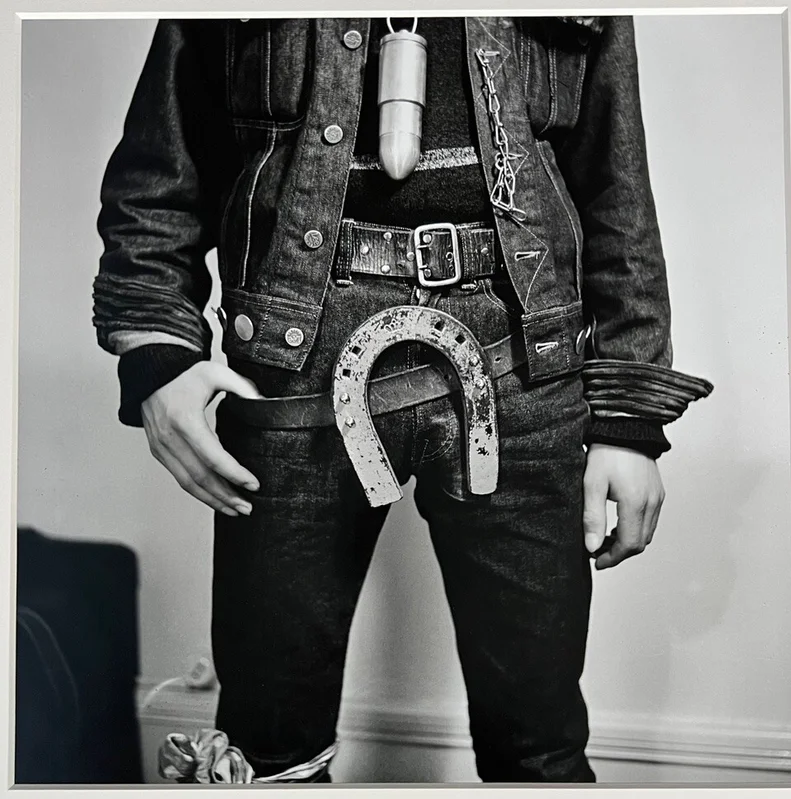
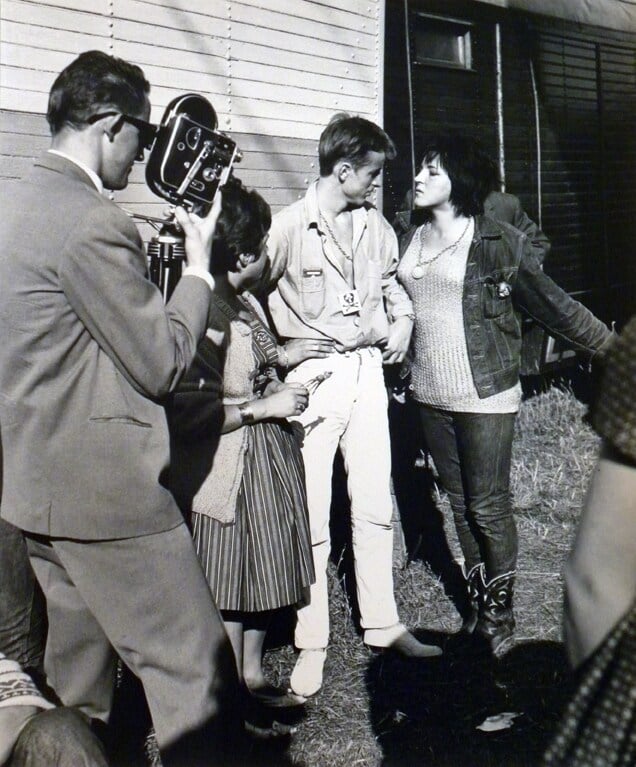
Weinberger photographed them everywhere: in his apartment (his mother’s opaque curtains serving as a recurring backdrop), in the alleys of Zurich, in the countryside during weekend trips. His subjects didn’t pose, they performed. Custom-tailored pants stitched with words like Texas and ranch, jean buttons replaced with nuts and bolts, handmade belts covered in metal studs. An invented, handcrafted imagery, American only in aspiration.

“I never thought of myself as a fashion photographer.”
— Karlheinz Weinberger, New York Times, 2001
Fifty Years of Silence
The photographs remained hidden away for decades. Weinberger kept working at Siemens, photographing in secret, building an archive no one would see: tens of thousands of prints, slides, and negatives. Meanwhile, in parallel and just as quietly, he documented workers, bikers, and athletes for the underground gay magazine Der Kreis, under the codename Jim. Two lives, one camera.
Then, in 1999, a small Zurich publishing house released his first book. In 2000 came the exhibition at the Museum of Design in Zurich. The world finally noticed him. He was nearly eighty years old.

Weinberger’s Legacy
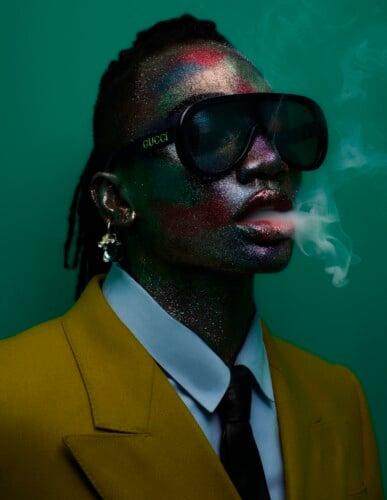
Versace dedicated a tribute campaign to him, while the New York Times interviewed him in 2001. But beyond that, designers such as Wolfgang Tillmans and Collier Schorr cite him as a foundational reference. His photographs — raw, intimate, charged with desire and humor — now live in the visual imagination of anyone working with fashion, streetwear, and queer aesthetics. An archive of the margins, built by a man who never placed himself at the center.
Weinberger died in 2006, finally famous. For nearly half a century he had remained anonymous, by fate or perhaps by choice. His stories never needed him in order to be true. They only needed time to surface.
Read also: Shirley Baker, the street photographer of England’s streets