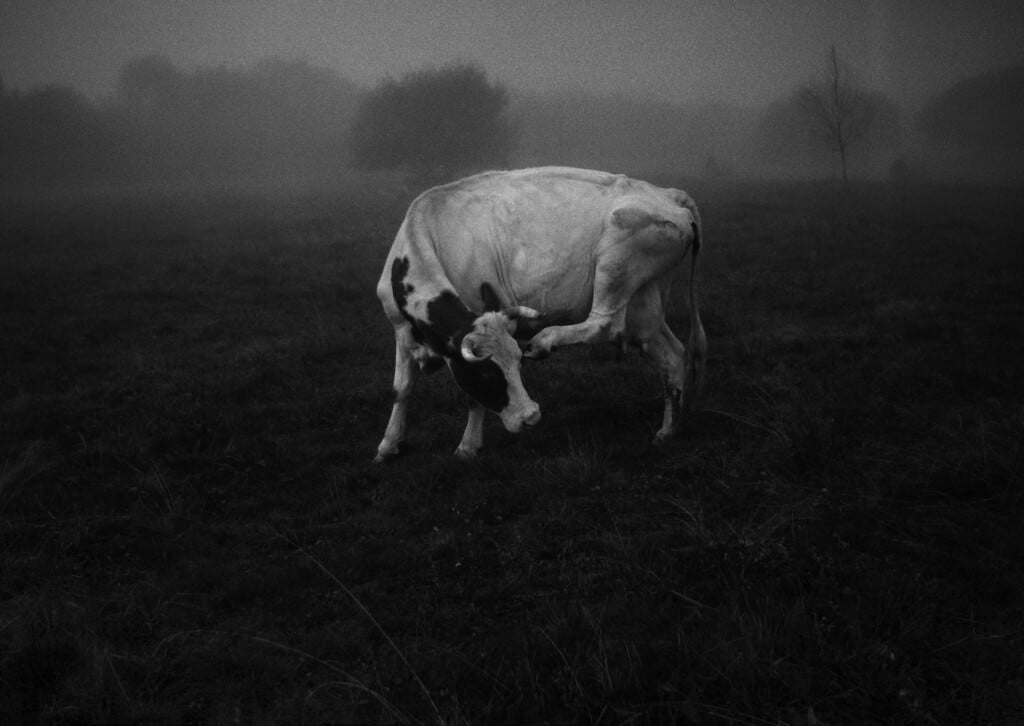
These photographs seem to speak about the past, but in reality they tell above all about the present. This is what happens in the work of the photographer Anna Szász-Bányász, born in 1996 in Gyergyóújfalu, Romania, who trained in Budapest at the Moholy-Nagy University of Art and Design, where she completed first her bachelor’s and then her master’s degree in photography. Since 2021 she has been a member of the Fiatalok Fotóművészeti Stúdiója, a Hungarian organization dedicated to contemporary photography.
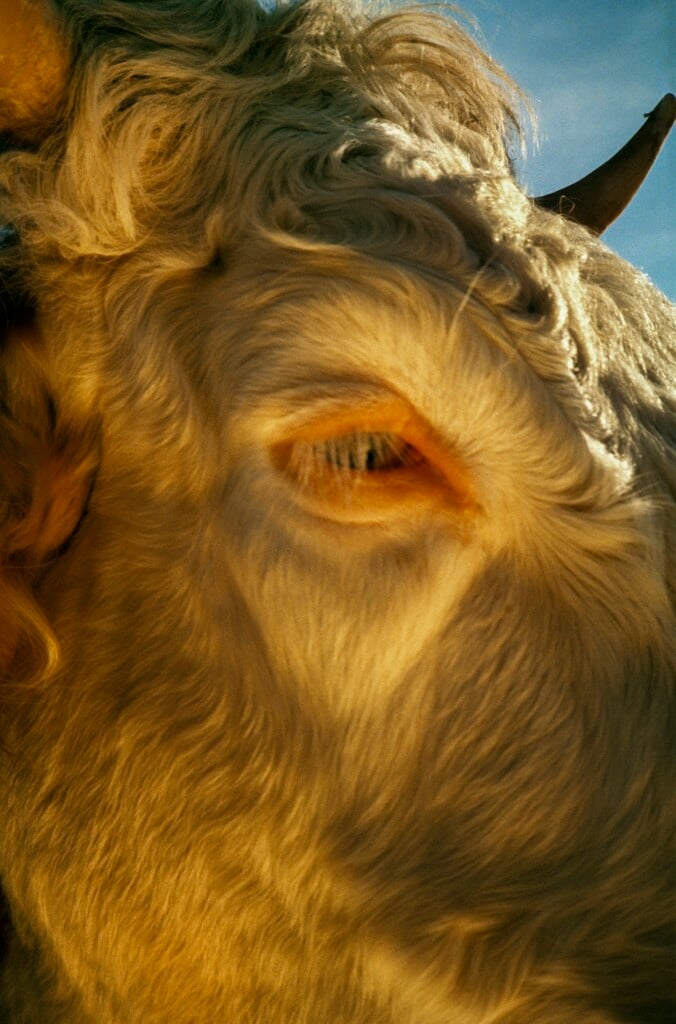
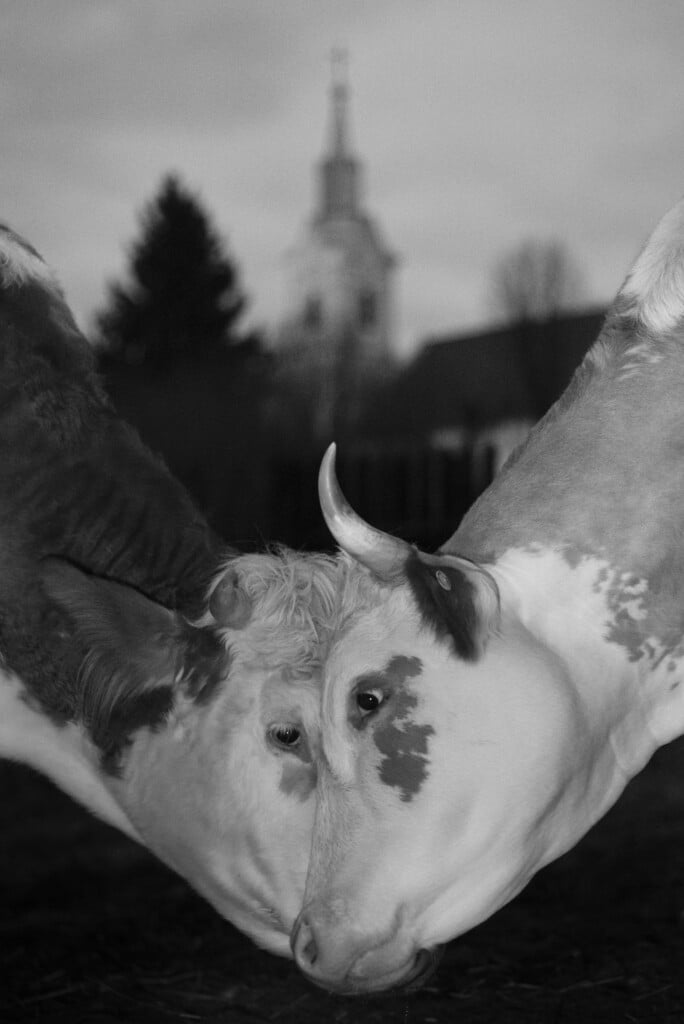
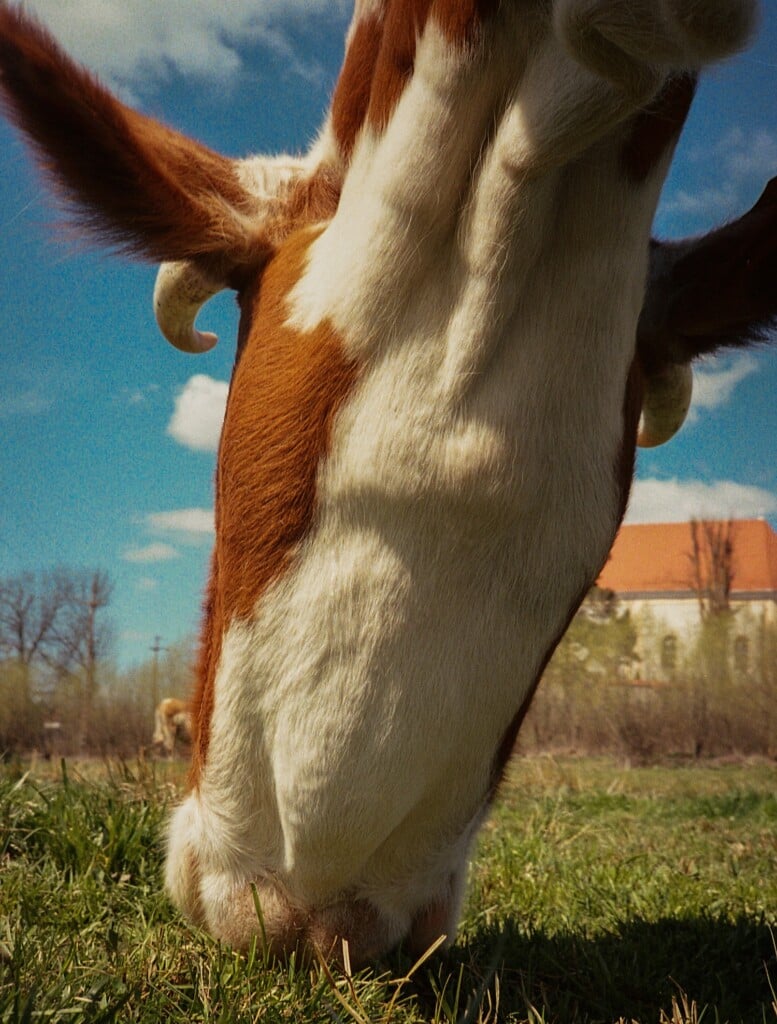
Her best-known project, Már a jövő sem a régi, which can be translated as The Future Is Not What It Used to Be, was born in a very concrete place: her family’s farm in Transylvania. But to call it simply a project about rural life would be reductive. Szász-Bányász’s photographs start from a personal experience to question something broader: what does it mean to keep living in a direct relationship with the land while everything around changes?
Anna Szász-Bányász knows that world from the inside. While working on the project she did not merely observe it: she worked on the farm every day, taking care of the animals and the agricultural activities, with a camera always within reach. It is an important methodological choice, because it eliminates the usual distance between the person photographing and what is being photographed. The images do not come from an occasional visit, but from daily presence.
And it is perhaps precisely this familiarity that allows her to see what normally remains invisible. The recurring protagonists are the cows, which in her photographs are not treated as mere elements of the agricultural landscape. Anna regards them as individuals, with names and personalities, and builds a relationship of closeness with them. The camera gets so close to their bodies that it turns seemingly ordinary details, an eye, the coat, the curve of a back, into almost abstract forms. A back can become a landscape; a close-up can lose its scale completely.
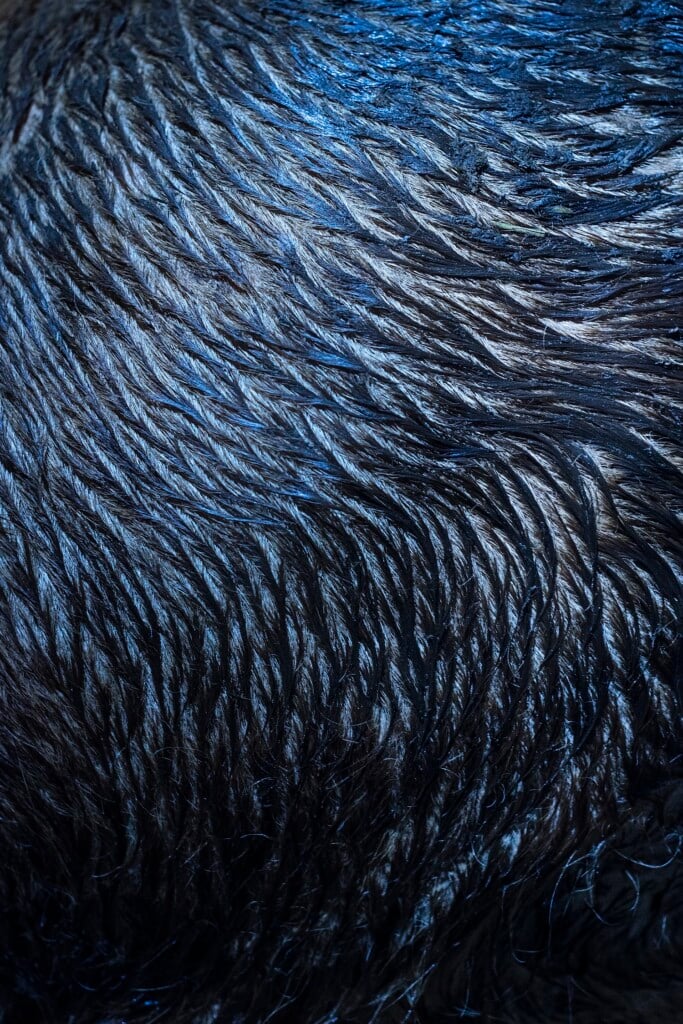
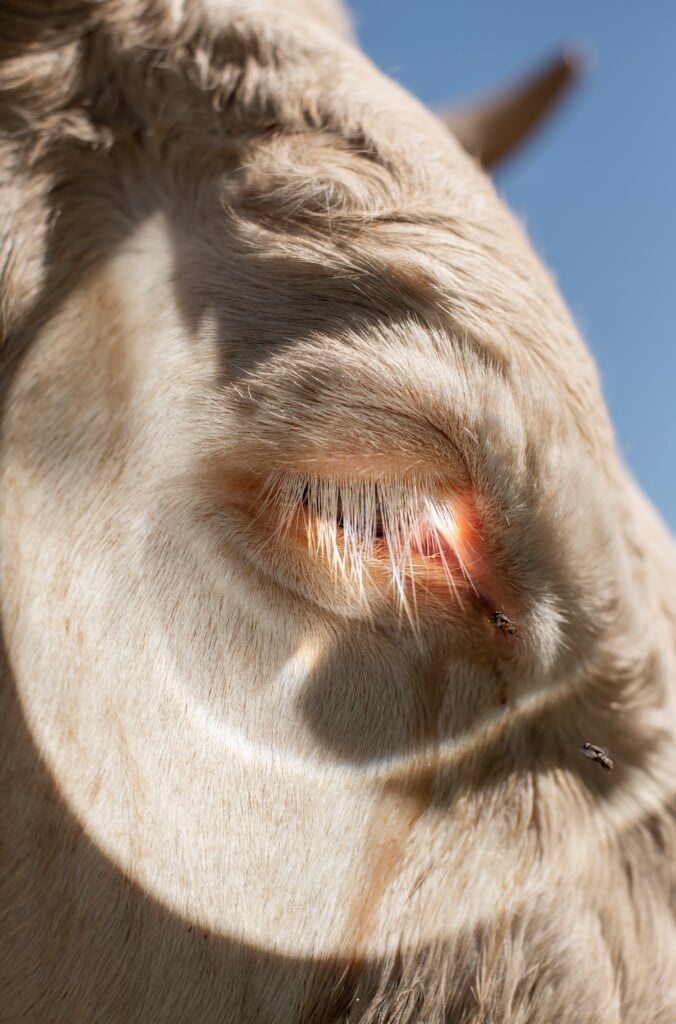
Szász-Bányász does not want to produce yet another idealized representation of the countryside, nor simply follow the codes of documentary photography. She has explained that she wants to find a language capable of moving away from existing images of rural life and of making the project personal, yet at the same time understandable even to those who do not belong to that context.
From this comes a photography that constantly oscillates between document and metaphor. The images record real activities, animals and lived-in spaces, but their composition takes them elsewhere. The result is not a chronicle of a farm, but the construction of a visual memory in which the everyday takes on an almost suspended form.
The title of the series also contains a contradiction. The Future Is Not What It Used to Be looks at nostalgia without turning it into praise of the past. The rural world that Anna photographs is not a place frozen in time: it is shaped by technology, by social change and by the need to find new ways of living together with the environment. The artist therefore suggests seeing agriculture not as a practice necessarily destined to disappear, but as a possible alternative for the future, reinterpreted through the conditions of the present.
Nostalgia, then, becomes a less innocent tool than it seems. In her texts on the project, Anna observes how memories do not give the past back exactly as it was, but transform it into an essential, almost ideal version. Photographing also means confronting this distance: what we remember, what we live and what we imagine about the future end up overlapping. It is here that her research takes on a broader dimension. The farm is not just the subject of the photographs: it is the place from which to look at the relationship between memory and transformation.
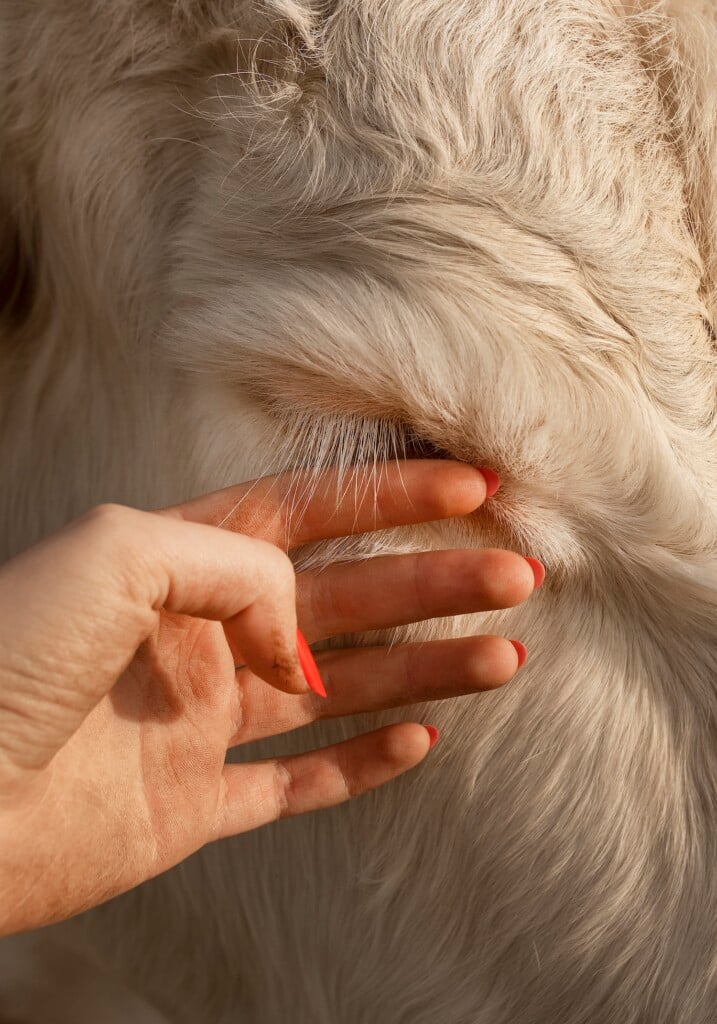
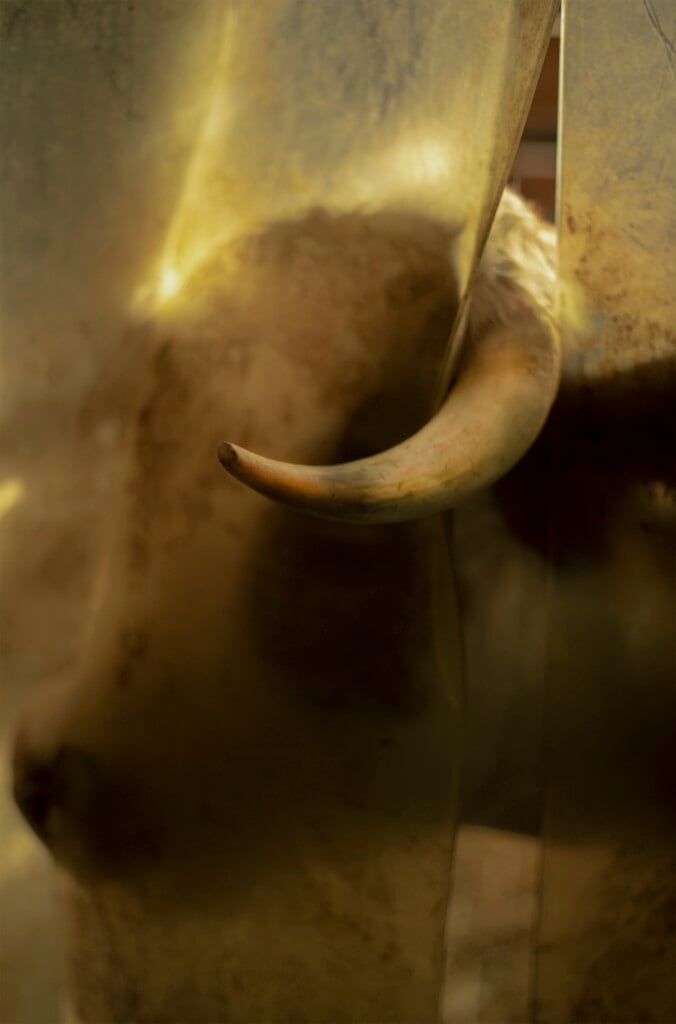
This attention to detail and closeness also runs through the way Szász-Bányász conceives of photography. For her, truly knowing a subject means being there, taking part, sharing the time needed for something to emerge. The camera therefore does not serve only to capture a moment, but becomes a tool for staying inside that moment long enough to understand it.
Her work remains tied to an extremely concrete dimension, that of days spent among animals, manual labor and familiar landscapes. And it is precisely this concreteness that makes it interesting. Anna Szász-Bányász does not photograph a world that is simply disappearing. She photographs the moment in which that world has to decide how to change in order to keep existing.