We are often told not to judge a book by its cover. In the world of cinema, that would be like saying you shouldn’t judge a film by its trailer or its poster. And yet we know how important movie posters are, how much work goes into them—just think of Drew Struzan’s highly detailed illustrations or Saul Bass’s geometric and minimalist designs. The concept behind every single poster hides a thought process and a strategy that must take into account where it will be displayed and the audience it is meant to reach. This is how, in the 1980s, a unique artistic movement was born: that of the Ghanaian movie posters.
In the 1980s, while movie theaters in major European and American cities were multiplying and filling up, in Ghana cinema magic echoed through dusty squares and village streets. Films arrived on portable video projectors, powered by generators, capturing the attention of entire neighborhoods. For these screenings, there were no official posters or billboards provided. Yet a way to promote the selected film was still necessary.
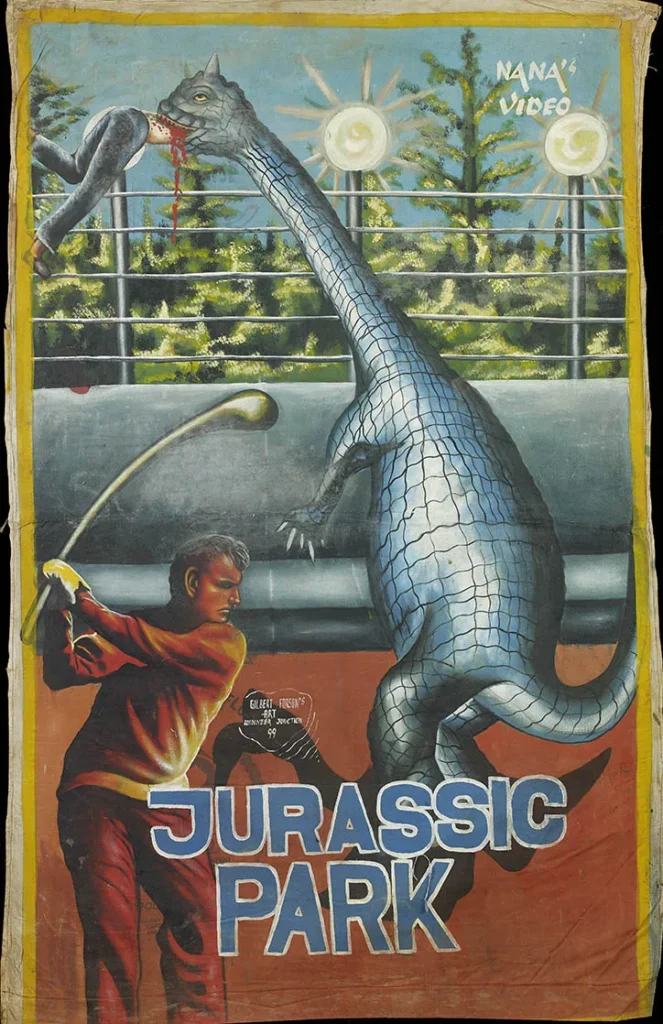
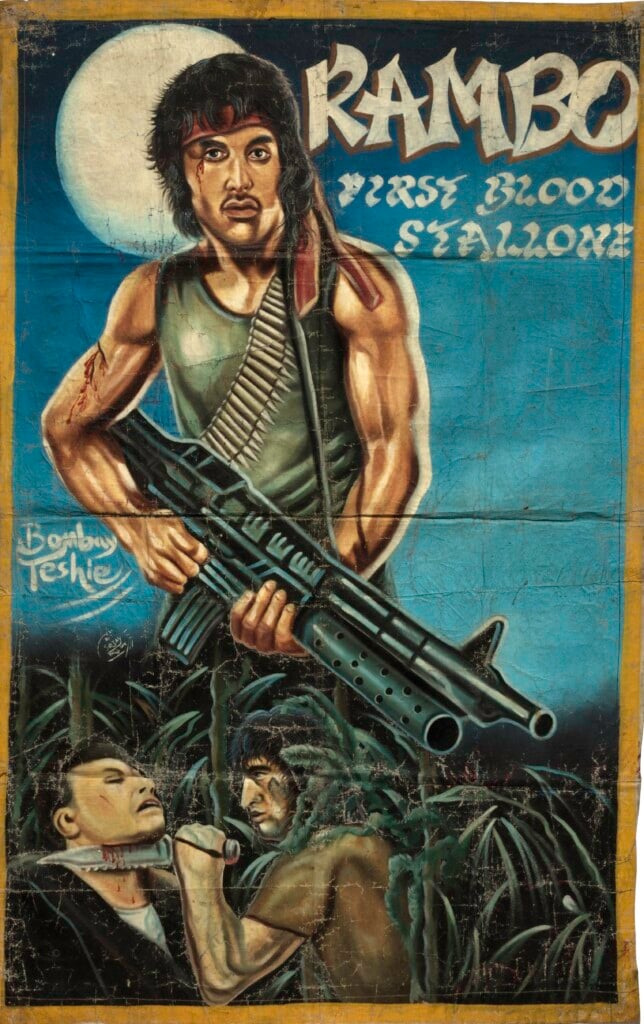
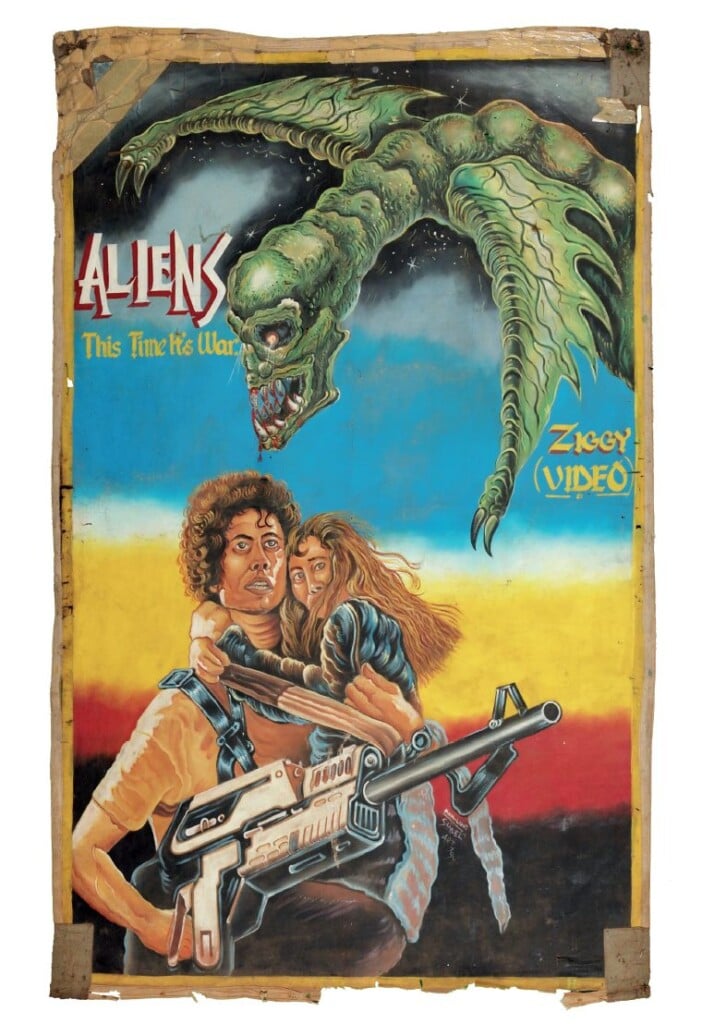
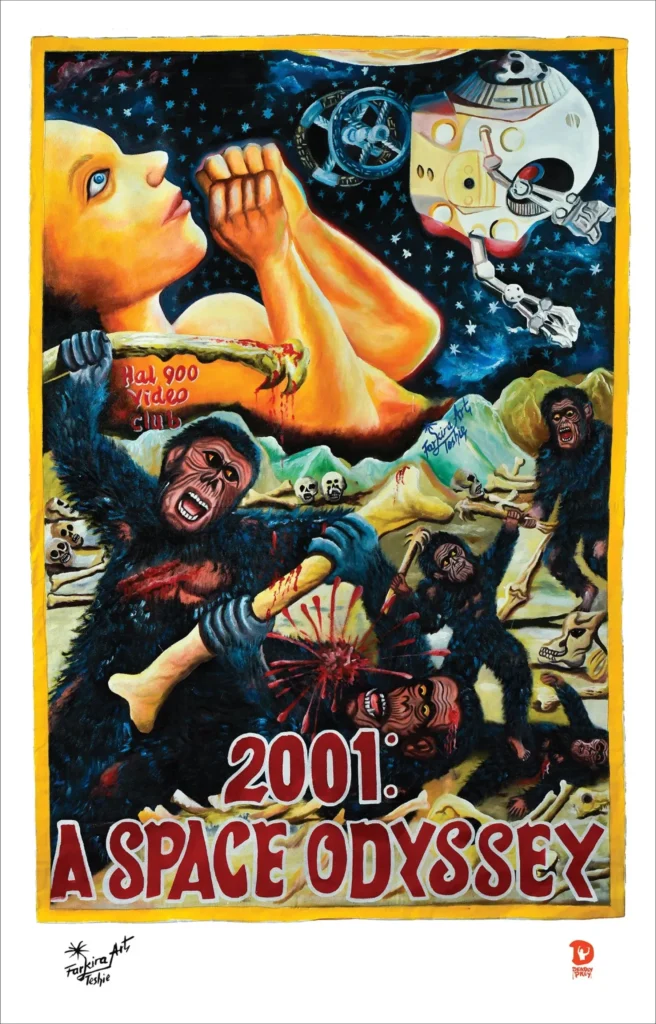
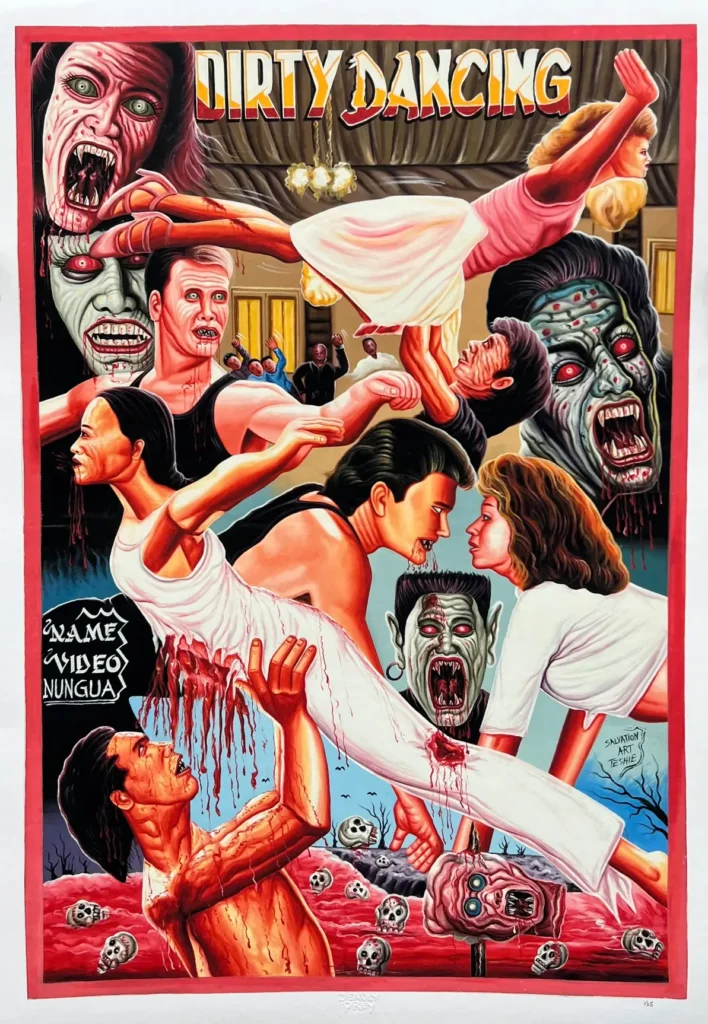
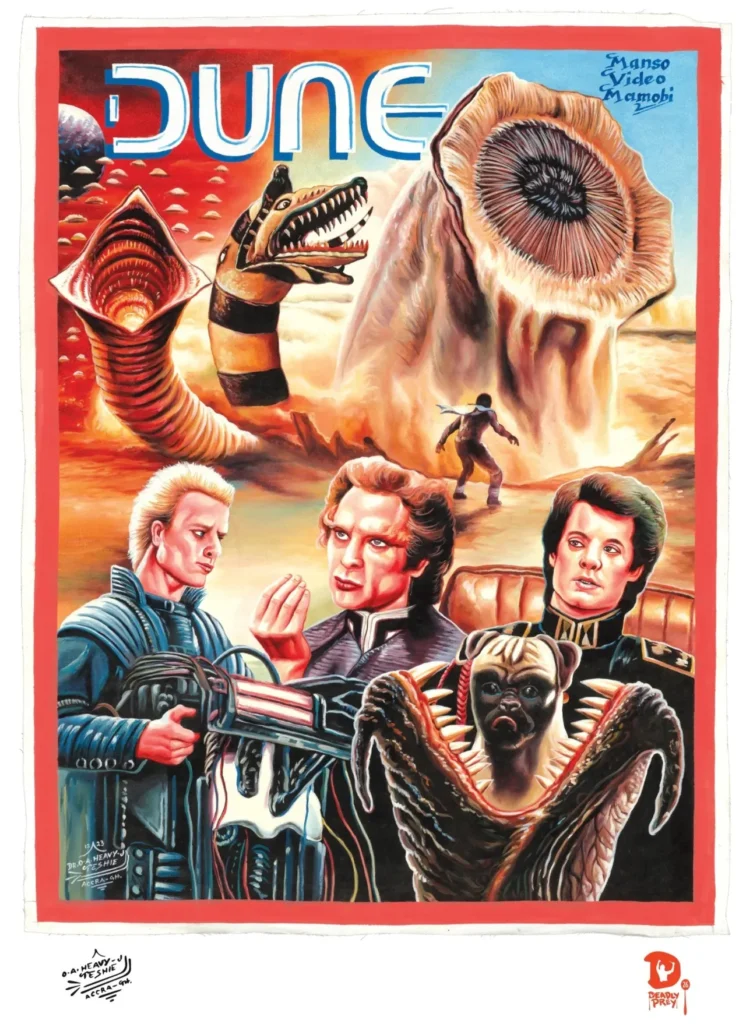
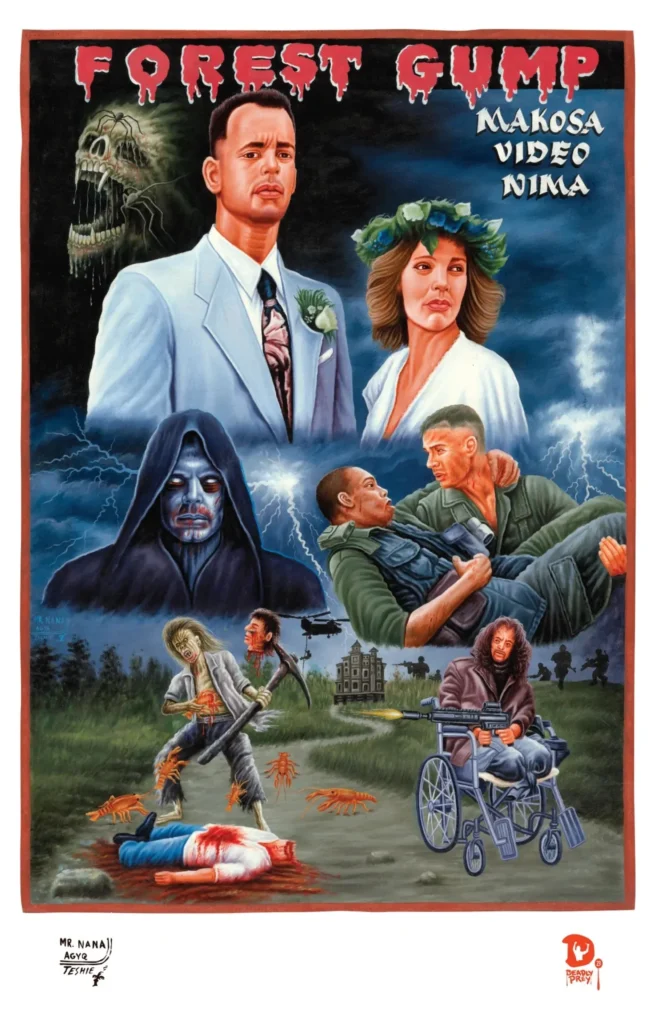
On the occasion of these screenings, local artists began creating hand-painted movie posters using oil paints or household enamel on recycled flour sacks. These posters immediately stood out thanks to their vibrant colors, bold subjects, and dynamic visual compositions.
The originality of these works lay precisely in the freedom each artist allowed themselves. Often without having seen the actual film—and relying only on second-hand stories or brief plot summaries—artists unleashed their creativity, adding scenes that did not exist in the movie or emphasizing genre elements in exaggerated ways: if it was an action film, gigantic explosions were simply a must.
As often happens, with the advent of inexpensive printing and the gradual spread of digital media, the practice of hand-painting movie posters nearly disappeared by the mid-2000s. The mobile cinemas that once entertained entire communities were replaced by DVDs, streaming platforms, and television screens.
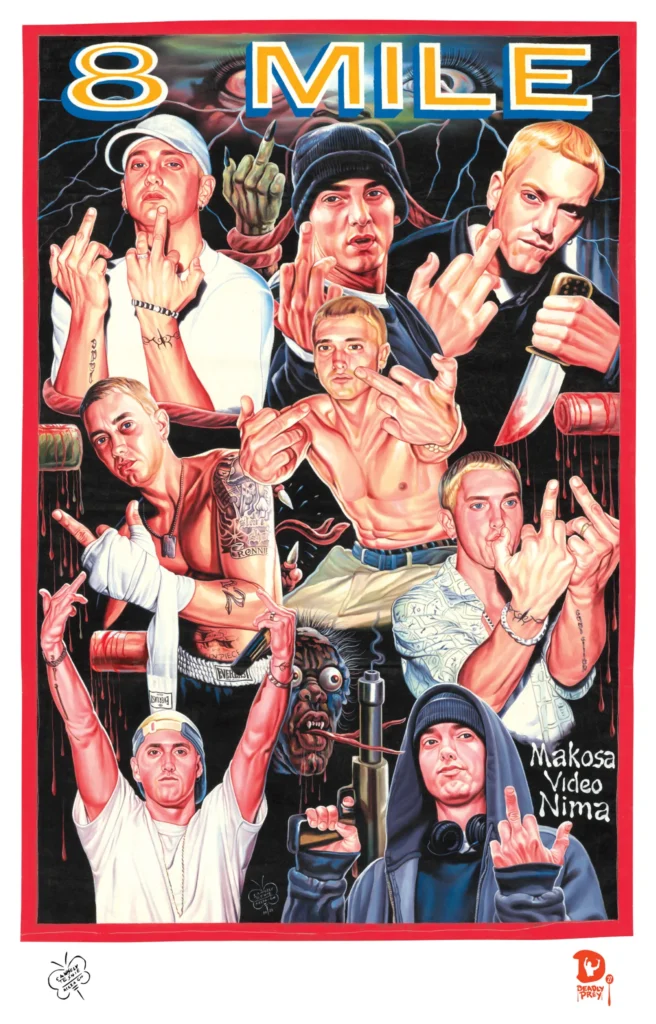
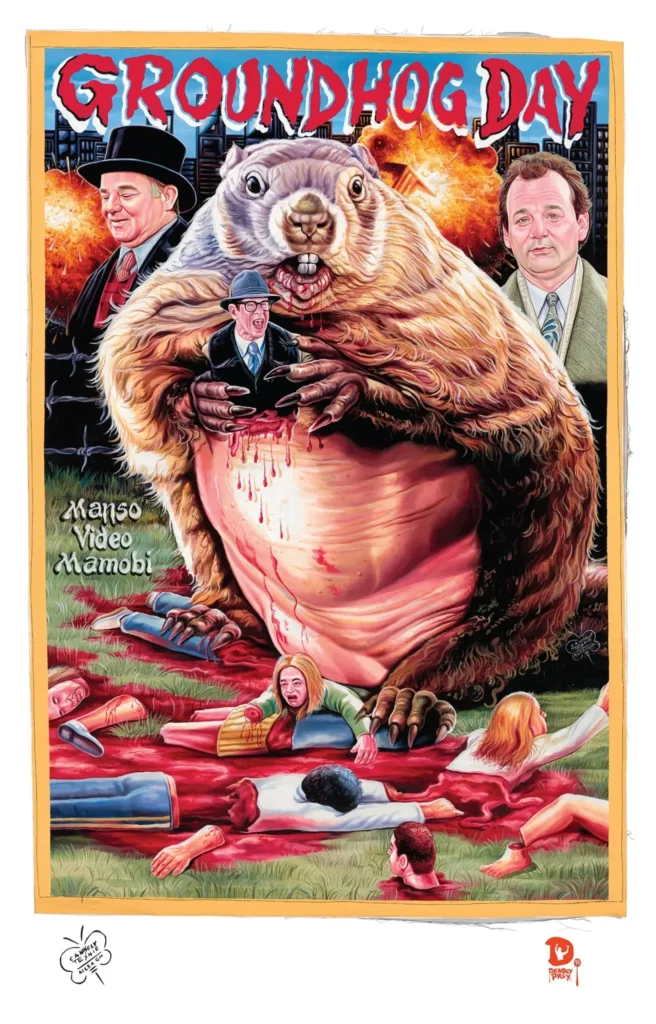
Fortunately, in recent years curators, collectors, and visual artists have rediscovered Ghanaian movie posters, leading to a growing number of exhibitions both across the African continent and in the United States. This revival has been made possible largely thanks to the Deadly Prey Gallery, a gallery based in Chicago but deeply connected to Accra, which for over a decade has collected, archived, and supported this art form and its creators. Founded by Brian Chankin and Robert Kofi, the gallery works directly with a dozen Ghanaian artists, bringing their work beyond Ghana’s borders and introducing it to a global audience.
The gallery’s stated mission is not only to preserve the historical tradition of Ghanaian movie posters, but also to provide contemporary artists with a platform where they can continue to create, receive commissions, and share their work with cinema lovers, art enthusiasts, and graphic design communities around the world.