There are images that don’t just belong to a single film, but to an entire collective imagination. Faces, lights, and compositions that accompanied our childhood and that, even today, define the way we think about ’80s cinema. Behind many of these images there is one name: Drew Struzan.
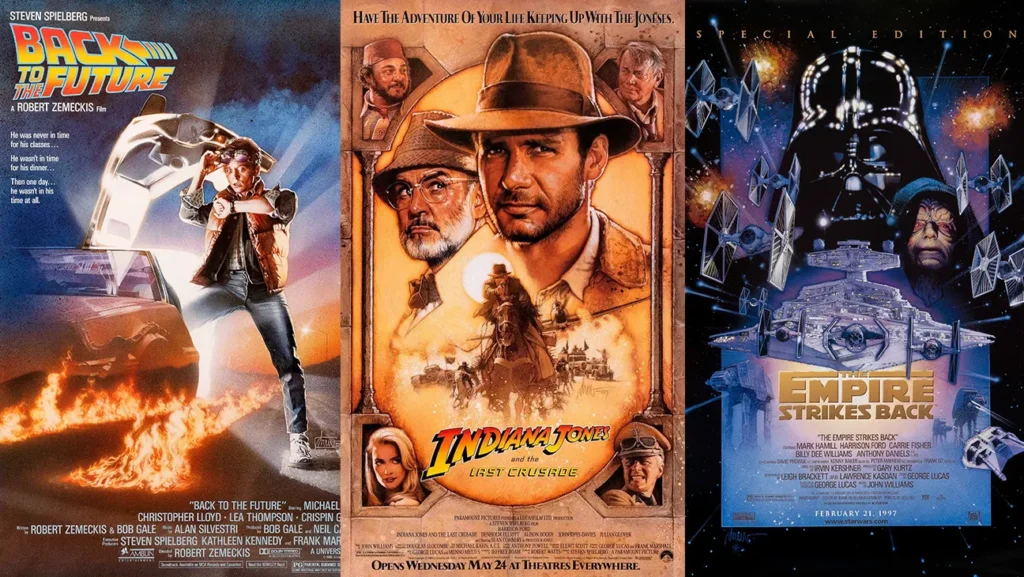
An illustrator, painter, and visionary, Struzan left us this past October 13 and is the man who transformed the movie poster into an art form in its own right. His posters for Indiana Jones, Back to the Future, Blade Runner, and Star Wars are not mere promotional tools, but iconic works that defined an aesthetic and influenced generations of artists and designers.
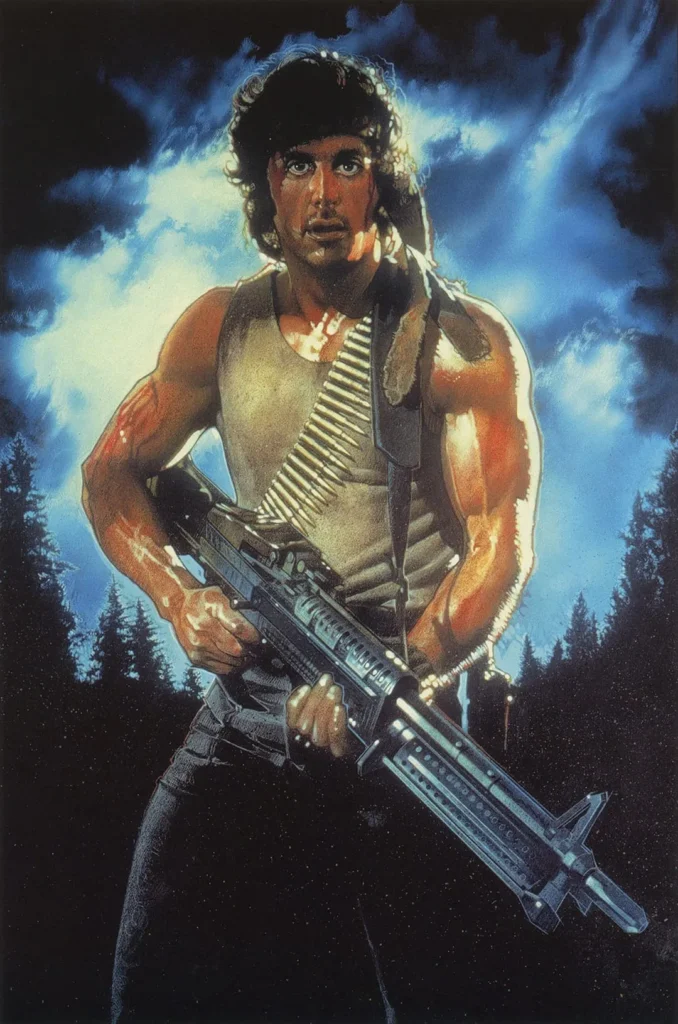
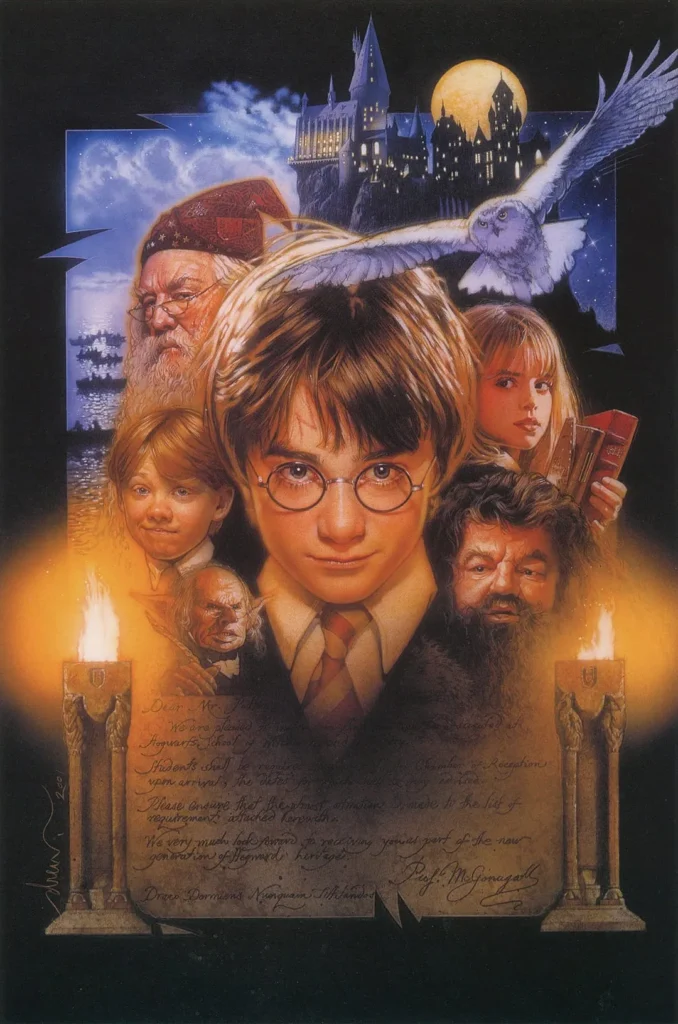
And yet his story begins far from Hollywood. Born into humble circumstances, Struzan often recounted how he started drawing “on toilet paper, with pencils found around the house.” Illustration, for him, wasn’t just a passion: it was a way to get by. After his studies, he found work at the Los Angeles design studio Pacific Eye & Ear, where he created album covers for artists such as the Bee Gees, the Beach Boys, and especially Alice Cooper. The cover of Welcome to My Nightmare (1975) would later be included by Rolling Stone among the 100 greatest album covers of all time.
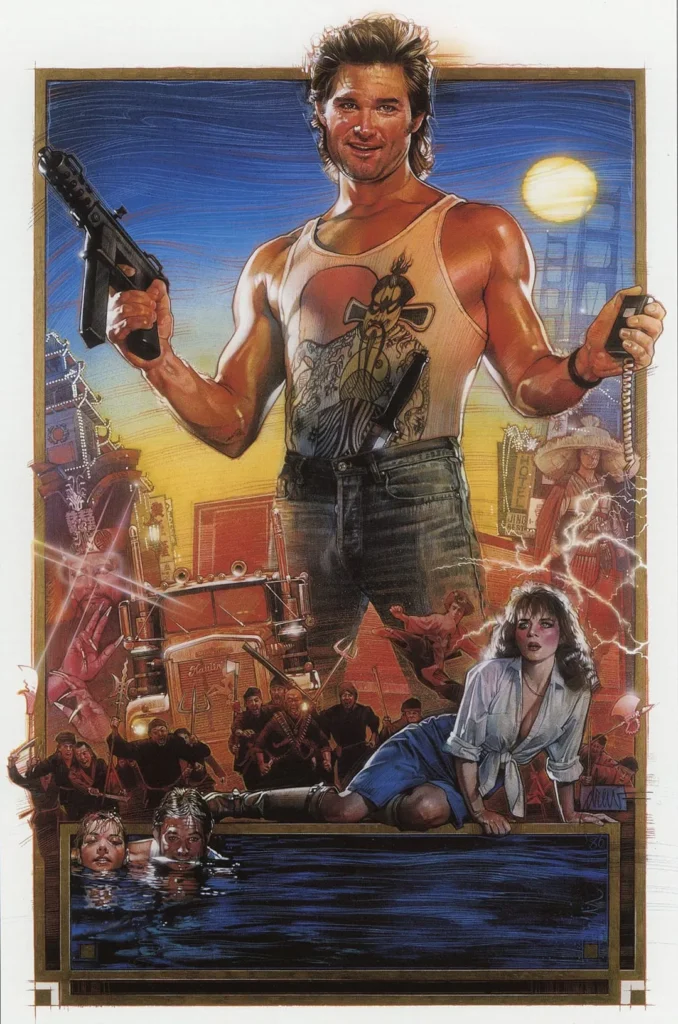
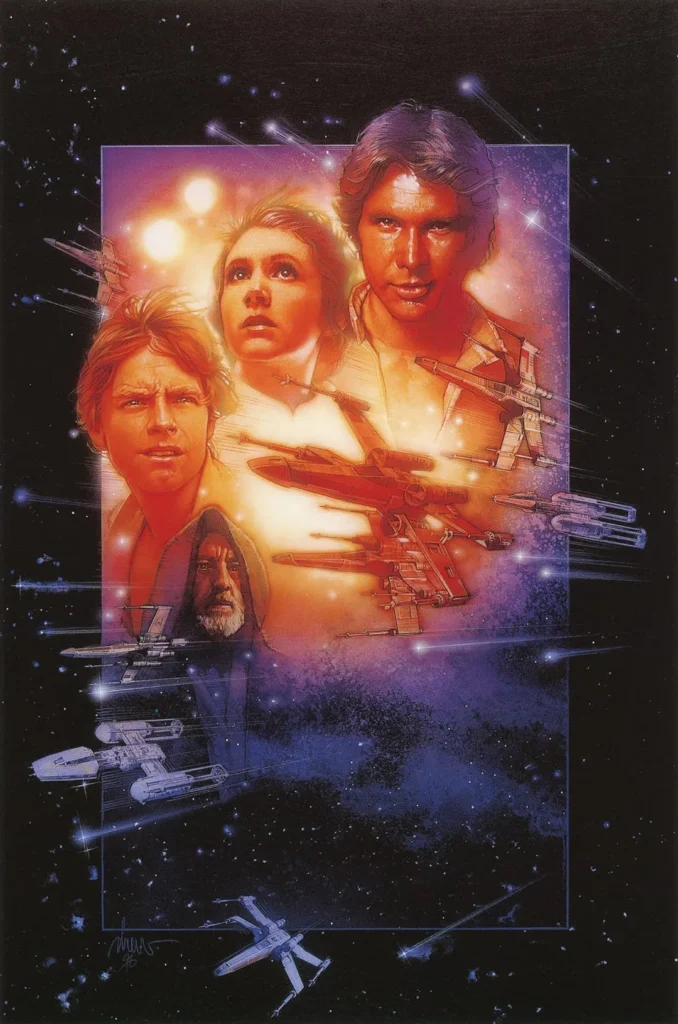
The turning point came in the mid-1970s, when Struzan began working on movie posters, often for B-movies that allowed him to experiment with the airbrush and refine his hyperrealist technique. But his true entry into Hollywood happened almost by chance, with a project shared with his friend Charles White III: the famous “Circus” poster for the 1978 re-release of Star Wars. That collaboration marked the beginning of an artistic partnership with George Lucas and, shortly thereafter, with Steven Spielberg.
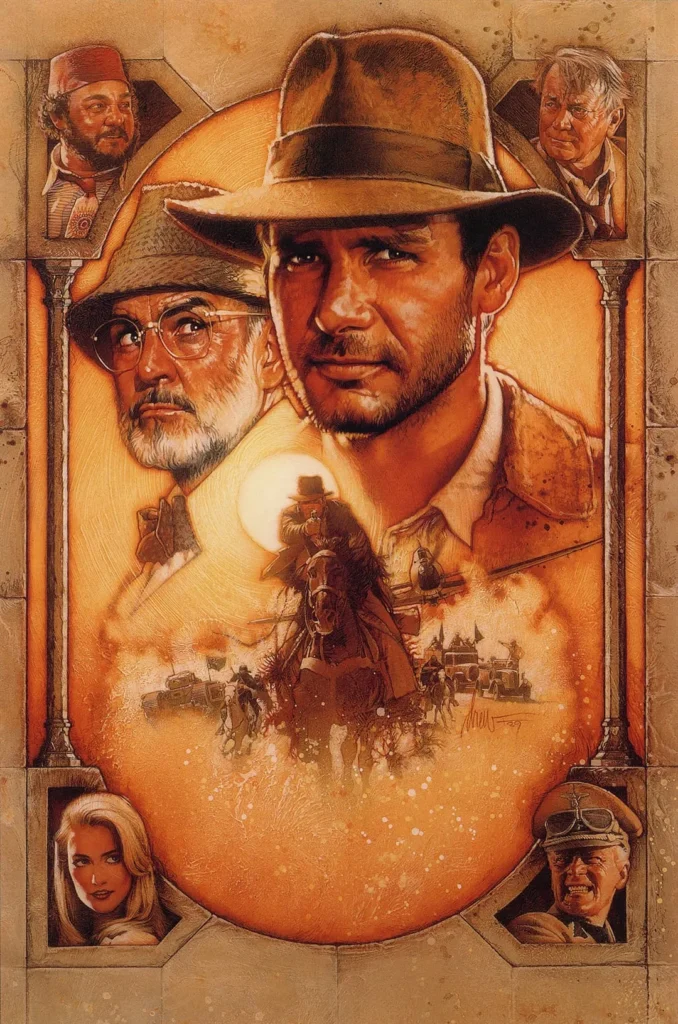
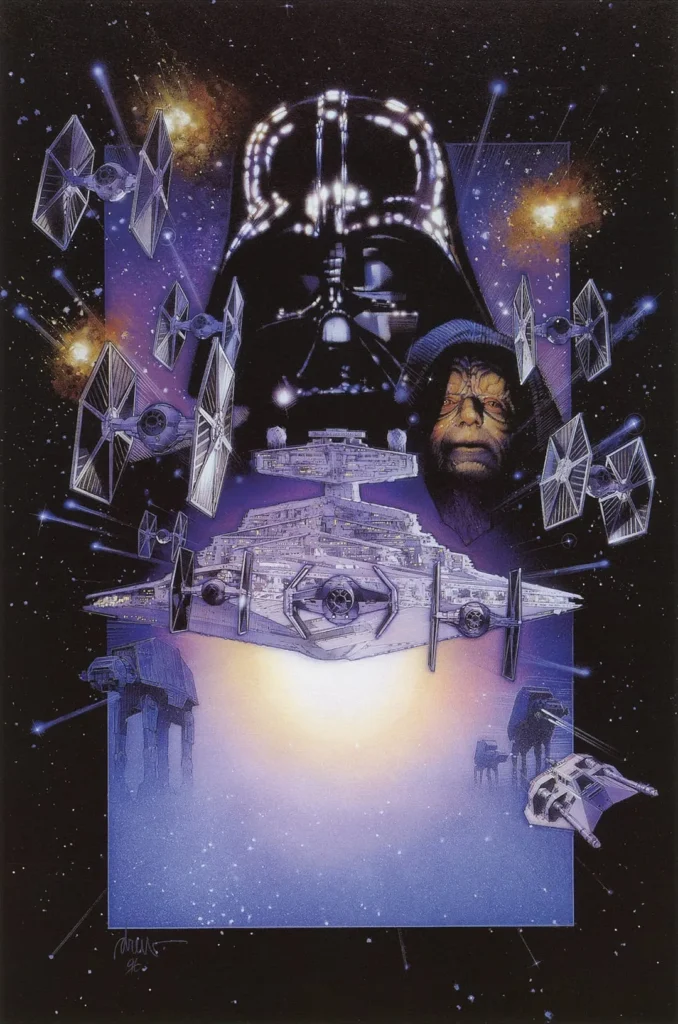
In the 1980s Struzan signed some of the most recognizable posters in the history of cinema: Indiana Jones and the Temple of Doom, The Goonies, E.T., The Princess Bride, Back to the Future, and the Star Wars and Indiana Jones trilogies. His soft line, the light that sculpts the characters’ faces, the ensemble composition that manages to tell an entire film in a single image—everything in his style speaks of epicness and emotion.
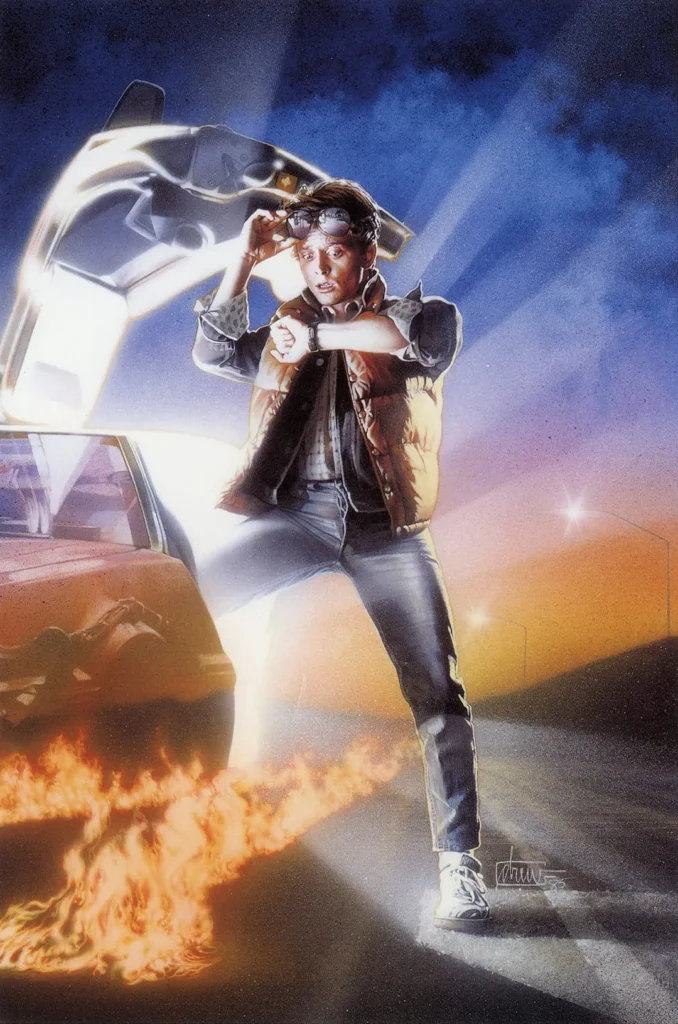
Robert Zemeckis, director of Back to the Future, told Struzan: “I waited until I made a film good enough to deserve one of your posters.” And that image of Marty McFly checking his watch in front of the flaming DeLorean became a symbol—not only of the film, but of an era.
Drew Struzan painted hundreds of posters, often working at night, without knowing the films’ plots and relying only on a few on-set photographs. Yet he managed to capture their soul. His way of combining painting and cinema created a visual language that still inspires designers, digital artists, and illustrators today.
In the 2000s, with the advent of digital graphics and photo-editing, the illustrated poster style became increasingly rare. But Struzan’s work lives on as a benchmark for those seeking to unite technique, storytelling, and painterly sensibility. His hand gave a face to the dreams of cinema, and even when we don’t know his name, we recognize his touch.