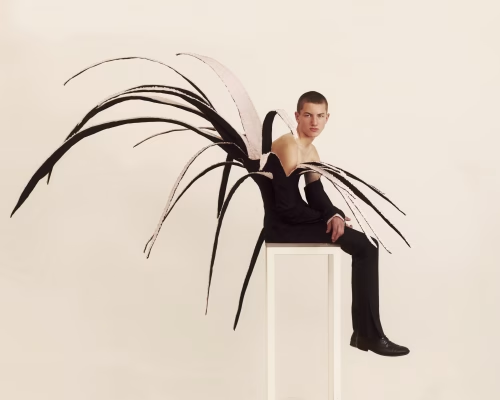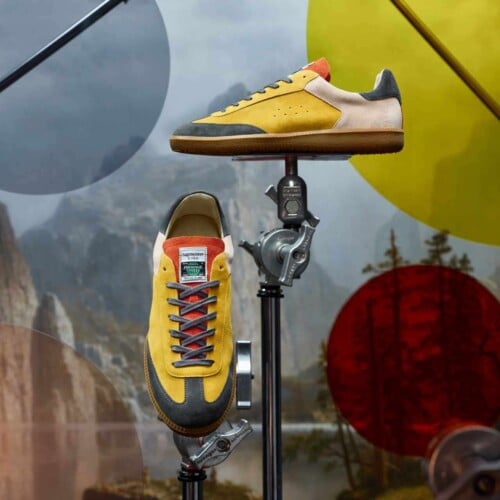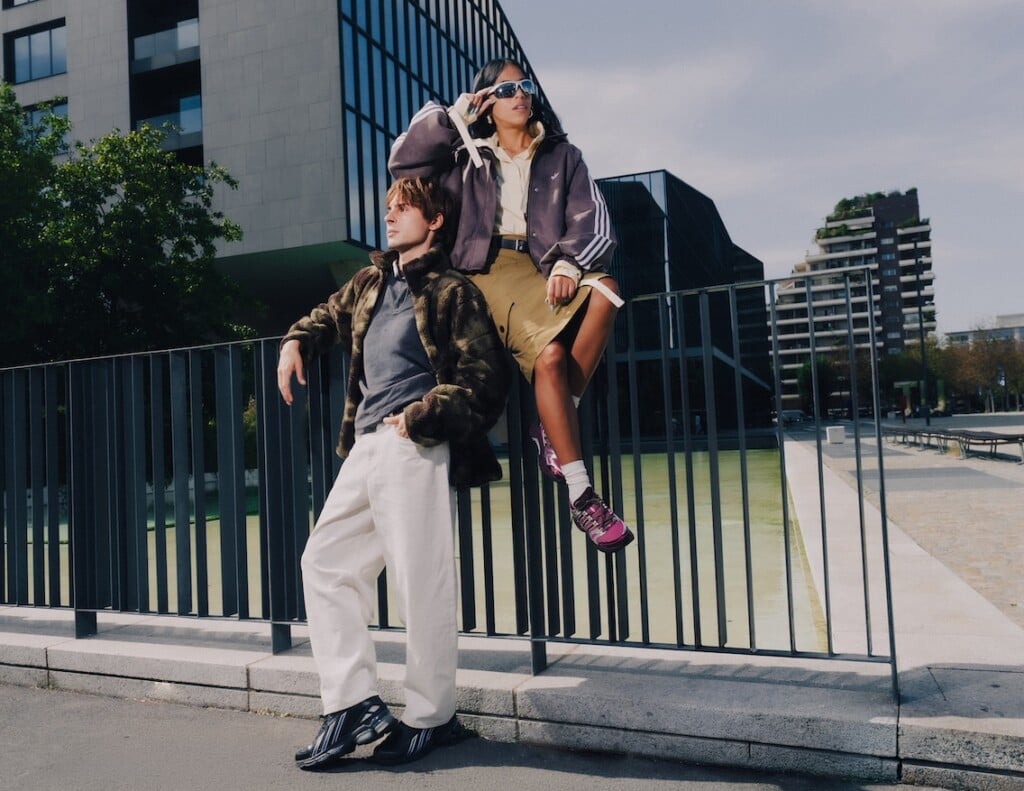
A photoshoot between Milan, retro references and personal identities rereads the aesthetics of the early 2000s through a contemporary lens. Created by Collater.al Studio for AW LAB and adidas Originals, the project brings sporty silhouettes, casual pieces and combinations that reinterpret the codes of streetwear into dialogue, leaving space for the individuality of its protagonists.
Born in sporting environments and then fully embraced by urban culture, running style has become a reference point for contemporary fashion. Technical volumes, functional details and nods to the past now coexist with new combinations of shapes and colors, turning sportswear into a ground for personal experimentation. It is from this meeting between Y2K heritage and present-day sensibilities that the shoot takes shape, in which shoes and clothes together help define an imaginary free from a single idea of style.
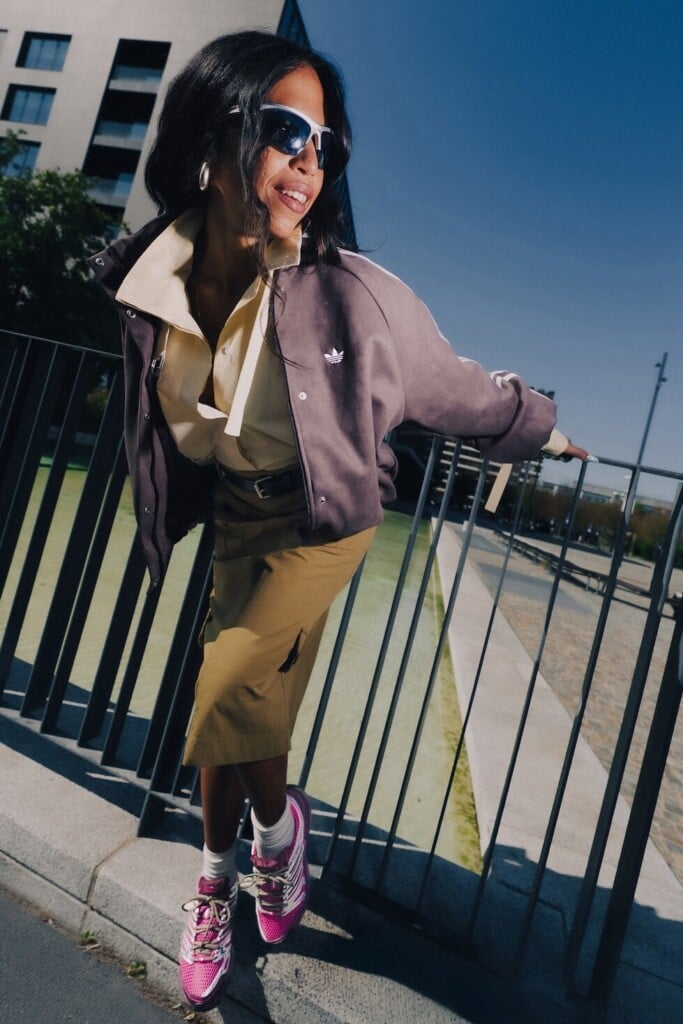
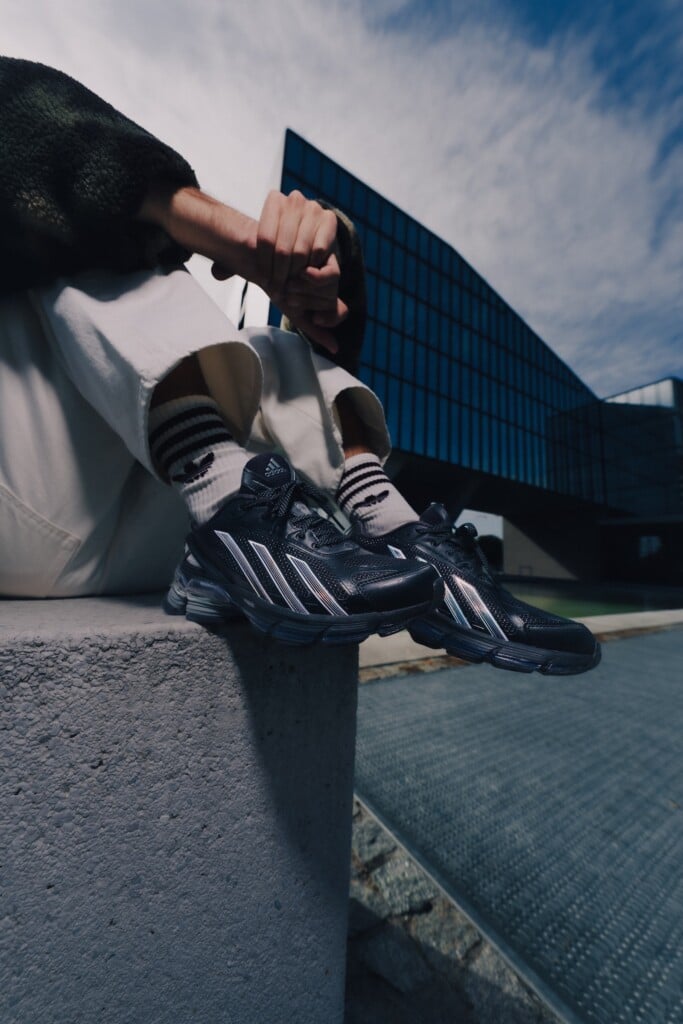
Set in Milan, the campaign moves among contemporary architecture, open urban spaces and styling details that recall the Y2K imaginary without being limited to reproducing it. The result is a dialogue between different eras, in which the past is not treated as a repertoire to copy, but as a collection of codes to be reinterpreted through individual sensibilities.
The return of the 2000s, without nostalgia
The Y2K aesthetic is made of contrasts, technical materials and glossy surfaces, sporty volumes, bold accessories and a relationship with the image that is deeply tied to digital culture. But bringing these elements back into the present does not mean faithfully rebuilding a 2000 wardrobe. The challenge is understanding which details are still able to speak to new generations and how they can coexist with a freer, more personal and more contaminated way of dressing.
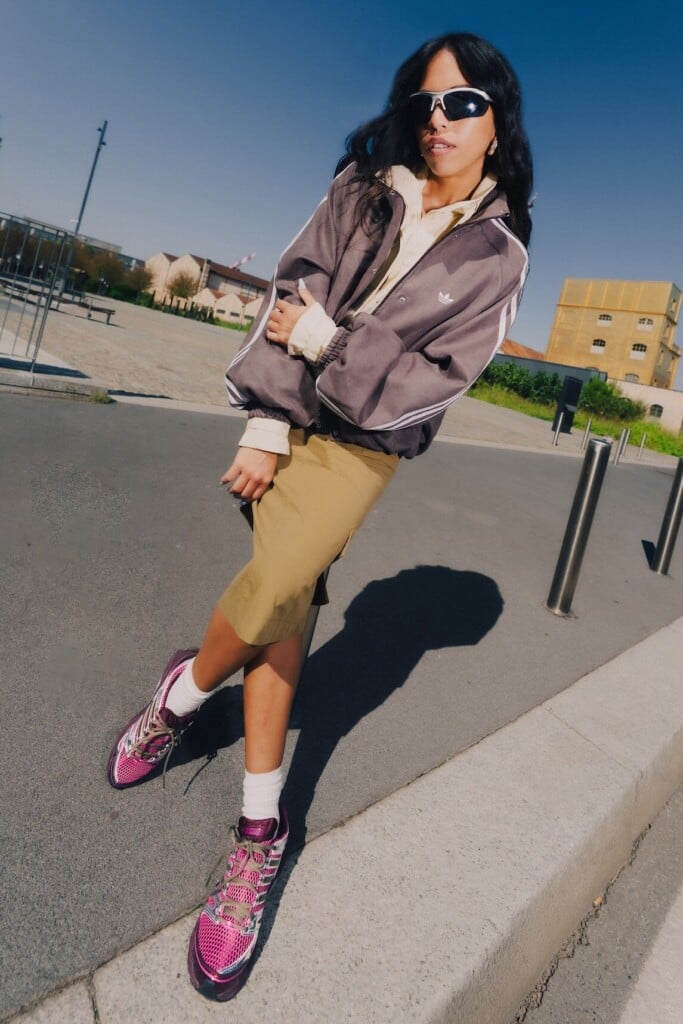
The campaign’s art direction works precisely on this temporal distance. Direct flash, grain, intense colors and dynamic framing evoke spontaneous photography, close to the aesthetic of digital images from the early 2000s. Handheld shooting and movement, on the other hand, convey a contemporary energy, made of natural gestures and moments that seem taken away from the traditional construction of a fashion campaign. It is not, therefore, about recreating an era through a nostalgic filter. The intention is to make its references coexist with today’s reality, letting the protagonists, their looks and the urban landscape build the meaning of the images.
The retro running aesthetic of the early 2000s
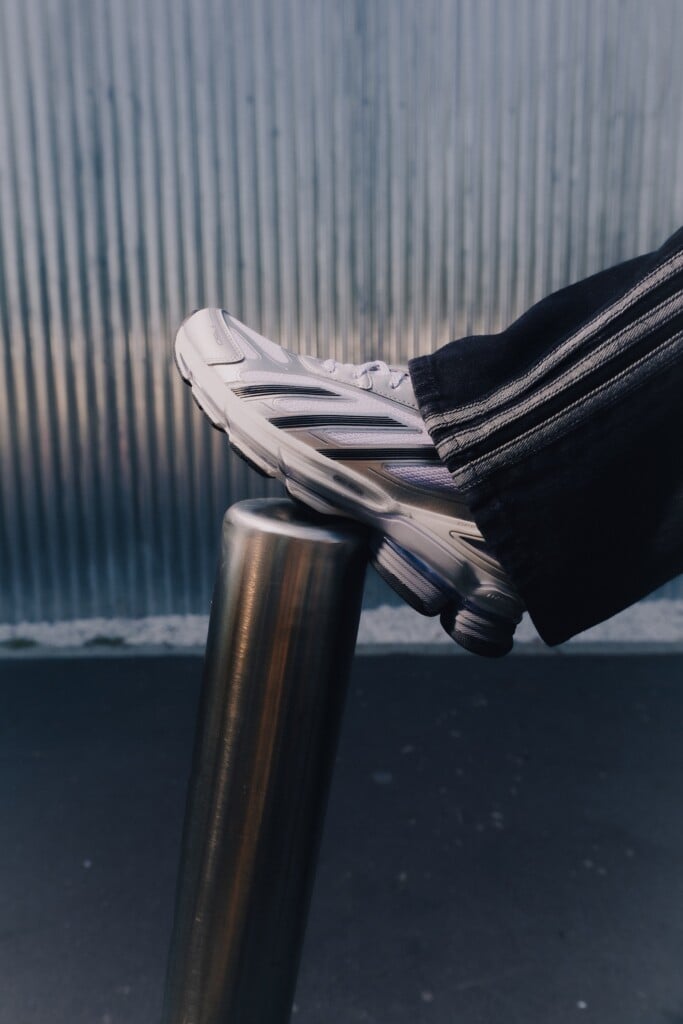
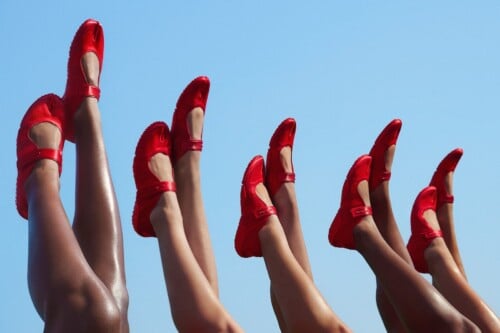
What defines the campaign’s imaginary are above all the shapes and contrasts of the products. The adidas Adistar and Formotion F50 stand out for silhouettes and details that dialogue with the styling, with dynamic volumes, distinctive lines and nods to the brand’s archive. Two models that, reinterpreted in a contemporary key, go beyond the boundaries of the adidas world to fit into an everyday wardrobe, where design and visual identity become an integral part of the look.
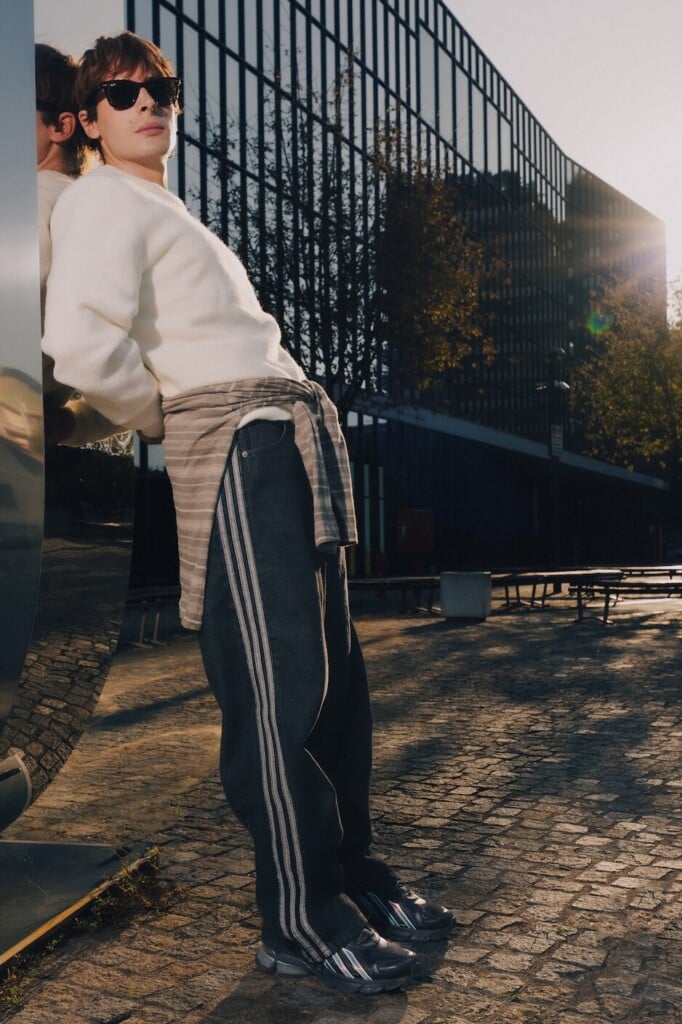
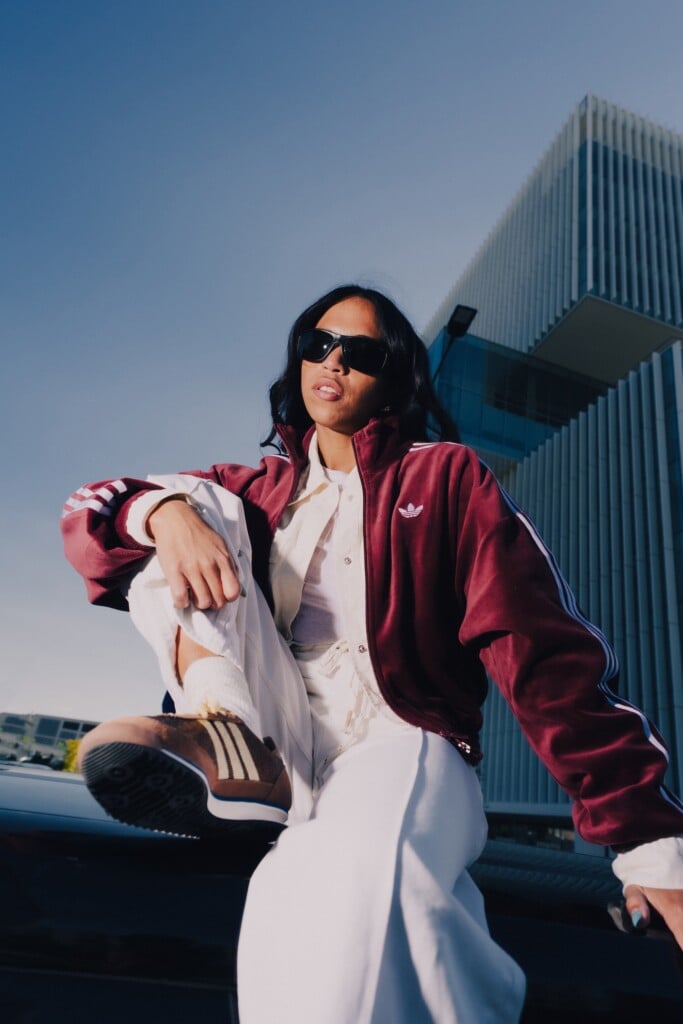
The collection develops through a play of proportions and color pairings. Alongside sneakers with structured builds are the brand’s iconic track jackets, revisited in burgundy and mauve tones, with a suede effect or velour fabric, wide pants, light-colored shirts and visible socks. The colors alternate neutral tones with more intense accents, while relaxed volumes move the garments away from the dimension of performance alone. The result is a styling in which sporty elements are not isolated, but combined with pieces and proportions that belong to everyday life. Alongside the sneakers, iconic adidas Originals pieces define the character of the shoot: sweatshirts and track pants with the famous three stripes, relaxed silhouettes and retro details that recall the brand’s archive.
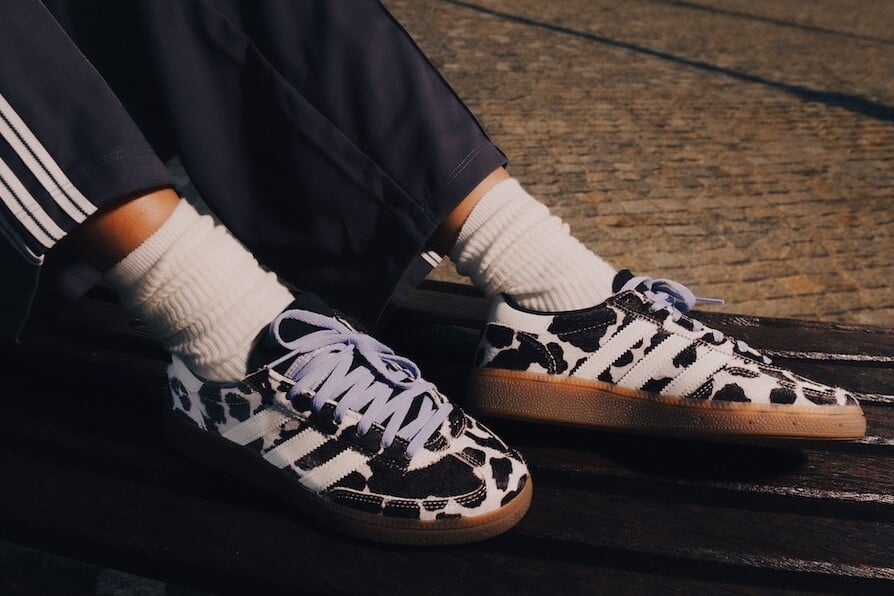
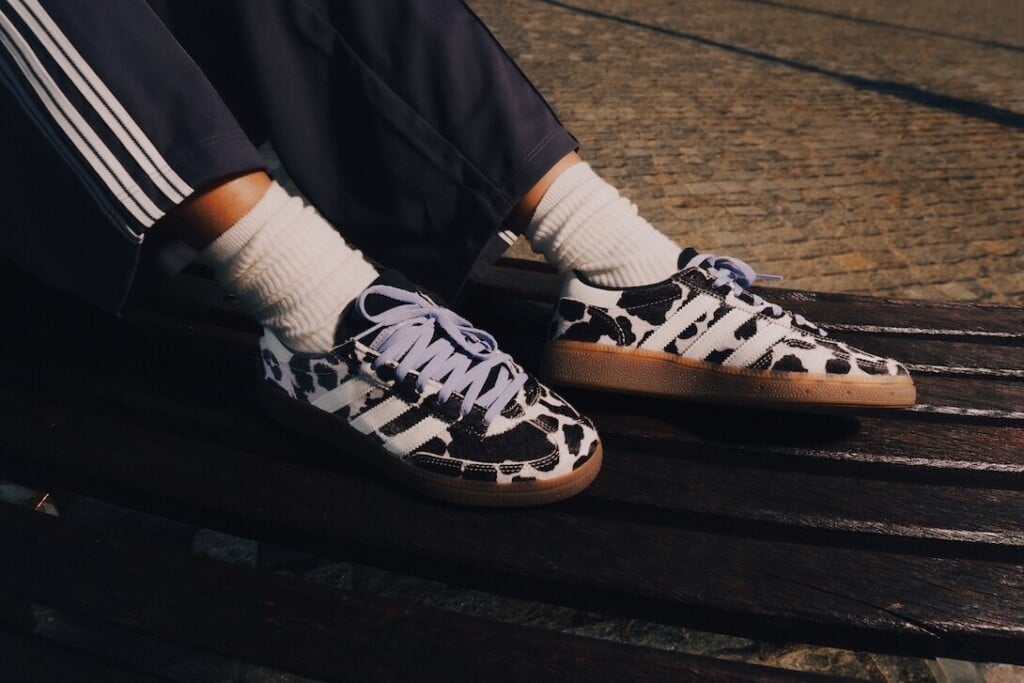
Among the models featured in the shoot are also the Handball Spezial, which in the cow print version add a bolder graphic note to the collection. Born in 1979 as indoor handball shoes, they have over time become a reference of adidas Originals style. The black-and-white print, inspired by a cow’s coat, interrupts the continuity of the retro silhouettes with a bold pattern, while the three stripes and the gum-colored sole maintain a recognizable link with the brand’s sporting archive.
Paired with Firebird Track pants, with a wide, modern fit, and visible white socks, they turn a model with a vintage heritage into a distinctive element of the contemporary look. Elements born in relation to performance have, over time, become part of the vocabulary of streetwear. It is a transition that adidas Originals has already explored through the recovery of its own archive: in 2024, with the 2000 Running collection, the brand brought attention back to models and visual codes of the period, connecting sporting memory and contemporary culture.
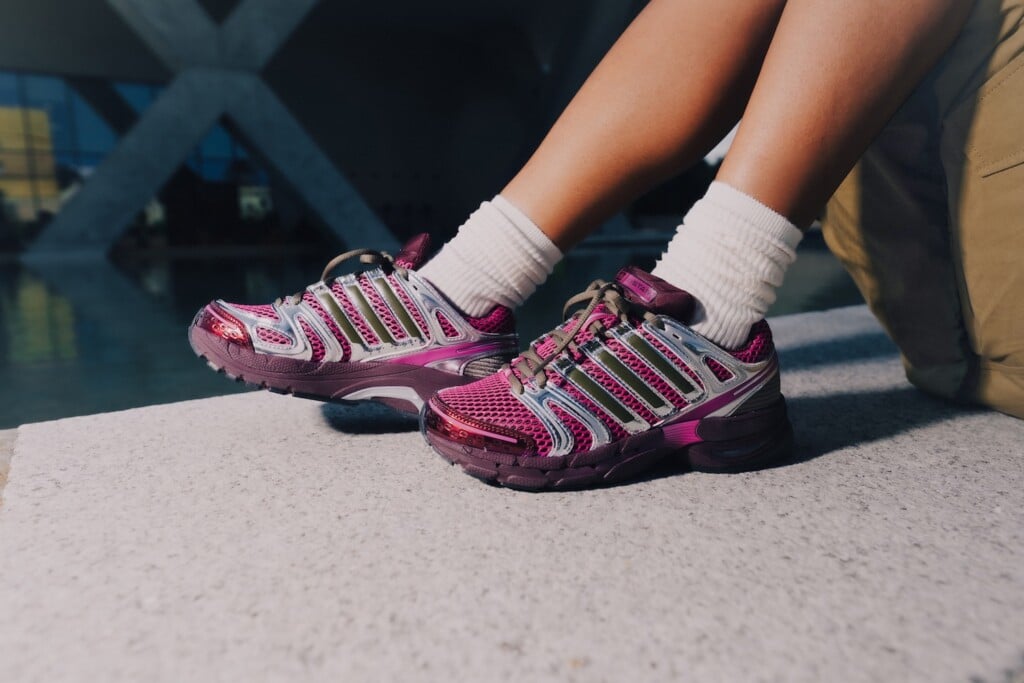
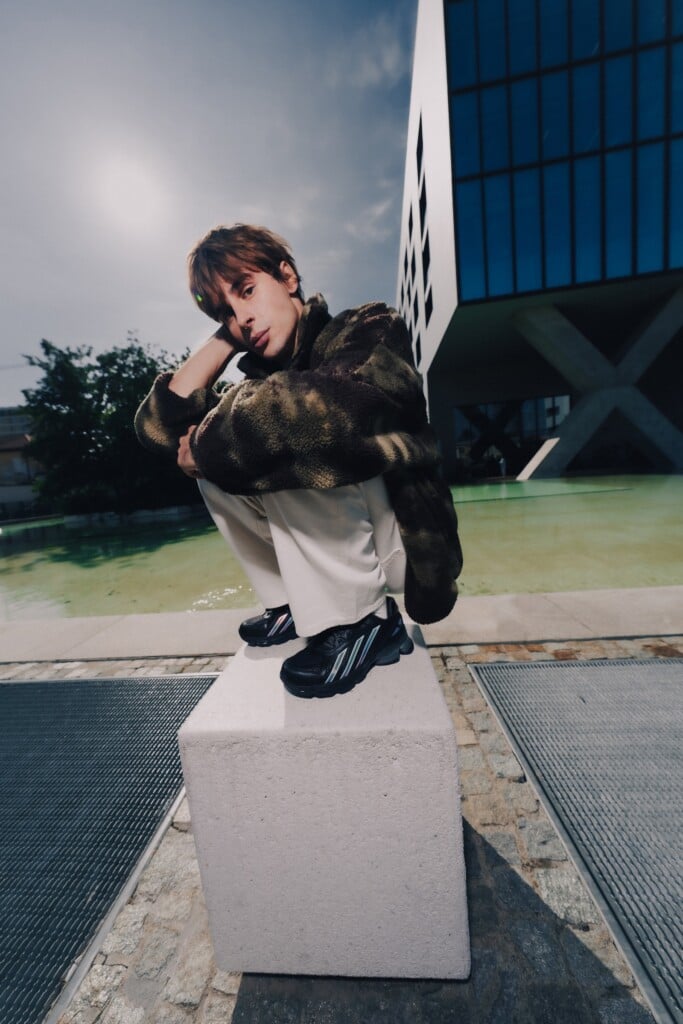
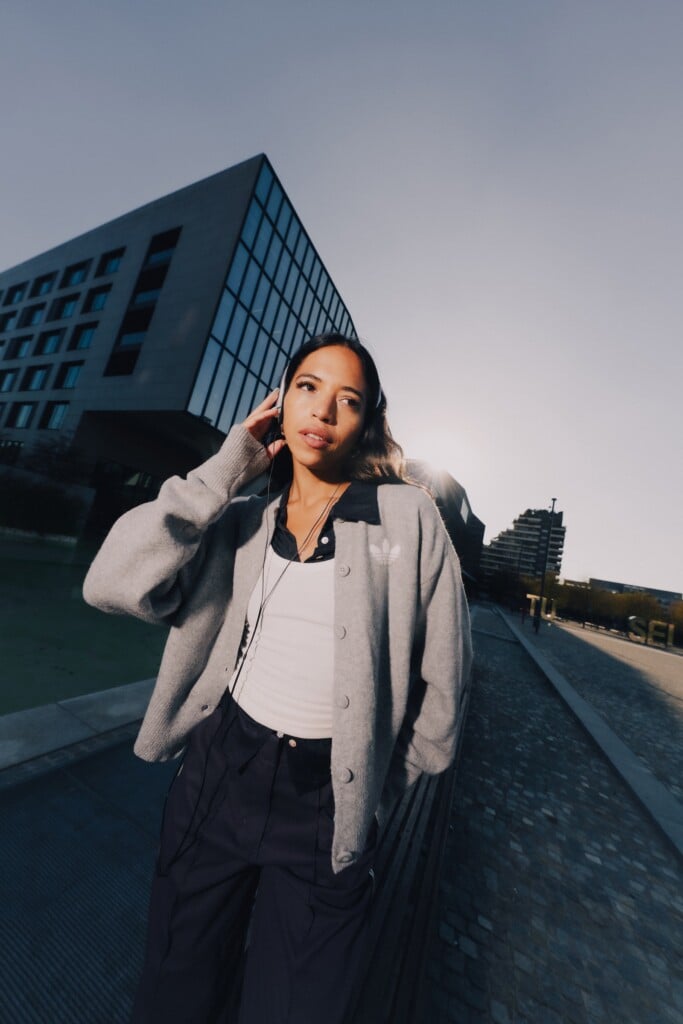
In the shoot for AW LAB, this heritage is translated through a styling that brings together sporty references, casual pieces and bolder details. The shoes enter the protagonists’ everyday life, dialogue with wide pants, visible socks and relaxed silhouettes, becoming part of a look that doesn’t need to adhere to a single definition of streetwear.
Details matter too, and a sneaker with a strong visual presence can change the perception of an essential outfit, while a more experimental combination turns it into an element of continuity between clothing, movement and attitude. The product is not isolated from its context, but observed in the way it is worn and interpreted. This is where the reference to the 2000s takes on a current dimension: not in the literal repetition of a past aesthetic, but in the possibility of reusing its shapes to build something personal.
Two talents, two ways of inhabiting style
Giving shape to this vision are Alva Luna and Leonardo Dovich, two talents who interpret the campaign from different sensibilities. Their presence introduces an individual dimension into a story that would otherwise risk remaining focused exclusively on clothes and product.
Alva Luna moves between fashion, styling, sewing and painting, bringing a creative approach that crosses different disciplines. Leonardo Dovich, instead, builds his own imaginary through content that intertwines travel, fashion and moments of personal life. Two distinct paths that help convey an idea of style that is not rigidly defined, but constantly evolving.
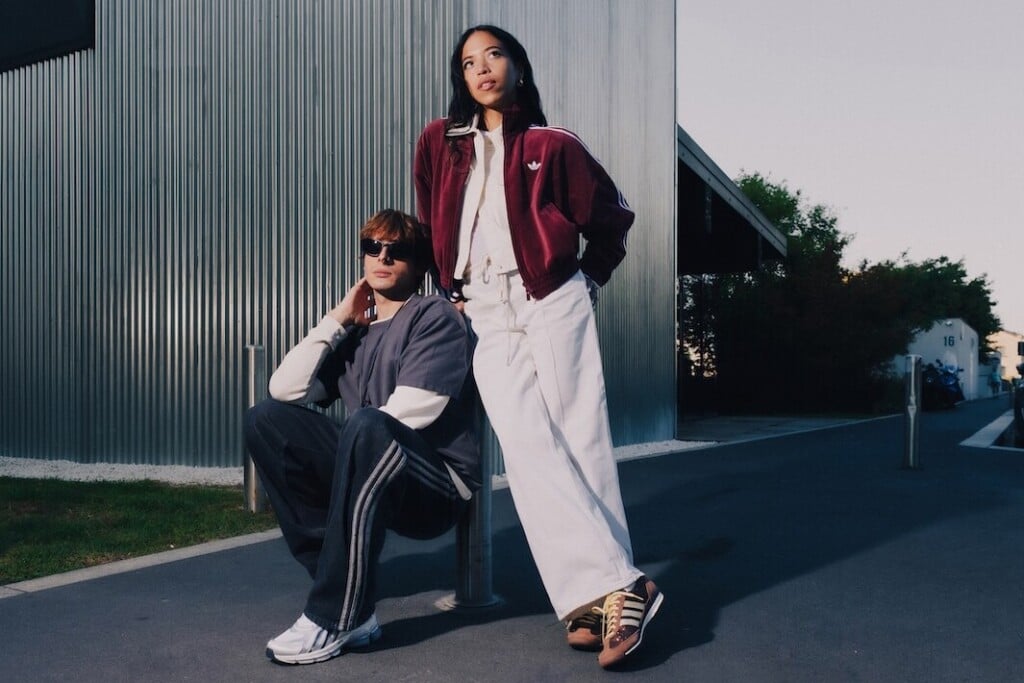
The project also develops through a series of videos and interviews, designed to explore the protagonists’ relationship with their own identity, the aesthetic references of the early 2000s and adidas. The story thus shifts from images to voice: not only how a sneaker is worn, but what happens when an object enters personal memory and becomes part of one’s way of expressing oneself.
It is precisely the variety of models and pairings that makes the shoot interesting. The sneakers do not work as isolated elements to be placed in the foreground, but enter into relation with the other garments: a structured sole meets a wide-cut pant, a sporty jacket is combined with more delicate tones, while a color detail can change the character of an otherwise essential look. The product takes on a different meaning depending on who wears it; it is no longer just a recognizable silhouette, but an element that crosses different experiences, tastes and cultural references. The campaign finds its point of balance here: keeping the shoe at the center, while leaving room for the individualities that interpret it.
An icon doesn’t belong to just one era
The return of Y2K codes is interesting not only for the possibility of recovering an aesthetic from the past, but for the way it can be transformed through new combinations. A sporty silhouette, a jacket with retro lines or a pair of wide pants change meaning when placed in an ensemble that reflects different tastes and personalities.
With this project, Collater.al Studio, AW LAB and adidas Originals tell exactly this possibility: making sporty references, casual clothing and individual sensibilities coexist without reducing them to a single idea of streetwear. Rather than rebuilding an era, the shoot recovers some of its codes and tests them in the present.
Because streetwear, when it truly works, is not about wearing the same codes as everyone else, but about finding a way to make them your own. And a sneaker inspired by another era can become contemporary precisely when it stops telling only where it comes from and starts telling who wears it.