We often talk about the stagnation of the outskirts, we had already discussed it with the photographer Alessandro Galli, who spoke of the «motion of a motionless province», referring to Busto Arsizio. We return to discuss this with artist Alvise Pi, who grew up in the province of Padua. In the suburbs «dreams crumble and everyone settles in factories or behind condemnations», observes Alvise, who tells us what it means to aspire to something, but not to have the financial means to get there. He does so with such transport that it is clear he is also talking about himself. His resilience, however, has led him to Milan, where he now pursues a quest that tells us so much about his origins and his past. Hip hop culture – graffiti in particular – has always accompanied him, perhaps because it reflects «a naked, pure and raw selfishness of wanting to let people know you exist. A desire for revenge to draw your name to shout it in people’s faces, not to disappear like the protagonists of my paintings do».


«To not disappear like the protagonists in my paintings»
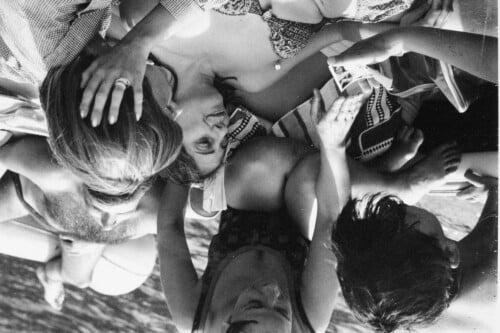
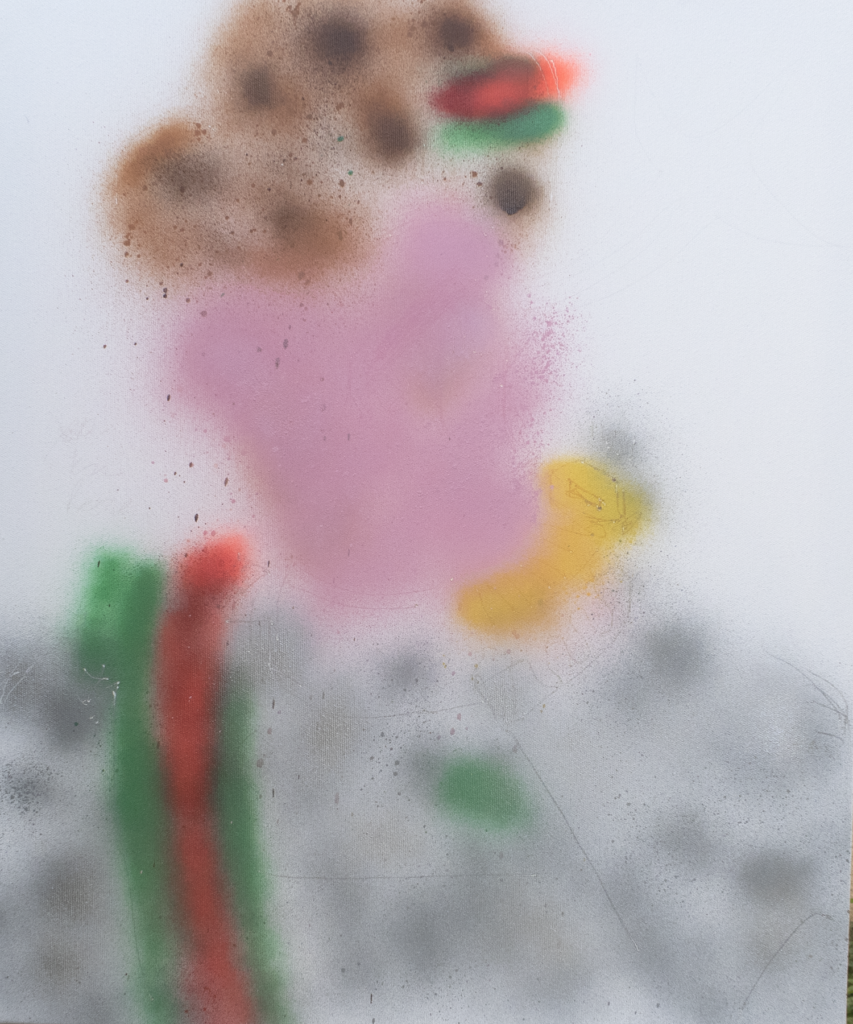
This statement by Alvise Pi, so raw but so true, immediately brought me back to his Ricordi (Memories) series, which I want to talk to him about today in order to take a closer look at it and to delve into his artistic growth. I have been following Alvise’s work for several years now – in particular the urban activations of his artistic duo Collettivo Piano A, which he carries on with Francesco Perrini – so much so that I can recognise some of the subjects of his portraits, some just by their pose, others by their hairstyle or clothing. All the portraits, of which there are many, are in fact completely blurred, fragile, just like our memories. The series is made with spray on canvas, with the intention of returning to its origins, to that technique which, as the artist explains, «made me change my vision of the world, quickly projecting me into an adult and cynical dynamic of respect for spaces and street hierarchies through graffiti». Returning to the subjects, this series aims to enclose under the same container all those people who in the course of his existence have affected him even for a moment. From his parents to his artist colleague Perrini, from some girls he met at a party to an old man in the street, to all those friends in the suburbs who inspired this work.


«A periphery that does not give you space, that takes away your identity»
This is how we begin our conversation, talking about the suburbs, everything that still inspires him, both out of a feeling of revenge and because one’s origins, in order to really get to know oneself, should never be forgotten or disowned. «The works are all untitled because they reflect the environment from which the subjects come, a periphery that does not give you space, that takes away your identity, that allows you neither to grow on a personal level nor to strive towards your dream,» Alvise Pi explains to me when I ask him more about the titles and his subjects. «The few details that are present only allow those who really know me – I am talking about that small circle of friends – to actually recognise who has been painted or who the person portrayed is, as well as being a stylistic feature because the use of the sign has always been important in my work».


«no need to talk about it or boast about it because the streets speak for themselves»
I shift the discussion to street culture. I’m interested in how a small-town kid approaches this art to make room for himself in the world and, as Alvise said earlier, to shout his existence. «About graffiti and street culture I could talk about it for a long time, but honestly I prefer to be very reserved about it because those who do or have done such things know very well that there is no need to talk about it, boast about it or celebrate it, but those who know you know all the stories, because the streets speak for themselves,» Alvise collected. «I have always considered myself a storyteller, a visitor, sometimes a player in this intricate, underground world that has given strength to my work, my friends and acquaintances. The strength to want something more than what we saw during our days, or rather, during our nights».

We conclude this conversation with a reflection on life, perhaps more on friendship and its bonds of affection, a value that always emerges in all his work and which is undoubtedly the driving force behind all his motivation. «I think certainly this culture and all my experiences on the street have taught me that nobody gives you anything. Everyone wants something and if someone approaches you it is never for nothing, there is always an alchemical bond, a mutual exchange going on. Throughout life, the only friends you will find will be those who, together with you, pursue a dream common to yours».
In short, Alvise Pi’s is an album of fuzzy memories that he jealously does not want to show to everyone, but only to his circle of affection, increasing even more the value of belonging typical of street culture. That group which today, in the artistic field in Milan, is worth everything to him. A series of portraits that I would not stop looking at, trying to recognise something of myself or my friends, some detail of the pop culture that somehow unites us all, with the desire not to disappear.


Courtesy Alvise Pi