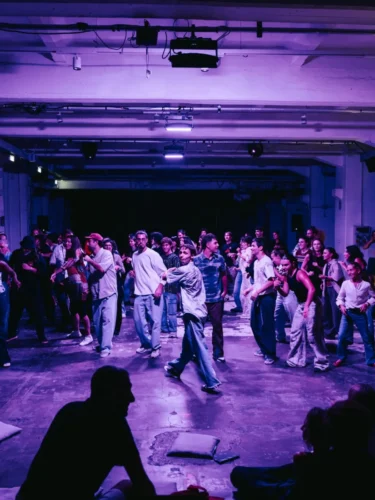
Last month, inside the Canadian exhibition space Eastern Bloc in Montréal, artist Aphex Redditor transformed one of the most passive and everyday gestures of contemporary life into a radical performative act. The project is titled BedRot, and the name already says it all: staying in bed, letting yourself be consumed by time and scrolling.
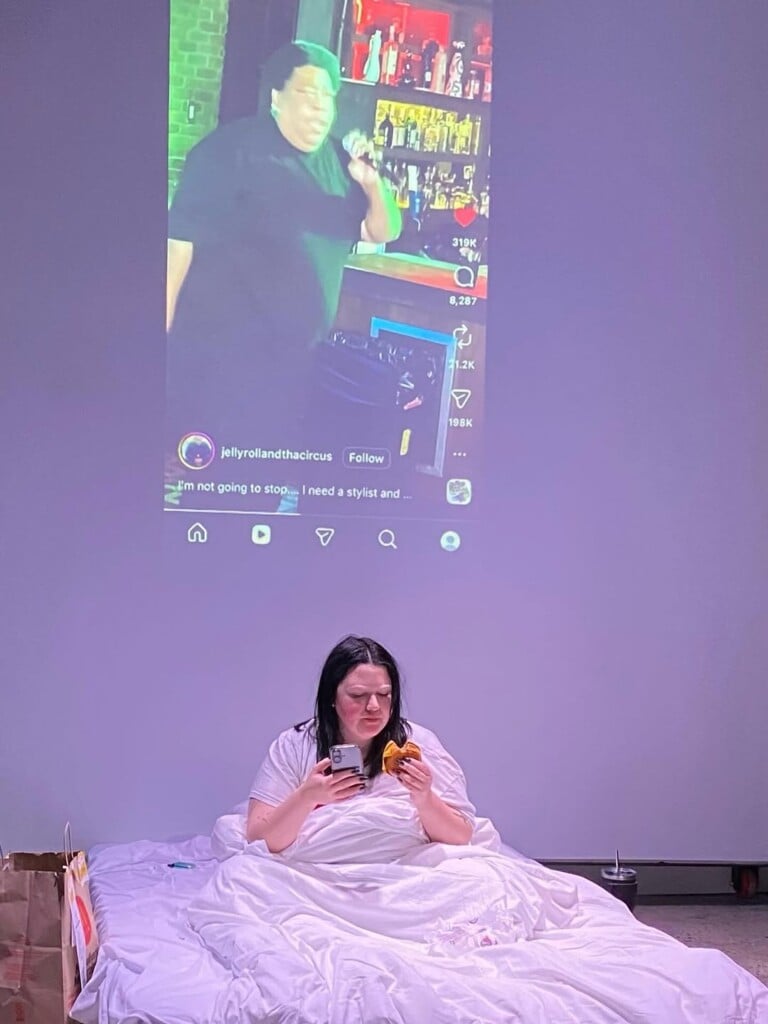
For 24 consecutive hours, the artist lay on a bed installed inside the gallery space, continuously scrolling through Instagram Reels. Not a private gesture, but an exposed action: the phone screen was projected in real time, allowing the audience to observe the endless stream of content passing through her.
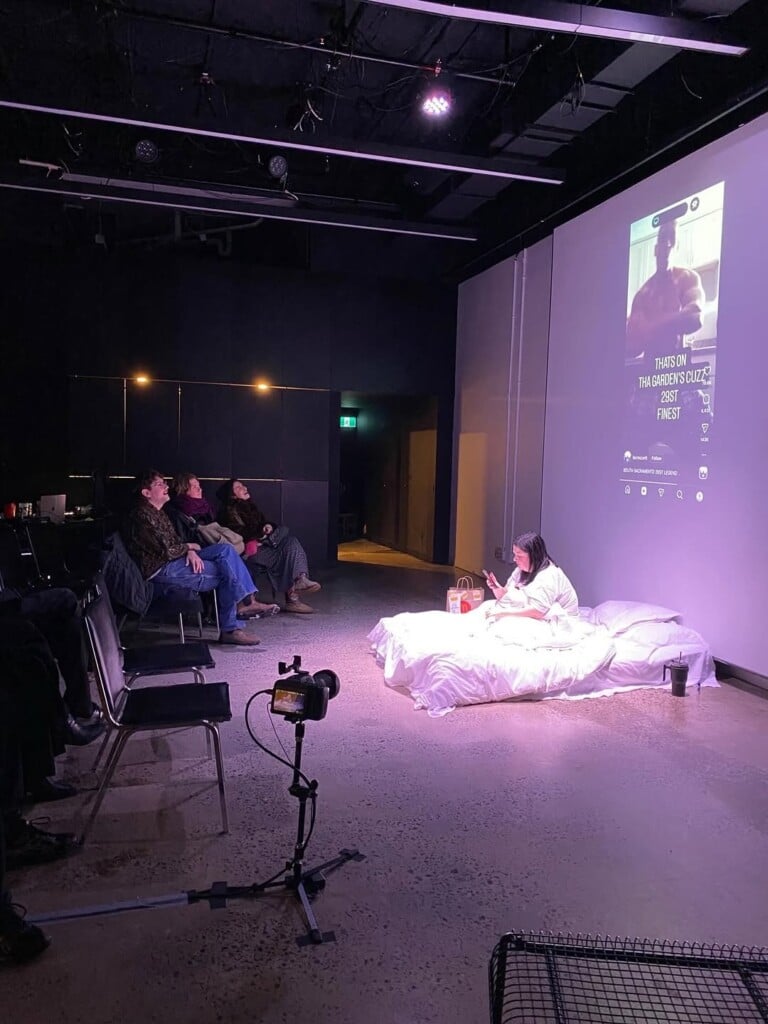
BedRot works because it adds nothing. There is no specific narrative. Just an extreme duration applied to something we all do every day, yet rarely observe for what it really is: an interface that constantly reshapes itself to keep us engaged. During the performance, the real subject is not the artist’s body, but the algorithm, evolving and shifting based on interaction.
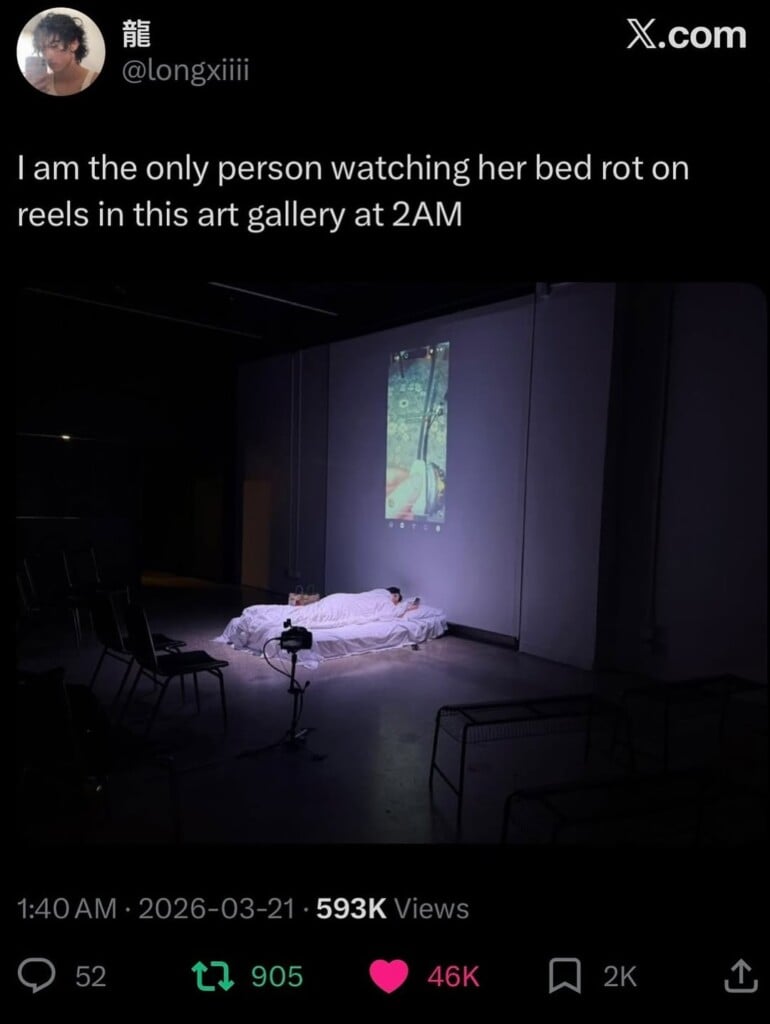
The work fits within a practice rooted in post-internet culture, where the digital landscape becomes a territory to explore and make visible. Aphex Redditor treats social media as a constantly shifting visual and behavioral archive, made of memes, trends, and obsessive repetitions.
Here, however, the discourse becomes more radical. While much post-internet art observes the digital, BedRot submits to it. The artist does not filter or select: she places herself in a state of total passivity, allowing the algorithm to construct the experience. It is no longer a work that speaks about the internet, but one that behaves like it.
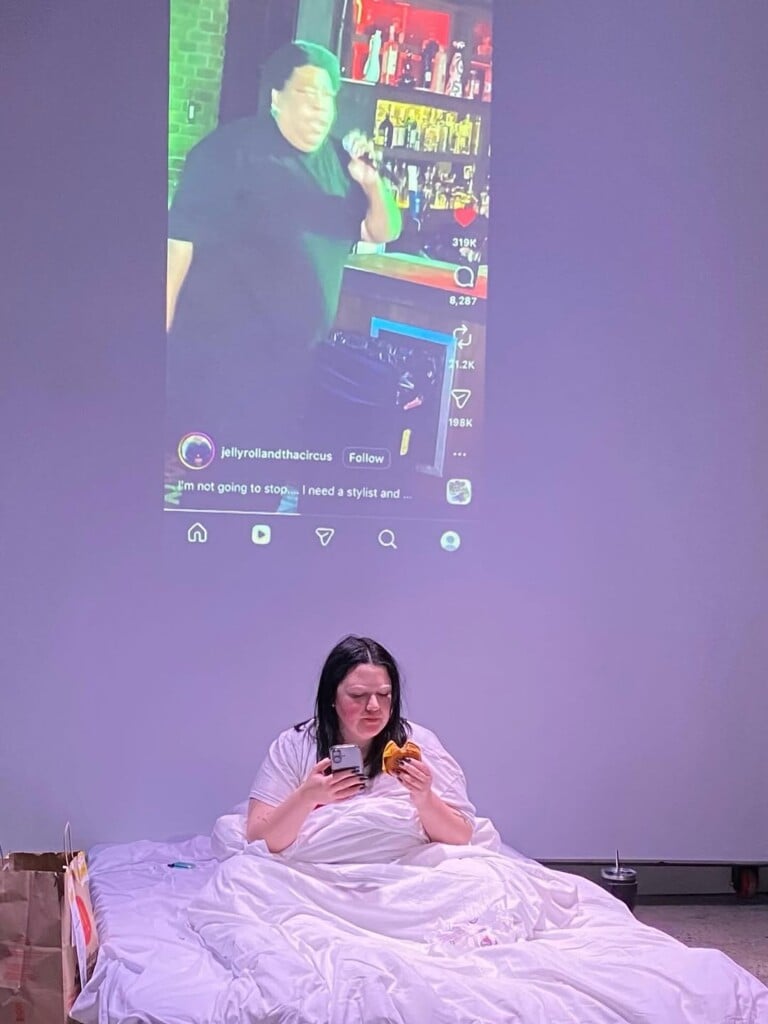
There is also a physical component that is far from secondary. The term “bed rotting” describes a condition suspended between burnout and escapism, in which staying in bed becomes a form of passive resistance. Bringing it into an exhibition space turns a often invisible practice into a public gesture.
The result is unsettling precisely because it feels familiar. Watching BedRot means recognizing yourself in that flow, but also glimpsing the invisible architecture that sustains it: a system that observes, learns, and feeds back in a loop. It is not a spectacular performance, but one that forces us to reflect on a phenomenon that is all too familiar.