The relationship between fashion designers and the world of cinema has deep and fascinating roots, intertwining two creative universes that mutually influence each other. From Hollywood’s golden age to the present day, this collaboration has defined trends, styles, and often the visual identity of entire generations of viewers.
In the 1930s and 1940s, with the rise of the film industry, costumes became an essential element in defining characters and settings. Although collaborations between directors and fashion designers were not yet common, it was during these years that the role of the costume designer began to gain increasing importance—so much so that their creations for the big screen could be compared to the work of today’s fashion designers, as they often set trends to be followed. Two figures, in particular, made history.
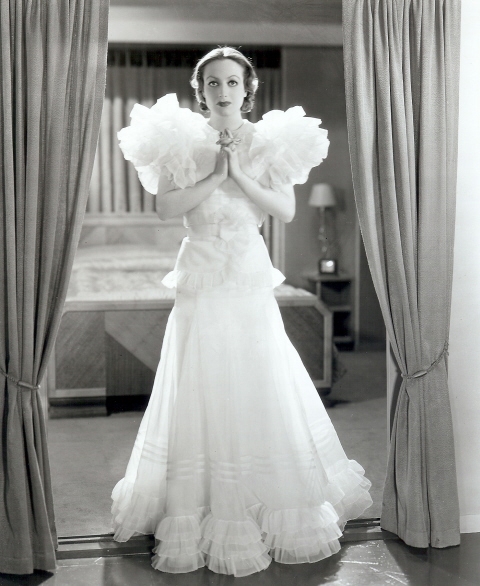
The first is Adrian Adolph Greenberg, known simply as Adrian. At just 25 years old, he became the chief costume designer for MGM, shaping the style of Greta Garbo and many other divas whose looks were imitated by thousands of women around the world. The influence of his creations was so strong that in 1932, after completing the iconic white dress worn by Joan Crawford in Letty Lynton, he sold the design to Macy’s department store, which produced an affordable version for the mass market. American women went wild for it, and over 500,000 units were sold within a week.

The other great name from that era is undoubtedly Edith Head. If you’ve never heard of her, just consider that she remains the woman with the most Academy Awards and nominations to date: we’re talking about 8 Oscars won out of a total of 35 nominations. She worked on over four hundred films, and some of the looks she created have rightfully become part of history, significantly influencing fashion, especially in the 1950s.
From Audrey Hepburn‘s dresses in Roman Holiday to Elizabeth Taylor‘s outfits in A Place in the Sun, her work left an indelible mark. Perhaps her greatest masterpiece, however, is the wardrobe she designed for Grace Kelly in Rear Window. In that film, a true piece of art is undoubtedly the “Paris dress,” the black-and-white gown worn by Kelly in the film’s opening scenes, which went on to influence the fashion world for years to come. In fact, beyond being paid homage in other cinematic productions, some say that this very dress foreshadowed the style of Christian Dior’s Ligne Corolle collection, launched in 1954, characterized by a cinched waist and a skirt that flares out to mid-calf length.
Following in Dior’s footsteps, other French designers in the 1960s recognized the potential of cinema to showcase their style and present their creations to a much wider audience. This is where Hubert de Givenchy and Yves Saint Laurent come into play, coincidentally finding themselves connected through the same iconic piece: the little black dress.
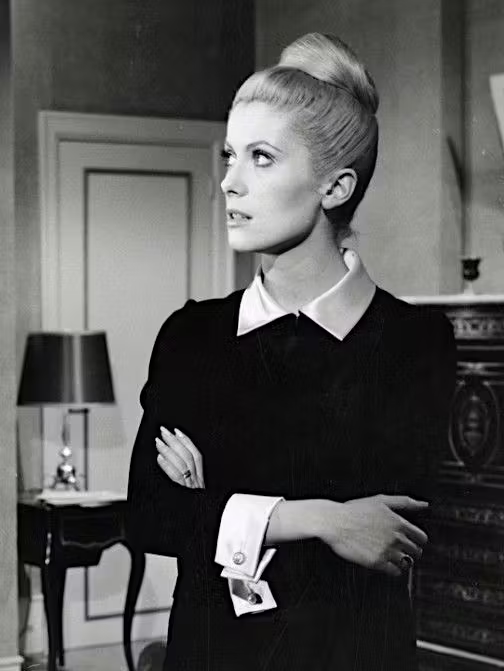
On one side, we have Hubert de Givenchy, the mastermind behind the dresses worn by Audrey Hepburn, first in Funny Face and a few years later in the cult classic Breakfast at Tiffany’s. It’s in this film that the famous little black dress makes its grand entrance, paired with gloves, a pearl necklace, a tiara, and oversized sunglasses, as Hepburn strolls through the streets of New York. On the other side, we find Yves Saint Laurent who—not only personally designed the costumes for Claudia Cardinale and Capucine in The Pink Panther (1963)—also created the iconic little black dress with a white collar and cuffs worn by Catherine Deneuve in Belle de Jour.

We arrive in the 1980s—or more precisely, in 1980—when American Gigolo, directed by Paul Schrader, hits theaters. The film became a cult classic not only for its plot and Richard Gere’s portrayal of the young and charming gigolo Julian Kay but also for the wardrobe he wears, entirely designed by Armani. This film marked the beginning of a long series of collaborations between Giorgio Armani and the world of cinema.
More than just a costume designer, who shapes garments around the characters, Armani has proven to be a true fashion designer both on the runway and on the big screen. It’s the characters themselves who are perfectly suited to his elegant attire, which has become his signature style. Characters like Richard Gere’s, the police officers played by Kevin Costner and Sean Connery in The Untouchables, the thieves portrayed by George Clooney and Brad Pitt in the Ocean’s series, and even Nolan’s Batman, played by Christian Bale, could wear nothing but Armani suits.


The connection between high fashion and cinema continued into the 1990s, marking a shift toward a sexier style. This is perfectly exemplified by the black mini dress with gold details that Gianni Versace designed for Elizabeth Berkley in her role in Showgirls, a piece that fully reflected the looks Versace was showcasing on the runway during those years.
Anche lo stile delle collezioni di Jean-Paul Gaultier possiamo rivederlo in un film simbolo degli anni ’90, ovvero Il quinto elemento. L’outfit composto da anfibi, pantaloni cargo e canottiera arancione indossato da Bruce Willis è ben impresso nelle nostre menti e le tute attillate e body e con cut-out o dettagli arancioni studiati appositamente per Milla Jovovich sono ancora oggi alcuni dei look più riprodotti dai cosplayer di tutto il mondo.
The style of Jean-Paul Gaultier‘s collections can also be seen in an iconic film of the 1990s: The Fifth Element. The outfit worn by Bruce Willis, consisting of combat boots, cargo pants, and an orange tank top, is firmly etched in our memories. Meanwhile, the form-fitting suits and bodysuits with cut-outs and orange details, designed specifically for Milla Jovovich, remain some of the most frequently recreated looks by cosplayers around the world to this day.


When discussing the special bond between high fashion and cinema in the 1990s, it’s impossible not to mention the 1996 Academy Awards. During the ceremony, when it was time to present the award for Best Costume Design, Pierce Brosnan took the stage alongside Claudia Schiffer and Naomi Campbell to introduce the category. The real presentation of the nominated films, however, came in the form of an actual fashion show. That’s right—for about three minutes, the stage of the Dorothy Chandler Pavilion in Los Angeles transformed into a runway for a fashion show no one would have wanted to miss.
Before moving on to contemporary collaborations, it’s worth taking a brief detour to highlight the work of Miuccia Prada, who, unlike all the others, designed costumes for an animated film. This was Appleseed: Ex Machina—the second installment of the Japanese Appleseed trilogy directed by Shinji Aramaki—for which Miuccia herself designed two of the outfits worn by the protagonist, Deunan Knute.
This brings us to the present day, where two names stand out: Anthony Vaccarello and Jonathan Anderson.
While the creative director of Yves Saint Laurent has been credited as an executive producer on several films, he has personally worked as a costume designer on two productions. The first is the short film Strange Way of Life, directed by Pedro Almodóvar and starring Pedro Pascal and Ethan Hawke. The second is Paolo Sorrentino’s latest film, Parthenope, showcasing his ability to create looks that set trends, whether it’s for a western or a production steeped in Italian aesthetics and atmosphere.


L’esperienza di Jonathan Anderson è invece strettamente legata a un regista, Luca Guadagnino. È stato proprio Guadagnino, infatti, a volere il direttore creativo di Loewe come costumista sia di Challengers sia di Queer. Un vero e proprio caso è stato quello della t-shirt di Loewe con la scritta “I TOLD YA” indossata da Zendaya in Challengers. La collaborazione per Queer, invece, ha prevosto anche il lancio di una collezione firmata JW Anderson dedicata al film.


The synergy between cinema and fashion continues to shape both arts today. Each collaboration demonstrates how the boundary between high fashion, cinema, and trends has always been very thin, and how the creations made by designers for films have consistently influenced styles and fashions, from Grace Kelly to Zendaya.