For a long time we thought of clothes as something static, a surface to choose, wear and carry with us, whose appearance stays essentially unchanged throughout the day. But some brands are working beyond this idea, designing garments that change when they come into contact with what surrounds them.
Water, humidity, body heat and breath thus become part of the creative process. The garment is no longer just something we wear, but a surface capable of reacting to what happens around and on top of us. It’s a small shift, but it changes the way we look at a piece of clothing, because what we see when we buy it might not be what we’ll see after wearing it.
A particularly clear example comes from LÙMIAN, which has developed a series of garments with a water-reactive leopard print. At rest, the T-shirts and tank tops look essential, almost undecorated; when moisture reaches the fabric, the hidden pattern gradually emerges on the surface. Once dry, the garment returns to its original appearance.
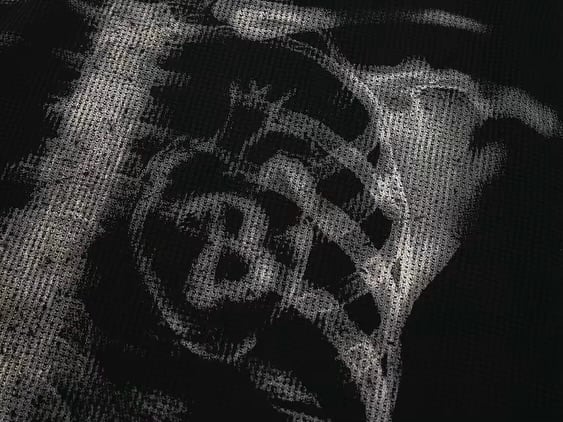
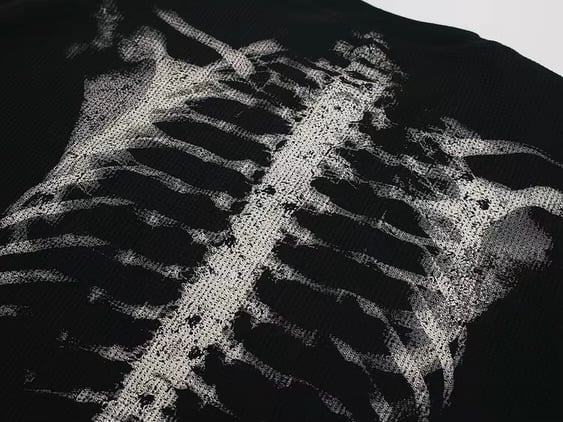
The result is interesting because the design isn’t simply printed onto the garment: it exists in a latent state. Water thus becomes a kind of switch, not adding an element to the garment, but revealing something that was already there. And this introduces a temporal dimension into fashion: the garment has a before, a during and an after.
Not all reactive materials need water. LUVZ, for instance, brings this idea into the world of accessories through its heat-reactive balaclavas. The fabric changes color in response to heat, including that produced by the body and by breath.
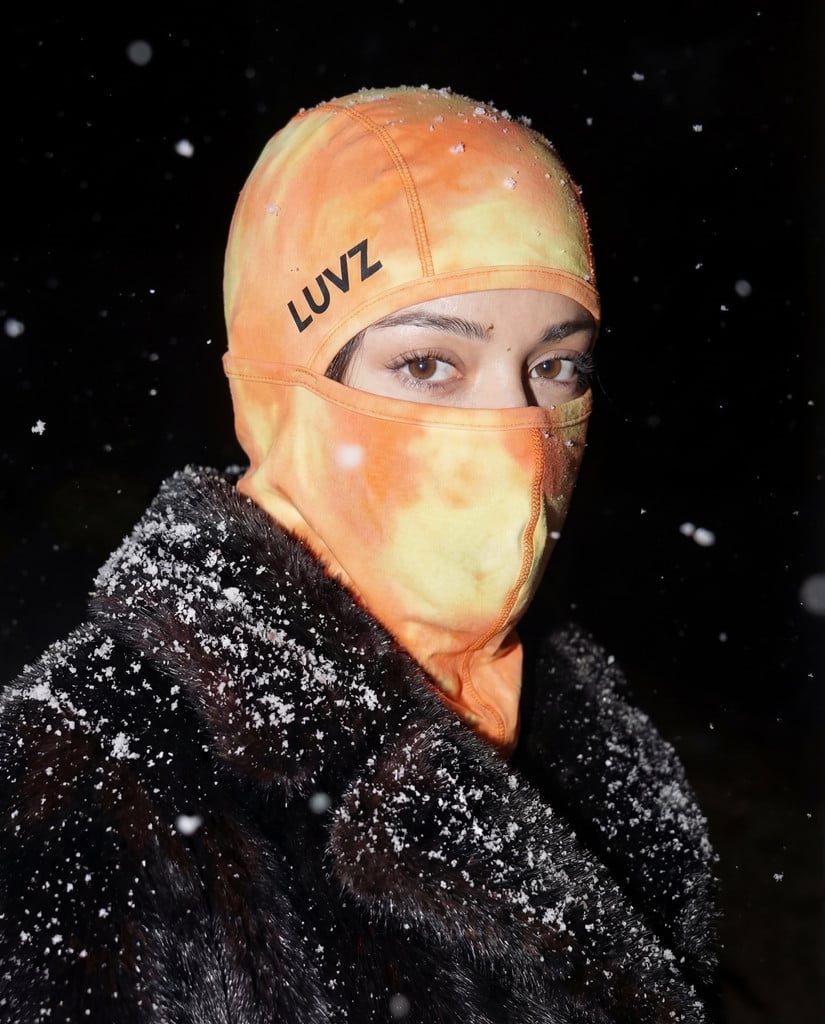

In this case the change is even more tied to the wearer. There’s no need to wait for rain or wet the fabric — it’s the body itself that triggers the transformation. An automatic act like breathing becomes part of the garment’s aesthetic, which changes its appearance as it is worn.
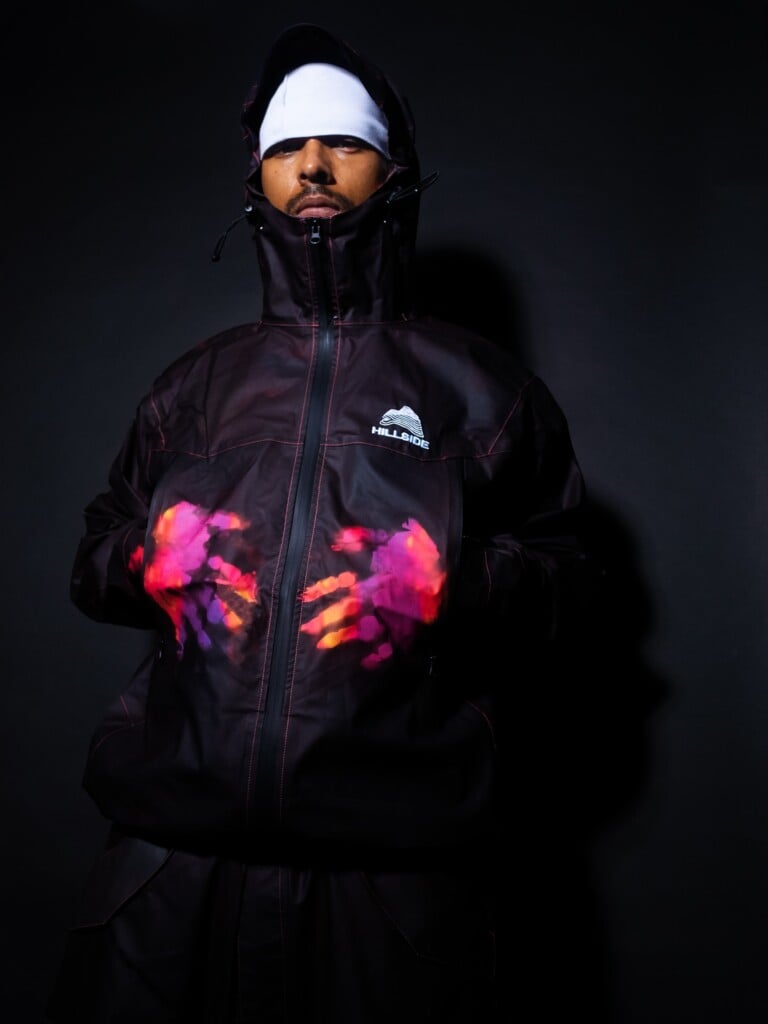
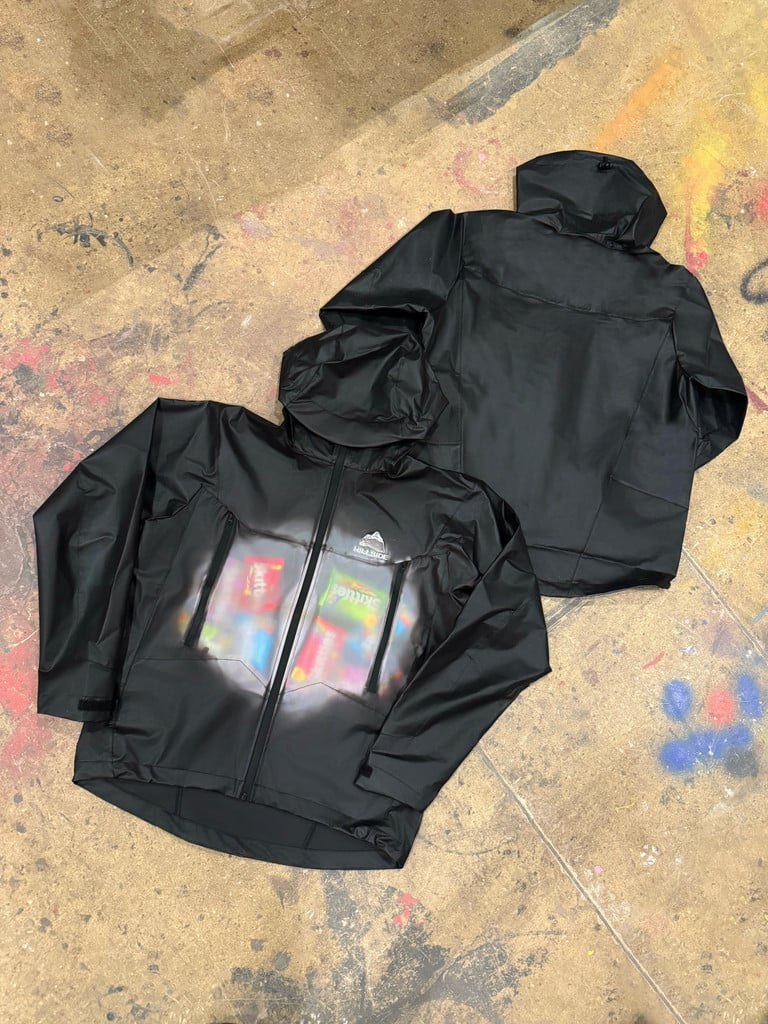
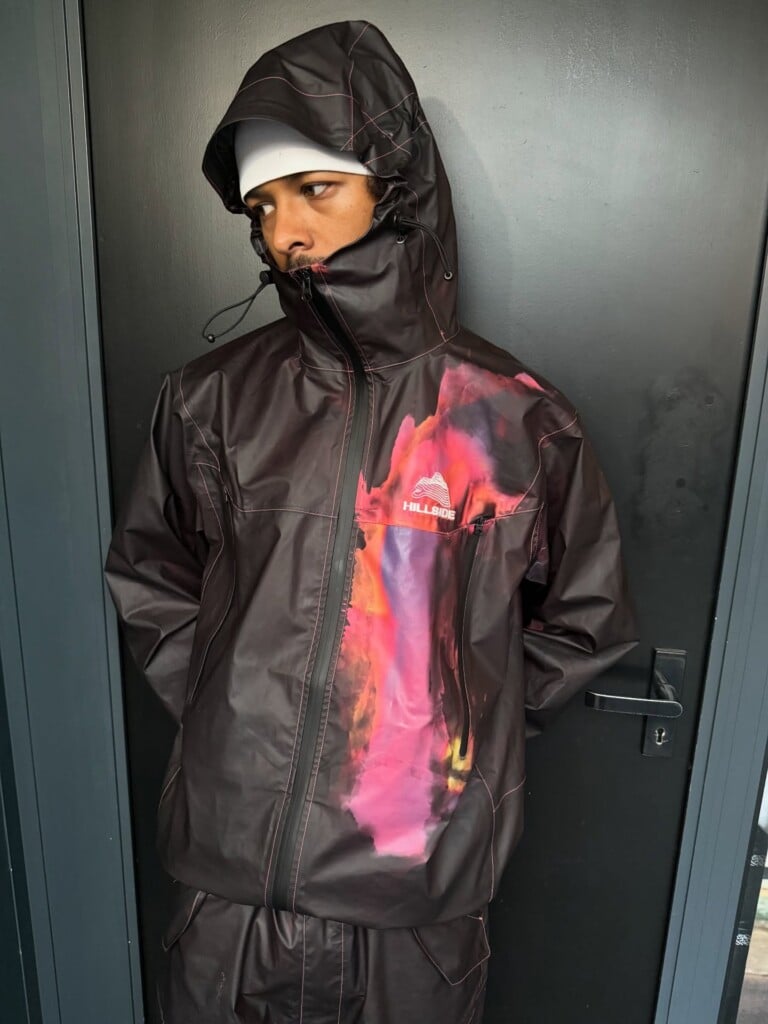
hillllside also works on making a garment less predictable; its Translucent Reactive Jacket uses a translucent base that is revealed through heat: in the content shared by the brand, the transformation is shown precisely as an effect emerging on the surface of the jacket.
The principle is similar, but the result changes: instead of using the reaction to reveal a pattern, the project plays with transparency, visibility and what normally stays hidden beneath a surface.
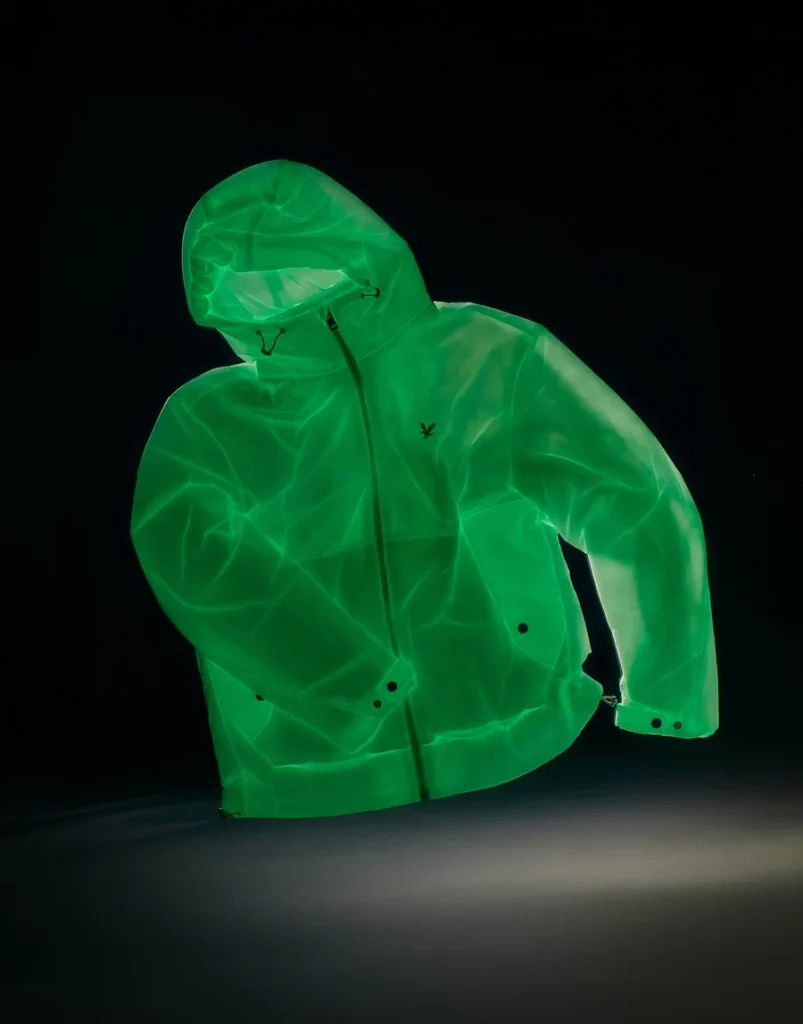
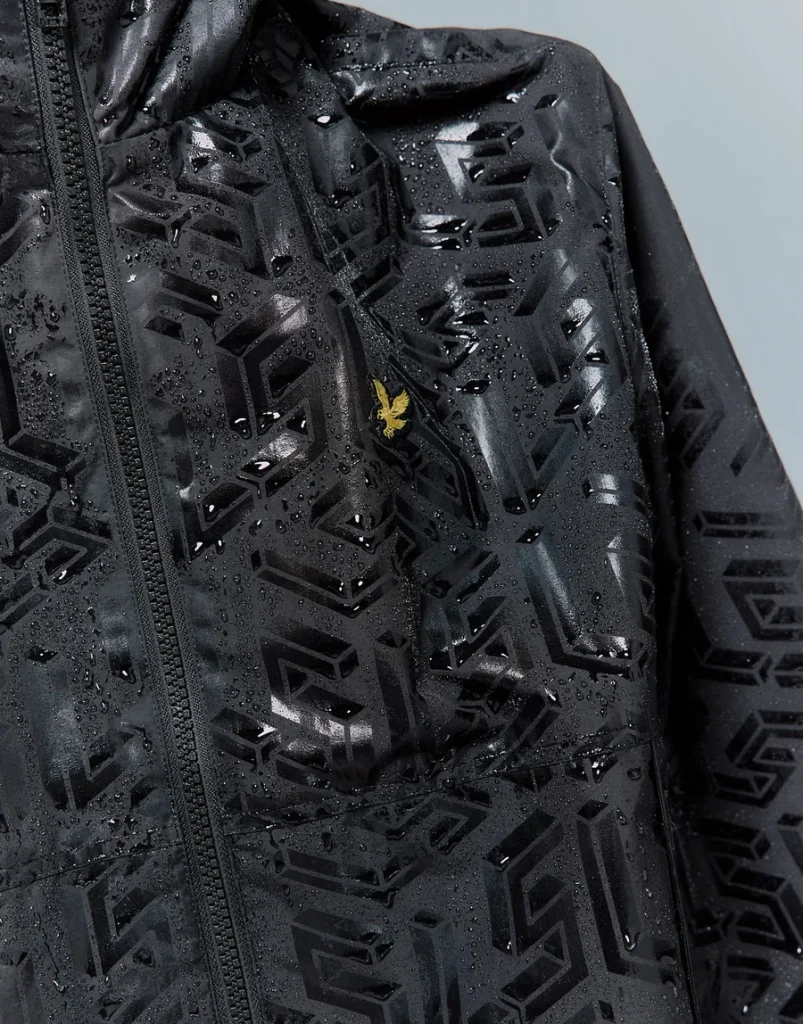
Lyle & Scott has also turned this idea into a full-fledged Reactive Series, a collection in which the garments react to different environmental elements, including heat, water, UV rays and low-light conditions. In the Water Reactive version, for example, water makes a three-dimensional pattern with the brand’s logo appear on the surface of the jacket, while the Heat Reactive models change tone when they come into contact with heat. The result is a wardrobe that doesn’t necessarily keep the same look all day, but shifts based on the conditions around it.
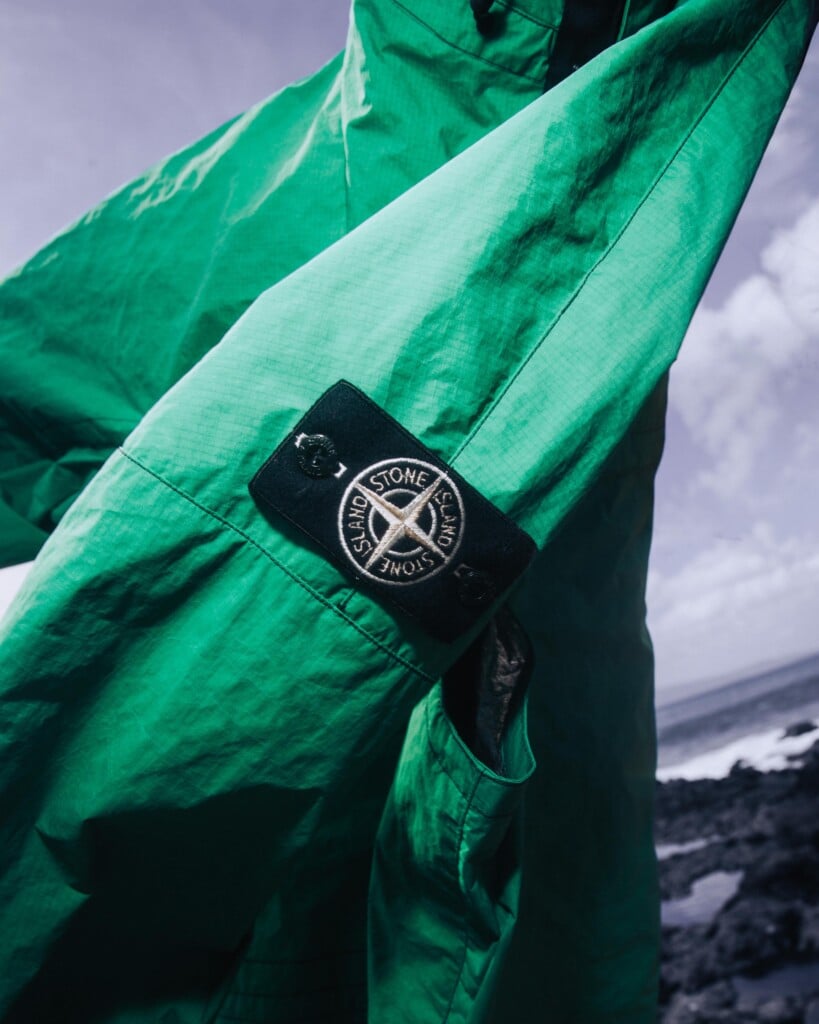
Research into reactive materials also has a longer history at Stone Island, which has for years been experimenting with fabrics and treatments capable of altering the visual and functional characteristics of its garments. In the Spring/Summer 2026 collection, the Metal Lamina Ripstop Heat Reactive is a hooded jacket that changes color depending on temperature, thanks to a laminated fabric with an aluminum film that also contributes to thermal insulation. In this case the transformation isn’t simply a decorative effect, because temperature becomes part of the material’s own behavior.
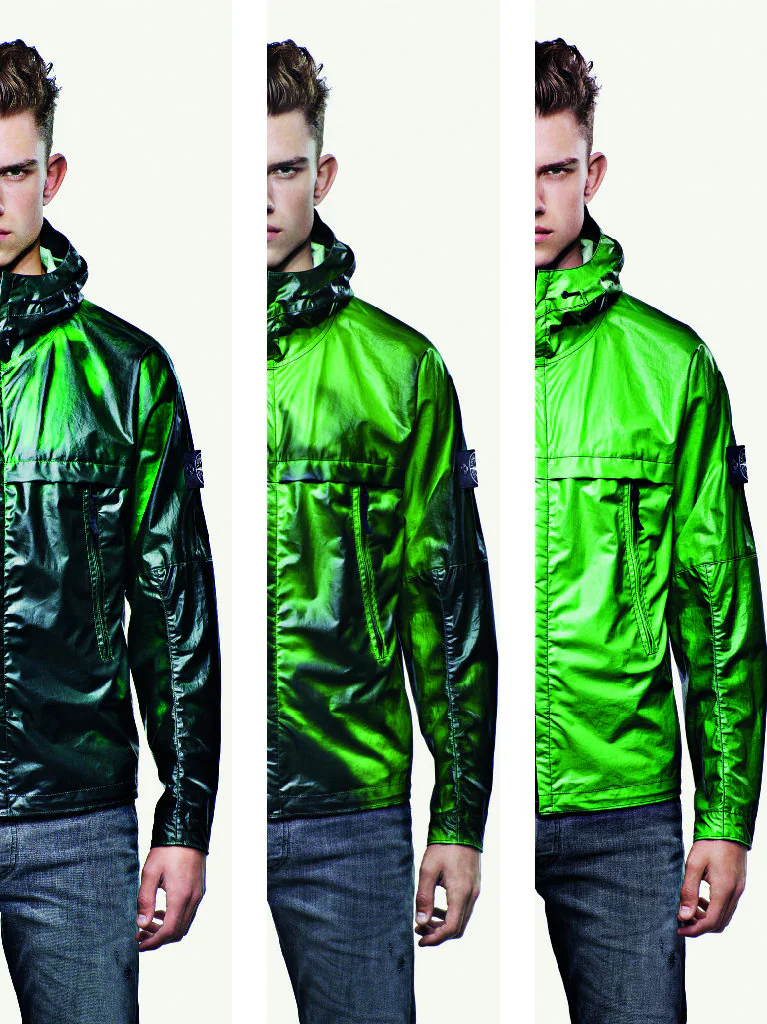
And this is perhaps the most interesting aspect of these experiments. They don’t necessarily try to make the garment more spectacular, but to make it less definitive.
These projects share one very simple thing: the garment isn’t exhausted the moment we look at it hanging on a rack. They are different reactions and shouldn’t be confused with one another, but all of them shift the focus from clothing as object to clothing as process. From this perspective, wearing something doesn’t simply mean choosing an image to show others. It also means triggering a transformation.