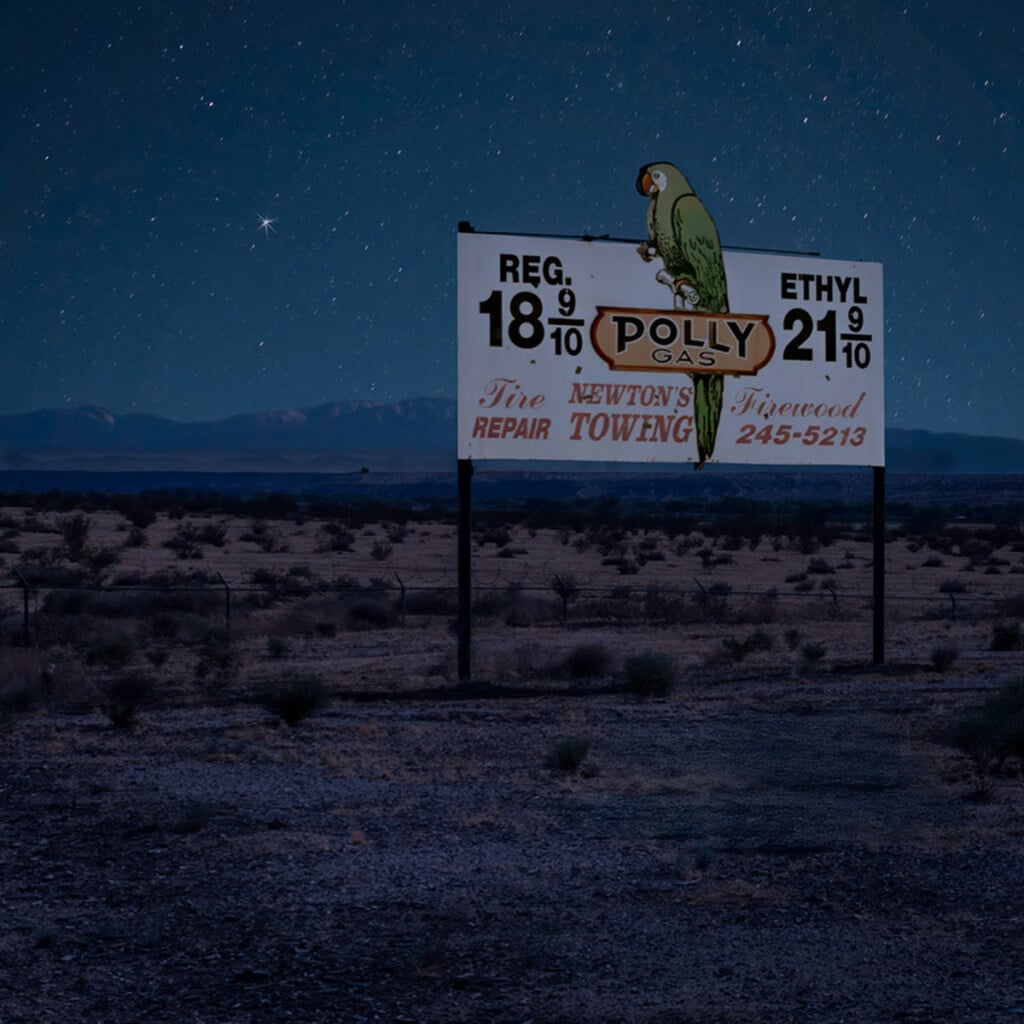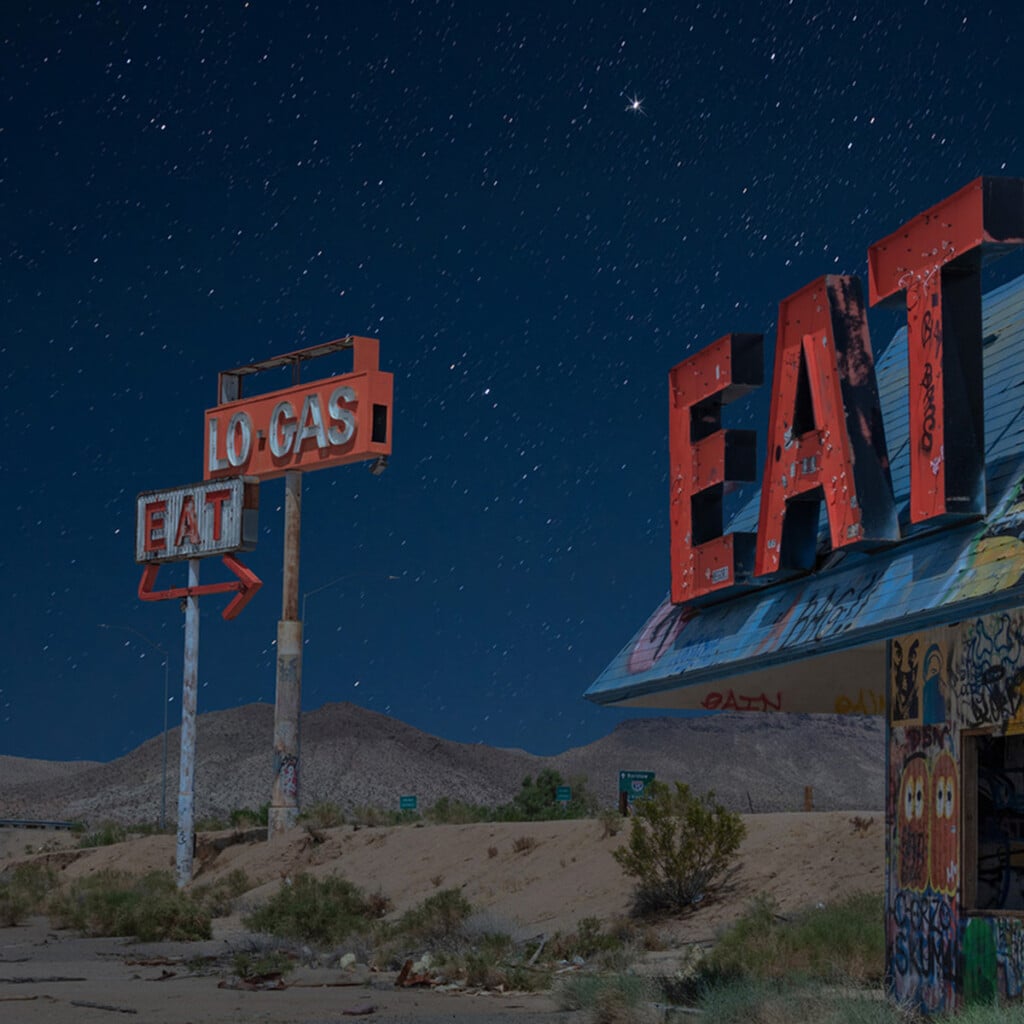
Out of Gas, the project by photographer Betsy Malloy, is a visual and sensory investigation into what it means to live in an era of transition.
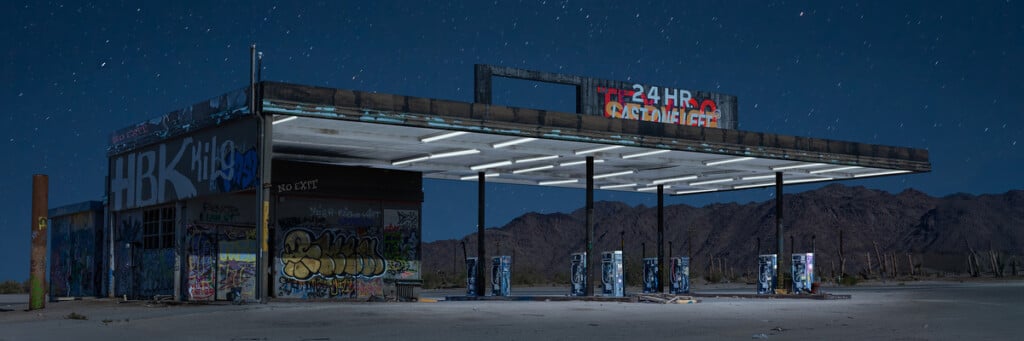
It all begins with a gas station. One of those structures that now seem outside of time, relics of an era slowly dissolving. Malloy almost doesn’t stop, and yet something compels her to turn off the road, to take a photograph that would stay with her for years. It would take a decade for her to truly understand what had drawn her to that image: not so much the subject itself, but the hidden emotion it contained, that subtle and persistent feeling of having been left behind.
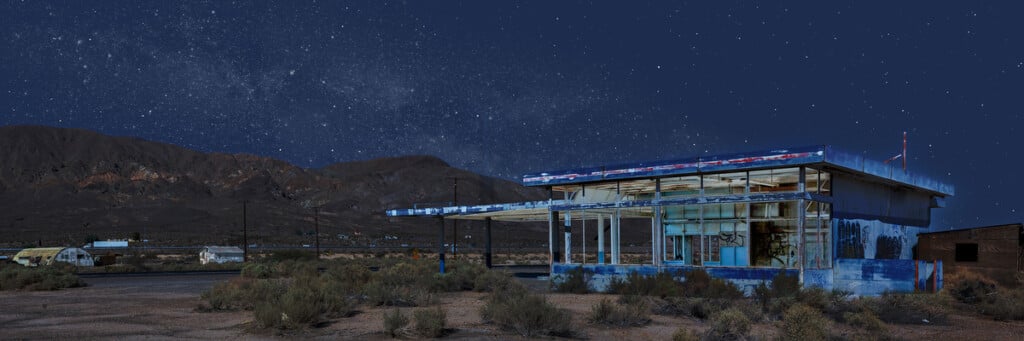
Out of Gas belongs to what the artist describes as a liminal moment, a historical threshold where past and future coexist without ever truly touching. The combustion engine slowly slips into the rearview mirror, while ahead lies a horizon still undefined. It is a transformation that is not only technological, but deeply emotional: it generates melancholy, resistance, resignation, but also a fragile form of hope.
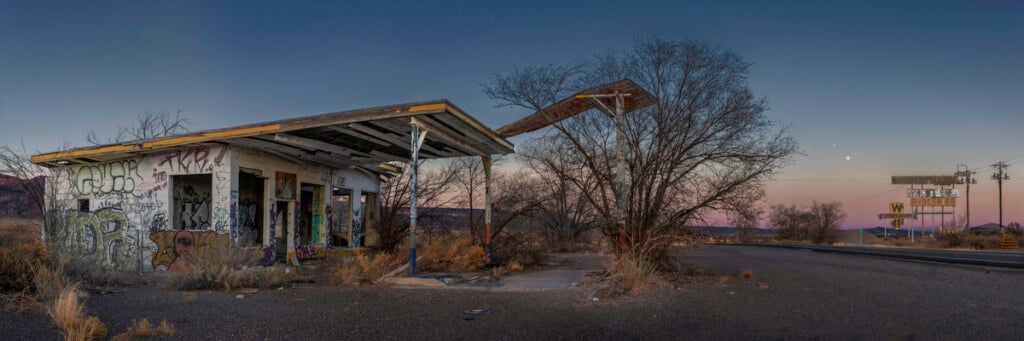
These are emotions that run through all of us, but rarely find a name. The silent frustration of sitting in traffic behind an electric car, the unease toward a future we still cannot quite bring into focus. Malloy intercepts these feelings and translates them into images, finding their tangible manifestation in the landscapes she photographs.
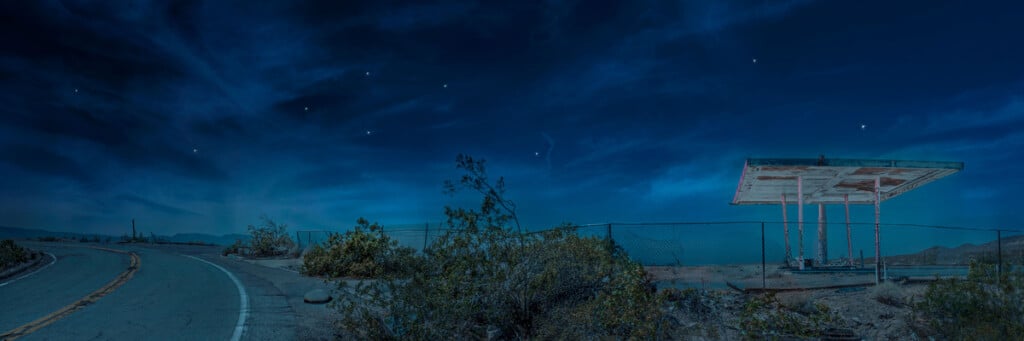
Each shot begins in the harsh, neutral light of day, when everything appears clear, almost banal. But it is with the transition into night that the work takes shape. In her digital darkroom, Betsy Malloy intervenes in the image, sculpting the scene to bring out what initially remains hidden: skies constructed to amplify the atmosphere, lights positioned with precision to guide both gaze and feeling. The result is never simple documentation, but a reinterpretation, an attempt to return the emotional truth of a place.
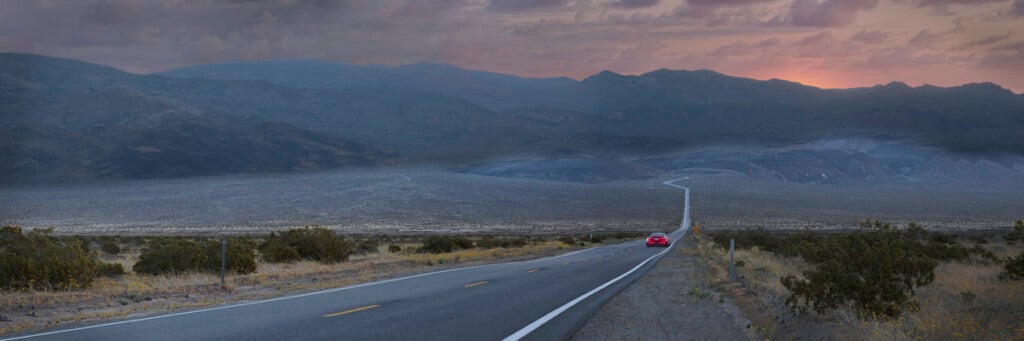
The project does not stop at photography. As also emerges from her reflections on its possible editorial development, Out of Gas is conceived as an open system, capable of expanding into digital installations and interdisciplinary collaborations, where image, sound and movement can enter into dialogue. More than a final product, the book becomes a tool, a point of contact, almost a calling card for new possibilities.
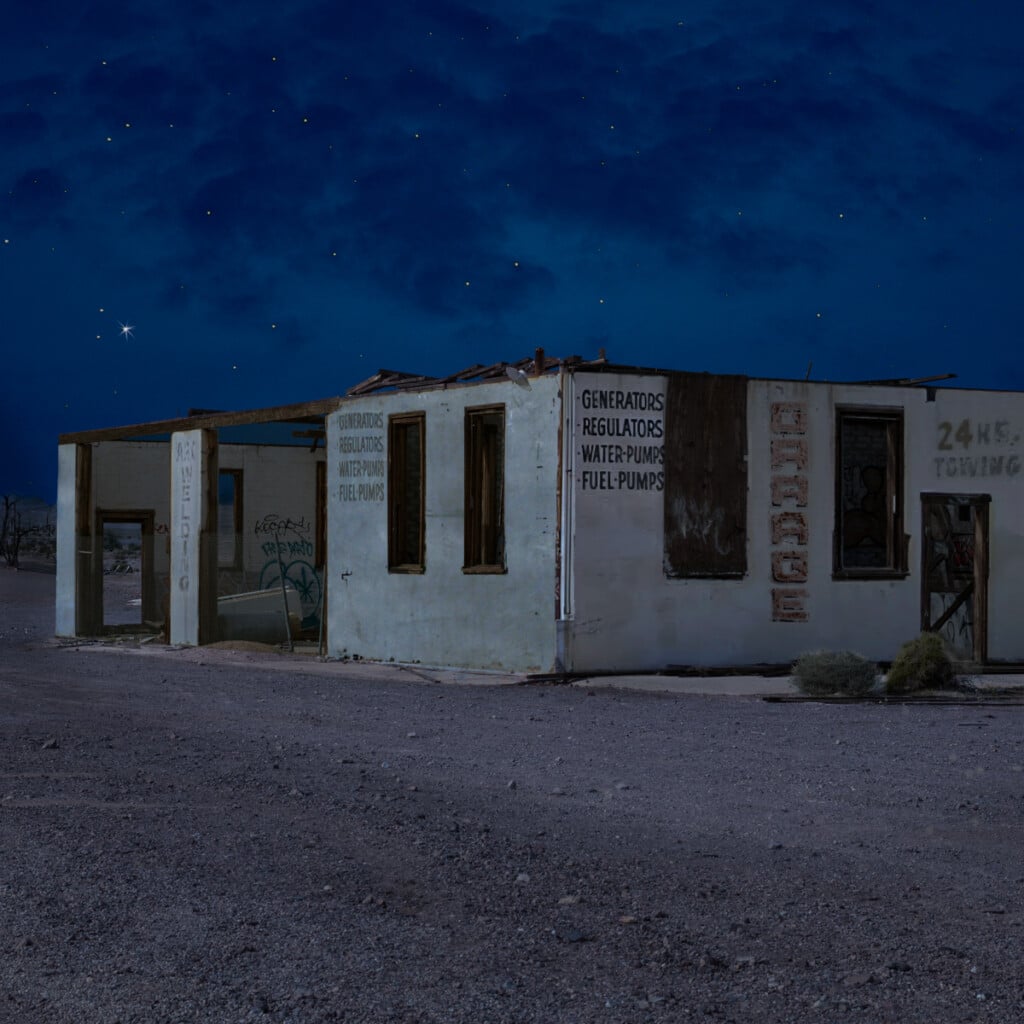
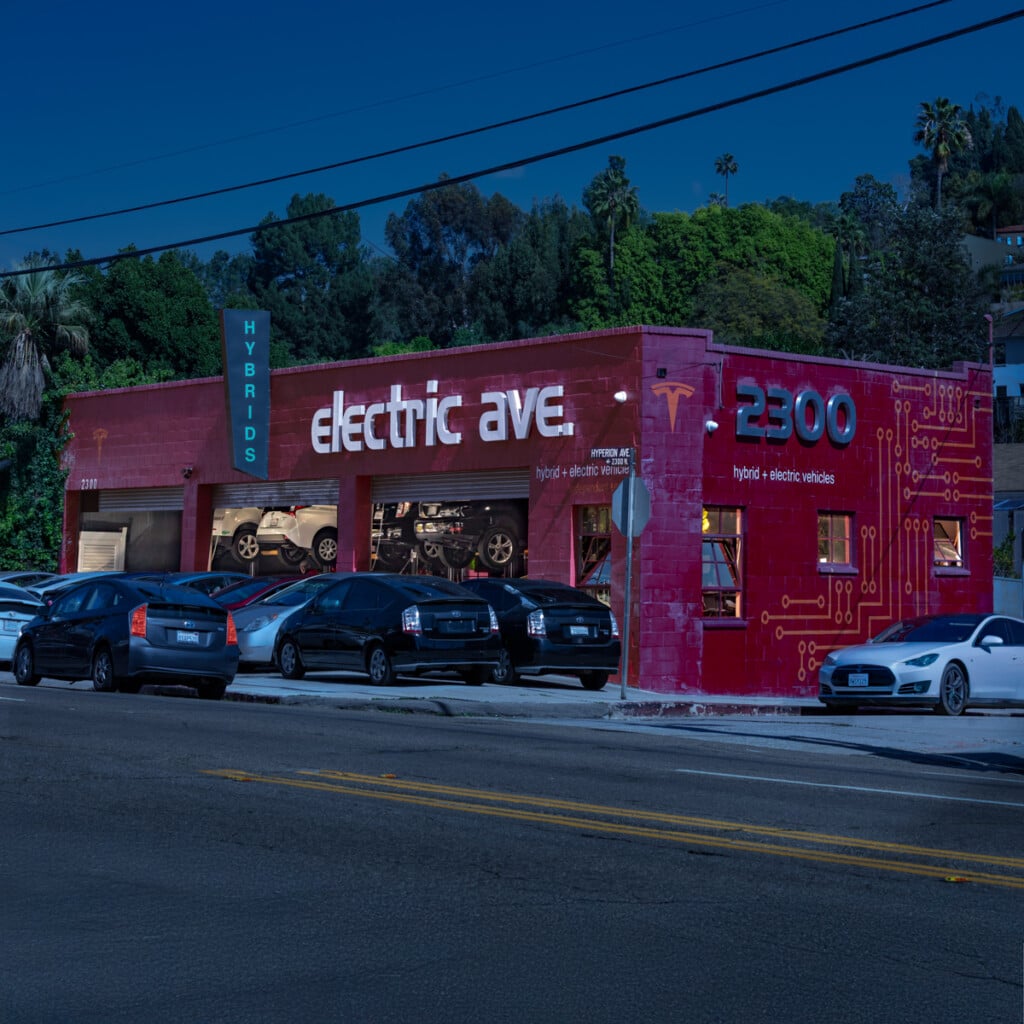
Ultimately, what Malloy builds is a narrative of contemporary uncertainty. An emotional archive of forgotten spaces that, precisely because they are marginal, are able to tell the story of our present better than any other place. A present made of incomplete transitions, of nostalgias that are difficult to admit, and of futures we have not yet truly learned how to imagine.