Throughout the whole of human knowledge, art and the body have always found ways to meet, converse and clash around the unknowns and the most vital questions tied to the theme of existence. It is to the mythological tale, attributed to Pliny the Elder, that we owe the most famous account of the birth and invention of painting. Legend has it that the young daughter of a potter, distraught at the imminent departure for war of her greatest love, decided to trace forever, by the faint light of a candle, the profile of her betrothed along the walls of a room, for a sad and solitary future. From the story of a beloved body, on the point of leaving and, probably, of an eternal farewell, Pliny gave rise to the widely shared account of the rise of portraiture.

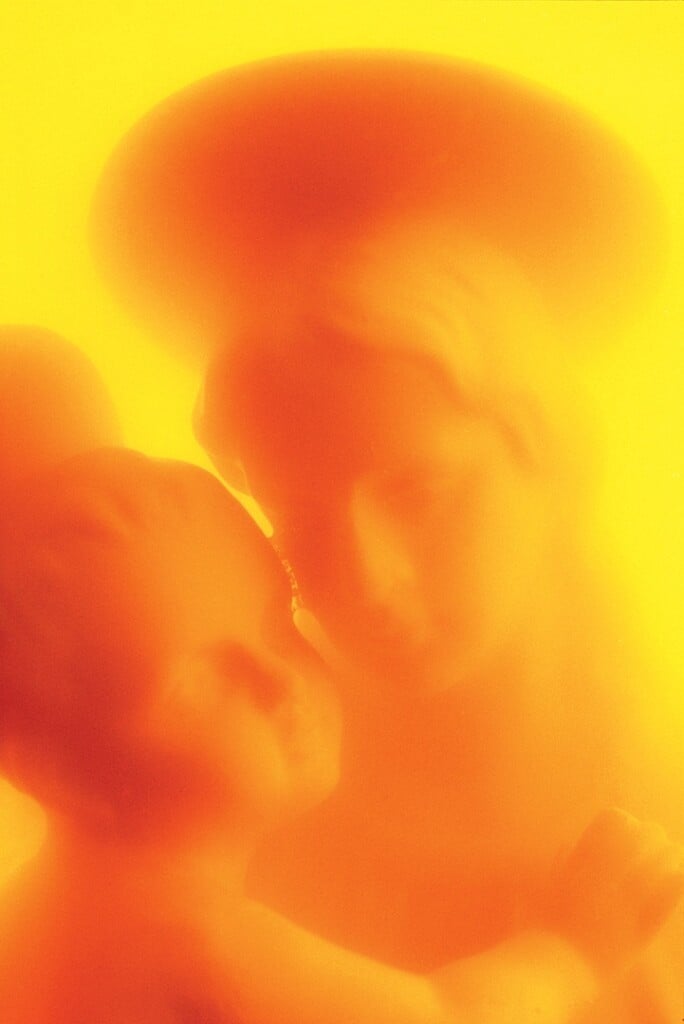
From the contours of the pose, through states of mind, expressiveness and the presence of the organic in the most vivid and destabilizing design process, both the path of the modern and the multidisciplinarity of the contemporary have offered glimpses and visions of artists’ interest in the “presence in the work” of the body.
Andres Serrano and the magic fluid
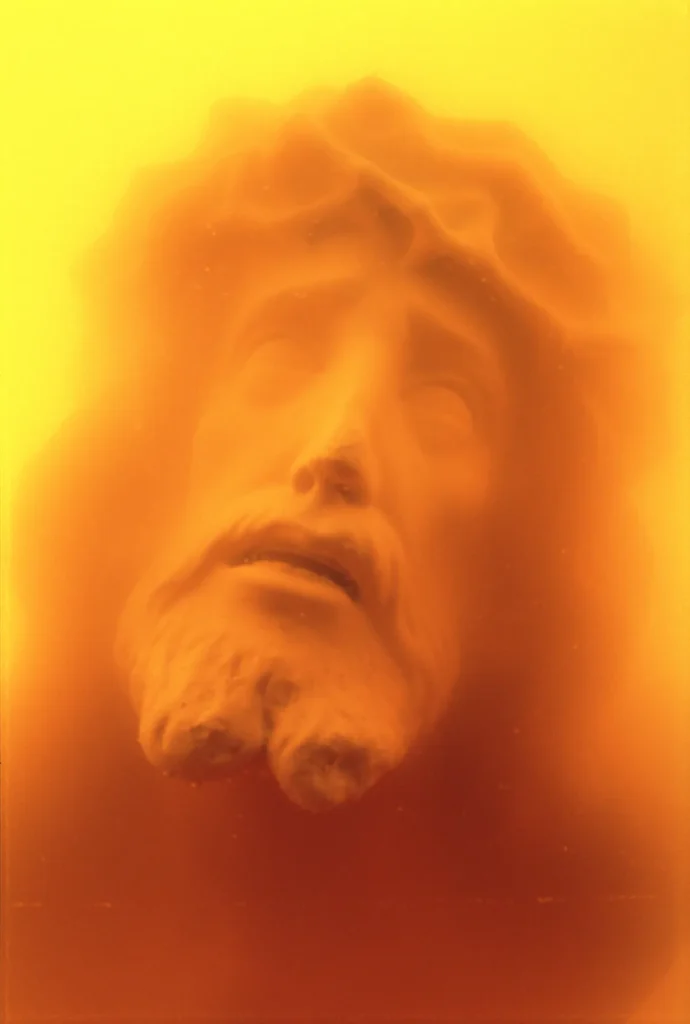
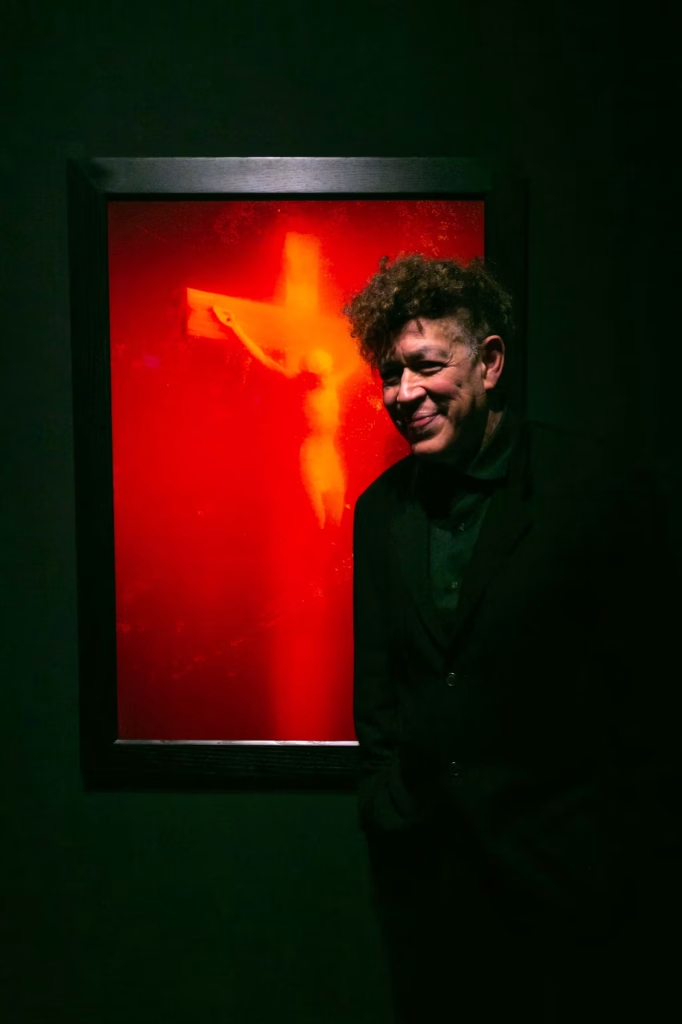
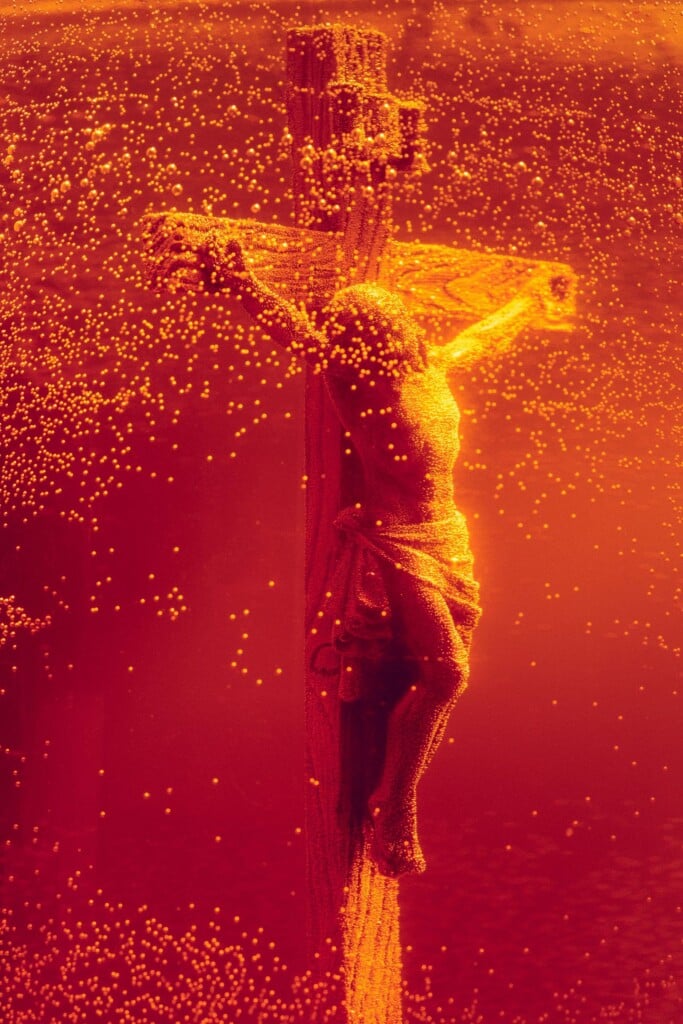
Toward the end of the 1980s, the artist and advertising graphic designer Andres Serrano (New York, 1964) captured the attention and the criticism of a broad public with the presentation of the photographic series Immersions (1987-1990). Sculptures and religious statuettes of the Virgin and of saints, belonging mostly to mass votive sale, now appeared immersed in a strange atmosphere of vivid, shadowed, dense color. Amid total bewilderment, the public was soon told that such a reddish background, with its glowing, golden tones, was nothing other than the cleverly immortalized rendering of a vital fluid made of a mix of urine and blood, drawn from the artist’s own body.
Piss Christ (1987), a child of the same series, long represented the ultimate image of a scandal that was, for the art world, incendiary and, to say the least, indigestible.
Marc Quinn: on the presence/dissolving of the body
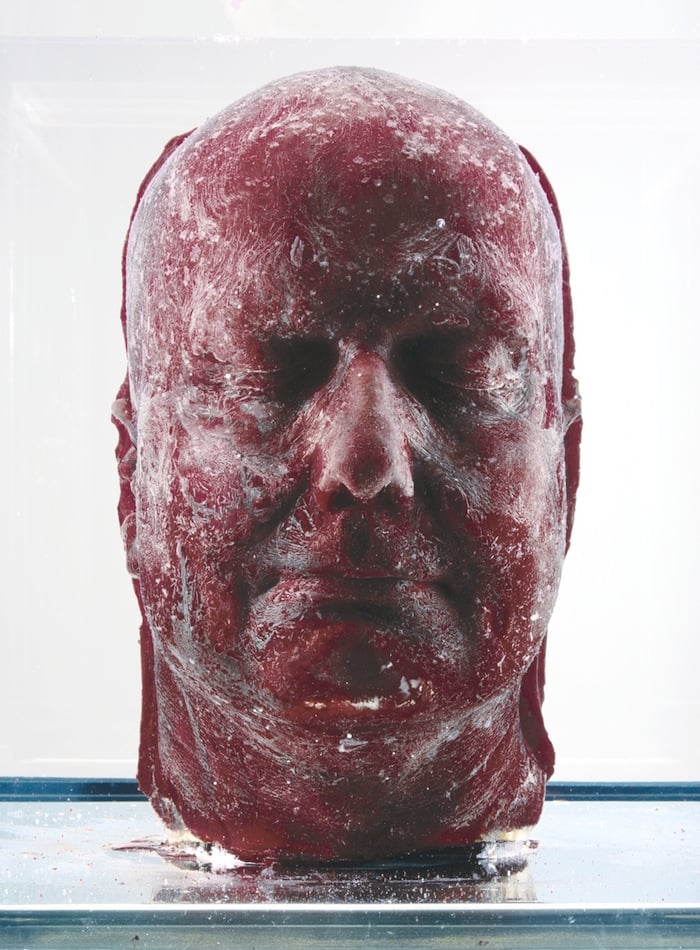
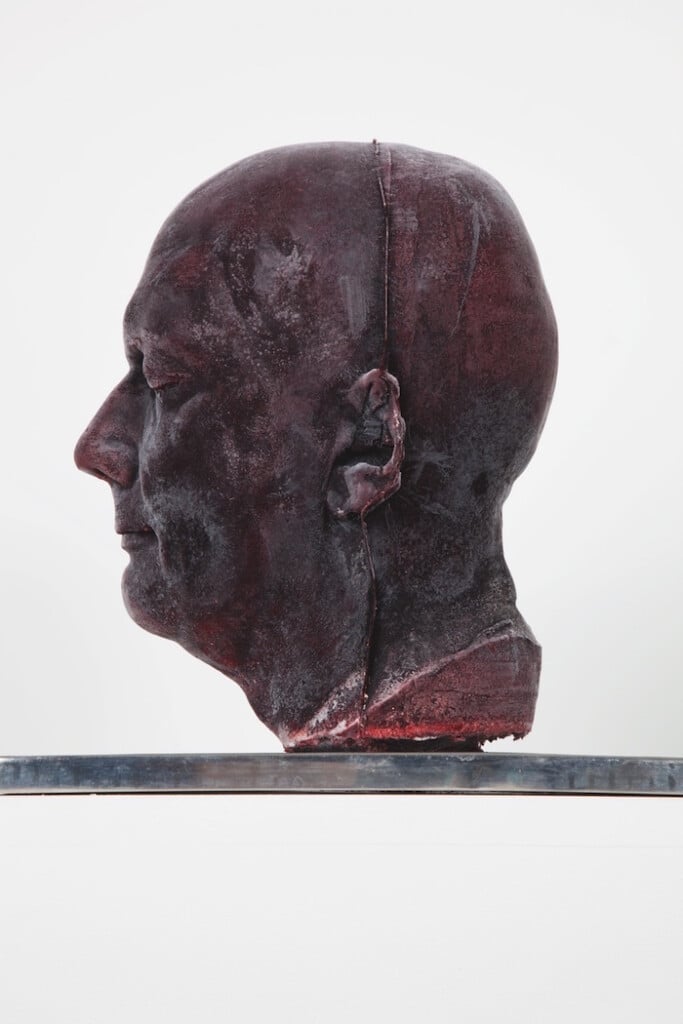
In 1991 it was a morning awakening, and probably a dream left unfinished, that suggested to the well-known London artist Marc Quinn (London, 1950) the design and creation of a “blood head”. As recounted by the critic and art curator Will Self, Quinn himself confessed to him:
At that time I was interested in freezing as a methodology. I felt that while sculpture necessarily existed outside of time, freezing stopped time, making timelessness explicit. At first I couldn’t think of anything interesting to freeze, then one morning I woke up and saw it, finished in my mind: a cast of my own head made with my own frozen blood.
Moving along the questions and unknowns tied to the presence and dissolving of the image and aura of the body, Quinn placed, within the measured, sacred and bare space of a museum display case, all the force and pulsing essence of a living matter that, like an underground river, flows in the silence and everyday unawareness of every possible existence. The work Self, presented at the Saatchi Gallery in 1993, much like the recovered marble head of a proud commander of antiquity, brought to the public’s attention the pulsing force of a living matter ready for preservation and, equally, for total and irreparable dissolution.
Maurizio Cattelan and the ashes of Dust
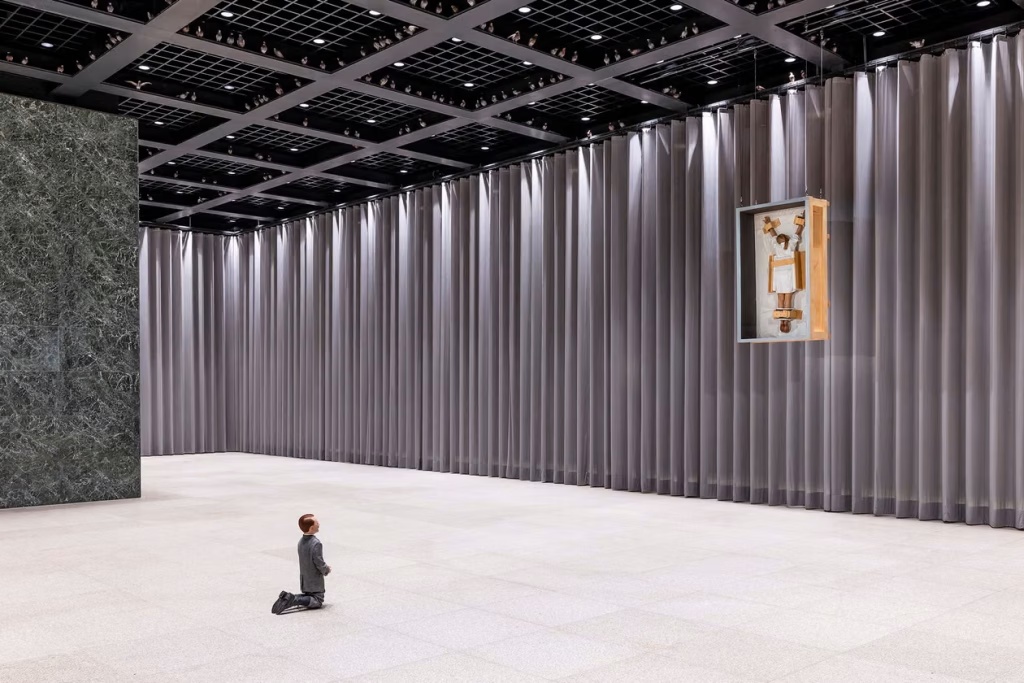
The major Berlin solo show NIGHT by Maurizio Cattelan (Padua, 1960), staged in the vast spaces of the Neue Nationalgalerie, meets the deliberate, minimal contours of a ready-made entrusted to an actual fire extinguisher, quietly displayed in the corner of an imposing dark granite marble pillar. The work Dust (2026), following the categorical instruction and expressed wish of its most legitimate owner (the deceased), holds the ashes of a dear friend of the famous artist, which continues to unsettle and brilliantly stir the discussions of a large community of critics, admirers and skeptics. Pushing beyond the (earthly) border, in this case, it is steel, glass, plastic and rubber that embrace, as if in a seal, and forever conceal the rite of passage of a beloved, cherished presence.
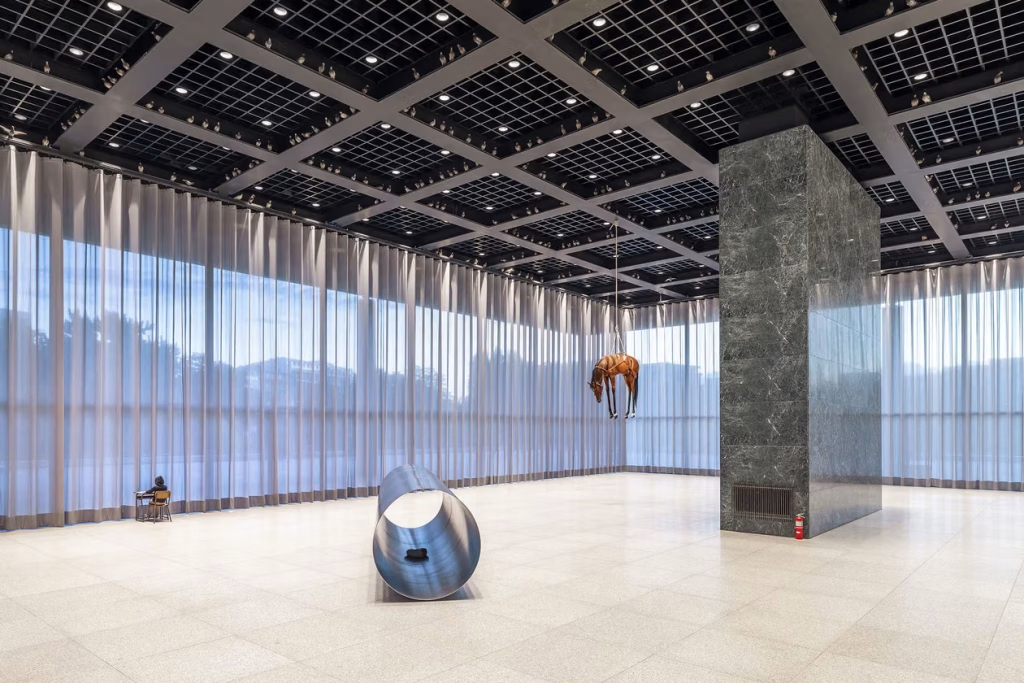
By a strange twist of fate or, even more so, through the intellectual mastery of a seasoned connoisseur of aesthetics and astute rendering, the tool meant for extinguishing fire (the supreme image of creation, passion and primordial life) is now called upon to gather and hold within itself what for years had burned with life and human energy. Returning a light wind of memory, Dust, like dust itself, holds within it the trace of a life and its freest devotion to remembrance and creativity.