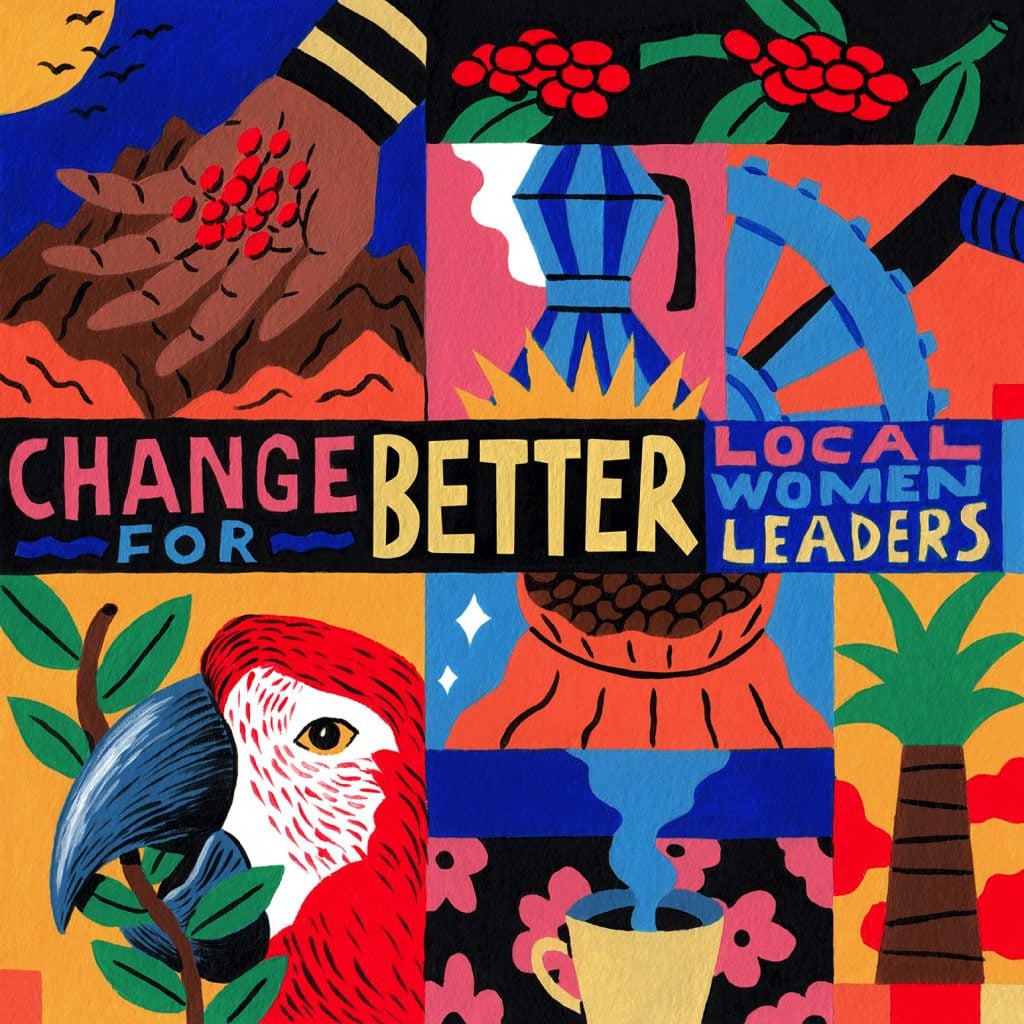
In Guatemala, thanks to the Coffee to be Reborn project, Isabel Gue is one of 140 women who have restarted high-quality coffee production, involving the entire community. In Uganda, thanks to the Ujana Coffee Project, Sheila Ampumuza is the national director of Sawa World and concretely helps young boys and girls to develop business ideas related to local coffee cultivation. In India, thanks to the A Cup of Learning initiative, young Pinki attended a training course to become a professionally certified barista.
These are just some of the stories that Lavazza has decided to tell with its Change for Better project.
From today, International Women’s Day, until the beginning of April, on Lavazza’s Instagram profile the stories of Isabel, Sheila, Pinki and four other women who have managed to change their lives and those of the community in which they live will be told.

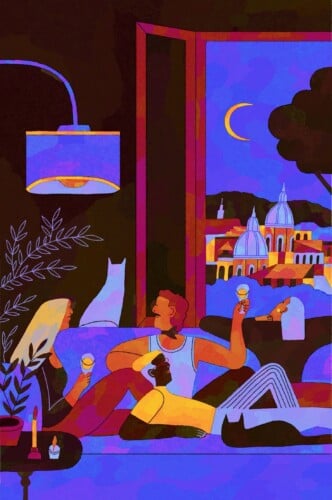
The narration has been commissioned to Saddo, a Romanian painter whose art ranges from illustration, to pieces of art destined for galleries, to beautiful murals. His work also includes portraits that go far beyond the simple representation of faces: through colour, but also the addition of elements and symbols, Saddo’s portraits tell the story of his subjects in their entirety.
This makes him the perfect artist to turn Change for Better into reality.
We were fortunate enough to ask Saddo a few questions and he spoke to us in more depth about this project, but also about his art. Keep reading to make sure you don’t miss the interview and follow Lavazza on Instagram to discover all the Change for Better stories.
What was your first approach to art?
One of the things I remember since when I was a kid, was scavenging my grandparents’ library for basically anything that could be of interest, and since probably I didn’t know how to read back then, picture books, art albums, comics, were the first to pop. And actually a black&white Henri Rousseau album is one of my first memories. As for my first time trying to do “art”, was basically drawing what I’d see in movies and cartoons, and trying to make up stories around them, and working with a friend of mine who was a really good drawer, to make fantasy or sci-fi comic strips.
Looking at your work we can find elements that make us think of different artists and artistic currents. What and who inspires you?
I’m inspired by many things, by young contemporary illustrators and artists, friends of mine, artistic trends, but also by timeless artists like Rousseau, Fernando Botero, Walton Ford, Grayson Perry, and also I feel really close to folk art, Naive art, decorative and textile art from different cultures.

I love Iranian and Indian miniatures, quilts, rugs and tapestries from different countries, the so-called “War Rugs” from Afghanistan come to mind. And I’m also inspired and influenced by graphic design, street culture, hip-hop, fashion brands like Gucci or Versace, etc.
How would you describe your style?
I’d describe it the way you’d describe a hip-hop song, for example, sampling different bits and pieces from super eclectic sources, and coming up with something that sounds or looks new and coherent stylistically. Also very fun, colorful, crowded, it draws you in visually, and then you can try to decipher some of the symbols and hints of stories, and hopefully discover something new, or read it in a different key.
How was working with Lavazza and how did this collaboration start? Is this the first time you have collaborated with them?

It’s the first time I collaborate with Lavazza, and it was pretty much a perfect match from the start, the team knew very clear what they were aiming for, they gave me some references from my own work – a series of paintings on canvas, of female rappers, that I painted for my “FANBOY” show.
And I loved the subject of the campaign, so I had a lot of fun working on the project.
For Lavazza’s Change for Better project, you created 7 portraits of 7 women who have changed their lives and the lives of their community. However, this is not the first time you have made such works, in fact, you started your series of illustrations of women in 2018. What brought you to create these works?
Actually, I started the series of Women illustrations from a commissioned project I made for a company producing pocket squares for men. And I loved the format and medium, which made me think of printed or embroidered bandanas and other forms of textile art, but I also struggled to try to come up with a subject to connect the three illustrations I was commissioned for. So I wanted to give it a twist and come up with three images of women who are doing stuff that in society, or in some cultures, are perceived as exclusively made by males. And I loved exploring this subject so I continued the series even after this project was done.

Isabel Gue Sheila Ampumuza


Your portraits are composed of the representation of the person you decide to paint, but also the frame, which is as important as the subject. What do we find in these frames and why did you feel the need to add them?
I’ve seen this kind of approach in contemporary illustration, graphic design, murals, but also in comics, in Medieval art, in Orthodox icons, in tapestries and rugs. Apart from the fact that I love how the central subject is visually enriched by this frame around it, which works in a very decorative way, it’s also some kind of shortcut or a way to expand the story told by the main figure, by adding different scenes, symbols, small characters, or just decorative elements. So for the pieces created for Lavazza, for each portrait I tried to give a hint of their personal story, the country and culture they come from, and some of the local art and folklore.

The Lavazza project was created on the occasion of International Women’s Day. In your opinion, what is the perception of women in the art world today? Are there aspects that still need to be improved?
I don’t really know that much about the art world in general, I know there’s lots of women artists and illustrators whose work and vision I love and am influenced by, like Nina Chanel Abney, Lakwena, Cristina Daura, Lea Rasovszky, Megan Dominescu, Ruohan Wang, Misaki Kawai, Anni Albers, Laura Rokas, Egle Zvirblyte, Hattie Stewart, Camille Walala, Zebu, and so many others. But yea, it seems still that the art world is mostly male-dominated, but I think that’s quickly changing.