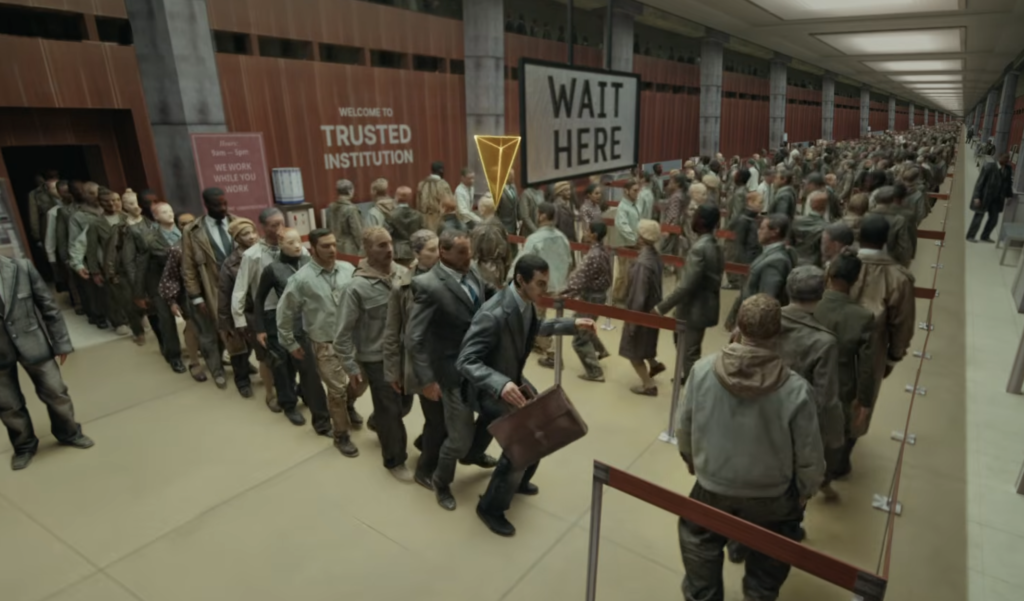
For its latest ad campaign, Coinbase, the platform for buying, selling, and managing cryptocurrencies, takes a counterintuitive approach. Instead of using digital tools to simulate reality, it uses reality to simulate the digital. In the new commercial directed by Oscar Hudson for Isle of Any, video game aesthetics aren’t computer-generated but physically built, piece by piece. Let’s take a closer look.
At first glance, everything feels familiar: a low-res world, rigid movements, characters trapped in repetitive animations. It’s the language of video games, the one of NPCs that exist only to follow a script. But this world isn’t rendered — it’s real. Surfaces are printed, costumes translate digital textures into fabric, and faces become flat, slightly uncanny masks. Even bodies move as if animated: jerks, loops, micro-imperfections that mimic programmed behavior.
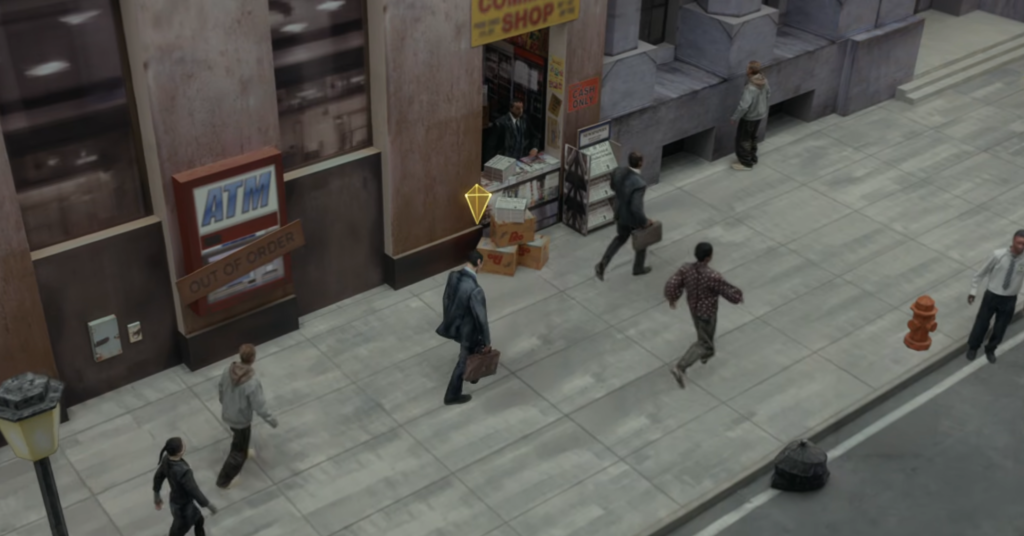
At the center of the story is an NPC who stops behaving like one. The shift is minimal at first, almost invisible, but it gradually disrupts the rhythm of the surrounding world. The loop breaks, actions fall out of sync, and what once felt like a stable simulation begins to collapse. It’s within this shift that the film finds its direction: not so much in escape, but in gaining control.
The practical construction — from printed sets to costumes, all the way to choreographed movement — becomes an integral part of the message. At a time when AI promises to make everything faster and smoother, Coinbase chooses a far more complex path. And it’s precisely there that it finds a more believable aesthetic: imperfect, and therefore more human.
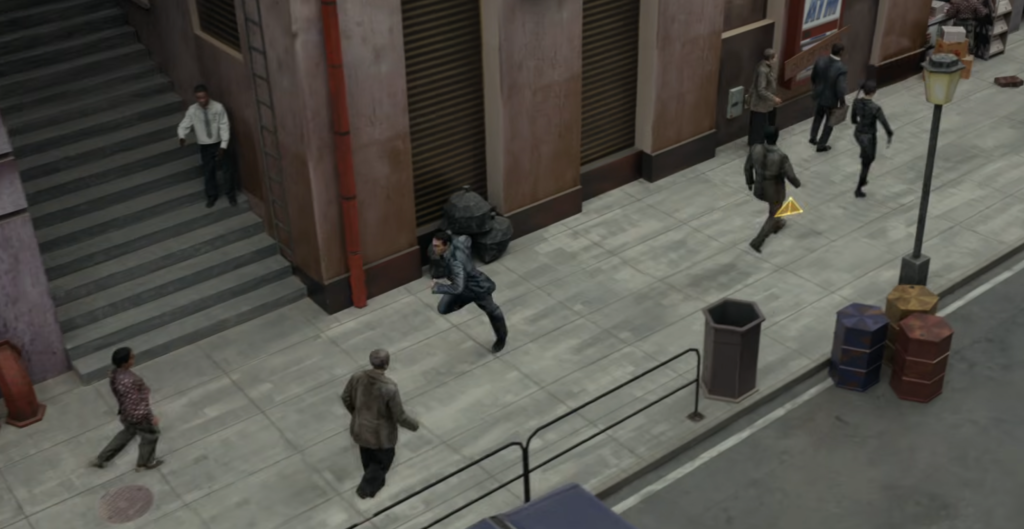
The ad works because it doesn’t just reference the world of video games — it translates it, shifts its context, and makes it tangible. In doing so, it suggests something simple: if reality can resemble a programmed system, then maybe it’s possible to step outside of it. Not through a heroic gesture, but through a small deviation, an error, a glitch. Just enough to stop being an NPC.