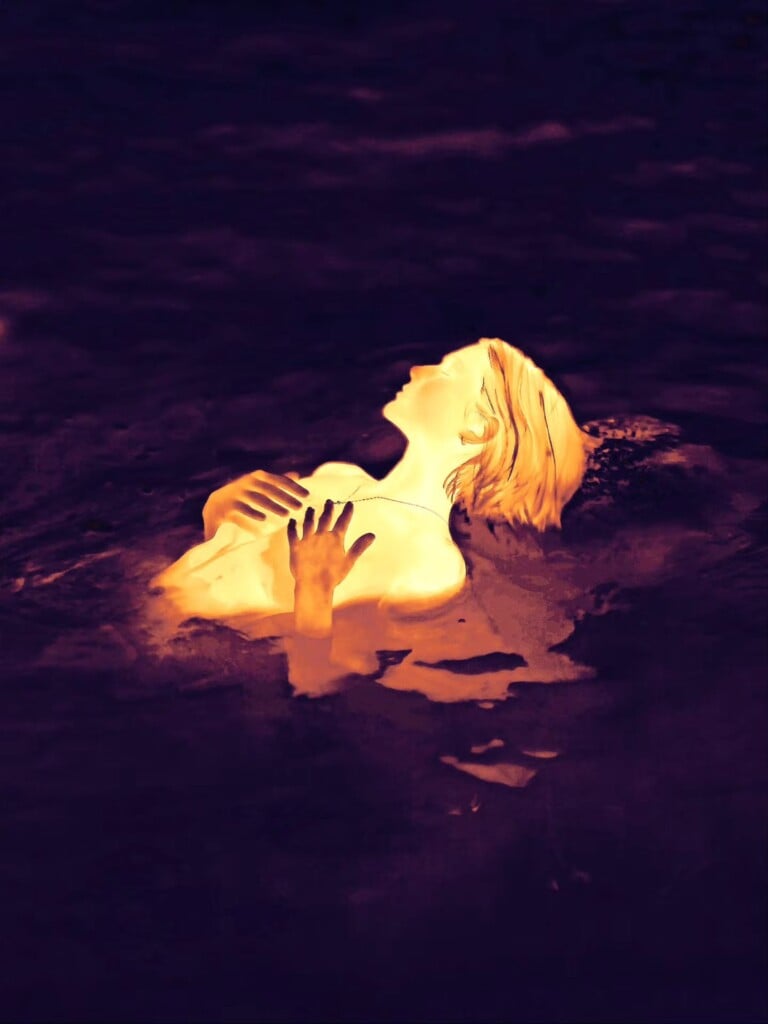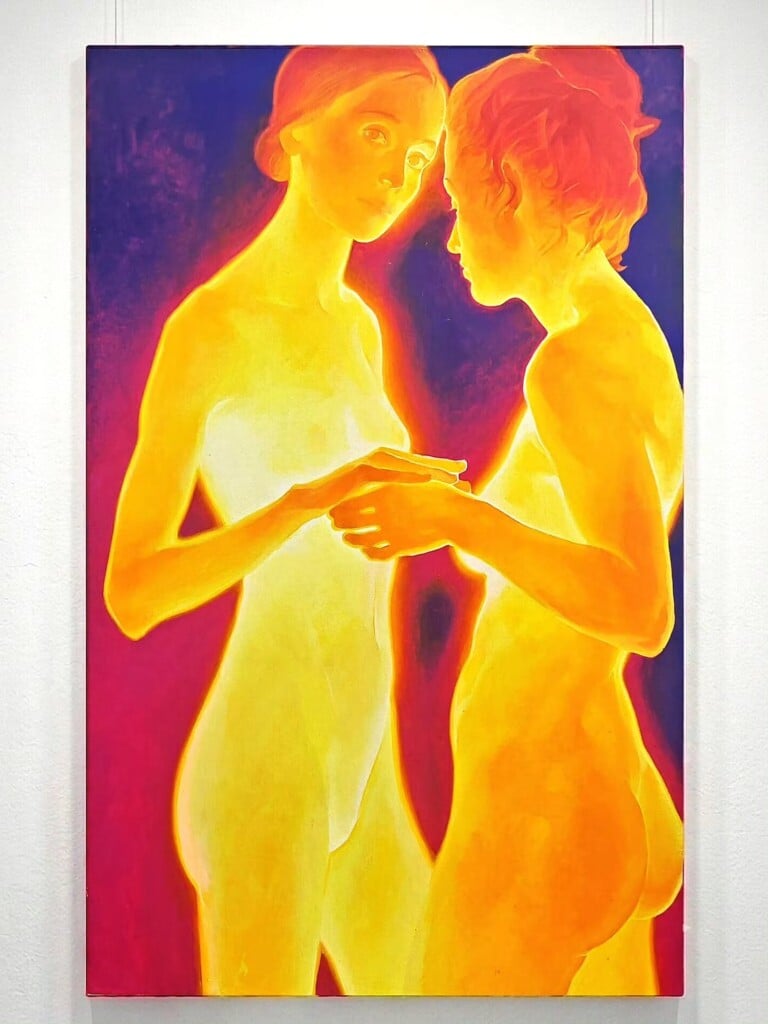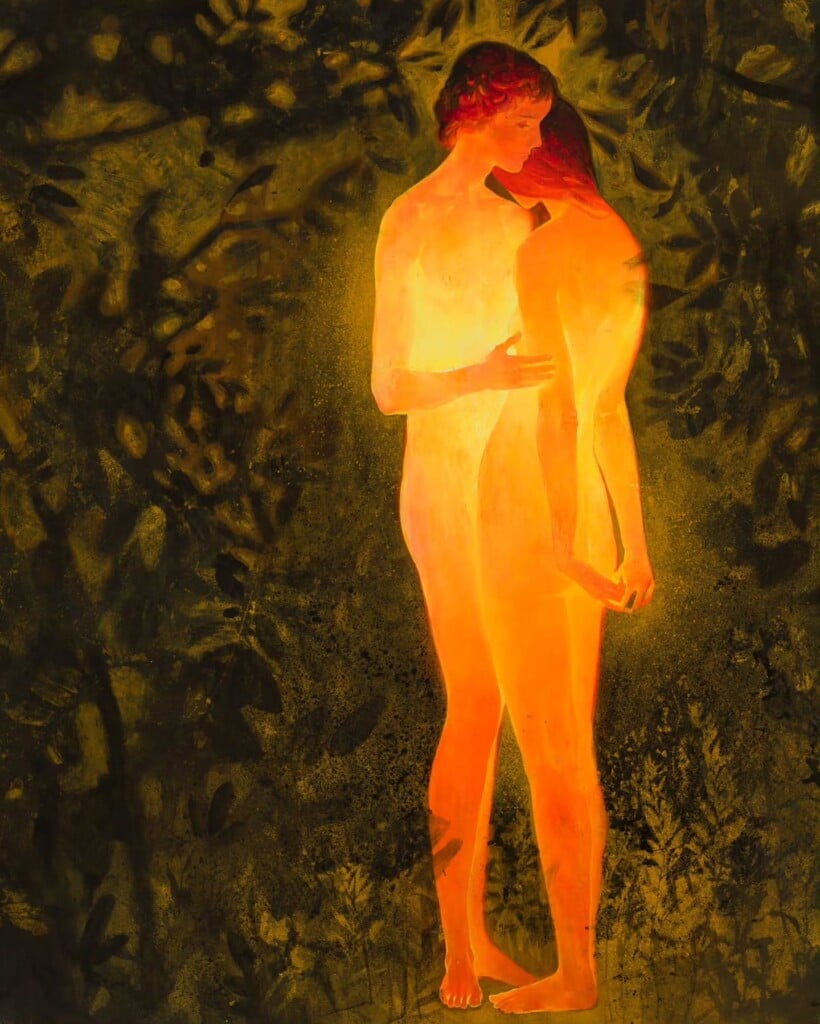
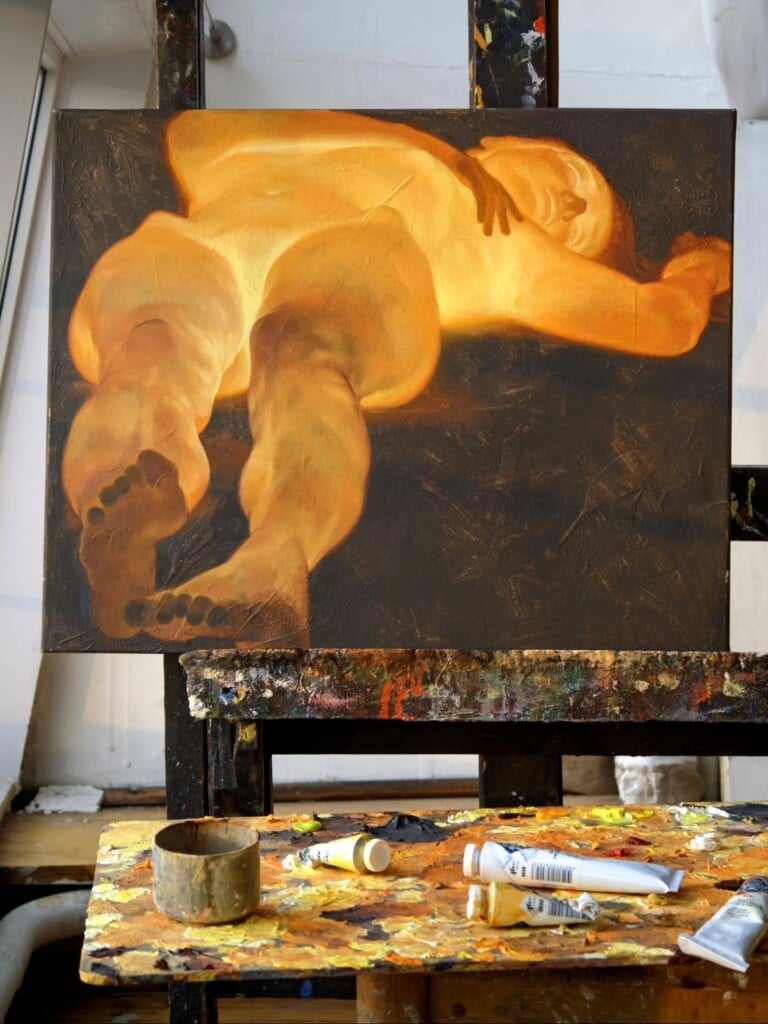
In the paintings of Ivan Pokidyshev, human figures appear as incandescent presences: they are not lit from outside, but seem to emit their own light. It’s this inversion that makes his painting immediately recognisable.
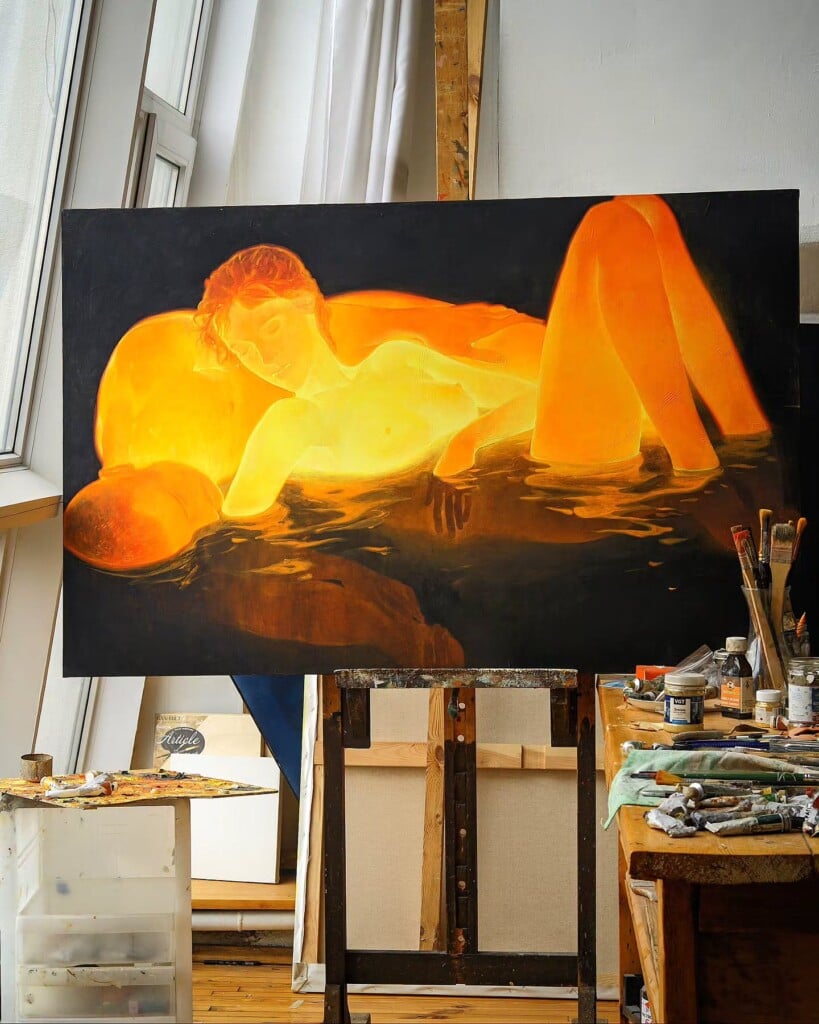
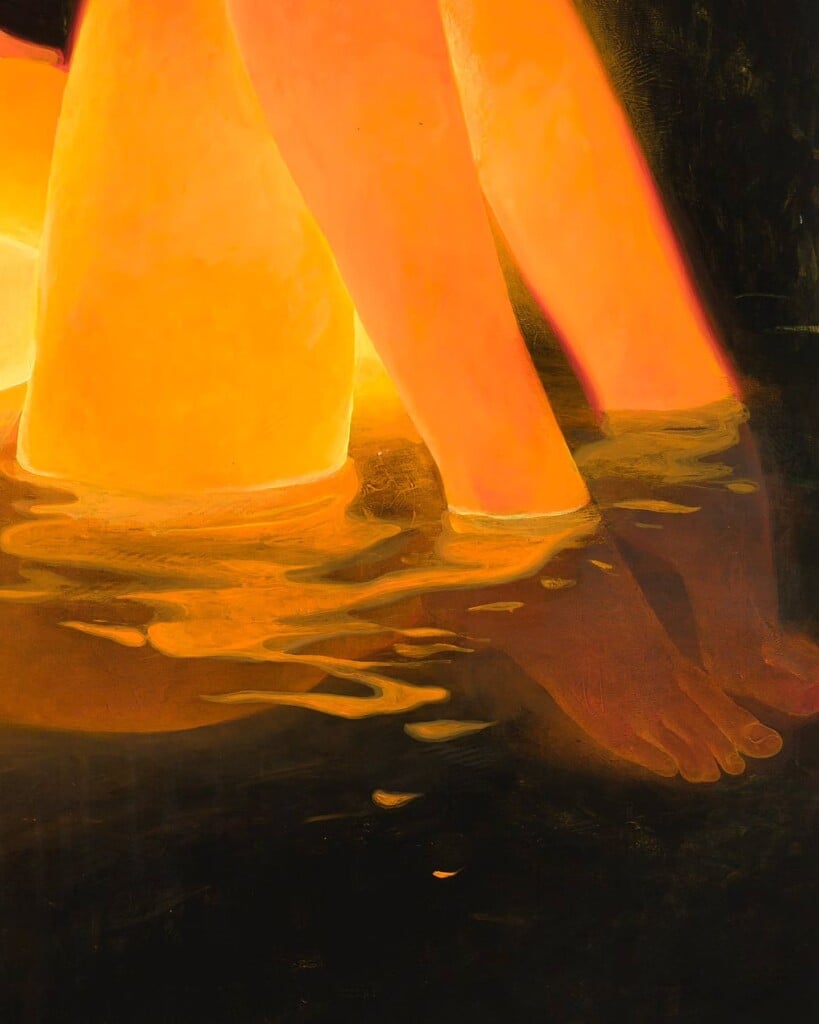
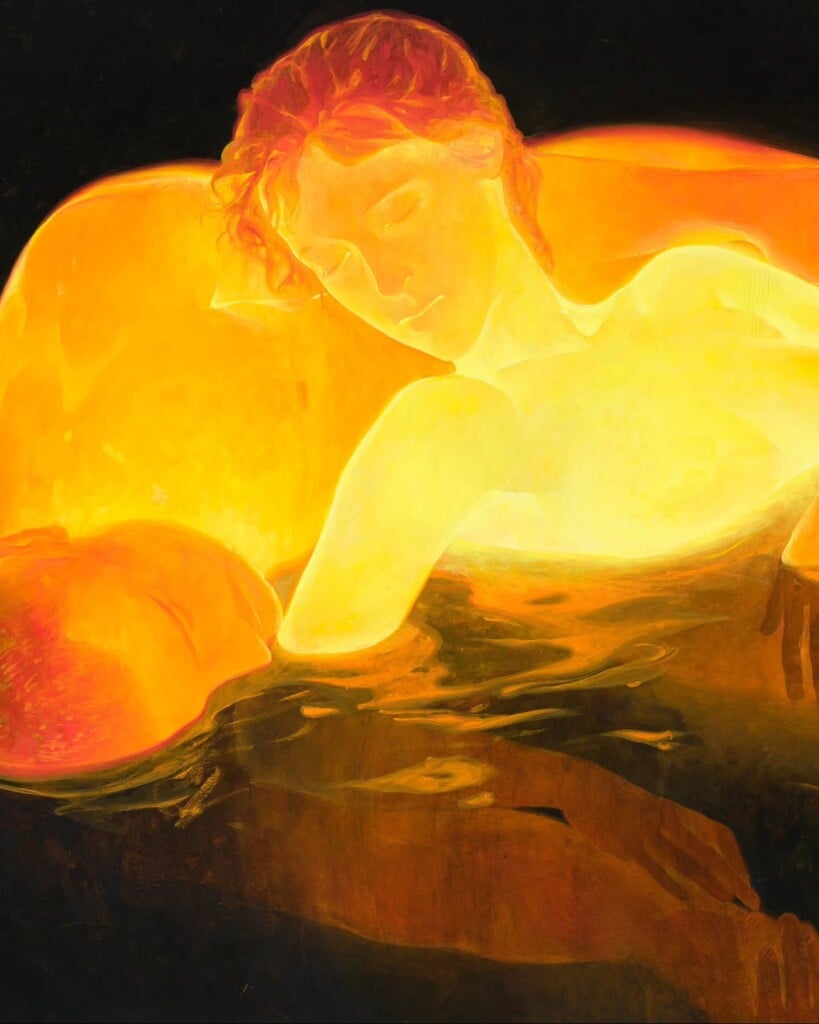
Born in Saint Petersburg in 1993 and a graduate of the Repin Academy of Fine Arts in 2017, Ivan Pokidyshev has built his research around two fundamental elements: light and heat. Since 2018, his Light and Warmth Project has explored exactly the possibility of turning phenomena that are normally invisible into painted images.
At the core of his method is infrared thermography, a technology that records the thermal radiation emitted by objects. In a thermal image, higher temperatures are displayed through brighter, more intense tones. Pokidyshev starts from this logic to build a personal pictorial language: heat becomes colour, temperature becomes light, and what we normally perceive without being able to see it takes on a concrete form on the canvas.
A body immersed in darkness, skin that no longer has the colour of skin, an orange light that seems to come from within. The result, however, isn’t simply the reproduction of a thermal image, because the artist translates that principle into oil painting and, in some recent works, acrylic, keeping a recognisable figurative structure while completely altering its colour perception. The Erarta Museum, presenting his solo show Wanderers in the Dark, describes heat precisely as a manifestation of vital energy that can pass from one figure to another or dissolve into the void.
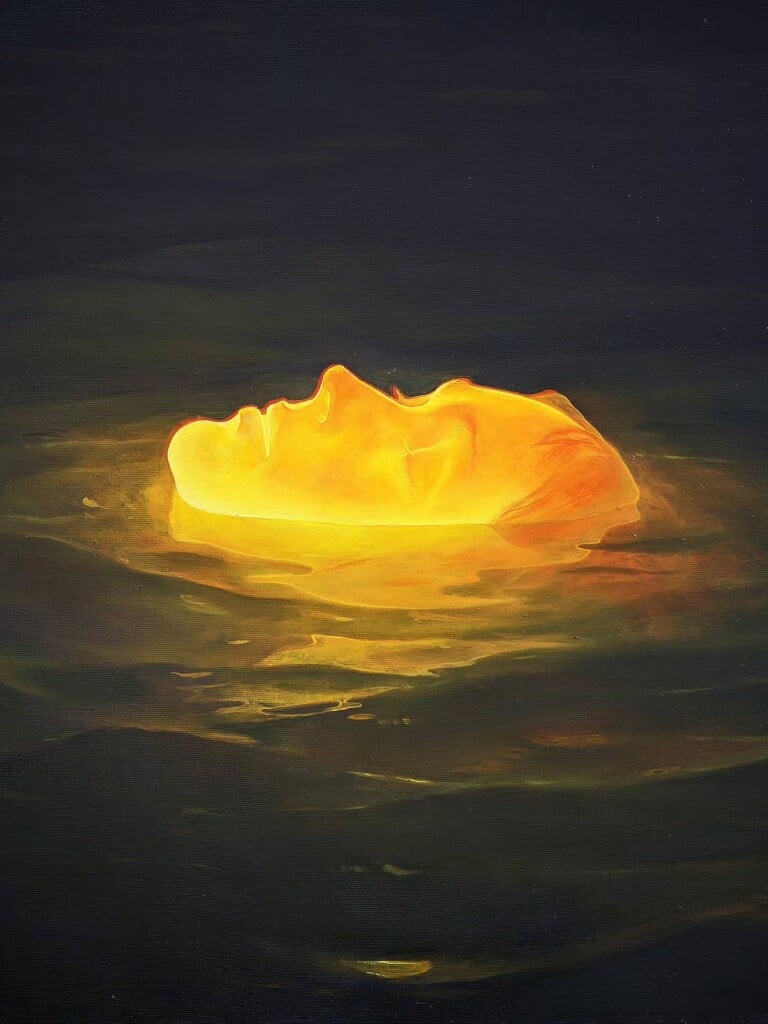
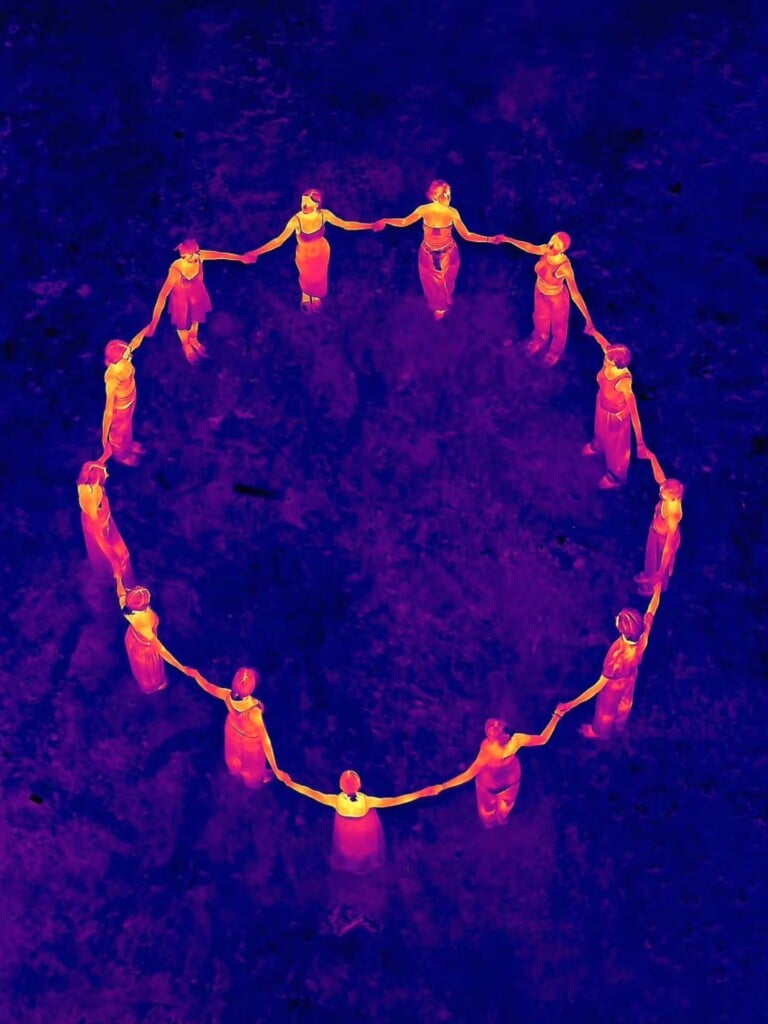
It’s colour above all that builds this sensation, with deep blues and blacks occupying the space around the figures, while reds, oranges and yellows concentrate on the bodies, turning them into incandescent surfaces. The contrast doesn’t just make the image more spectacular, but creates a precise visual hierarchy, in which the human presence emerges from the dark as a source of energy.
In the image, then, the body keeps its own anatomy but loses its usual visual temperature. Skin is no longer pink, beige or brown: it becomes a colour scale tied to heat, and this shift produces a strange familiarity. We instantly recognise a human figure, but we’re forced to look at it through a different perceptual system.
It’s precisely this distance between what the eye sees and what it normally cannot see that makes Pokidyshev’s research so interesting. His painting doesn’t use thermography merely as an aesthetic effect, but as a tool for shifting attention from the surface toward something harder to represent: energy, closeness, solitude, connection.
Darkness, too, takes on a fundamental role in this way. It isn’t simply a black backdrop meant to make the warm colours stand out, but a space that allows light to gain meaning. The body emerges from the void and seems to move through it, as if every figure carried with it a small reserve of energy.
This relationship between light and darkness also runs through the solo show Wanderers in the Dark, presented at the Erarta Museum between November 2025 and February 2026. The exhibition connected the luminous vitality of the subjects with a more existential theme: movement through darkness and uncertainty.
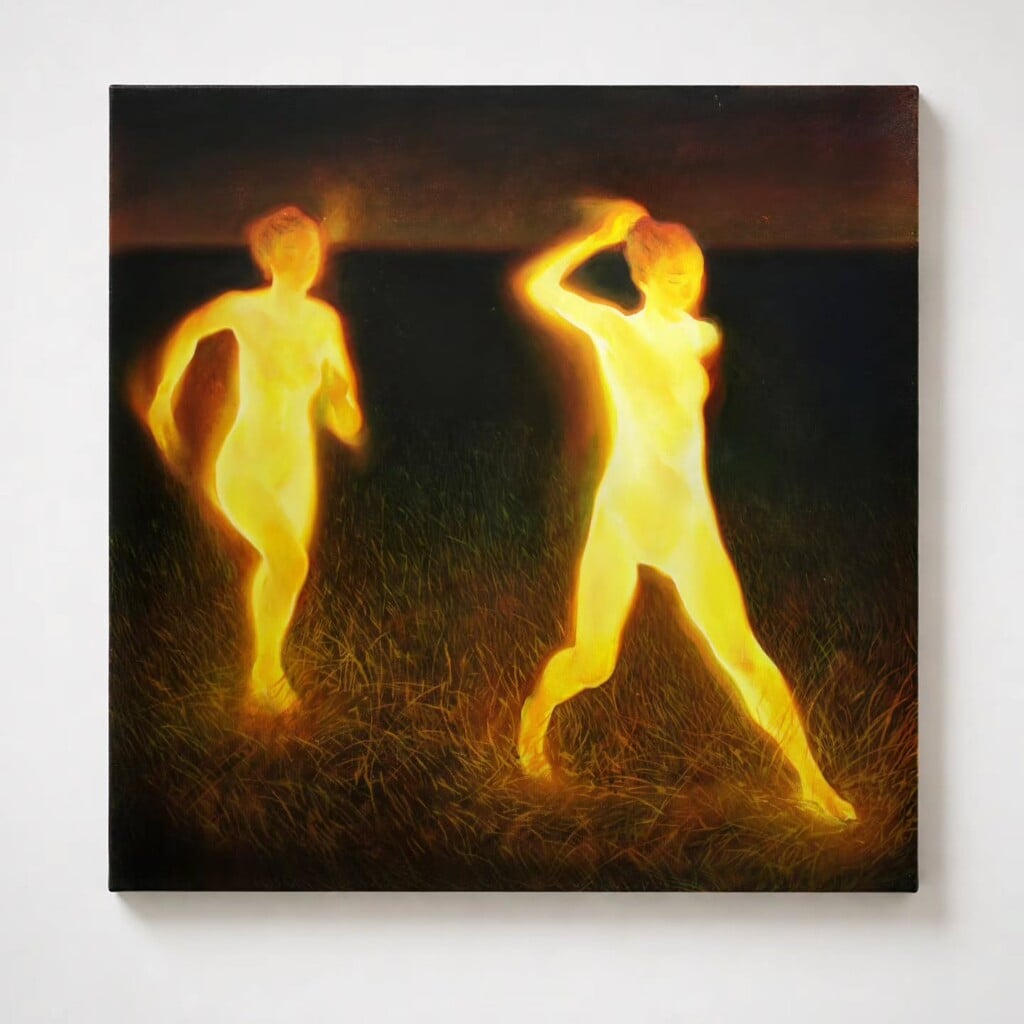
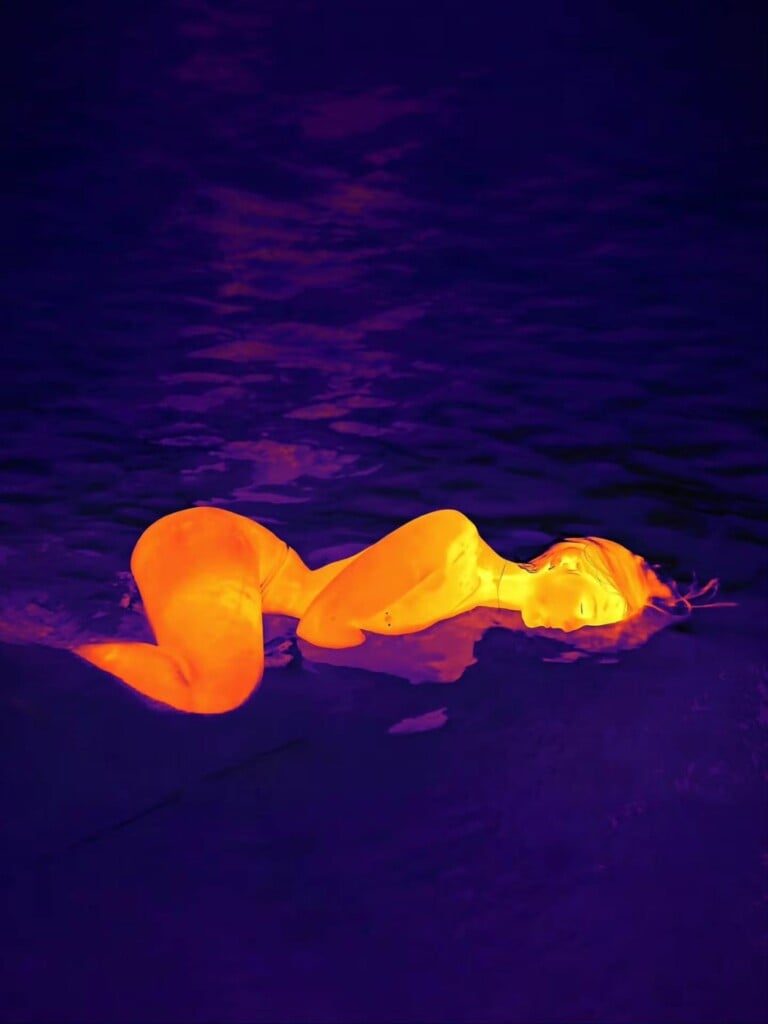
Today Ivan Pokidyshev’s work continues to question the relationship between reality and perception. In the group show We Paint What You Might See, on view at Tang Contemporary Art in Hong Kong until 10 October 2026, his research is presented precisely for the way it uses painting to question what we consider visible and real. In Pokidyshev’s case, what is brought to the surface is literally the invisible, that is, the heat and energy that pass through a body.
His figures thus seem to belong to a world we know but normally cannot see, and painting becomes a kind of thermal map of existence, where colour doesn’t simply describe a body, but reveals its presence. In Pokidyshev’s hands, heat becomes a way of speaking about what keeps us alive and what connects us to others. A light that doesn’t come from outside, but seems to be born directly from people themselves.