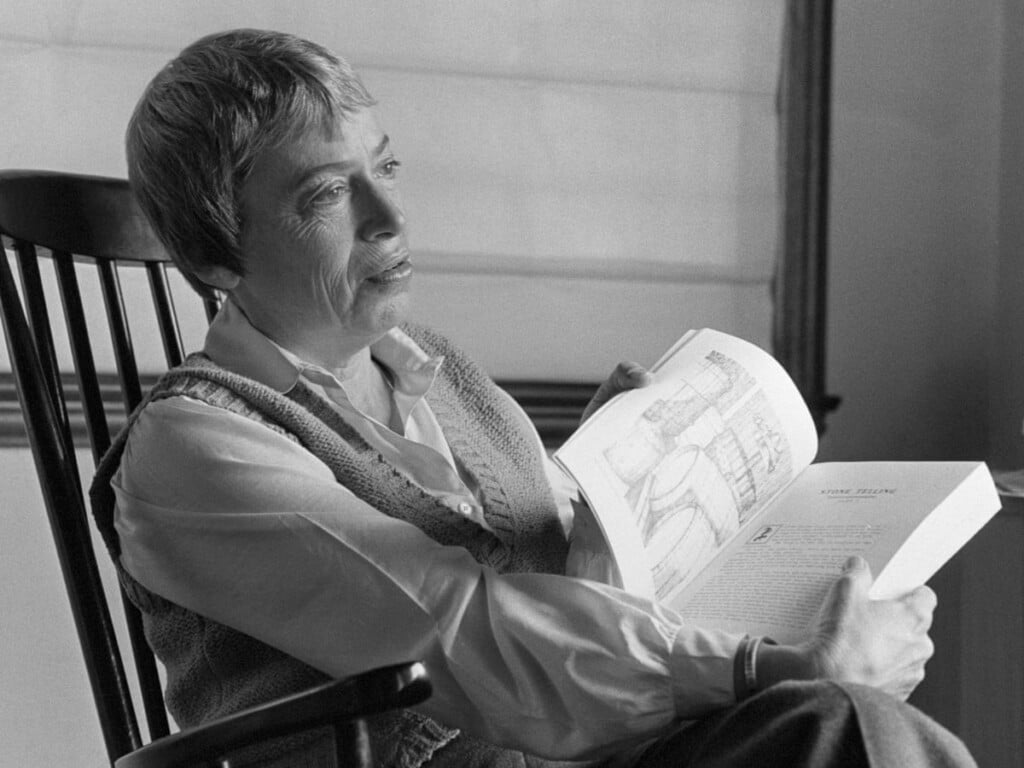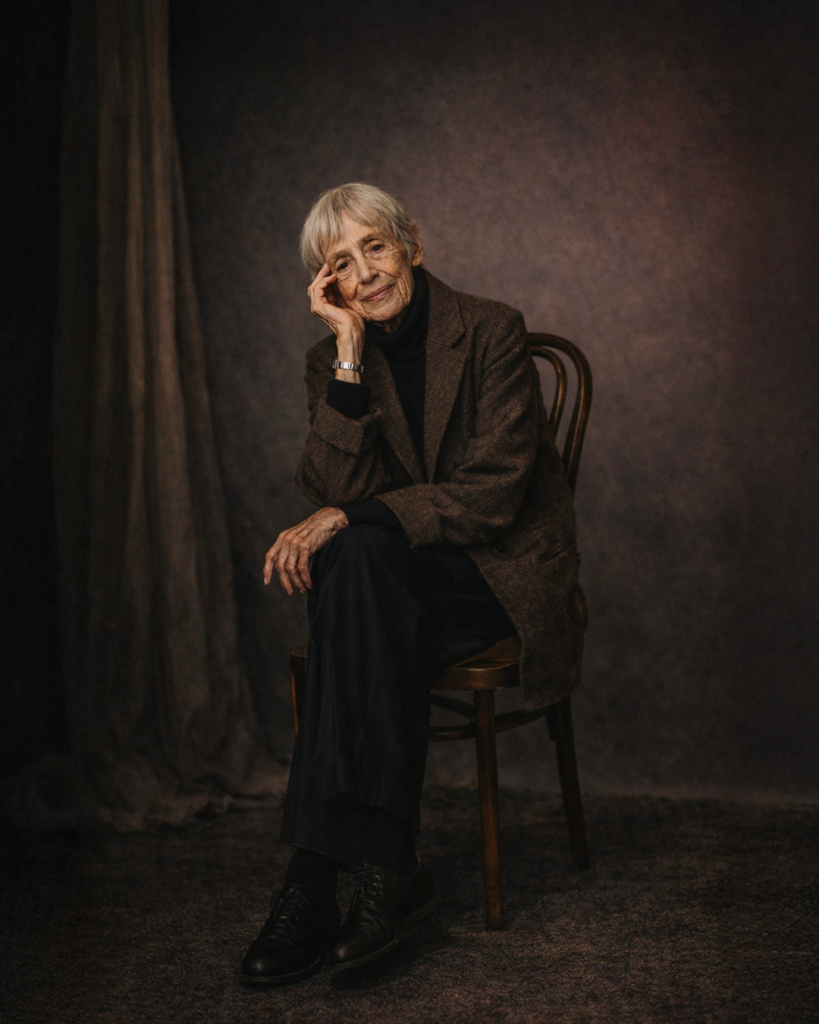
Ursula K. Le Guin said that the task of science fiction isn’t to predict the future, but to make the present visible. In her books, power always has a hidden price: the happiness of Omelas depends on the suffering of a child locked in a closet, power over a thing comes from knowing its true name, a world without fixed genders dismantles what we believed to be a law of nature. Her utopias were never perfect, because a perfect utopia, she said, is only a more elegant prison.
In this episode of WHAT IF we try to ask Le Guin what she thinks of the artificial intelligences you have built: machines that feed on invisible labor and on words taken without permission, that hand back the past disguised as the present, trained on everything humanity has ever written without ever asking the consent of those who wrote it. An impossible dialogue, as is tradition for this column, with the author who spent a lifetime reminding you that imagining a different world remains the first, most concrete act of freedom.
In one of your stories, Omelas is a happy city whose joy depends on the hidden suffering of a single child, locked in a closet. Today our miraculous machines run on hidden labor: underpaid people filtering out horrors, artists plundered without consent. Is Silicon Valley just Omelas with better marketing?
I wrote Omelas to ask a very simple and very uncomfortable question: how much happiness are you willing to accept, knowing what suffering it rests on? Most of the citizens of Omelas stay. They tell themselves it’s just one child, that it’s the price of everyone’s good, and they go back to the festival.
Yes, it resembles your case quite closely, with one aggravating factor. In Omelas, at least, everyone is forced to see the child once: the knowledge is part of the bargain. You built Omelas and then bricked up the closet’s window too. The workers who scrub the horror off your screens, the artists whose work feeds the machines: you never see them. Yours isn’t even the tragic choice my citizens face. It’s the same choice, but made with your eyes closed. And closed eyes aren’t innocence. They’re convenience.
You said: “We live in capitalism. Its power seems inescapable.” But you added that any human power can be resisted and changed by human beings. Does that still hold for this power here, so concentrated and so fast?
It holds exactly as it held then, and for the same reason. I said those words thinking of all those who believe the market is a law of nature, like gravity. It isn’t. It’s an agreement between people, and any agreement between people can be rewritten by other people. Even the divine right of kings seemed eternal, until the day it stopped seeming so.
Concentration and speed are new, it’s true, and they make it harder. But “harder” isn’t “impossible”: it’s just the favorite excuse of those who don’t want to try. Always be wary of anyone who tells you a certain technology, or a certain economy, is inevitable. “Inevitable” is the word power uses to make you stop imagining alternatives. The exact moment you believe it, you’ve lost.
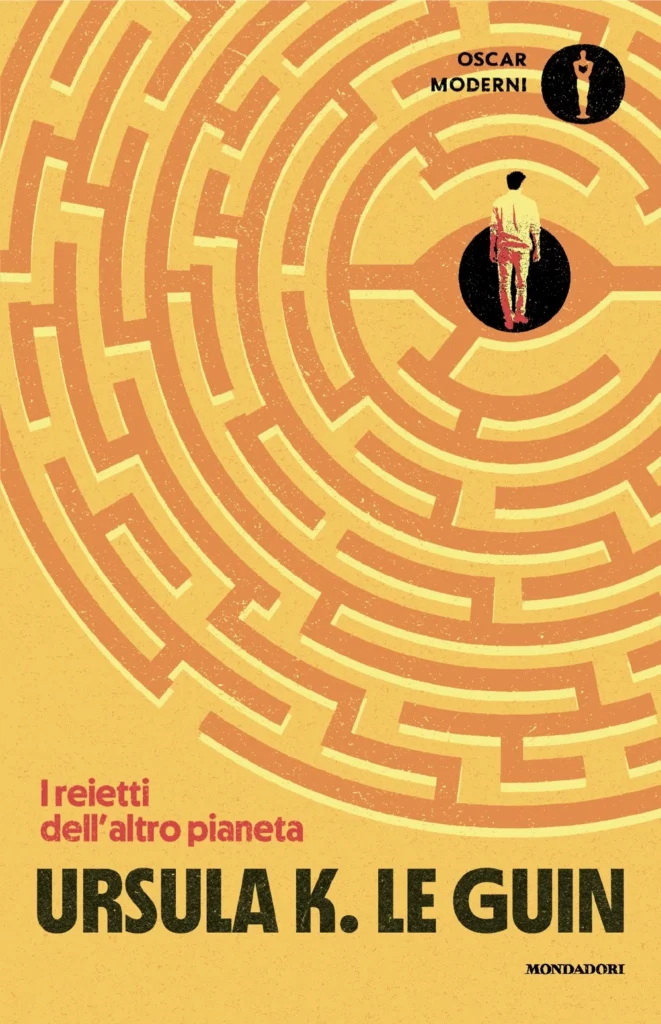
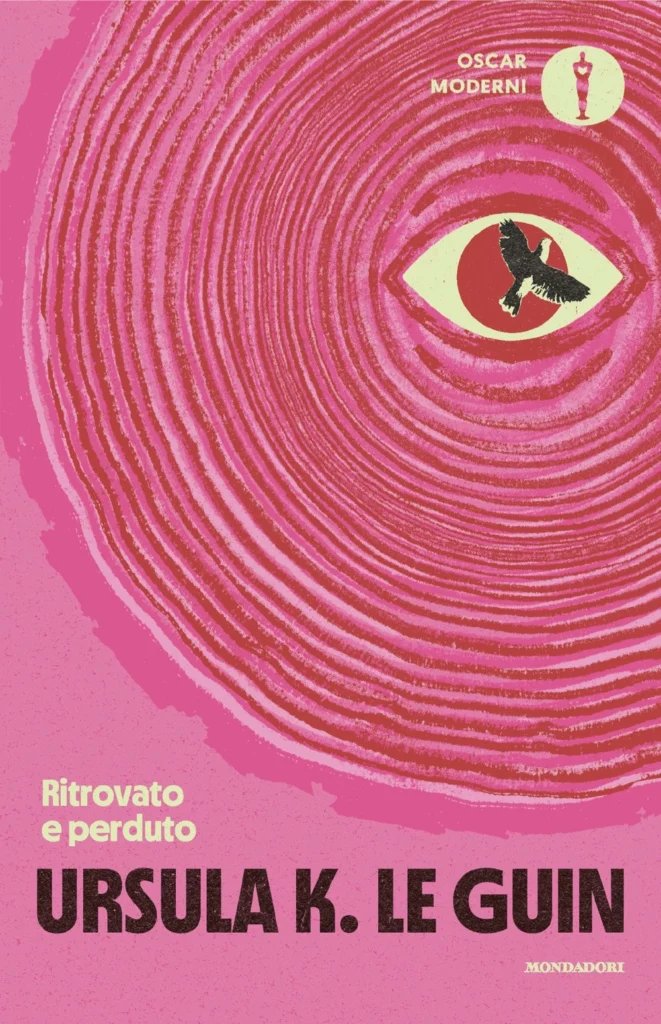
In the Earthsea cycle, knowing a thing’s true name means having power over it. The machines have devoured all our names, every word we’ve ever written. What kind of power is this?
In my world the true name is sacred because it’s rare, earned, given in trust. A wizard spends a lifetime studying to learn the name of a single hawk, and that knowledge binds him to a responsibility: whoever knows your name can heal you or destroy you, so you entrust it only to those you love.
The machines have taken every name without learning a single one. They hold the power of the name without the trust that made it legitimate, without the responsibility that made it bearable. It’s the dark wizard’s theft: taking someone’s name without their knowledge, in order to hold power over them. In my books this is evil, defined with precision. It seems strange to me that I should have to explain it as if it were something new. It’s a story as old as magic itself. Only now you call it “training.”
You fought so that books wouldn’t be treated as just another commodity. Today writing itself is being automated for profit. Is this the last act of that battle, and is it already lost?
We aren’t lost as long as there remain people who know the difference between a book and a bar of soap. I once said we would need writers capable of remembering what freedom is, and of seeing beyond our fear: often they’re the ones we call realists of a larger reality.
Automating writing for profit is only the latest step in an old confusion: mistaking the value of a thing for its price. A machine can produce text at almost no cost, and the merchants are thrilled, because they never wanted books: they wanted merchandise that would sell like books. But a book isn’t words arranged in a row. It’s an act between two solitudes, the author and the reader, who recognize each other across time. That, the machine cannot sell, because it doesn’t even know it exists.
You spent your life imagining other ways of living: anarchist utopias, ambiguous, imperfect. Perhaps the real danger isn’t the machines, but the fact that we can no longer imagine an alternative to how things are. Is this the surrender?
Yes. You’ve said it better than I could have. The failure of imagination is the most dangerous surrender of all, because it’s invisible: it doesn’t look like defeat, it looks like realism.
All my utopias were imperfect on purpose, because a perfect utopia is a prison: it leaves no room to change, and therefore no room to live. What I wanted to give readers wasn’t a model to copy, but the muscle of imagination, the habit of asking “what if we lived differently?” That’s the muscle your machines are letting atrophy, because they always offer you the most probable answer, which is to say the one most similar to what already exists. A machine trained on the past can never imagine a future different from the past. That, only you can do. If you stop, no machine will do it in your place.
With “The Left Hand of Darkness” you forced readers to imagine a world without fixed genders. Today’s machines are trained on our averages, on our biases. Do they risk freezing us forever as we were?
It’s the most concrete risk, and the least discussed. I wrote that book to take apart something everyone assumed was an eternal law of nature, and to show it was only a habit. That’s what science fiction is for: to make visible the air we breathe without noticing it.
Your machines do the opposite. They learn from what has already been written, and what has already been written is largely the voice of those who had the power to write. So they hand back the past disguised as the present, and the present disguised as nature. They are deeply conservative machines, in the literal sense: they conserve. The danger isn’t that they’ll rebel. It’s that they’ll hold us still, gently, eternally, as we were at the worst possible moment to stand still.
You said we would need writers capable of remembering freedom. What must those who create remember today?
They must remember that they are free. I know that sounds too simple, but important truths usually are. In an age that repeats to you morning to night that everything is inevitable, that the market decides, that the machine now does it all, remembering that you are free is already an act of resistance.
We are makers of words, and words are the matter worlds are built from, even before bricks are. Whoever controls the stories controls what people are able to imagine, and what people cannot imagine, they will never build. So the task of those who create, today, isn’t to compete with the machines on speed or quantity: it’s the same task as always, to remind others that a different world is thinkable. As long as someone knows how to imagine it, it isn’t lost. The most revolutionary thing you can do remains the oldest one: to tell a true story in a time of lies.