Article by Floriana Savino
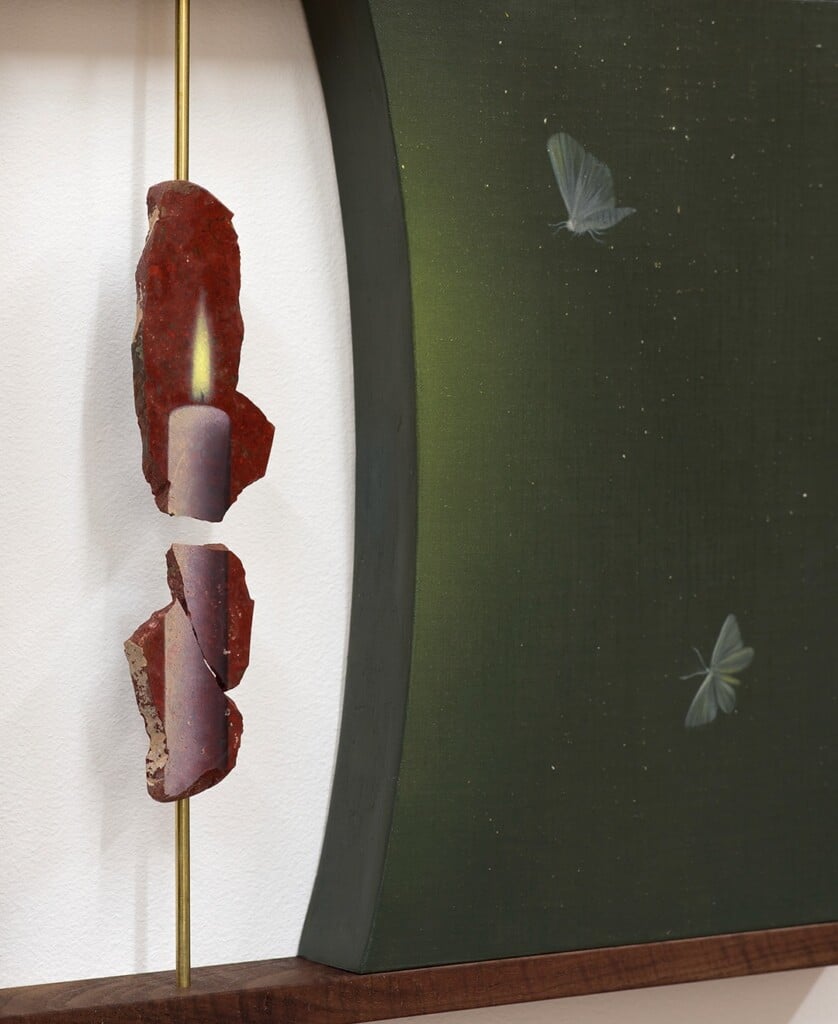
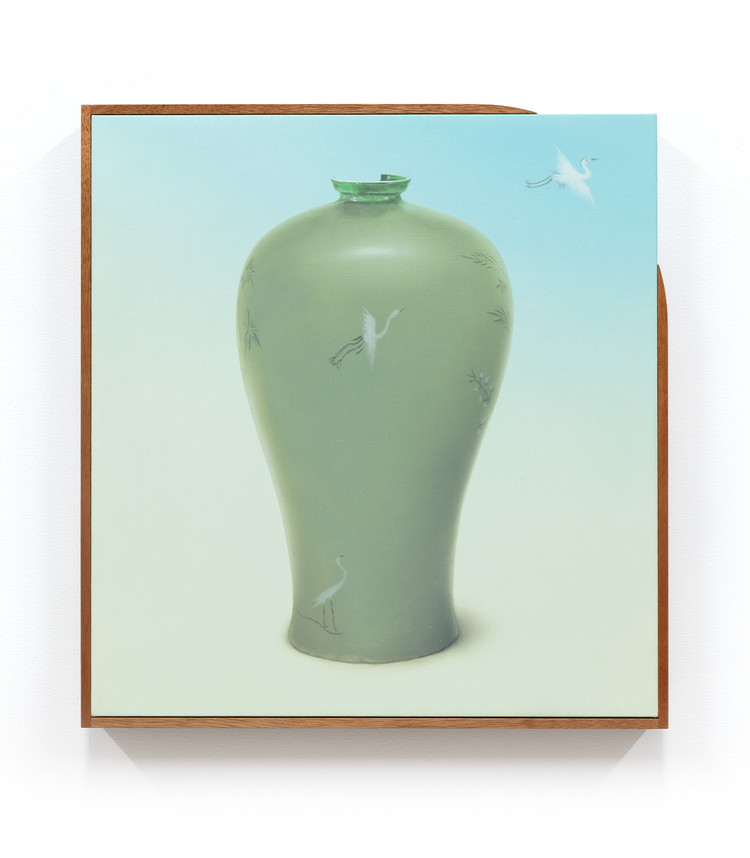
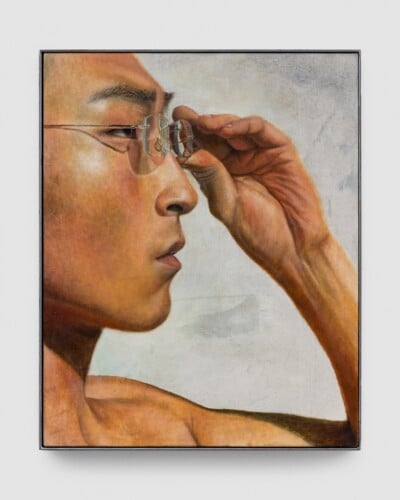
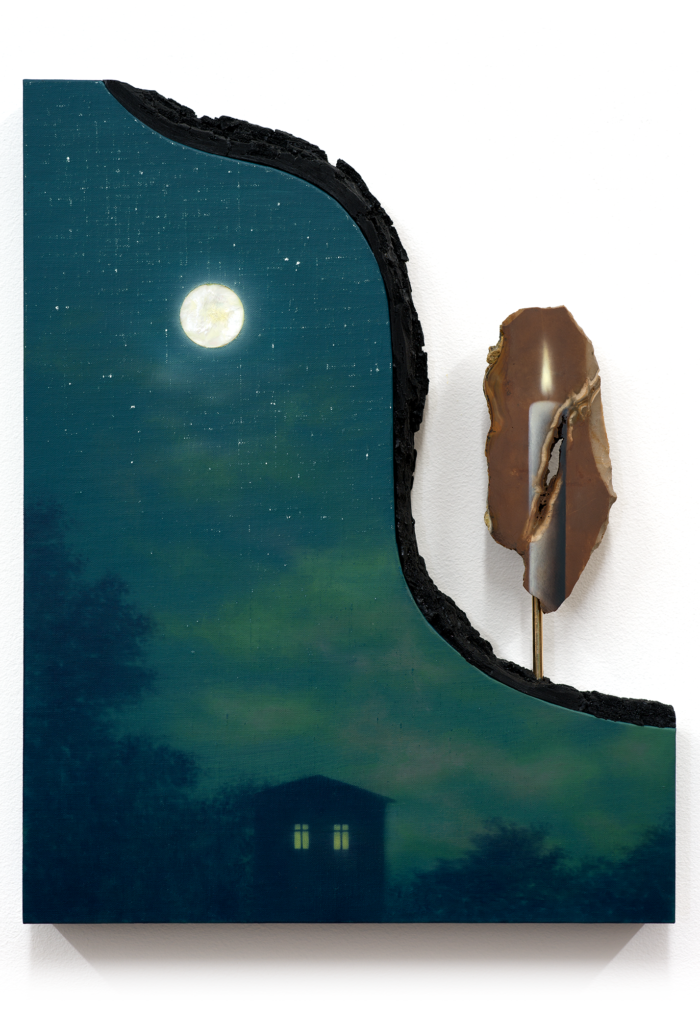
Along a horizon inhabited by night and steeped in stars, Document gallery in Chicago has opened its doors to the US solo exhibition of Dabin Ahn (Seoul, 1988). Reflecting on the idea of the third dimension and accompanying the pictorial space with the essence of the most vivifying illusion, Dabin’s canvas is populated by brushstrokes and plays of light, drawing magic from the possibility of living a dream with open eyes.
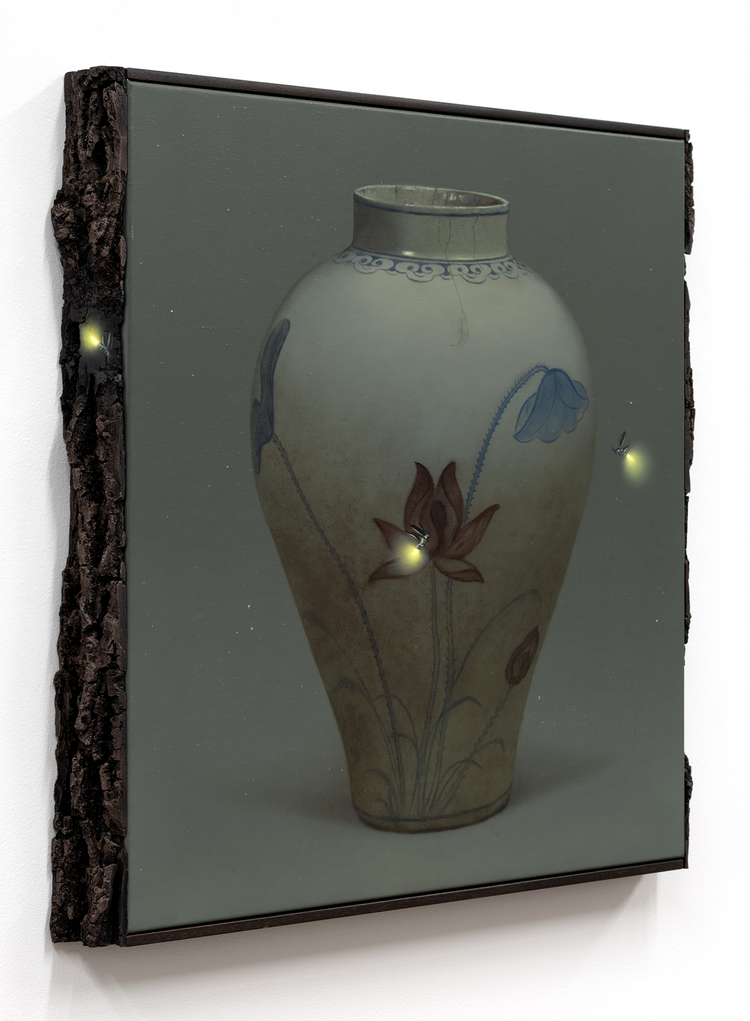
Fireflies, like candles, are the fixed point of a journey that ferries into art all the beauty of living life with a brush in hand. Paintings such as Repose (2025) trace the immortal snapshot of a time and a memory inhabited by the symbolic depth of the object. Pursuing the most sophisticated minimalism, the powerful illusion of a breath of fresh air invades a space of vision that motivates the encounter and persistence of strong emotions.


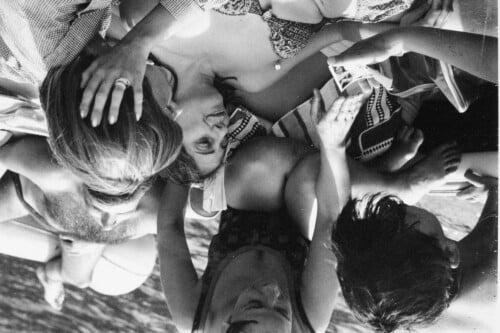
A white sheet of paper, kissed by the sharp and silent pencil of Untitled (Dad), returns without embellishment all the pain and sense of loss a child feels before the illness of a beloved father. The universality of a barely sketched vase as the most eternal of embraces, alongside the earthly illusion of a wooden surface ready to hold emotions and words, returns the supreme image of a memory that can never fade or pass away.


In Loss and Regeneration (2023), philosopher Judith Butler notes:
We know how important the blank page is in Roland Barthes’s texts, empty sheets on which neither words nor images appear. As early as 1965, in Criticism and Truth, Barthes intentionally left several pages blank, except for the phrase: “page intentionally left blank.” Granted, it is not quite a blank page, because the purely referential indication contradicts itself, but then let us take Jean Genet, who in A Captive in Love not only leaves empty spaces, but actually believes that the void of a white page is capable of rendering the lives of others better than a flood of words.
Tracing the humble and precious flight of fireflies through the most graceful night, Dabin Ahn intones the ode of his Nocturne (on view from March 27 to June 6, 2026). Spaces of darkness and fragments of Oriental ceramics with a millennia-old breath invade the space of a canvas that encompasses scenic fractures. The idea of the half-open continually inhabits the possibility of guiding the gaze beyond the territory of the given. The fertile idea of discontinuity characterizes an artistic practice nourished by poetry and the «fullest emptiness». Like fireflies yearning for an illuminated jolt in the heart of the deepest, most velvety night, Dabin’s paintings offer the itinerary of a generous awakening sewn by the eyes of a dream.