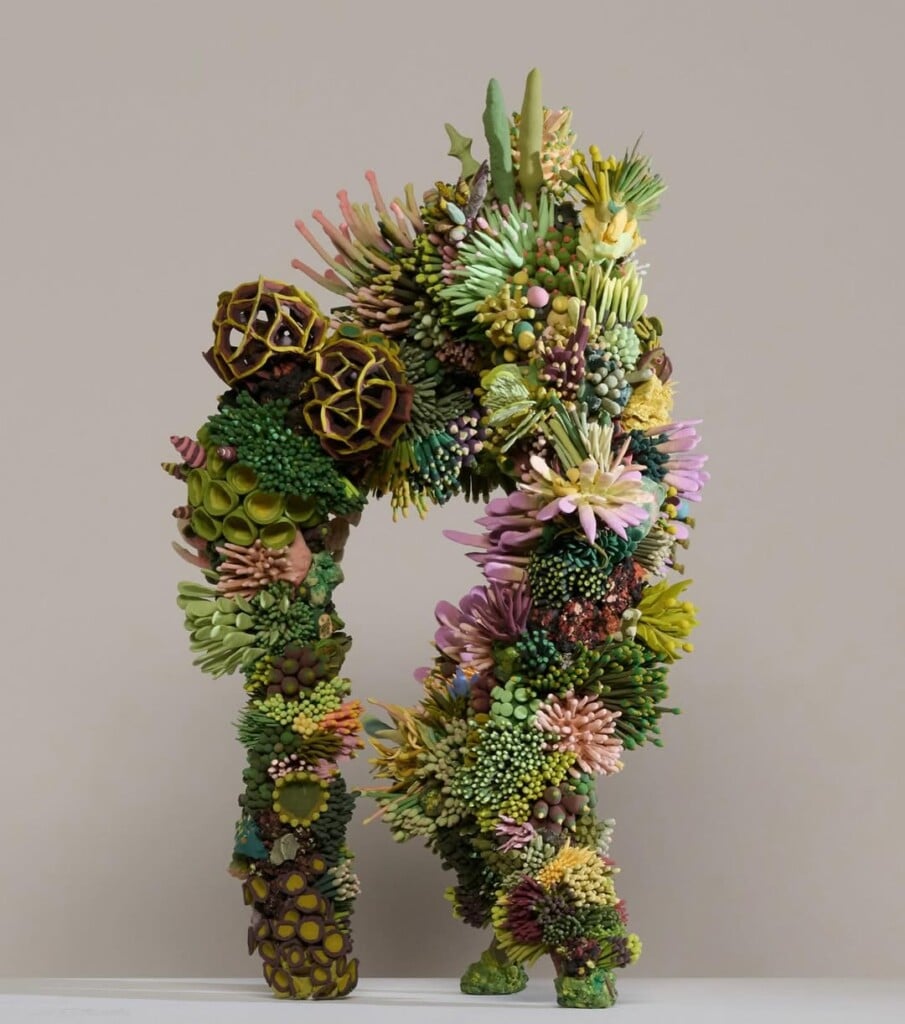
The first instinct when looking at the sculptures of David Aliperti is to move closer. There is no right distance from which to observe them: every centimetre reveals a new detail, a previously hidden element, a texture you hadn’t noticed before. Overlapping petals, descending filaments, microspheres arranged in sequence, leaves curling back on themselves. Botanical structures that don’t exist in nature yet feel entirely plausible, as if they came from a parallel ecosystem.
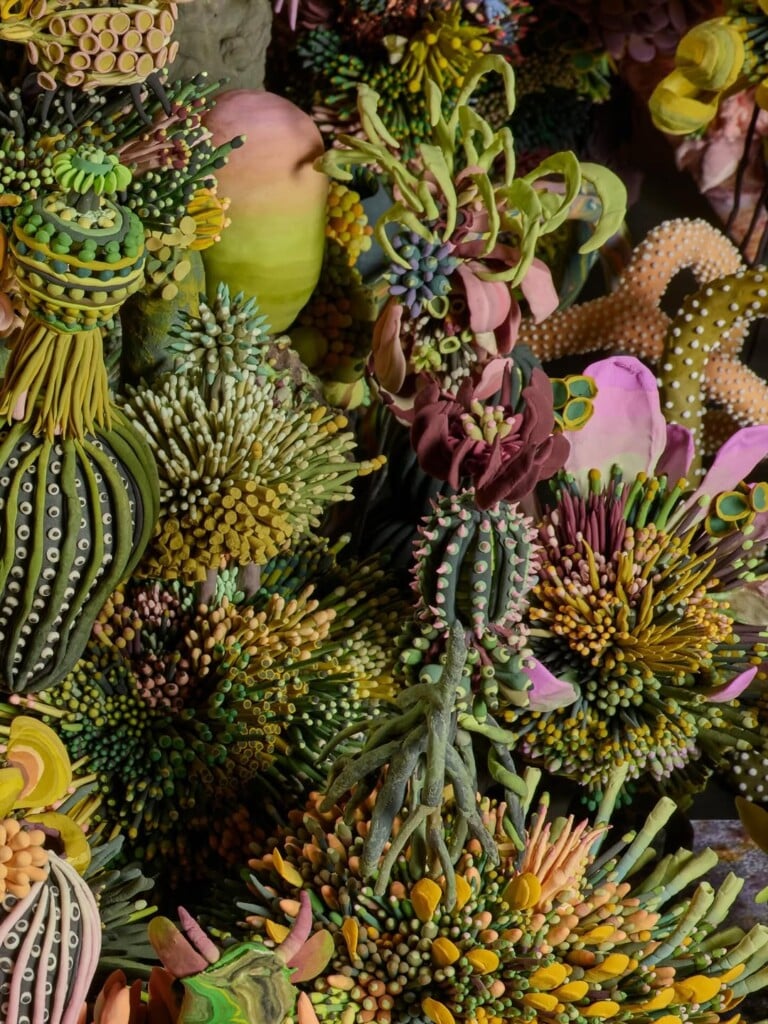

The material is coloured paper clay: light, malleable, with no armatures or fixed structures. It’s shaped by hand and air-dried. Each sculpture takes between 300 and 700 hours of work, built through repeated gestures and a meditative process. As Aliperti himself recounts in an interview with Living Corriere, one of his most recent works is made up of eight thousand individual micro-elements. It is physical, mechanical work — but also deeply introspective: the repetition of the same movements surfaces memories and sensations that the material then transforms into form.


Originally from Rio de Janeiro, Aliperti splits his time between Paris and the fashion world, with which he still collaborates today. In 2017, a heart attack forced him to stop. He bought some paper clay and began shaping it with no pressure, no deadlines. He hasn’t stopped since.

The new collection, presented by Nilufar during Milan Design Week as part of the exhibition La Casa Magica curated by Valentina Ciuffi, draws from Brazilian feminine mysticism: the figures of women healers who treated illness through plants, a practice almost entirely lost to colonisation. Nature, resilience and spirituality — the same forces that run through all of his work, translated into sculptures that grow upward or unfold in horizontal structures, resisting any attempt at categorisation.