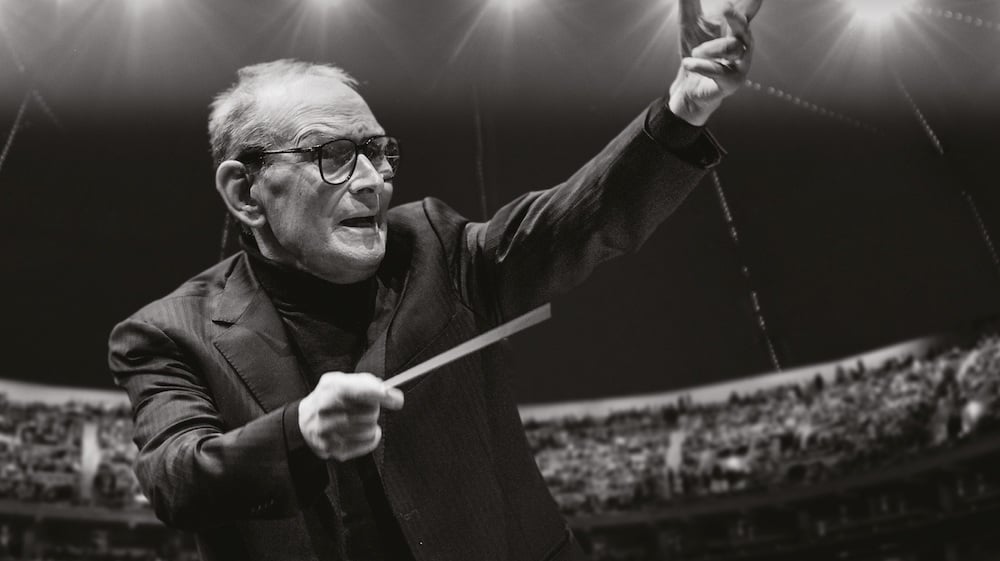
We will remember forever, with infinite joy, the artistic genius of Maestro Ennio Morricone.
A man who needs no introduction or proclamation but who over the years has made us dream, excite, reflect, writing memorable notes that will remain indelible in the history of music and cinema.
The Oscar for Lifetime Achievement at the age of 78 was the accomplishment of a very long journey made of music conceived, conceived and created especially for the cinema.
A career that began in the 60s, he made his debut in cinema with Luciano Salce’s film “Il federale” (1961), while he was about to impose himself as the arranger of the most famous Italian songs of the early 60s (his arrangements of all the hits of Gianni Morandi or that of Mina’s evergreen “Se telefonando“).
Later the great Italian artist continued to accompany the dusty exploits of Sergio Leone and Duccio Tessari‘s gunslingers, but he also followed those of the protagonists of “I pugni in tasca” (Marco Bellocchio, 1965), the bloody clashes of “La battaglia di Algeri” (Gillo Pontecorvo, 1966) or Totò‘s
wander in “Uccellacci e uccellini” (Pier Paolo Pasolini, 1966), passing through very different genres.
His music for Tornatore’s “Nuovo cinema Paradiso” and Tarantino in “The hateful eight” is unforgettable.
In addition to having won two coveted Oscars, Morricone has received every kind of award and recognition in his career. He has also won three Grammy Awards, three Golden Globes, six Bafta, ten David di Donatello, eleven Nastri d’argento, two European Film Awards, a Golden Lion for Lifetime Achievement and a Polar Music Prize and has also sold more than 70 million records, including film soundtracks and works he has composed for more than 500 titles.
A man who is a true monument of our culture, a composer who has made the history of world cinema.
On such a sad day, today more than ever, to remember Ennio Morricone properly, we only have to immerse ourselves in his deep and beautiful music.