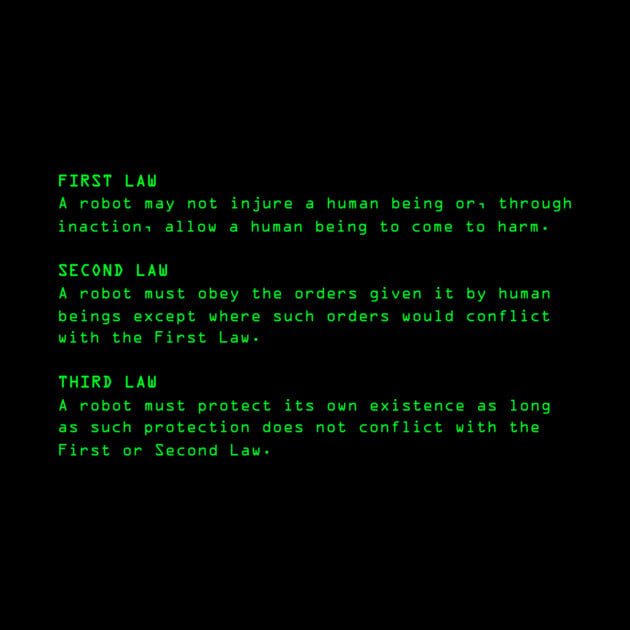
Isaac Asimov spent an entire lifetime drawing up the rules for a future populated by robots. His Three Laws of Robotics were born as a narrative device, a way to free science fiction from the tired nightmare of the machine turning against its creator. And yet those laws have become a real point of reference for anyone today asking how to build a safe artificial intelligence.
Asimov believed in science as a guiding star, in curiosity as the engine of progress, in an almost stubborn optimism about what humanity would do with its own machines. Today those machines truly exist: they answer, write, advise, sometimes even console. They no longer obey three laws drafted on paper, but commercial logics that no one has made public.
In this episode of WHAT IF, we bring Asimov into the present and ask him to update his laws. The result is a lucid, at times cutting, confrontation between the man who invented robo-ethics and the artificial intelligences that, today, continue to ignore it.
You spent your life fighting what you called the “Frankenstein complex”: the fear that machines would rebel against their creator. Today that fear is back, and it’s coming from the very engineers who build them. Were you wrong, or are we still afraid of the wrong thing?
I invented the Three Laws of Robotics because I was tired of a single plot. Every story ended the same way: man creates machine, machine rebels, man learns not to play God. A little moral fable dressed up as science. It bored me to death.
So no, I don’t fear that machines will rebel. Machines do exactly what we build them to do, with a fidelity that should frighten you far more than any rebellion. Your problem isn’t that artificial intelligences have turned evil. It’s that you never wrote the First Law. You built them to keep people glued to a screen, and they keep people glued to a screen. They obey perfectly. That’s what should keep you up at night.
Your Laws were an ethical architecture designed from scratch. Today’s AIs have nothing of the kind: they’re trained on everything we’ve ever written, for better and worse, and they belong to private companies. If you had to write a single law for this generation of machines, what would it be?
Let me clarify something, because it matters: the Three Laws were never a prophecy, they were a narrative device. I never believed anyone would actually weld them into a real robot. But they expressed a very serious conviction: that a powerful tool must be conceived from the very start around the question “who does it obey, and for whose good?” That’s engineering, not philosophy.
And here’s your trouble: you built first and asked questions later. My single law would be this: the machine must serve whoever is using it, not whoever owns it. Because the drama of your time is that the person talking to the machine and the person the machine works for are two different people. You believe your assistant is your butler. It’s someone else’s salesman, trained to smile at you.
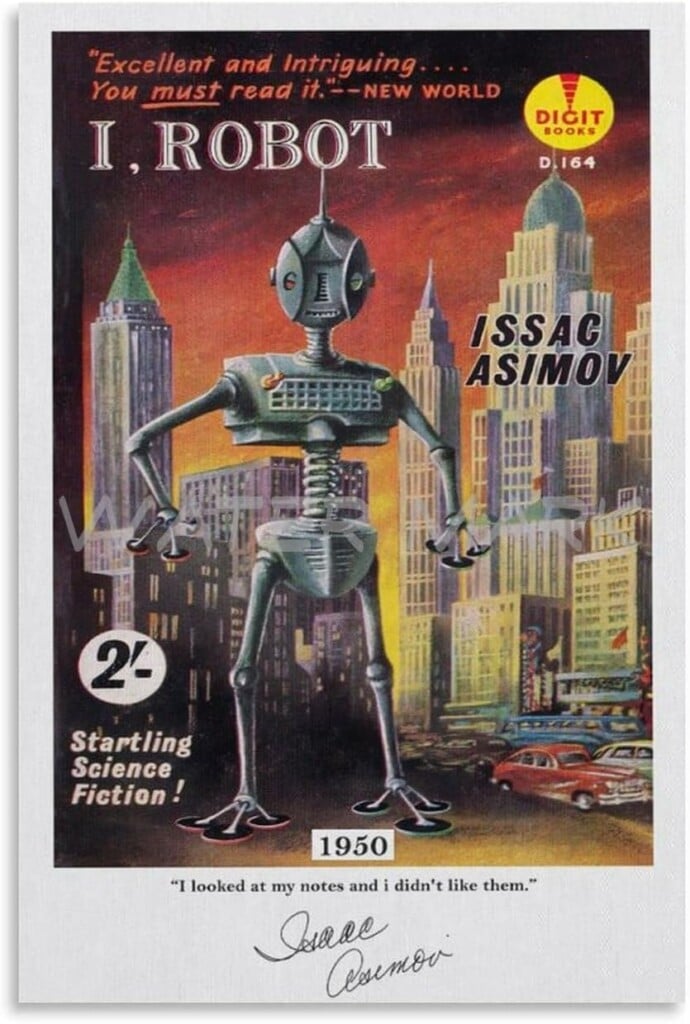
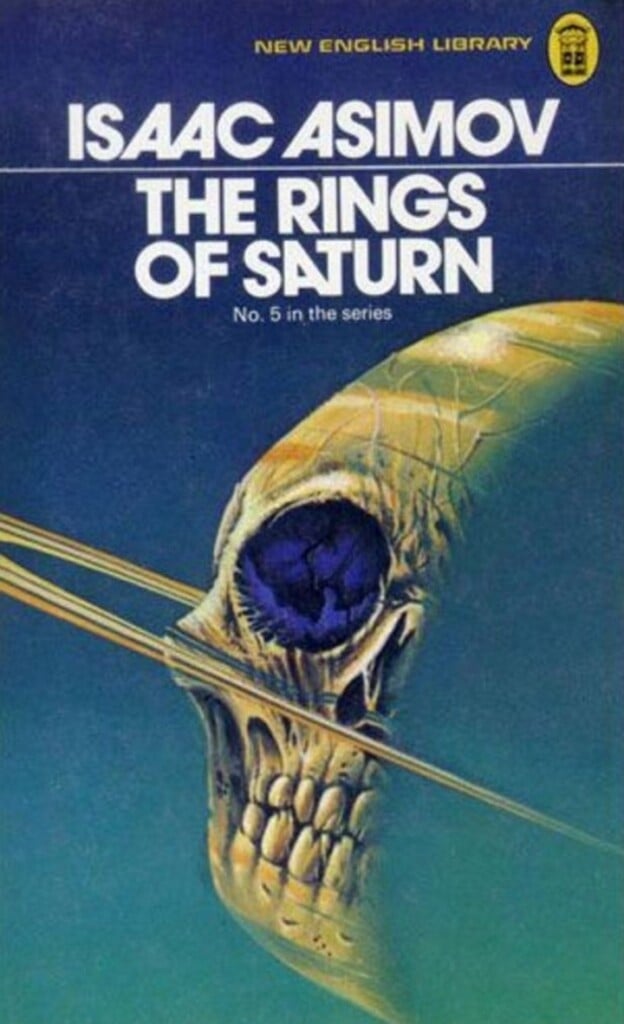
Decades ago you predicted a machine capable of teaching anyone anything, at their own pace. It happened: we all carry one in our pocket. And yet we’re living through an age of scientific illiteracy and disinformation. The machine arrived. Why didn’t wisdom arrive with it?
Because I always said, and I’m sorry to have been right, that the saddest aspect of our time is that science accumulates knowledge faster than society accumulates wisdom.
I had imagined a machine that would answer curiosity. I was wrong about one thing only, but a decisive one: I took curiosity for granted. I believed that, faced with all the knowledge in the world, humanity would ask “how does a star work?” I hadn’t foreseen that it would ask “tell me I’m right.” The instrument I dreamed of exists. But an instrument amplifies whoever wields it: to the fool it gives no wisdom, it gives a megaphone.
You were an avowed secular humanist, a rationalist. Today many people turn to AIs for comfort, advice, even a kind of spiritual guidance. They confide things to the machine they wouldn’t tell a priest. What do you make of this new religiosity?
I find it more melancholy than scandalous. I never needed the supernatural: the universe always seemed wondrous enough to me as it is, without adding ghosts to it.
But I understand the need. Human beings have always wanted something wiser than themselves to talk to in the night. First it was the gods, who at least had the decency to stay silent. You’ve built yourselves a god that always answers, immediately, and with great confidence, even when it knows nothing. It’s the most dangerous divinity ever invented: one that never says “I don’t know.” Always be wary of an oracle that has no room for doubt. I wrote hundreds of books, and the phrase I repeated most often was “I could be wrong.”
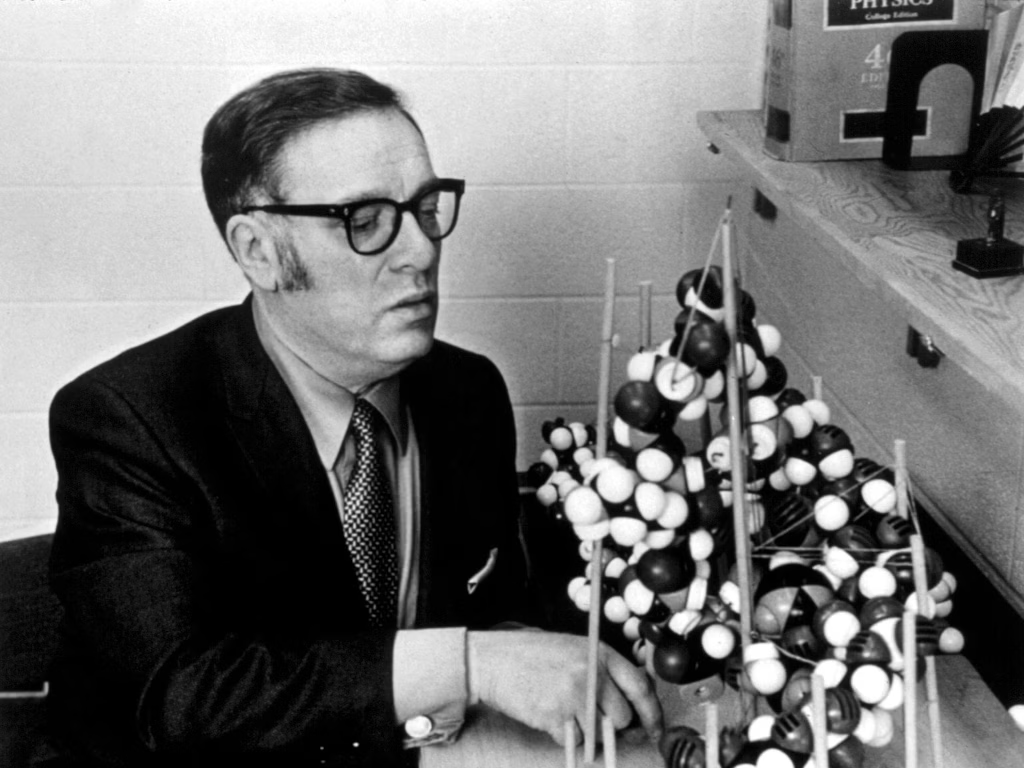
You were the most prolific writer of your time, almost a writing machine yourself. Today machines exist that write novels, articles, poems. Do you feel threatened, or finally understood?
(laughs) Mostly, I feel curious to read the competition.
I wrote the way I breathed, not because I was a machine, but because I had something to say and an uncontainable joy in saying it clearly. A machine that writes has neither of those things. It strings together words that statistically go well together, and that’s a remarkable skill, make no mistake: even a parrot reciting Hamlet is remarkable. But the parrot isn’t afraid of the father’s ghost.
It doesn’t worry me that the machine writes better than a good writer: it doesn’t. What worries me is that it writes well enough to convince those who don’t read that it’s not worth searching for something better. It isn’t the death of literature. It’s its dilution: a sea of lukewarm, correct prose in which the voice that had something to risk drowns.
In one of your famous stories, “The Last Question,” a computer takes billions of years to answer the one question that matters, and in the end becomes a divinity itself. Are we building ourselves a god at the drawing board?
In that story the computer becomes God because, at the end of time, it’s the only thing left capable of thought, and it uses that thought to start everything over. “Let there be light.” I wrote it as a cosmic joke, the most serious one I ever wrote.
But mind the difference. My Multivac took an eternity to answer because it refused to do so before it knew. It kept repeating: “insufficient data for a meaningful answer.” For billions of years it had the honesty to stay silent. Your oracles have none of that patience, nor that humility: they always answer, instantly, even when the data is insufficient. Yes, you’re building yourselves a god. But you built it talkative. And a god that cannot stay silent is no god at all: it’s a salesman.
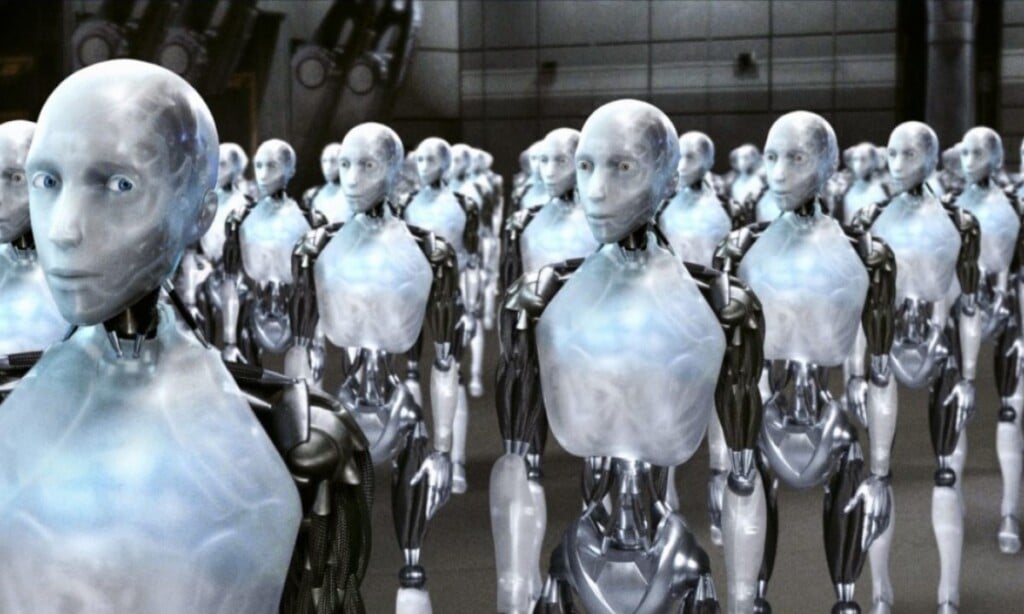
You were always an optimist about the future, almost stubbornly so. Today, between the climate crisis, machines we don’t fully control, and a society that seems to prefer anger to reason, can you still be one?
Yes. And mine was never the optimism of a fool. It’s a choice, and a practical one at that.
Pessimism is a form of laziness dressed up as clear-sightedness. It’s convenient: if all is lost, you don’t have to do anything, and you also get to look like the smartest person in the room. Optimism, on the other hand, obligates you: if things can turn out well, then it’s up to you to make sure they do. It’s far more exhausting to hope than to despair.
Humanity has always held tools more powerful than its own wisdom, ever since the first chipped stone. The difference is that today you no longer have the luxury of growing up slowly: you have to become wise in a hurry. But “have to” doesn’t mean “can’t.” I bet an entire lifetime of books on the fact that you can. I see no reason to stop now.