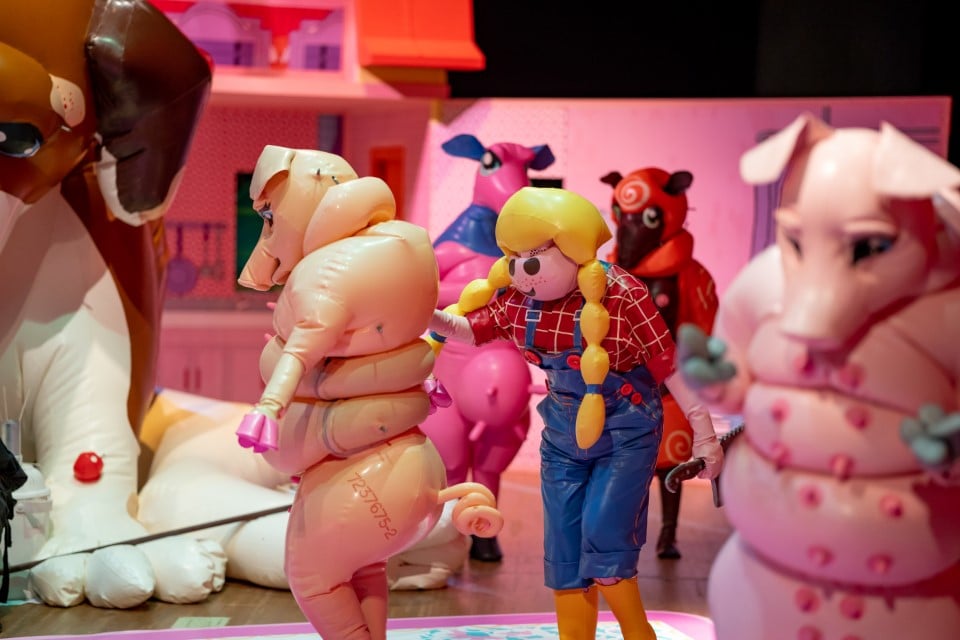
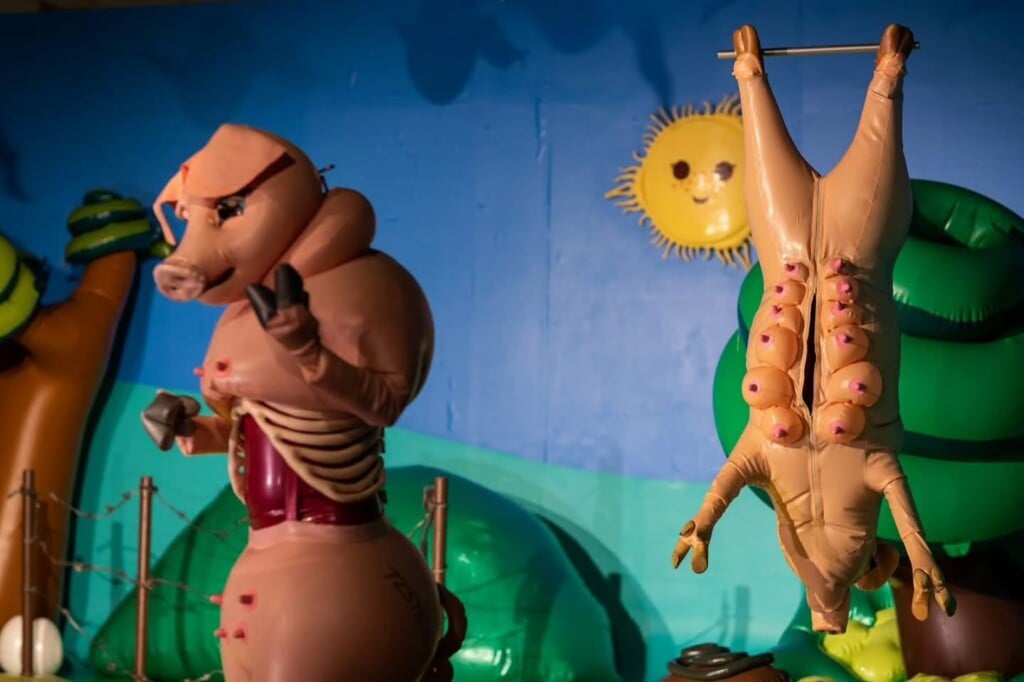
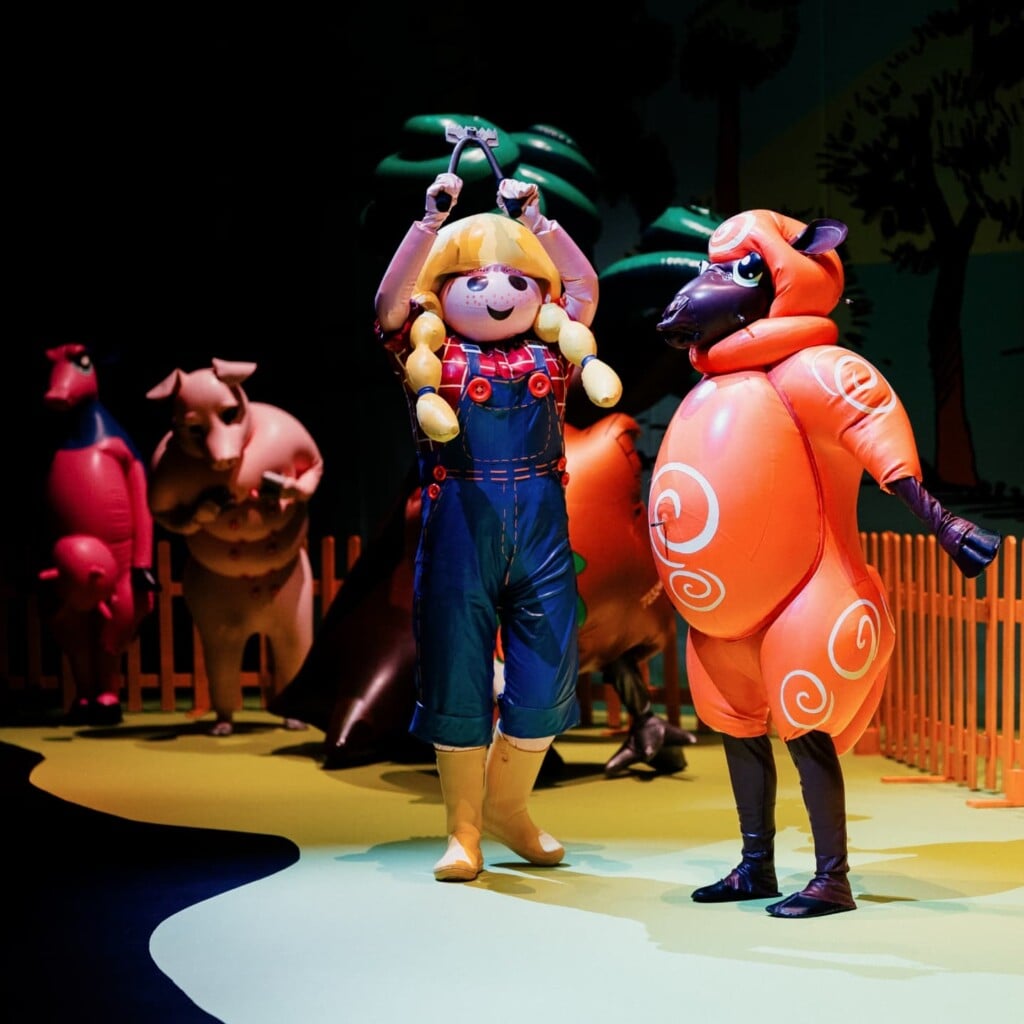
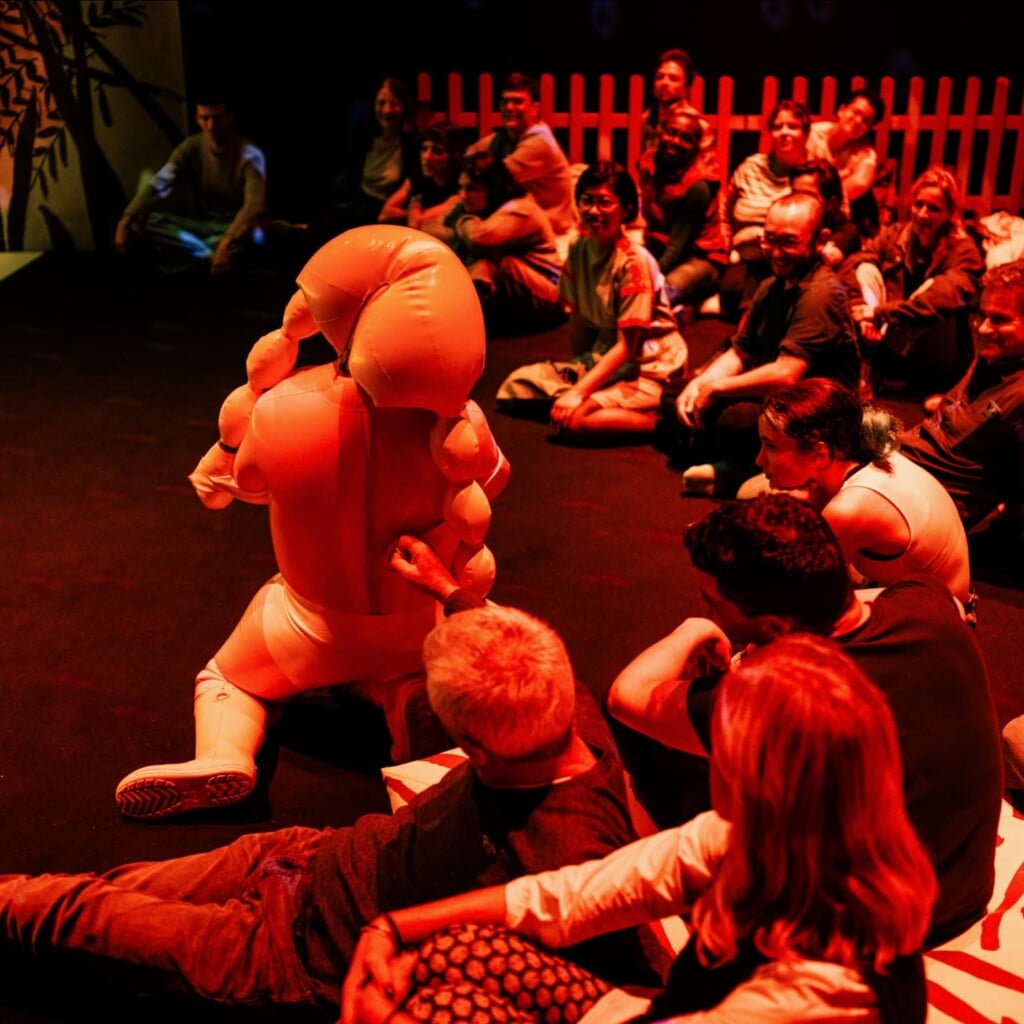
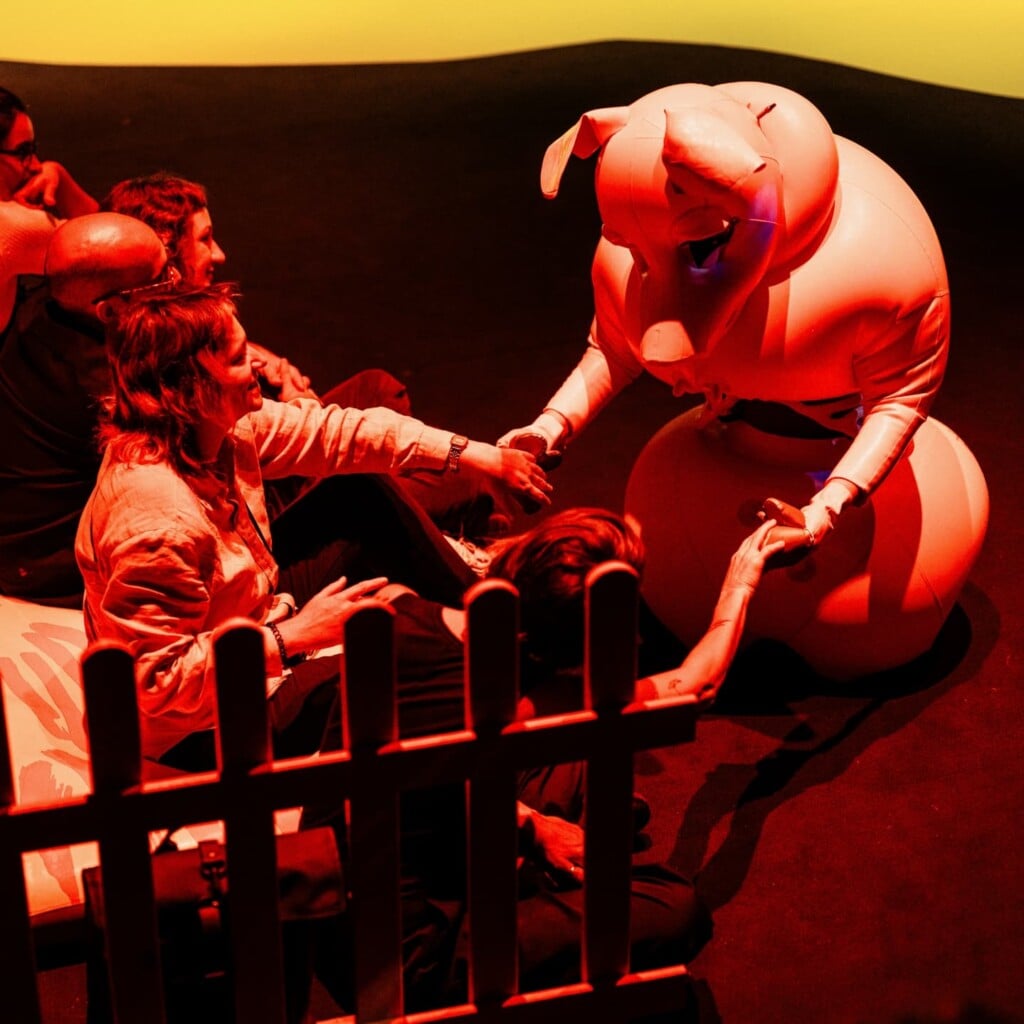
An inflatable latex sow, over a metre and a half tall, gives birth live in front of an audience dancing to techno music. Around her, an entire toy farm comes to life, hens laying eggs before the spectators’ eyes, a sheep sheared by invisible hands, a pig dragged toward a colourful rubber slaughterhouse while a worker in a pink latex jumpsuit keeps working, indifferent. This is the world of Slaughterhouse, one of the best-known works by Saeborg, an artist born in Toyama, Japan, in 1981 and today one of the most original voices on the international scene, exploring body, gender and species through costume and transformation.
The first instinct in front of these images is to file them under “fetish art,” with elements like latex and inflatables, an aesthetic explicitly indebted to Tokyo’s BDSM and queer underground. In Saeborg’s work, though, fetish isn’t the destination but the conceptual tool with which the artist dismantles, piece by piece, the ideology that assigns fixed roles to bodies, whether female bodies or animal bodies, because for Saeborg they are exactly the same thing.
From Department-H to the museum. A biography that’s already a manifesto
Saeborg graduated in Fine Arts from Joshibi University of Art and Design in Tokyo in 2006, but her real debut happened outside the academic circuit, inside Department-H, Tokyo’s historic fetish party running since the 1990s and a landmark of Japanese queer and BDSM culture. It’s there, among corsets, latex and late-night performances, that the alter ego giving the artist her name was born, a term that fuses “cyborg” with a sound evoking imperfection, because Saeborg considers herself an incomplete cyborg, half human, half toy. The choice points directly to Donna Haraway’s Cyborg Manifesto, the 1985 text that saw in the hybrid figure of the cyborg an escape route from the binary categories Western culture has always used to imprison the female body. Saeborg takes that theoretical suggestion and translates it into rubber flesh, building by hand, sewing and gluing, latex suits that deform her own body into animal shapes, sows, insects, giant bees, precisely to free herself, temporarily and visibly, from the gender stereotypes imposed on her, and from the discomfort with her own body that those stereotypes produce.
Her “official” debut came in 2014, when she received the Toshiko Okamoto Award at the seventeenth Taro Okamoto Award, a major Japanese contemporary art prize. From there, the institutional leap was quick and international, in 2016 and 2017 two of her video works, SEAPORK-1 and Slaughterhouse-9, were included in Mark Leckey’s solo show at MoMA PS1 in New York, bringing her inflatable-farm aesthetic for the first time into one of the most authoritative institutions of American contemporary art. Many more Biennale, festival and exhibition appearances followed, and in 2022 Saeborg won the Tokyo Contemporary Art Award (TCAA), a prize established by the Tokyo Metropolitan Government to support mid-career artists, which earned her a solo show at the Museum of Contemporary Art Tokyo in 2024 and a bilingual monograph designed to promote her work internationally.
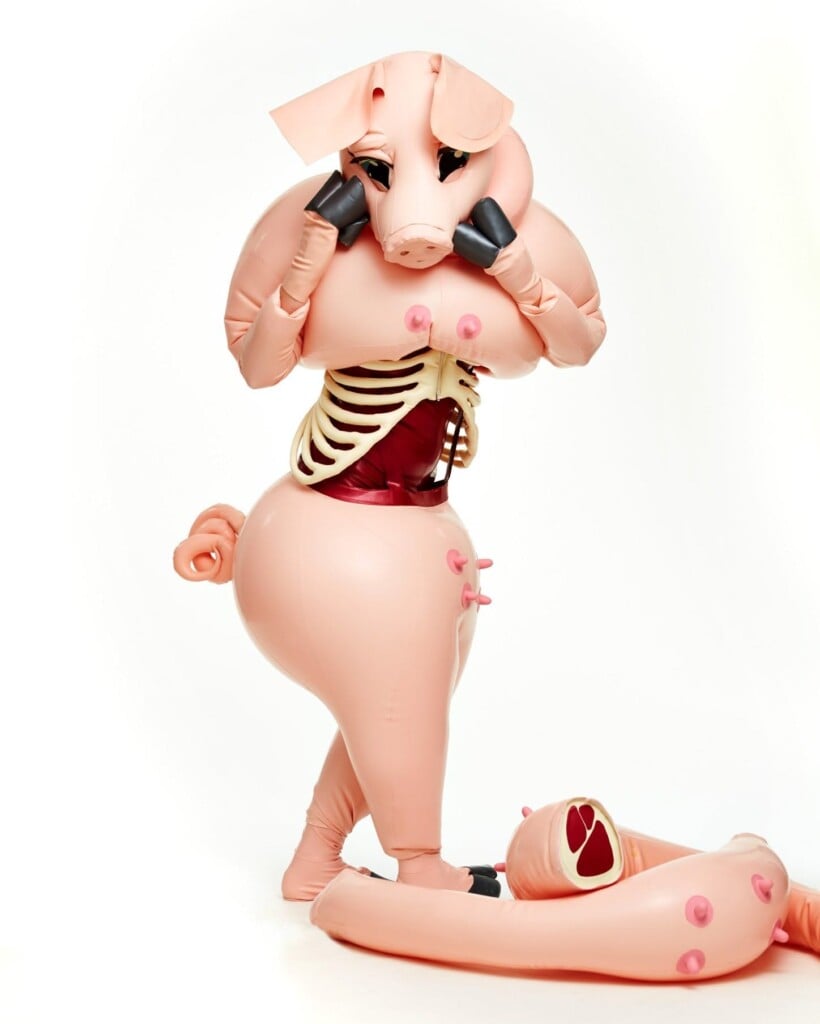
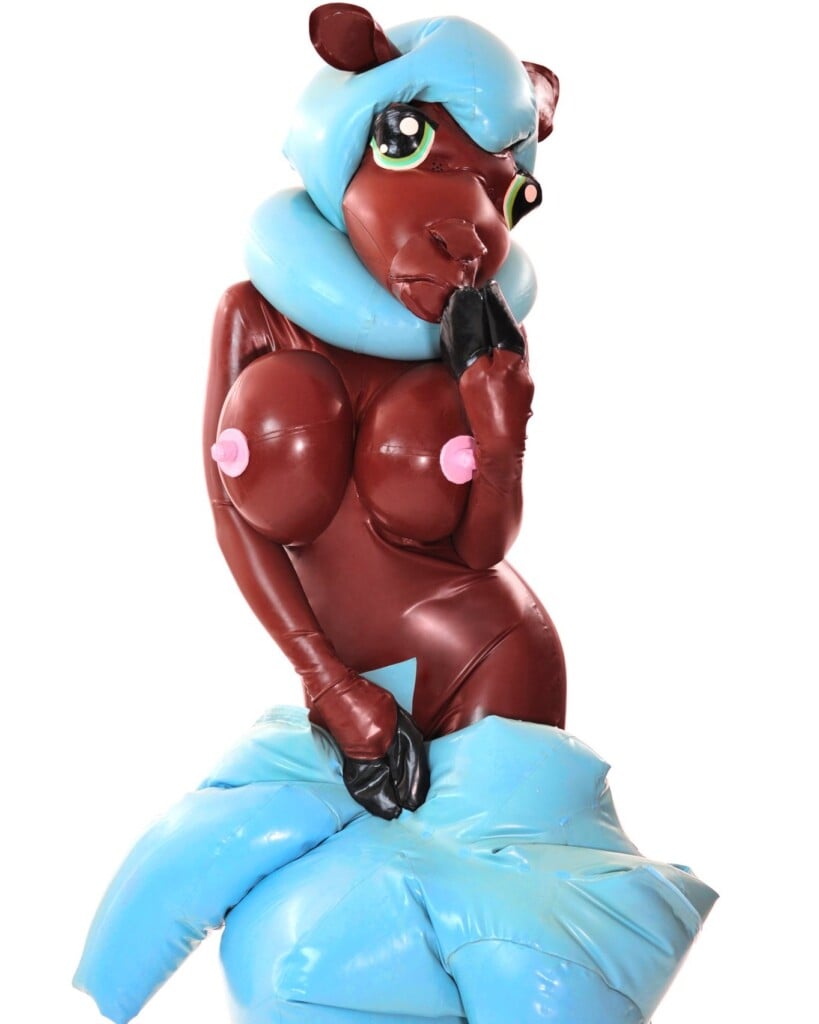
The farm as metaphor
What makes Saeborg’s work conceptually dense, rather than simply provocative, is the surgical precision with which the artist overlays two seemingly distant systems of exploitation, factory farming and the social construction of gender. In her performances, farm animals are never simply animals, they are bodies assigned a function from birth, the sow exists to be artificially inseminated, to nurse, and finally to be slaughtered; the hen to lay eggs; the sheep to be sheared. It’s an extremely rigid grid of roles, which Saeborg stages with a deliberately childlike, almost playground-like aesthetic, filled with pastel colours and fairground inflatables.
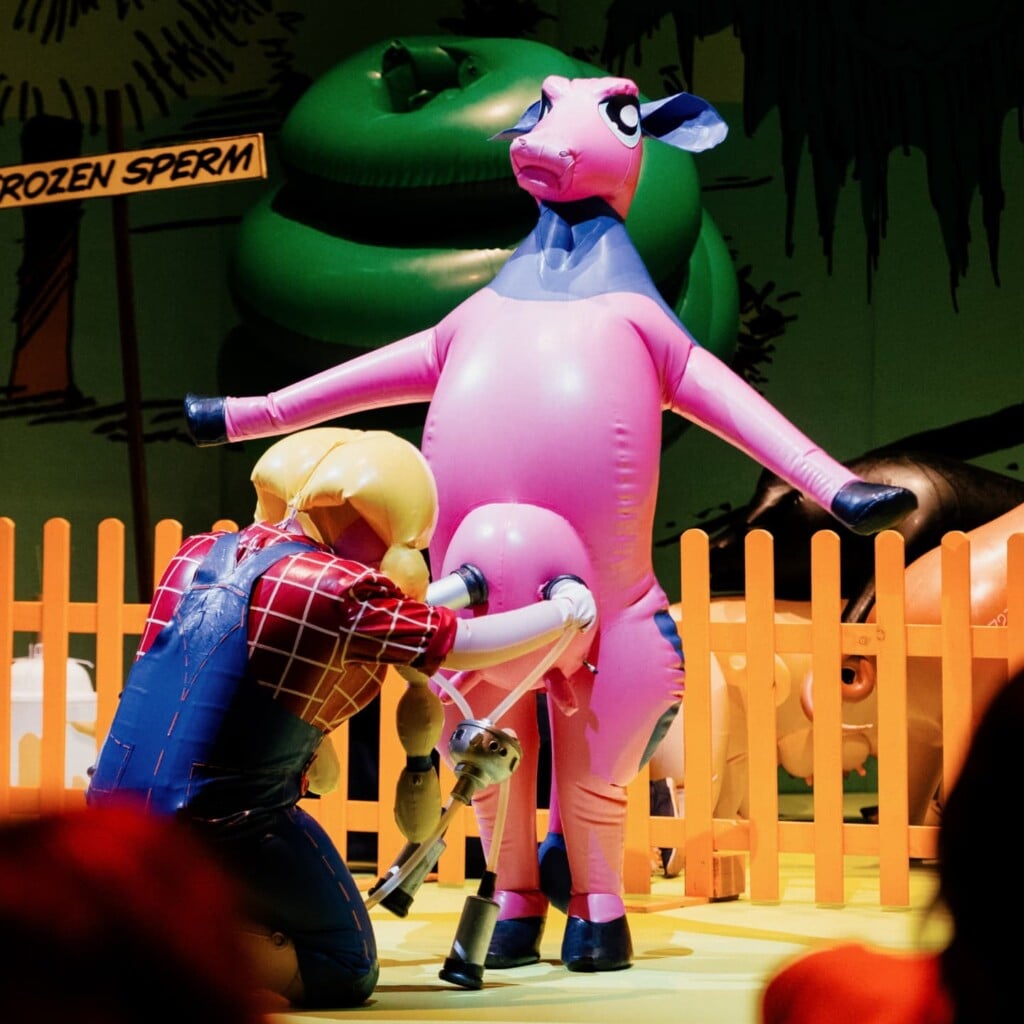
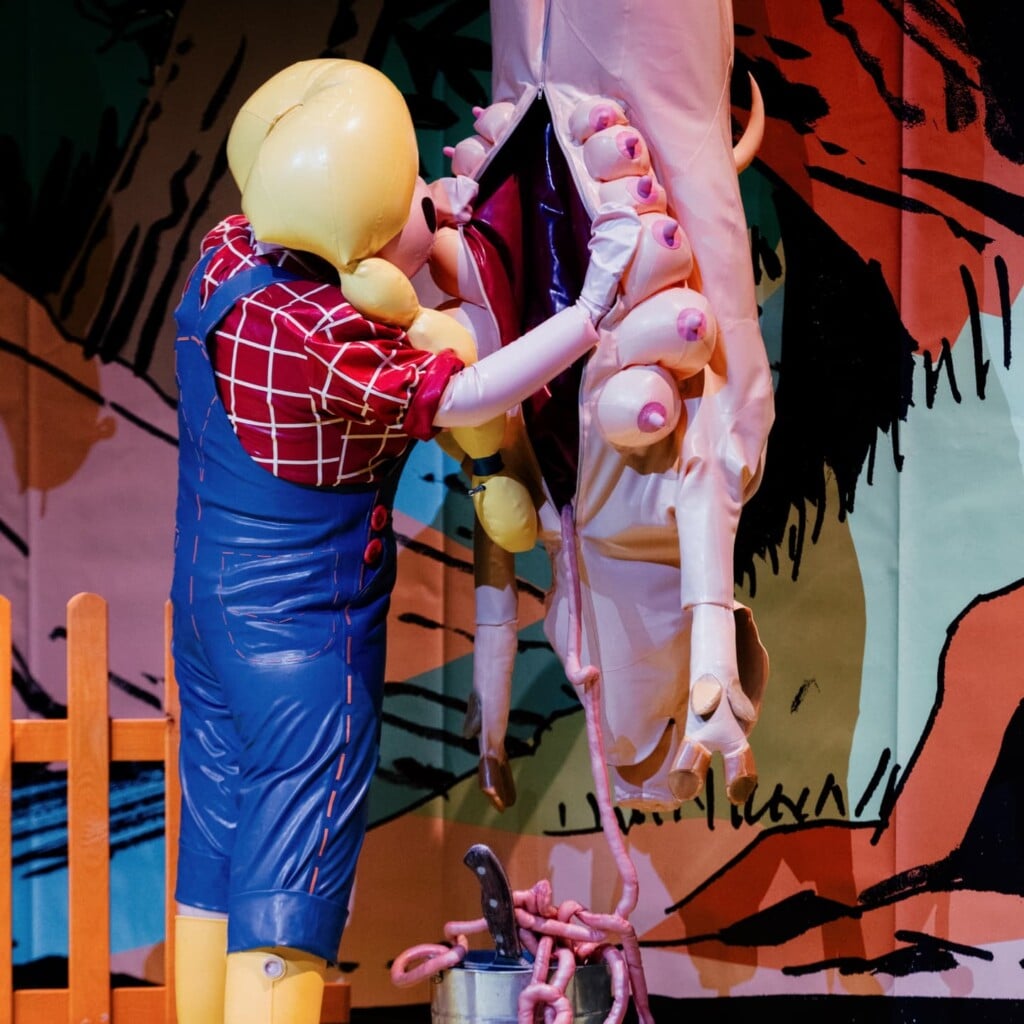
The contrast between the ferocity of the content and the tenderness of the form is the work’s real critical engine, forcing viewers to laugh and feel uneasy in the same instant, and to ask themselves why that same grid of assigned roles, when applied to human bodies and especially to women’s bodies (motherhood, care, sexual availability), is normally accepted as natural, while applied to a latex pig it suddenly looks grotesque.
It’s no accident that, in recent years, many of the performances have ended with a moment in which the audience is invited to dance alongside the animal-characters, in a space temporarily freed of stigma and fixed roles, a gesture the artist herself has described as an attempt to build, for the length of an evening, a small carnival in which identities become provisionally fluid again. This is where the legacy of Department-H’s nightlife and queer culture becomes evident even in the most institutional museum halls, Saeborg doesn’t clean up her club origins to make them presentable, she carries them intact into the white cube, and says so openly.
An art that doesn’t ask permission to be taken seriously
Underneath all this is a broader lesson about how museum institutions are learning to look at certain subcultures. For decades, fetish and BDSM aesthetics were treated by the “high” art world as a repertoire to be cited with caution, often after conceptual sanitising, defused, turned into an acceptable metaphor for something else. Saeborg overturns this pattern, she doesn’t apologise for her fetish-club origins, doesn’t disguise them as mere cultured reference, and precisely because of this manages to make them work as a full-fledged tool of gender theory, able to converse as easily with Donna Haraway’s philosophical tradition as with the crowd at a Tokyo rave. What remains, in the end, is an ambiguity Saeborg never resolves, and which is perhaps the true signature of her work.