Yayoi Kusama died on August 14, 2026, in a hospital in Tokyo, at the age of 97. The news only reached the public today, August 27, by the will of the Foundation that bears her name, in a statement describing “an extraordinary life entirely devoted to artistic creation.” That choice alone, waiting almost two weeks to announce her death, says a great deal about who Yayoi Kusama really was: a woman who, from the very start of her career, kept control over herself and over her own narrative.
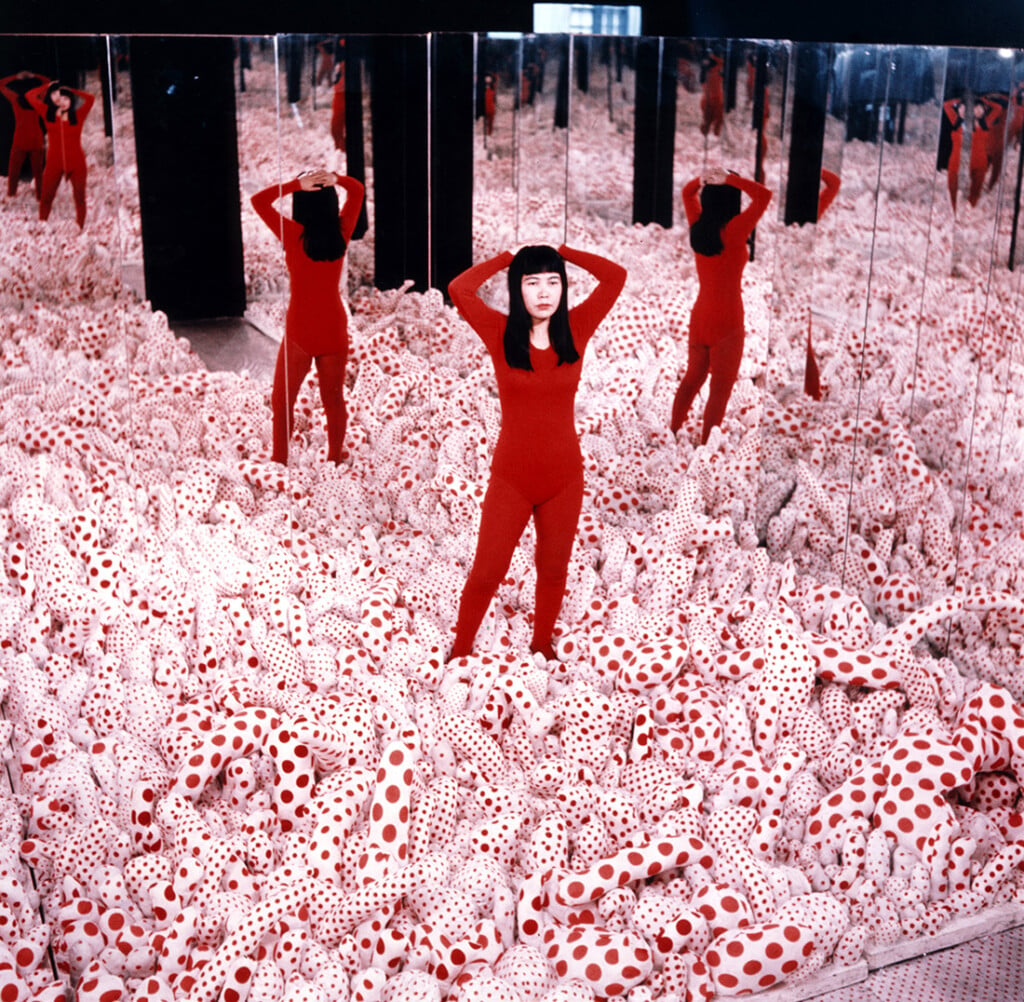
In Matsumoto, a provincial town in Japan, while she was still a child, Kusama began experiencing obsessive-compulsive symptoms and hallucinations, and started seeing the world in polka dots, the same dots she would later choose to paint. The patterns on tablecloths would detach from the fabric and spread across her field of vision, the walls, her own body. Raised in a wealthy, conservative family that made its fortune in the seed trade, and in which art was regarded as little more than a whim, Kusama kept drawing anyway, in secret. It was in those years that she began to shape the idea that painting was far more than an aesthetic gesture, that it was the only way to stay whole inside an experience that would otherwise have overwhelmed her.
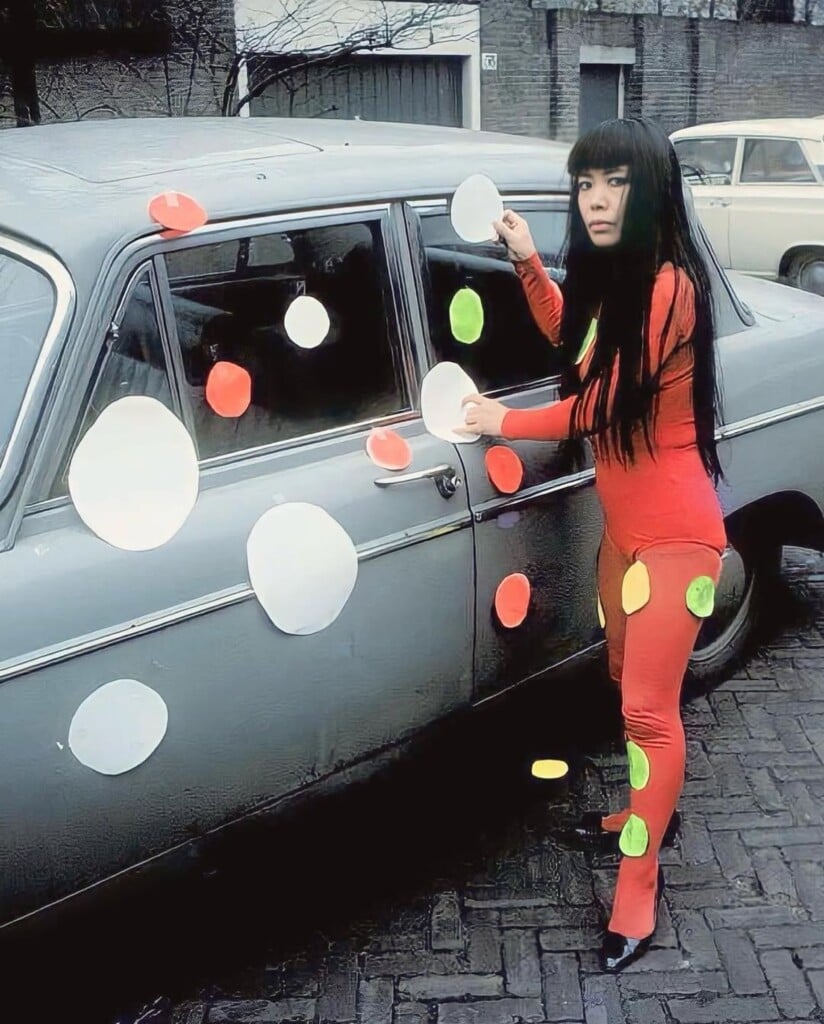
The turning point came at twenty-six, with a letter she sent to the artist Georgia O’Keeffe, who, surprisingly, wrote back to the young Kusama and encouraged her to leave for New York. That was the beginning of the journey that carried the Japanese artist from the Big Apple out into the whole world.
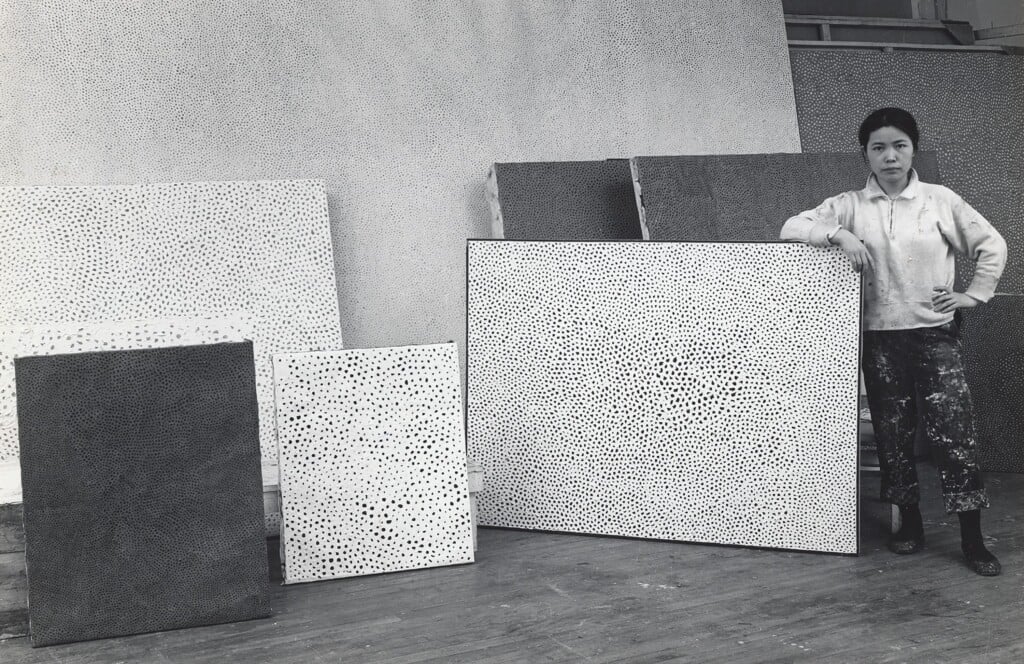
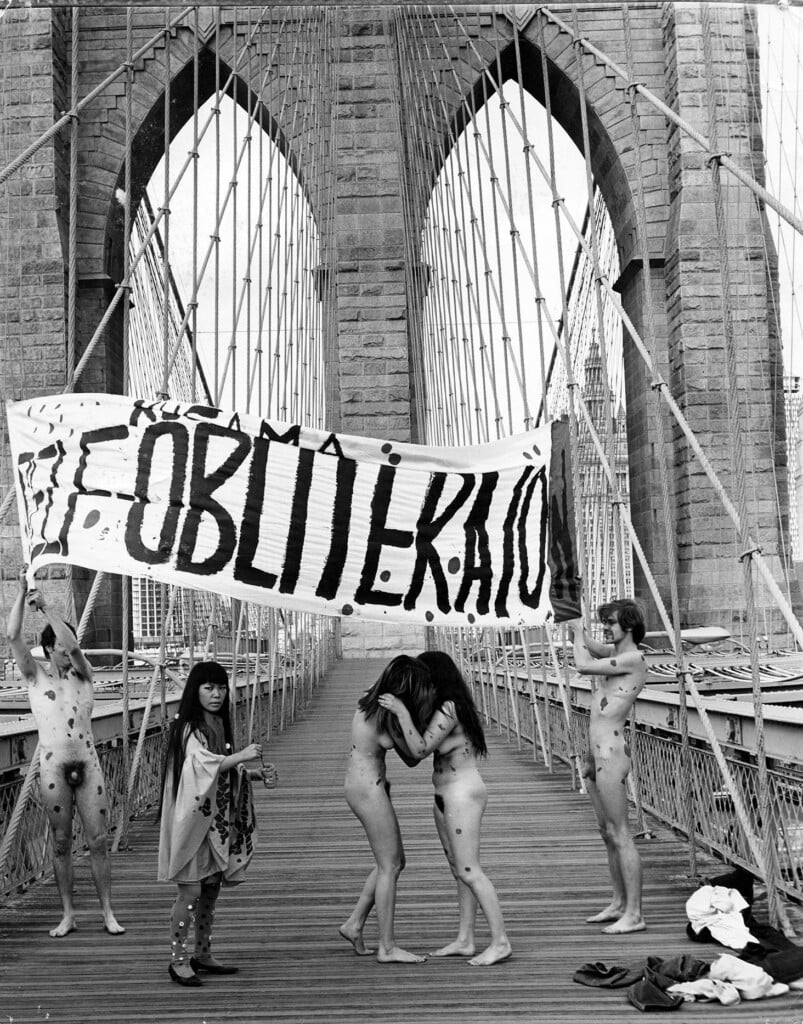
But the greater her success grew, the stronger her urge to disappear behind her own work. That is how her Infinity Mirror Rooms took shape (one will be on view starting October 31 at OGR Torino). Immersive, mirrored environments designed to multiply light and reflection into infinity, until anyone who steps inside loses every fixed point of reference, reduced to a single, tiny point within a system with no center and no edge. Kusama called this principle self-obliteration, and she never saw it as a loss. If anything, it was the only form of freedom that truly interested her, that of ceasing to be a separate individual in order to dissolve into something far larger.
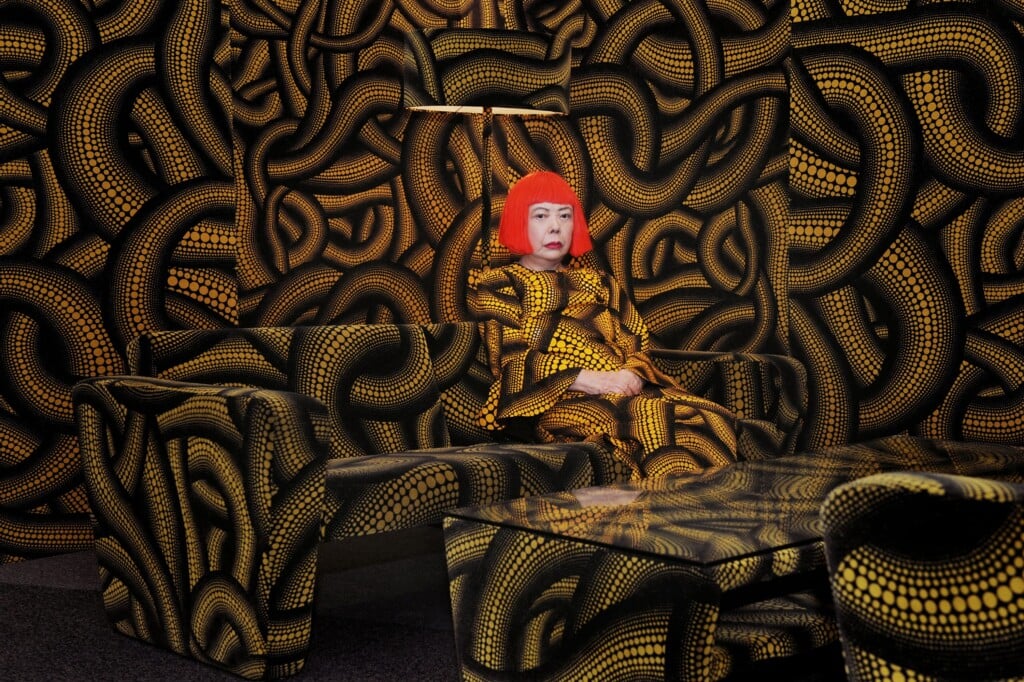
Perhaps this is the most important thing Yayoi Kusama leaves behind, an invitation to lose ourselves, to stop believing that the system we’re trapped in is the only one possible, and start seeing it for what it really is, a cage. All it takes is the courage to step out of it.