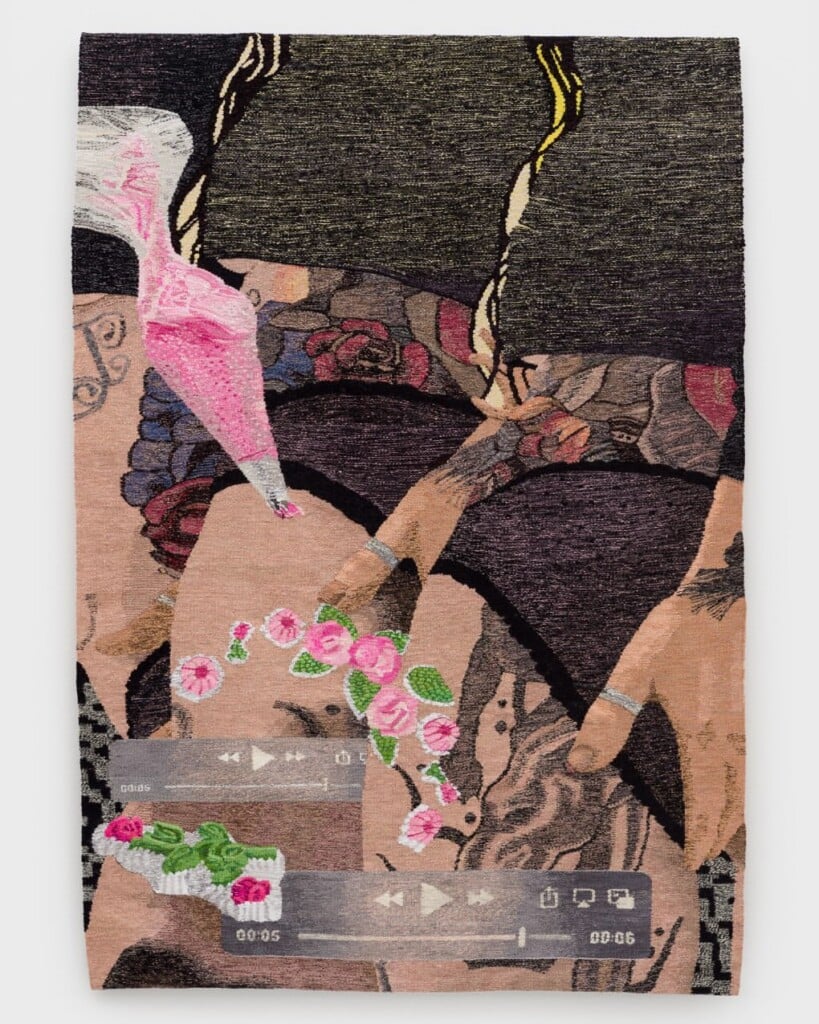
Textile artist Erin M. Riley uses the loom to weave images that belong to a precise aesthetic: that of internet culture. A counterintuitive approach for a medium usually associated with traditional craft. Riley weaves selfies, rolls of cash, video playback bars, text messages, tattooed bodies. She takes one of the slowest mediums that exists and fills it with the fastest images around — the digital, disposable kind we scroll past every day — and the result does nothing but draw us in, inviting us to linger over textures and details in a series of unsettling impressions.
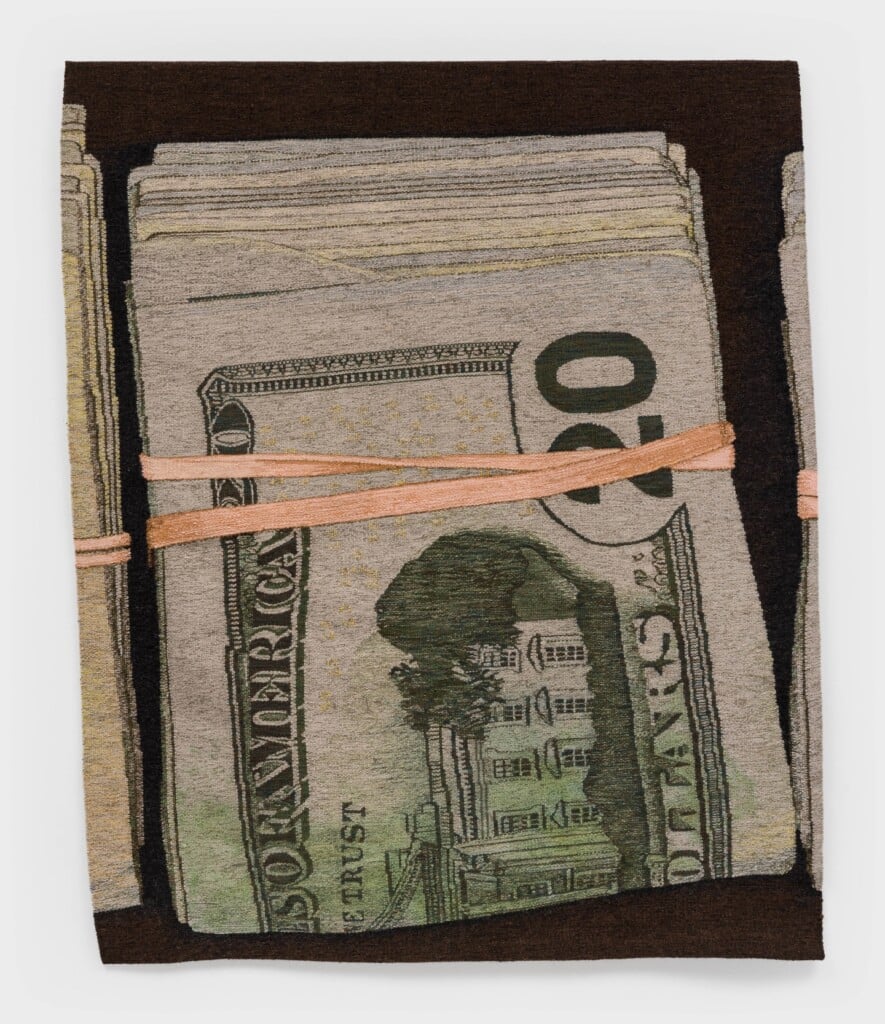
Among the most striking subjects: a video playback interface and a fifty-dollar bill rolled up and held together with a rubber band. Both, recreated as tapestries, took weeks of work to complete.
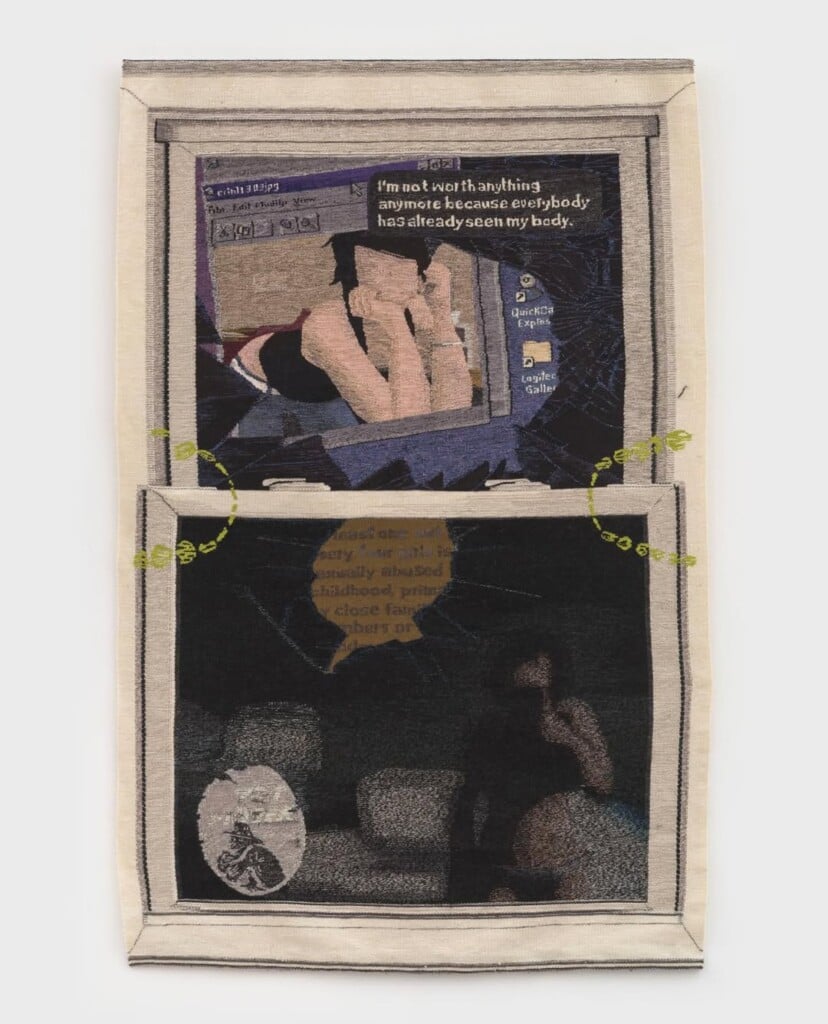
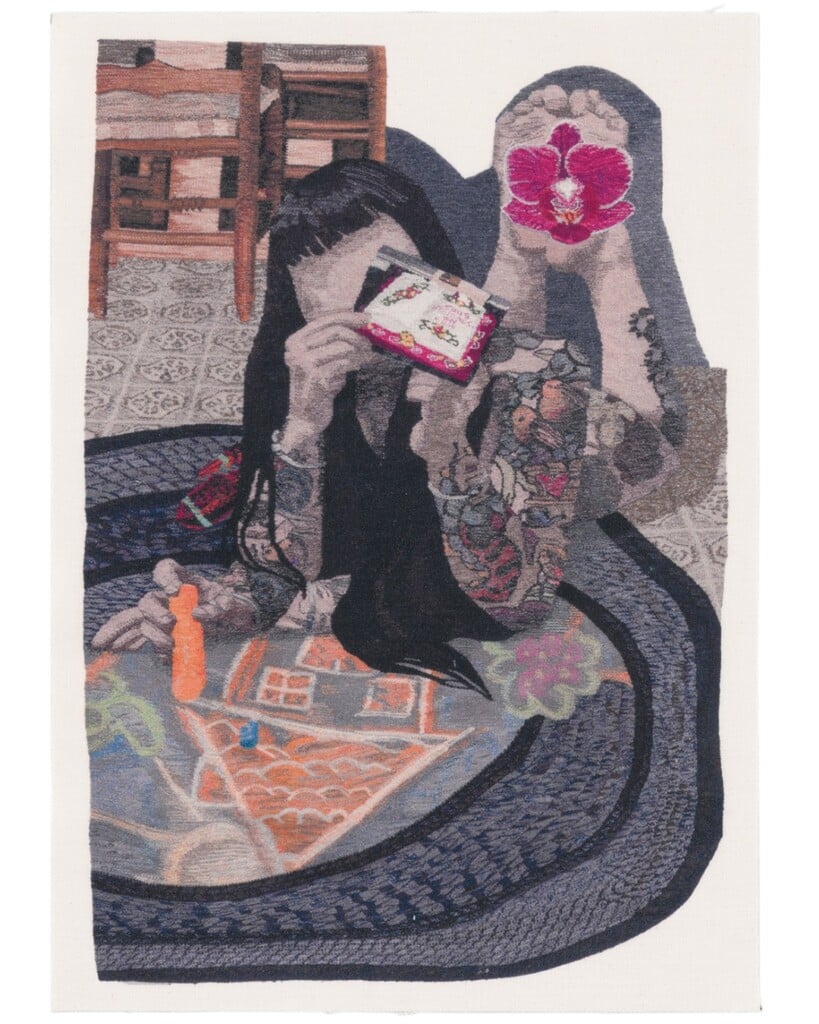
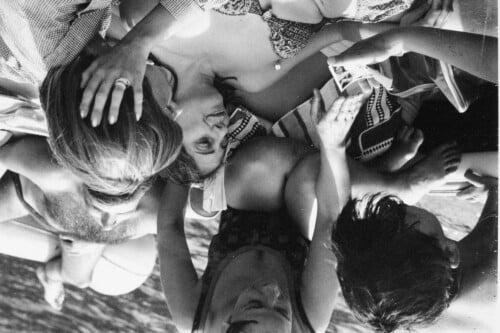
As Riley tells Vulture, her subjects come from her own life and that of the women around her: family photographs with faces blotted out, images from OnlyFans accounts, glimpses of the Massachusetts houses where she grew up. Tattooed skin is another recurring subject — in her tapestries, tattoos become a second narrative layer, stories within stories. As in The Hunted (2022), where a female figure photographs herself in the mirror: the most contemporary gesture possible, arrested by an ancient and laborious technique.
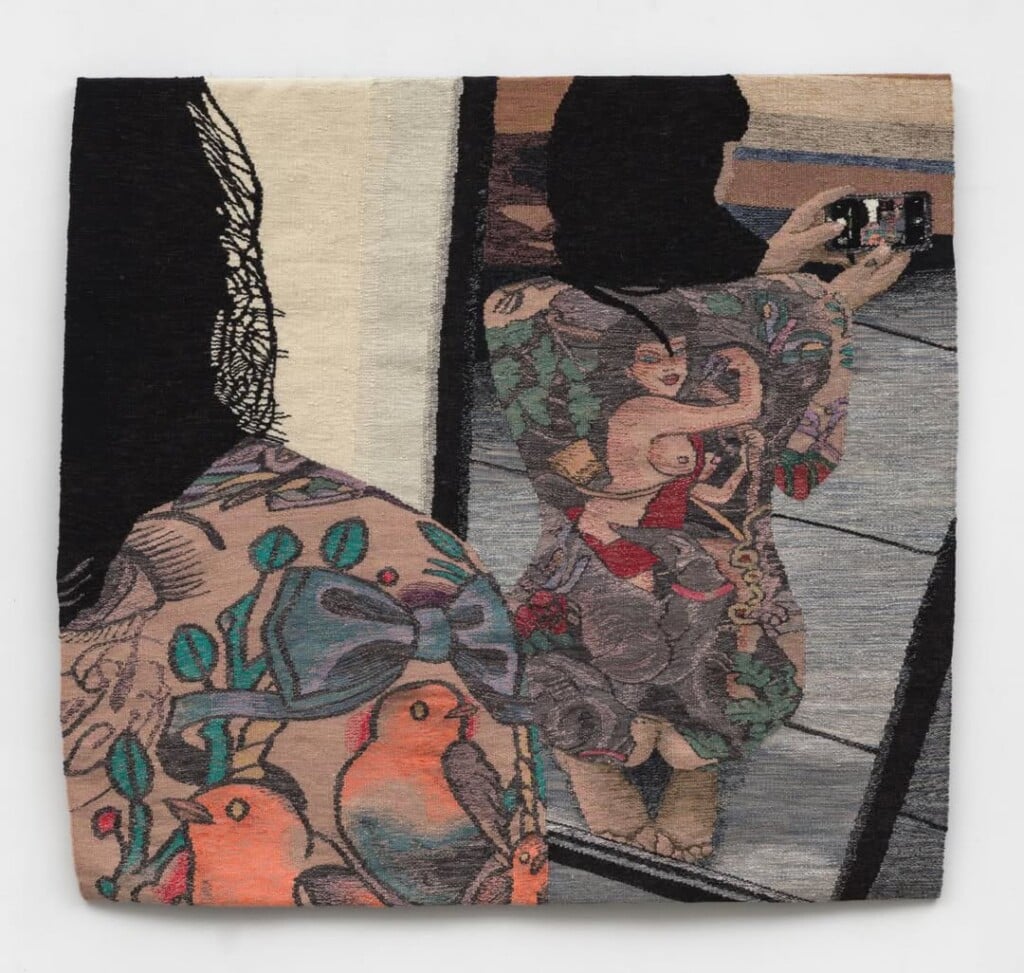
What fascinates in Erin M. Riley’s work is precisely this layering: two apparently distant worlds that together build an aesthetic you would struggle to find anywhere else.