New York, 1985. Andy Warhol is already one of the most recognizable artists in the world. Jean-Michel Basquiat is 24 years old and, in a very short time, has gone from graffiti signed SAMO to the most important galleries in the city. They seem to belong to two different generations, but between 1984 and 1985 they work together almost every day, creating around 160 paintings by four hands.
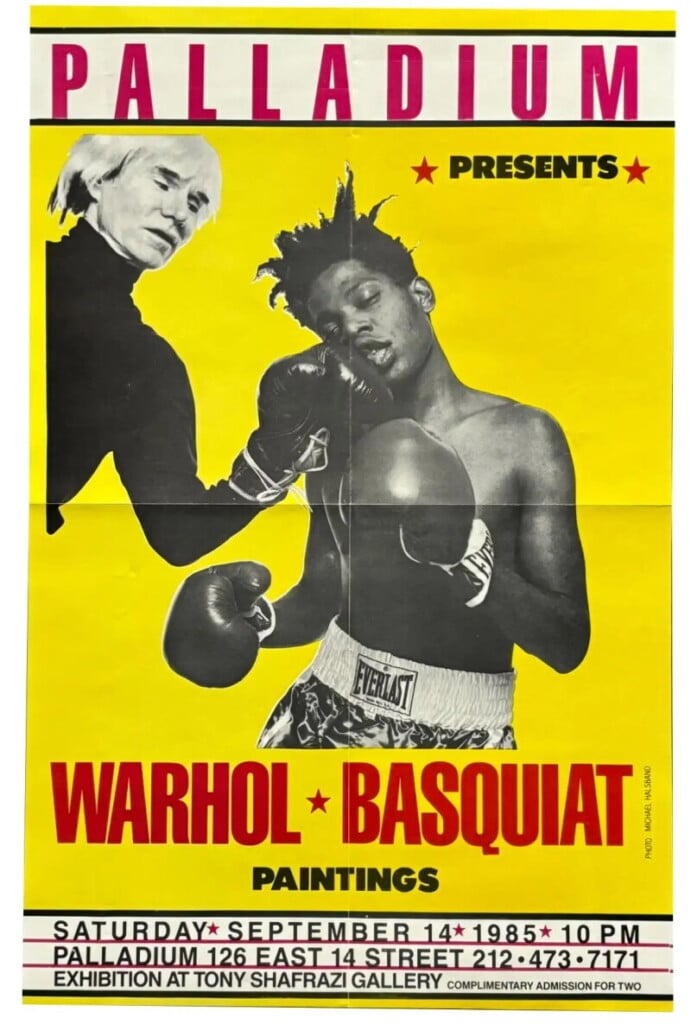
Their method works through continuous mutual interventions. Warhol inserts logos, newspaper headlines and recognizable images; Basquiat intervenes on top, erasing, adding words and figures. Then Warhol returns to the surface. He is not simply someone who completes the other’s work: every gesture forces the other to react. When in September 1985 these works have to be presented at the Tony Shafrazi Gallery, an image is needed to promote the exhibition. The idea is to treat Warhol and Basquiat as two boxers before a fight.
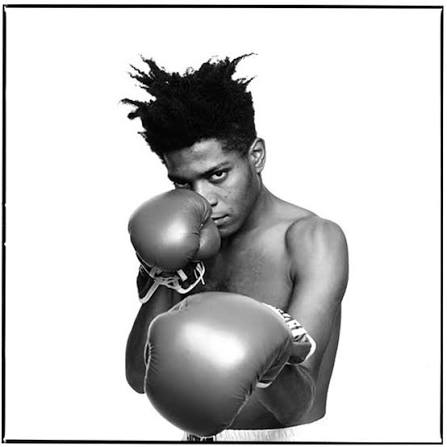
On July 10, 1985, they arrive at the studio of Michael Halsband wearing boxing shorts and gloves. Basquiat had personally chosen Halsband after following his work for years; Warhol had initially thought of Robert Mapplethorpe. Three photographs from the session would later be used to promote the exhibition. And it is here that an artistic collaboration is visually transformed into a fight.
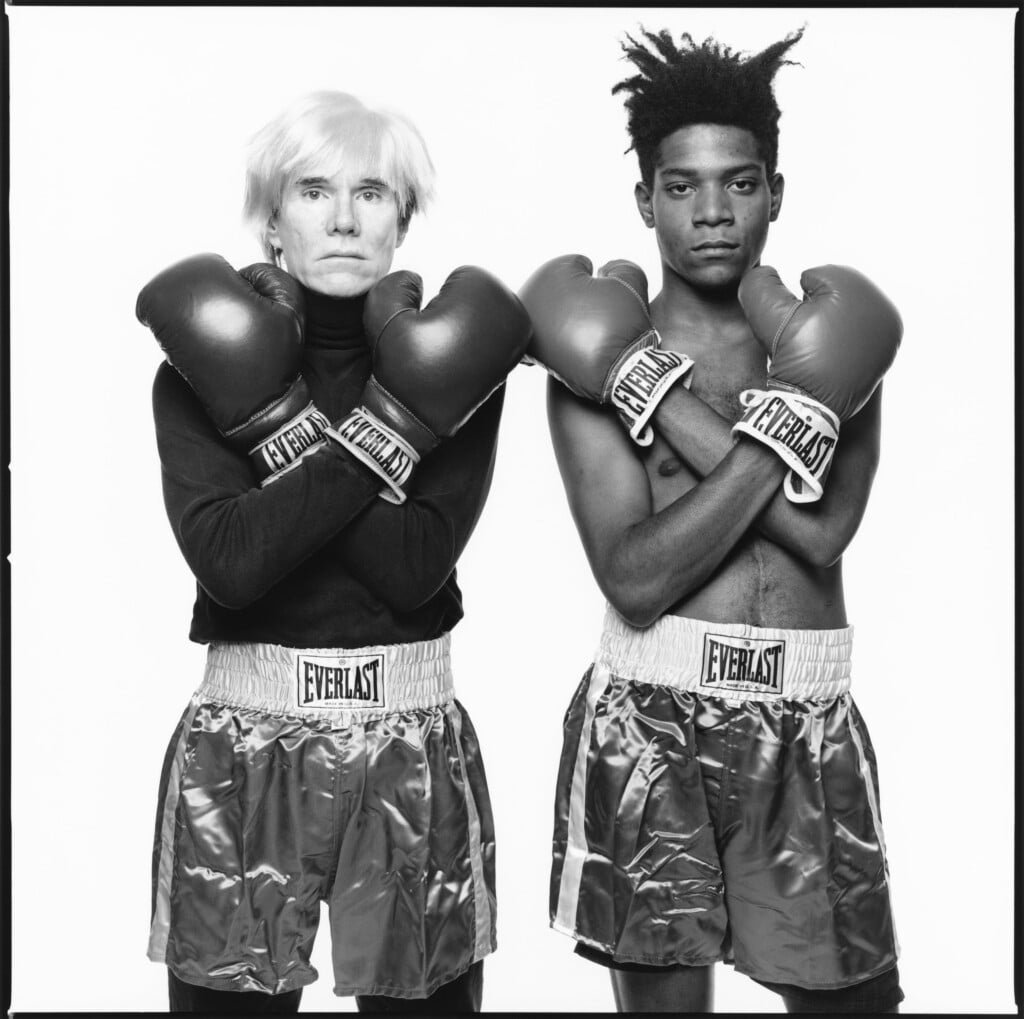
In the most famous shot, the two stand side by side against a white background, almost without any elements that might distract. The composition puts them on the same level: same gloves, same frontality, same space in the image. But their bodies seem to tell the story of two opposite characters. Warhol is covered up, rigid, almost motionless. Basquiat is shirtless, more exposed and physically present. The photograph doesn’t need a ring: the gloves and the position of the bodies are enough for us to immediately read it as a clash.
But the fight is a staging.
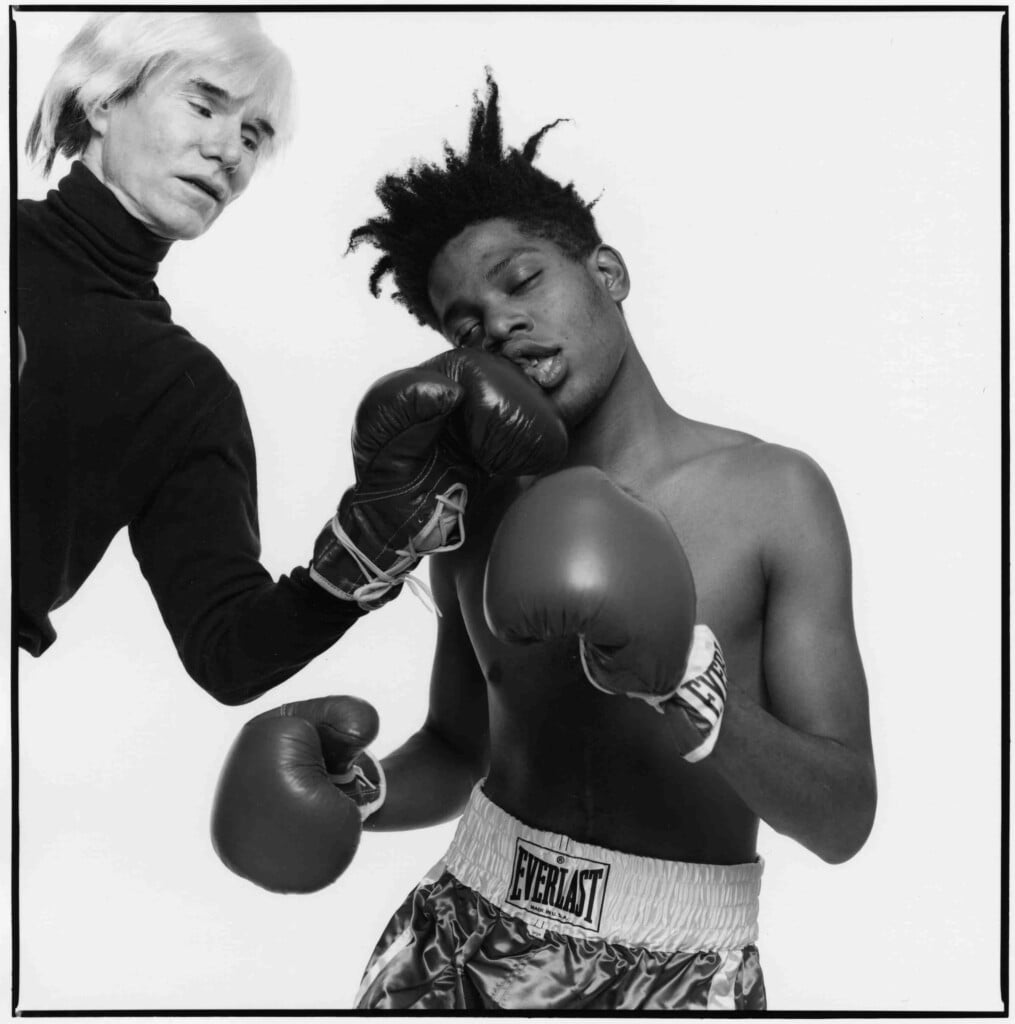
Years later, interviewed by VICE, Halsband recounted how little it took to turn a pose into a punch. During the shoot, Basquiat rests his head on Warhol’s glove. Halsband sees the scene, quickly tilts the camera and shoots. Warhol barely moves. Yet, in the photograph, he seems to have just hit Basquiat with an uppercut. The punch is born in the frame.
It is a detail that says a lot about the whole series. Halsband is not simply documenting two artists dressed as boxers: he uses pose, angle and composition to turn their relationship into a match. The camera doesn’t merely record the metaphor. It completes it. And this is exactly what was also happening on the canvases. Warhol and Basquiat did not work peacefully side by side on two separate parts of the painting. They continually entered each other’s space. They covered, modified, responded. Two recognizable languages forced to coexist on the same surface until they created something that neither of them would have produced alone.
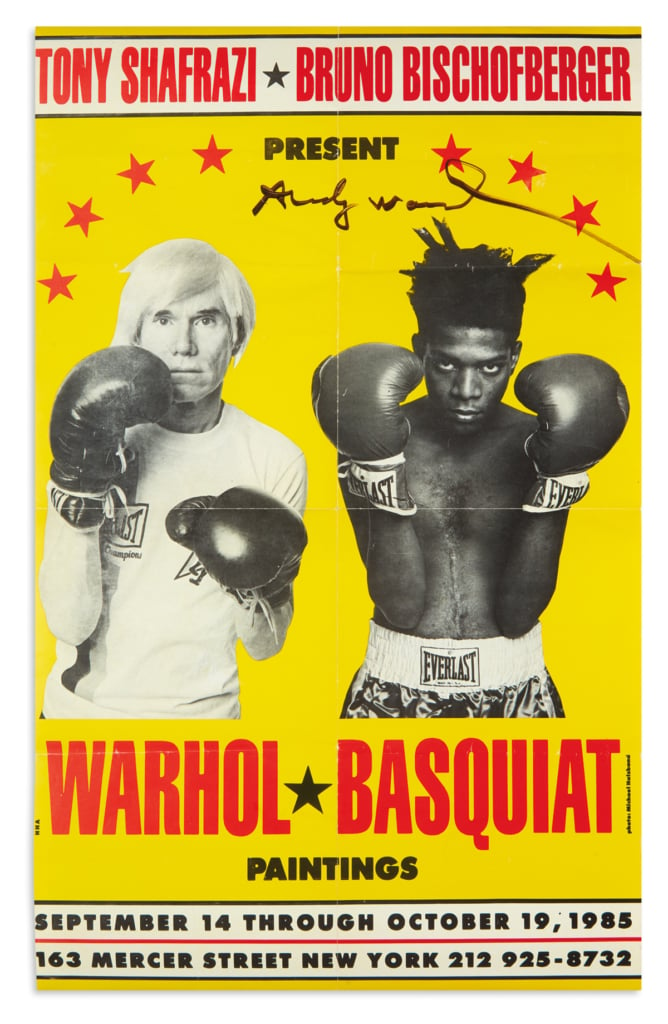
At first glance, then, the photograph says “Warhol versus Basquiat”. But looking at it more closely, almost the opposite happens. The two do not occupy opposite corners of a ring. They are very close. They have the same pose, wear the same gloves and are constructed photographically as two parts of the same image. Everything highlights their differences, but neither of them truly works without the other. The photograph stages a rivalry to tell a collaboration. What was born as promotional material for an exhibition thus becomes one of the definitive images of the relationship between Warhol and Basquiat. Not because it tells us who would have won the match. But because it tells what they did when they painted together: entering the other’s work enough to force them to react.
This article was created in collaboration with @superottomag and written by Gabriel Pisano.