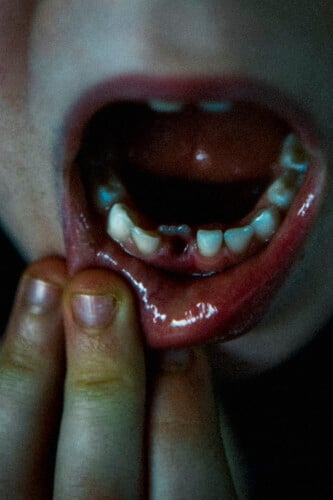
The photographer Zhang Jingxiang has a habit that goes against the rhythm of social media: he develops his rolls of film and then waits. He looks at them closely only after a long time, when memory has already smoothed out the details. At that point, he says, it is the negatives that win out: rough and soft at once, they bring back sensations that no digital photo has captured, like the coolness of rain in the wind, the dampness of the soil by the river, the warmth of the sunset on the arm.
In Zhang Jingxiang’s photographs almost nothing happens, and that is exactly the point. A slice of watermelon on a cabinet, lilies wet with rain, a Milky Way above a village: his is a photography that works by accumulating small things, until they feel like a memory.
Zhang Jingxiang was born in Henan Province, China, and lives and works in Tokyo. He graduated from Shanghai Jiao Tong University in 2020 and from the Graduate School of Photography at Tama Art University in 2024. His solo exhibitions include work presented in Shanghai, Chengdu and Zhengzhou in 2023 and 2024. The Jiangxi series was born from a return: for two consecutive summers the artist went back to the mountains in the south of the province.
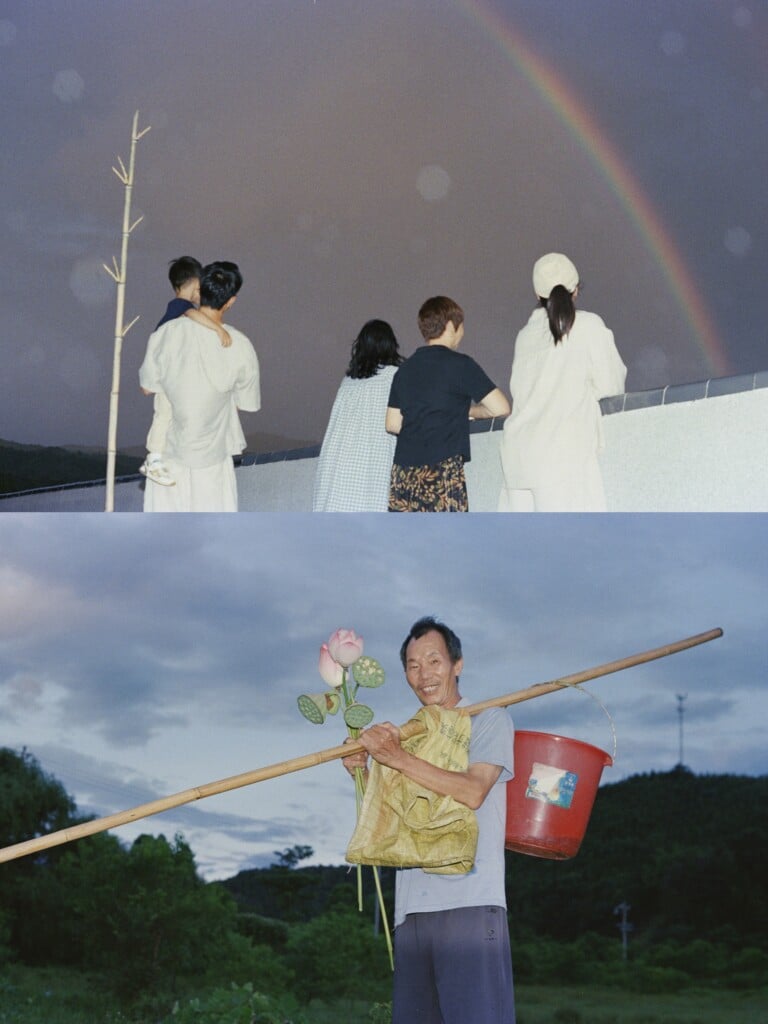
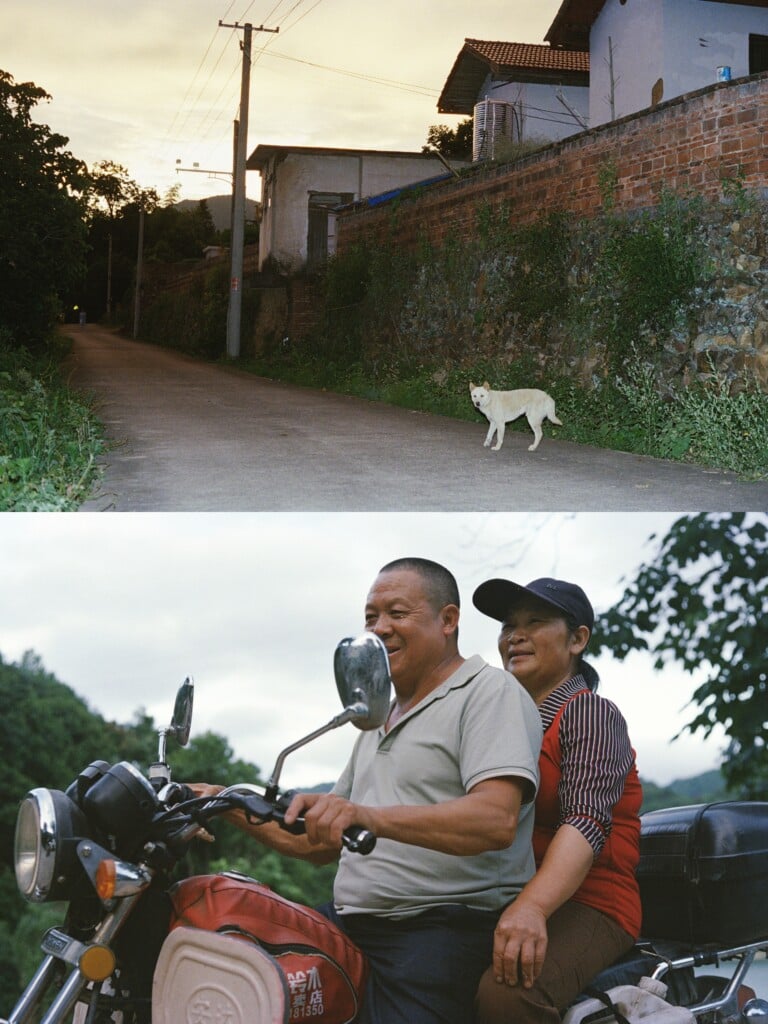
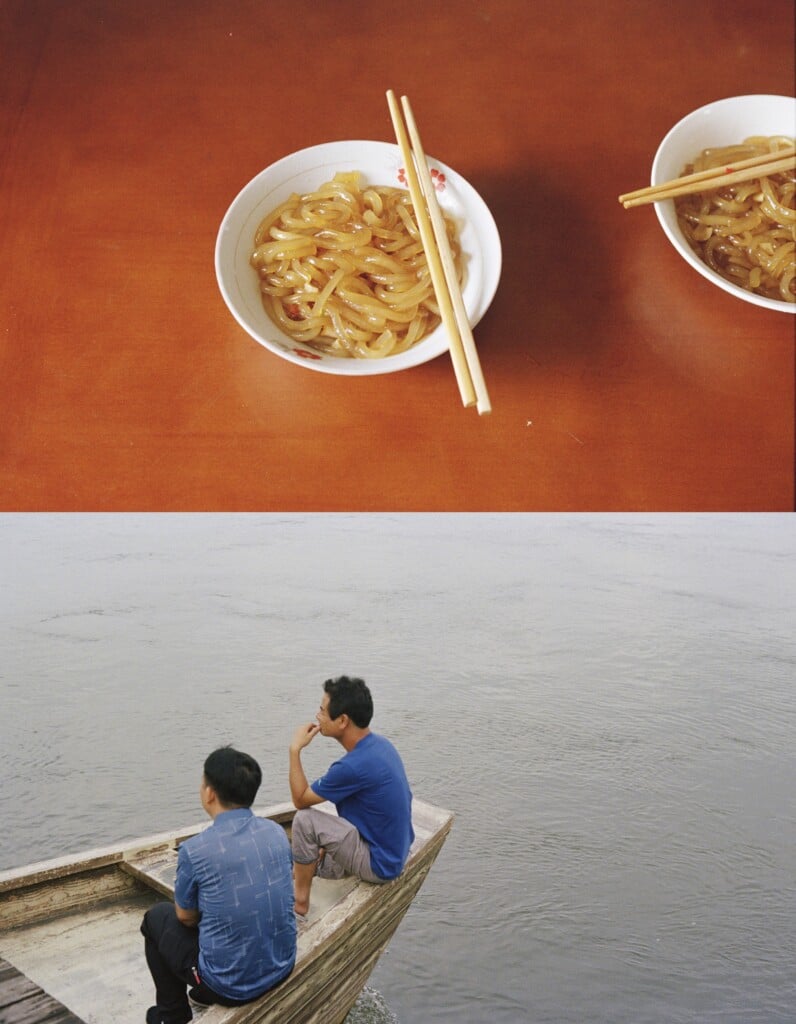
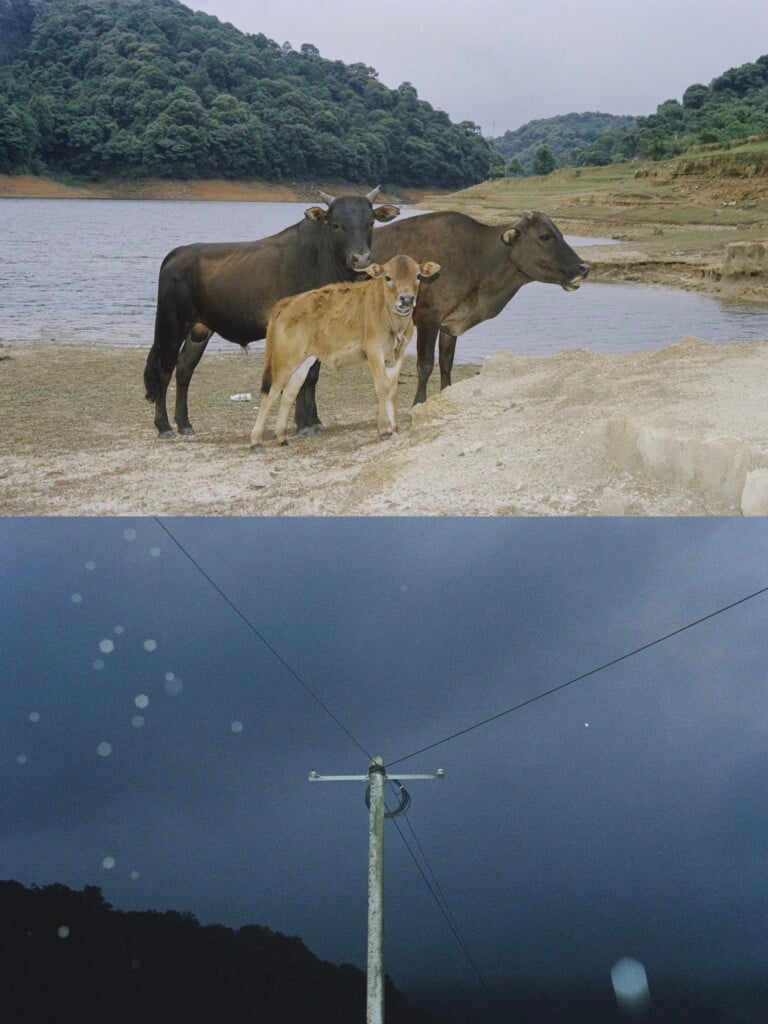
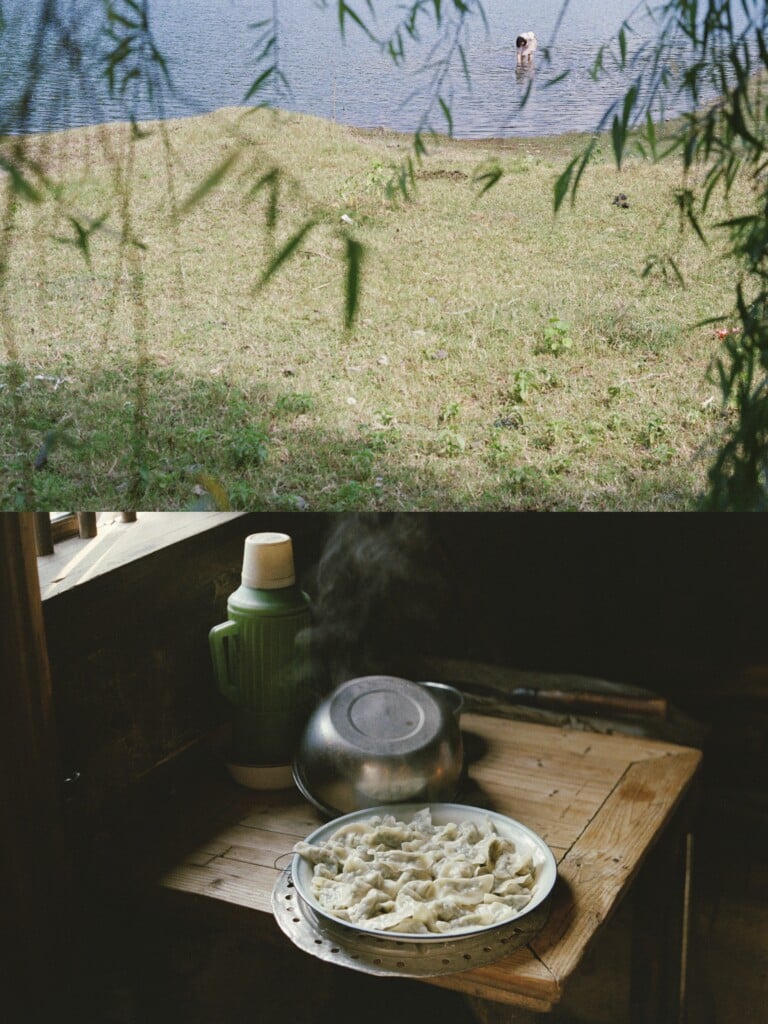
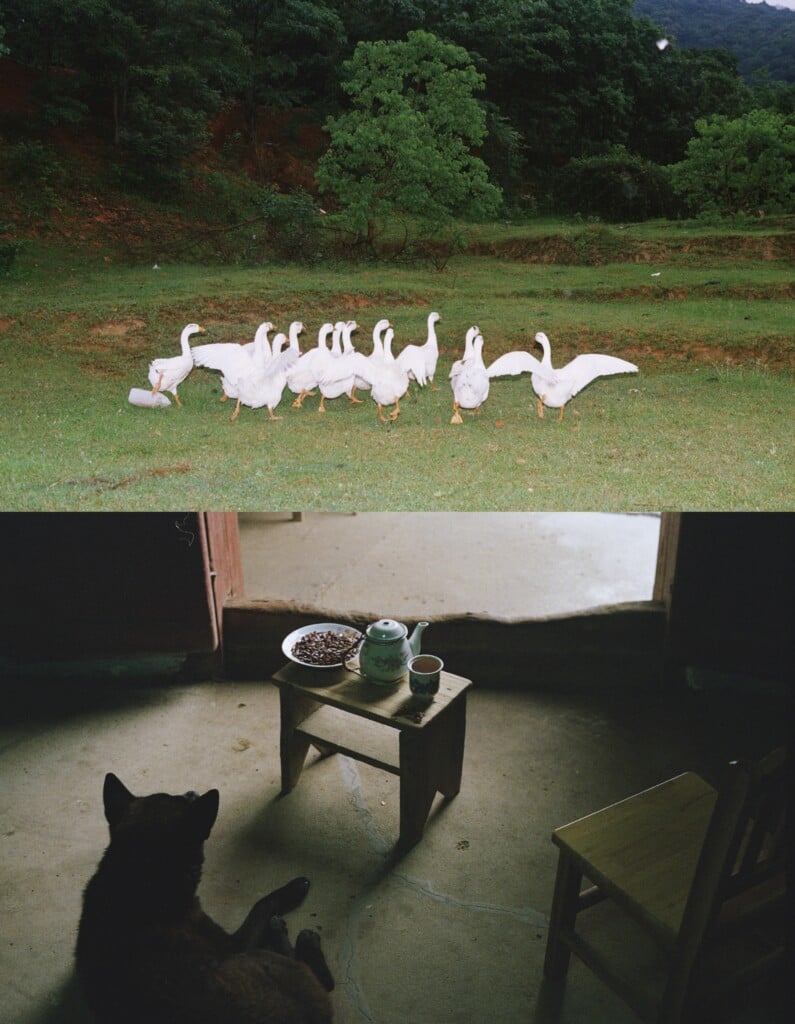
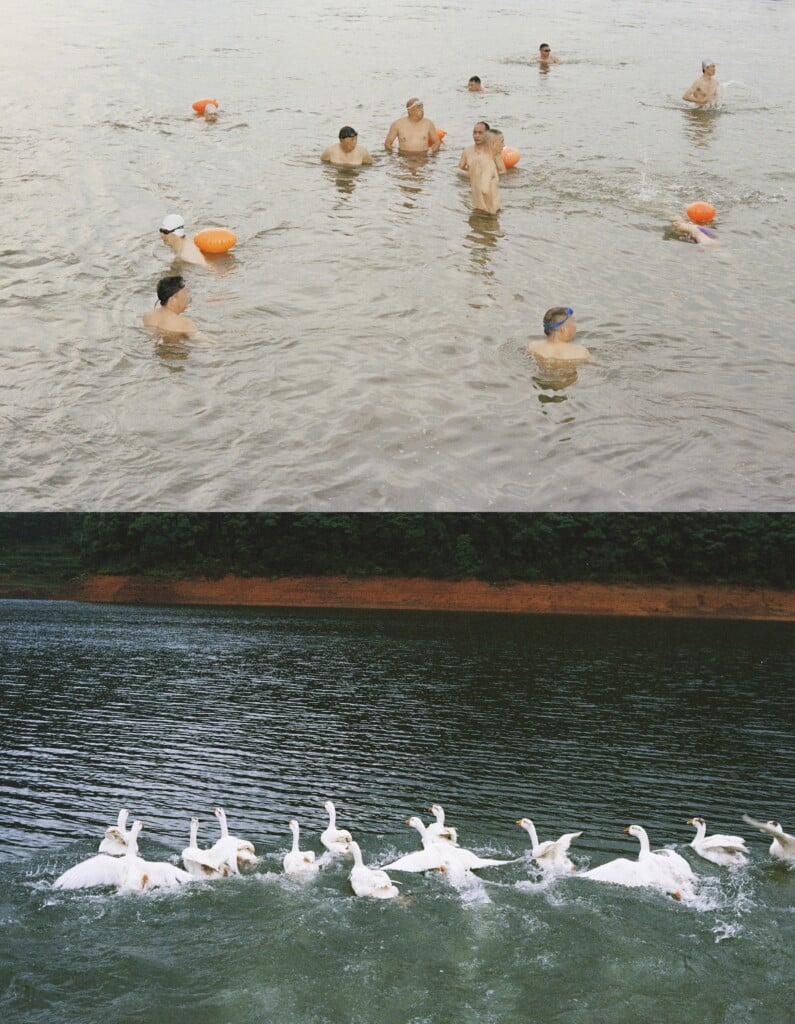
In his words, the landscape is made of details: the wind over the lotus ponds, red dragonflies above the damp earth, geese in the fields, rice swaying between greens and yellows. After the rain the evenings are quiet, dinner ends with watermelon and two rainbows appear behind the hills. At night the Milky Way brings with it a longing for home, faint and hard to explain.
The Jiangxi series, however, began with a work proposal. In April, a woman the author calls Mo Jie (末姐) wrote to him and invited him to spend a few days at her estate, the Duo’er Manor (朵儿庄园), in the mountains of Ganzhou, in southern Jiangxi, to create work about her and her hometown. Zhang, who describes himself as slow to warm up to people, hesitates, but goes. During the car ride, under heavy rain and with the forest seeming to swallow the road, the two immediately feel at ease. At one point Mo stops the car on a mountain pass and points to a lake in the mist, at the bottom of the valley: it is her homeland.
There was no commission to carry out, however. The estate had long been abandoned, with a treehouse full of dry branches and a studio on the lake covered in moss. Mo told him not to think about photos: to live there a few days and shoot only when something moved him, without making a video or promotional photos. He accompanied her in her return to her hometown after years of being lost, and in the new beginning of her life at the estate.
The days pass between sun and rain. The strongest scene, however, is another. Passing by the village’s ancestral temple, the two discover that the old commemorative gateway (paifang) has been dismantled and abandoned on the riverbank. Mo walks through the mud to the pile of wood and caresses the broken red beams. Zhang stops a little farther away and shoots in silence. Keeping this distance, in the story, is perhaps his idea of photography.
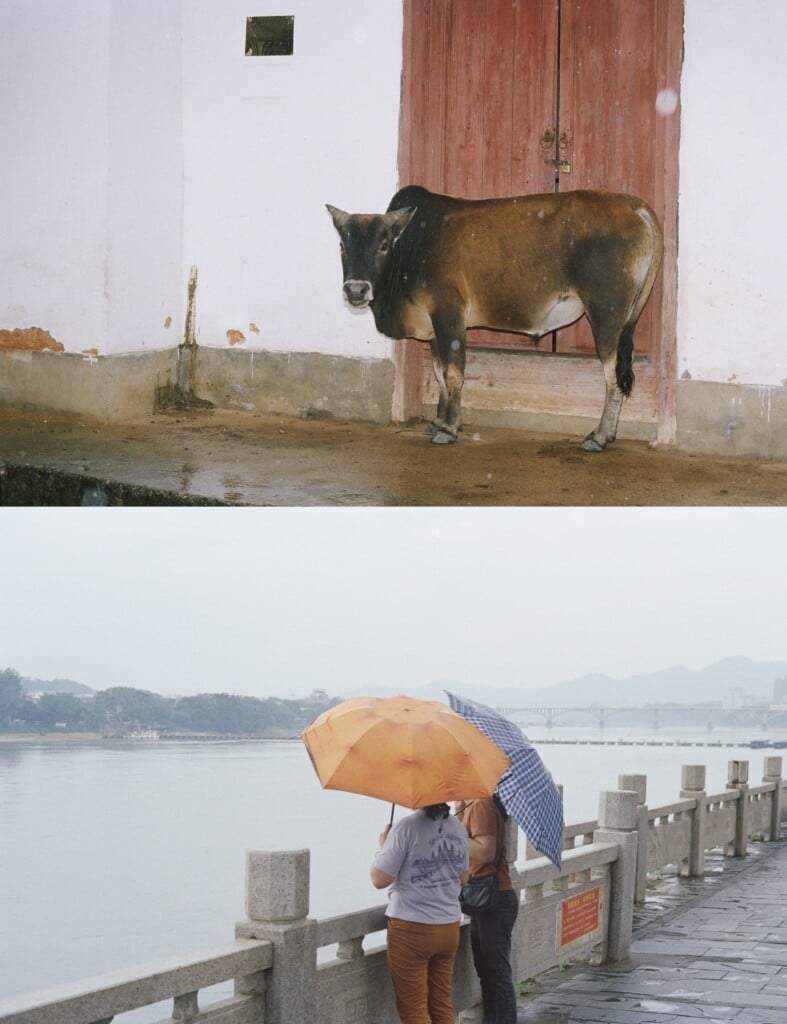
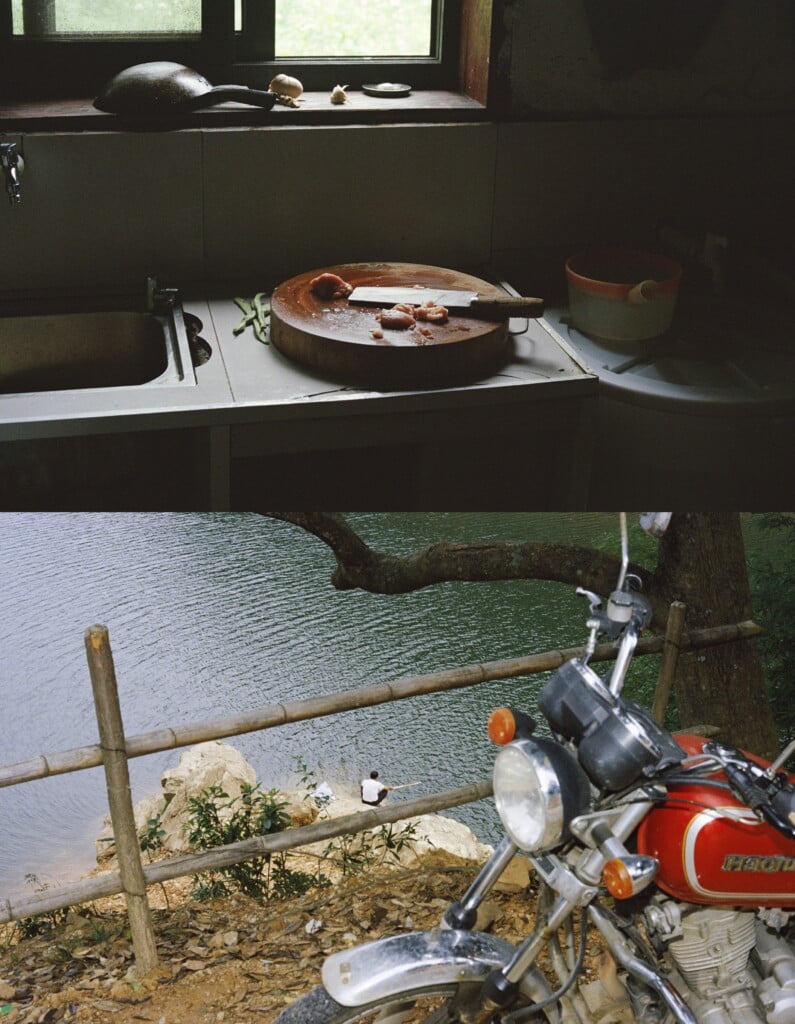
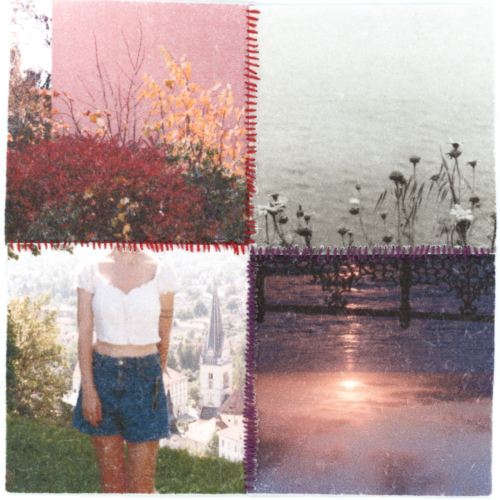
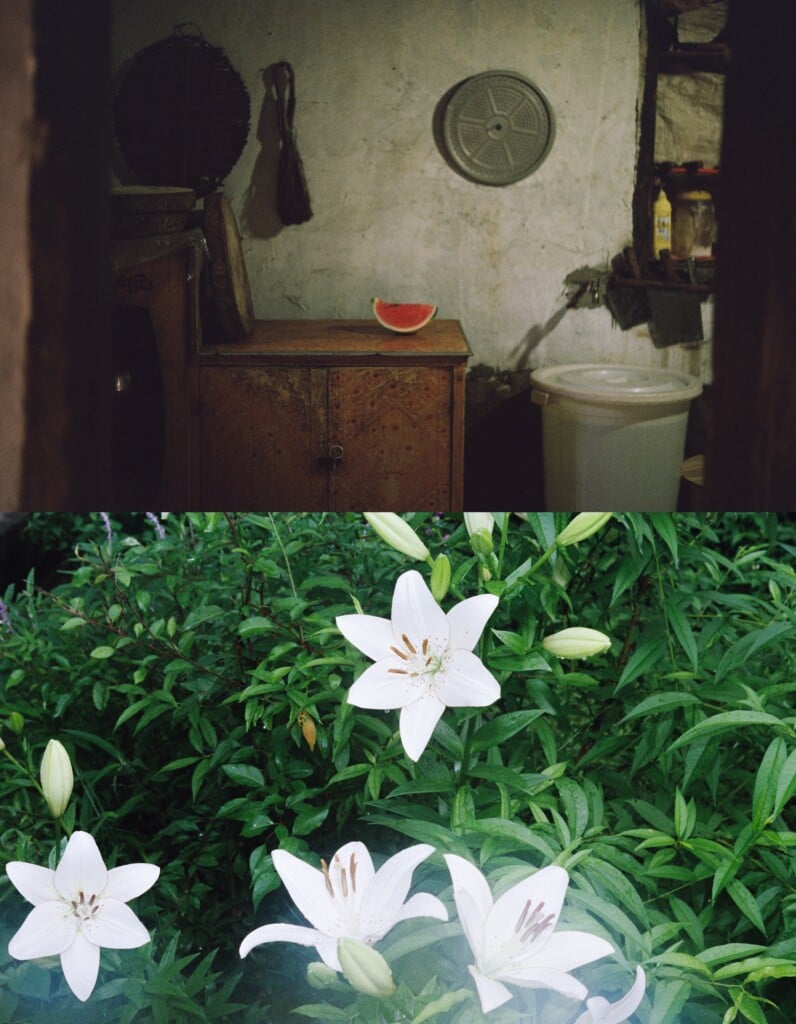
The photos that accompany the series are made up of two stacked images. At the top, a dim interior: a time-worn wall, a hanging basket, a broom, a metal lid, and on a dark wooden cabinet a single slice of watermelon, the only bright spot of color. Below, white lilies among dense, wet leaves, with a bluish veil of light rising from the edge. Inside and out, the intimacy of a room and the abundance of the garden: the watermelon, which in the text is the evening ritual, is the point of contact.
Jiangxi is not the only place where Zhang looks for home. In 2024 the Sony Imaging Gallery in Ginza hosted his exhibition The Longest Memory. It tells of a return, after three years, to a small town in the Zhongyuan region, where skyscrapers under construction are slowly swallowing childhood memories. Zhang shoots with a sense of farewell and asks himself what a hometown really is, and whether it would still exist once the familiar landscape is gone. They are different places and projects, but the underlying question seems the same. In the Jiangxi series there is no tension of change, and a sweeter, more contemplative tone prevails. Nostalgia remains, however, and takes the form of small, everyday objects, like a slice of watermelon in a dark room.