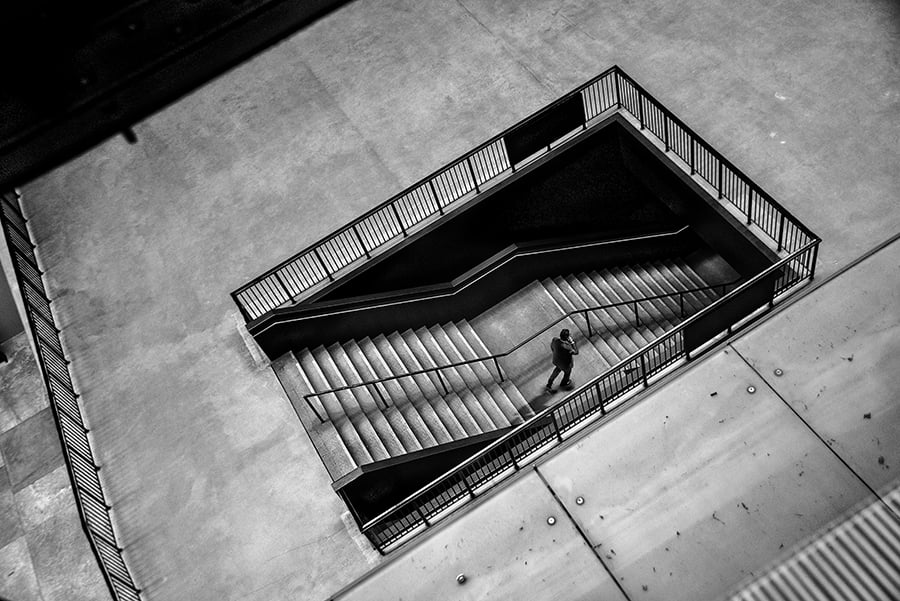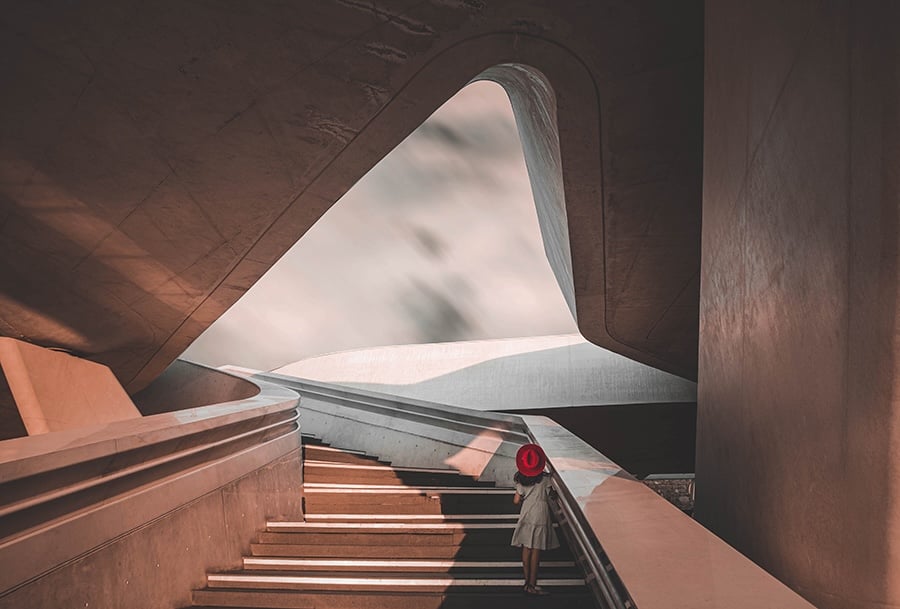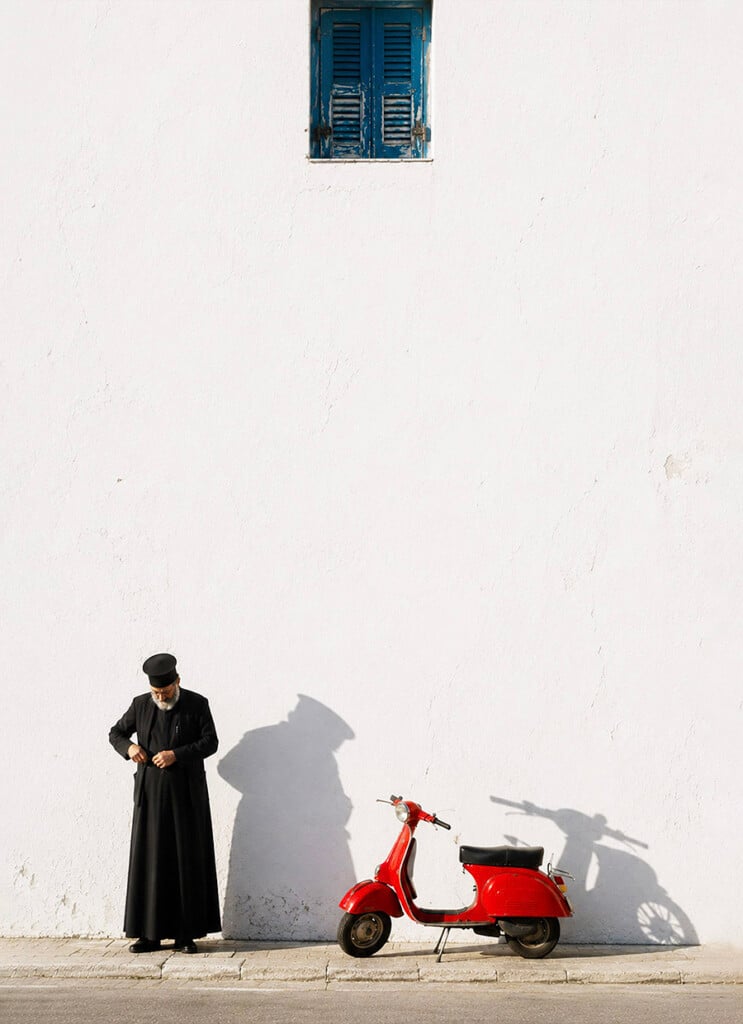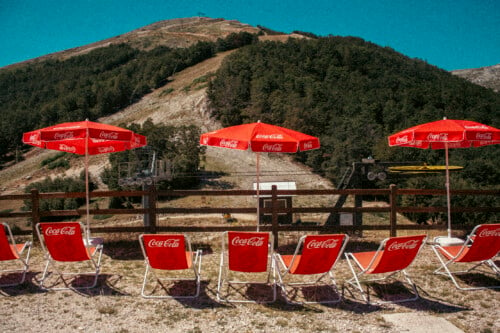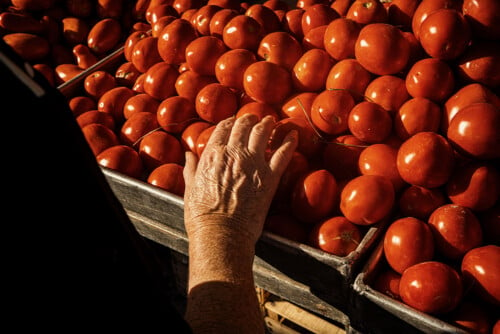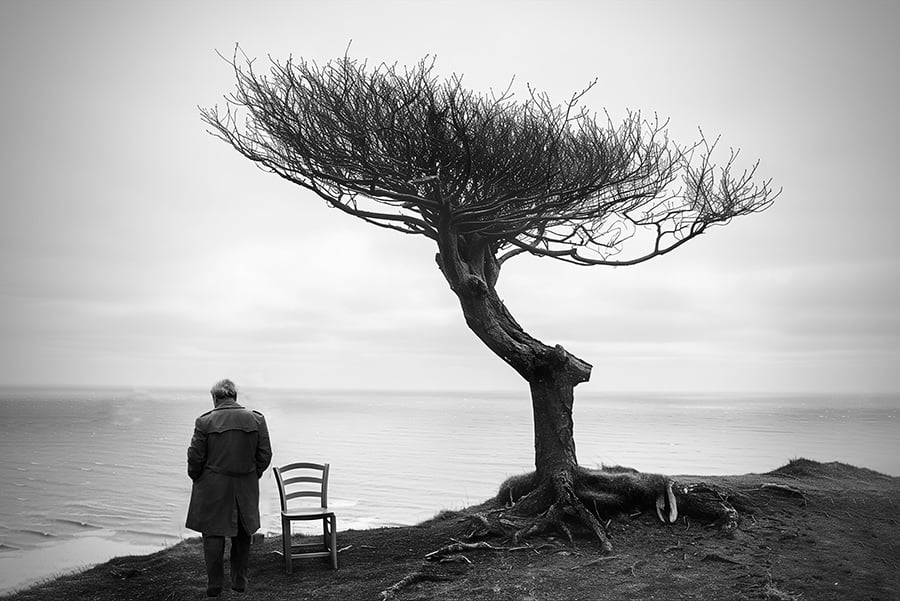
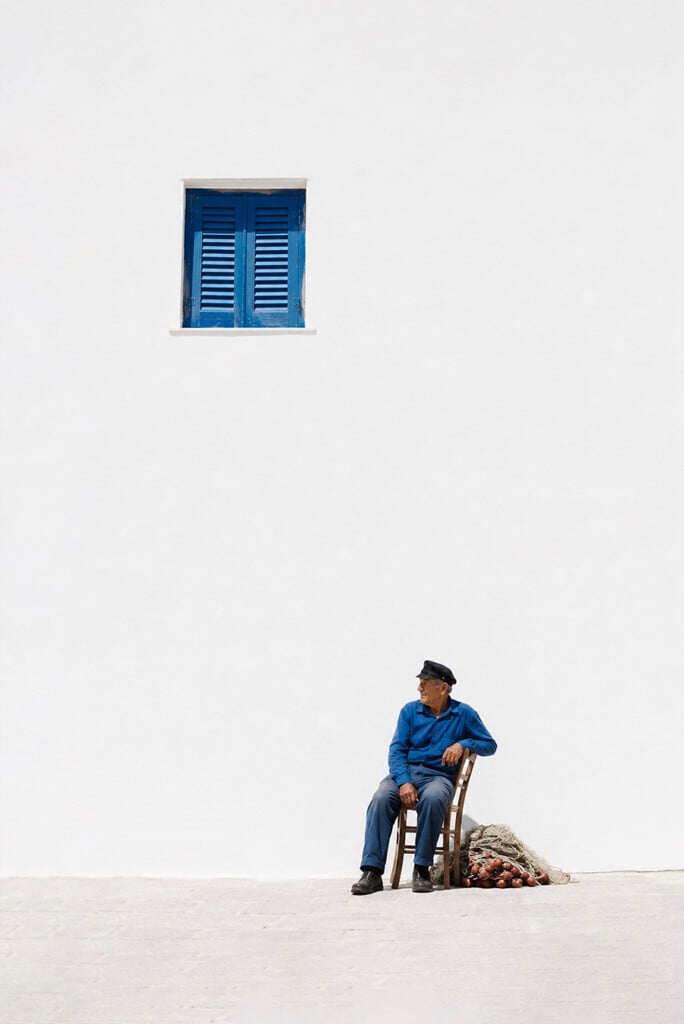
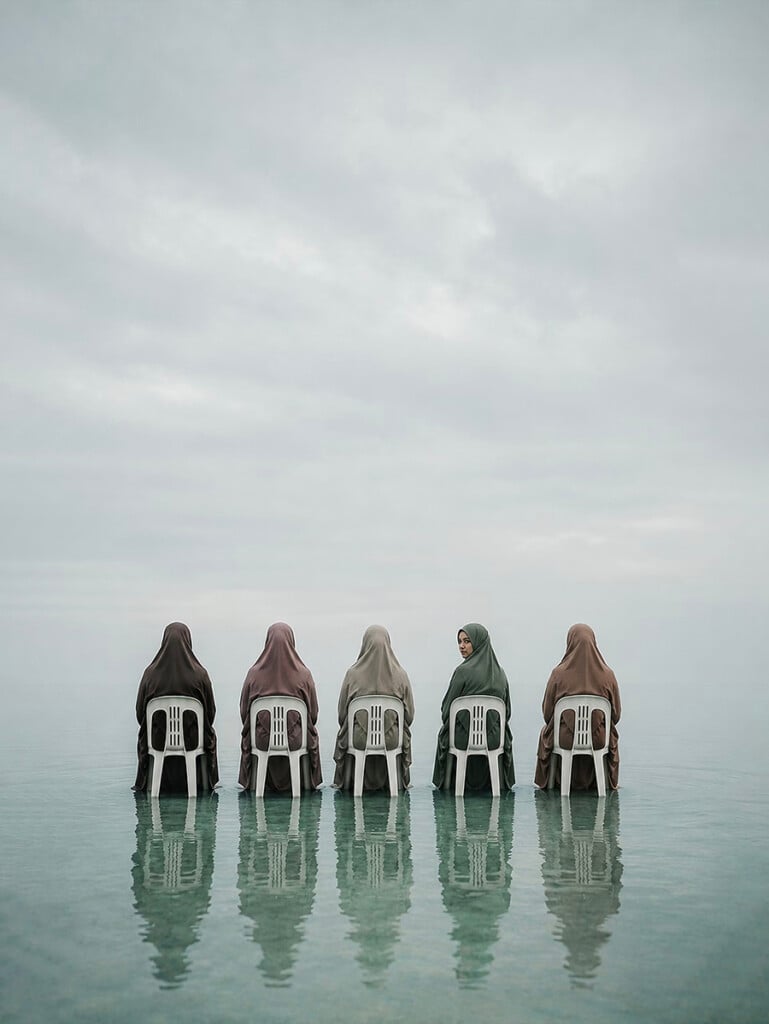
In Helena Georgiou’s photographs, not much often happens, at least on the surface, but it’s precisely in this space stripped down to the essential that the images start to speak. A figure seated against an almost entirely white wall, a tree bent by the wind in front of the sea. Five chairs suspended over the water. A shadow that crosses a wall and turns architecture into an abstract composition. Scenes that, taken individually, seem to belong to the ordinary, but that through her gaze take on a different, almost unsettling balance.
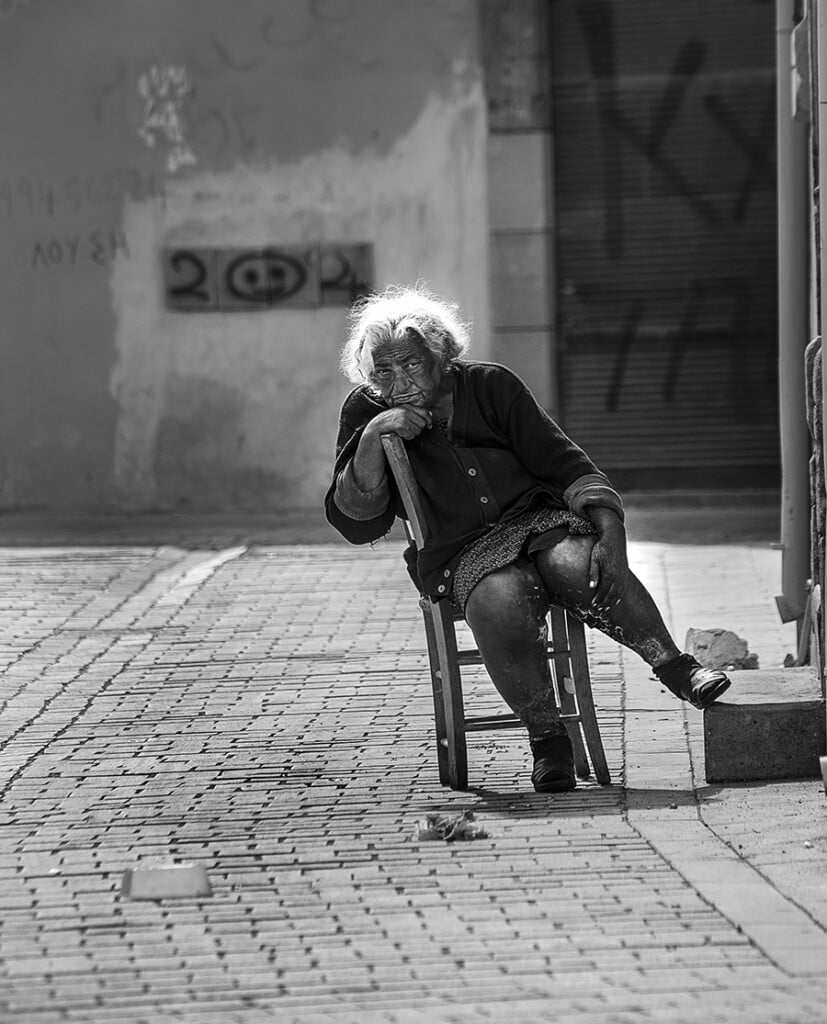
Born and raised in Nicosia, Cyprus, Helena Georgiou has a background spanning photography, interior design and the history of architecture. The photographer studied Interior Design at the University of Nicosia, photography and journalism at Michigan State University, and the history of architecture at the Harvard Extension School; her path also includes studies in the history of photography and, more recently, archaeology and history.
It’s a background that helps explain certain constants in her work, such as her attention to proportions, lines, surfaces and, above all, the way a figure can alter the perception of a space. Even before telling a story, Georgiou builds the image through what she decides to leave inside and outside the frame.
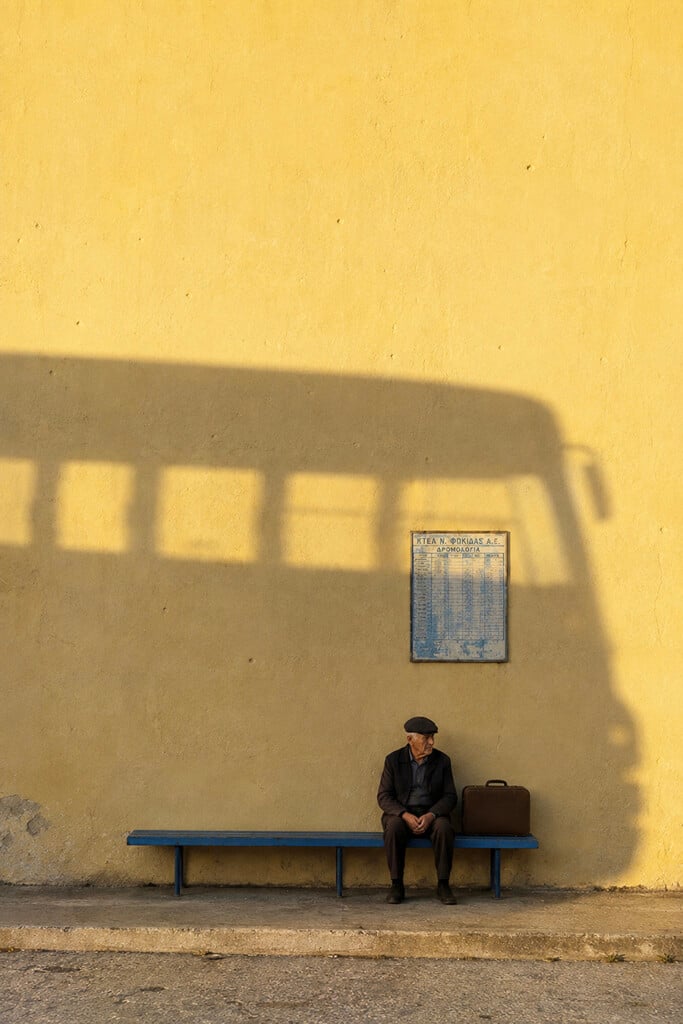
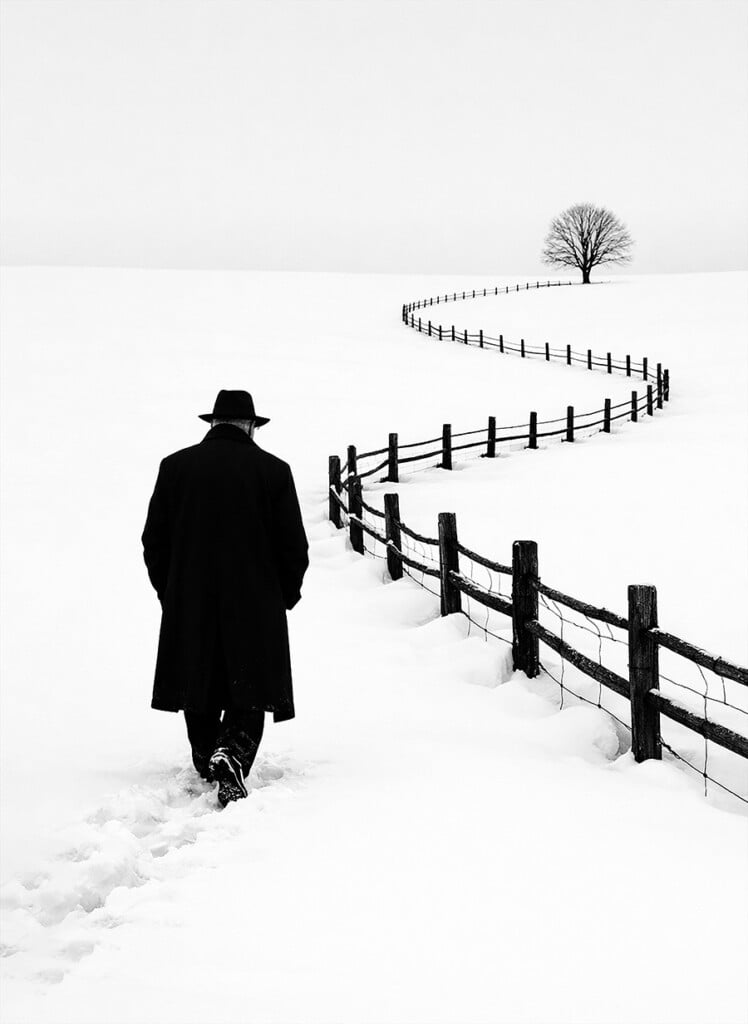
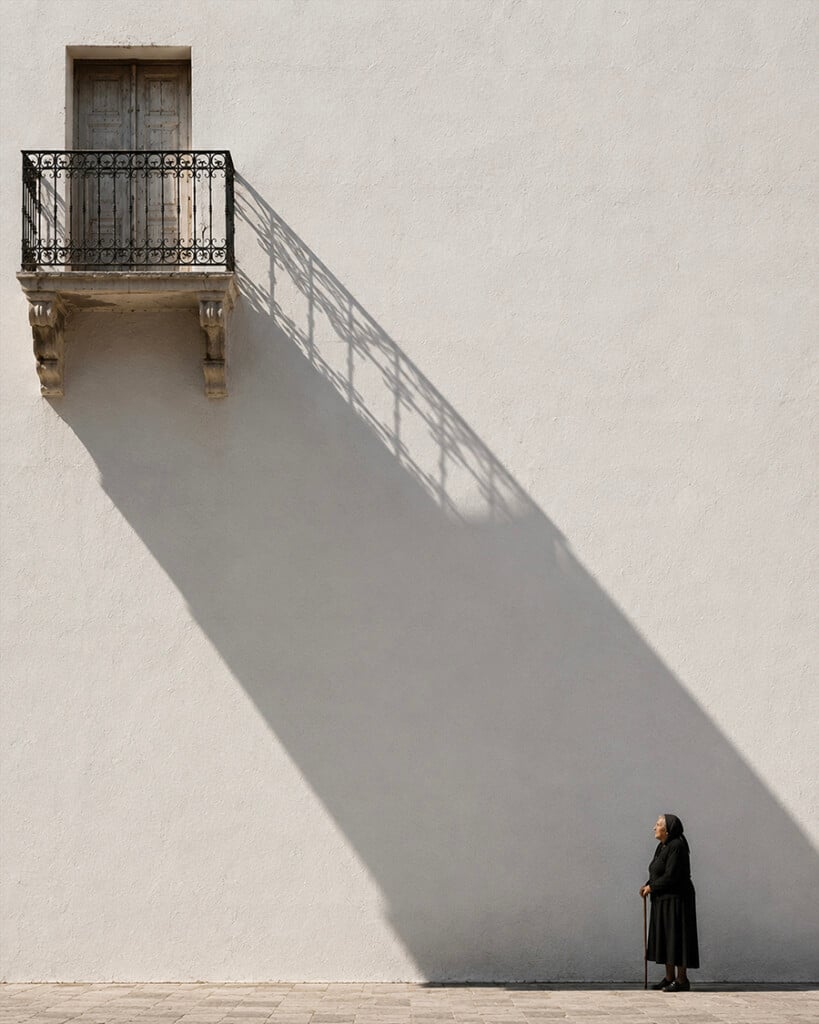
In Helena Georgiou’s photographs, people often seem to nearly disappear into their surroundings. A woman dressed in black becomes a vertical point next to the long shadow of a staircase; a man sits beneath a small pale-blue window; a figure crosses a snowy landscape following a fence that fades toward the horizon. Human presence, then, doesn’t necessarily serve to tell us who we’re looking at. It becomes a measure, something that lets us perceive the scale of the architecture, the distance, the emptiness.
Her work isn’t limited to documentary photography, however; Georgiou’s portfolio brings together street photography, portraits, architecture, still life, minimal photography and images obtained through digital manipulation.
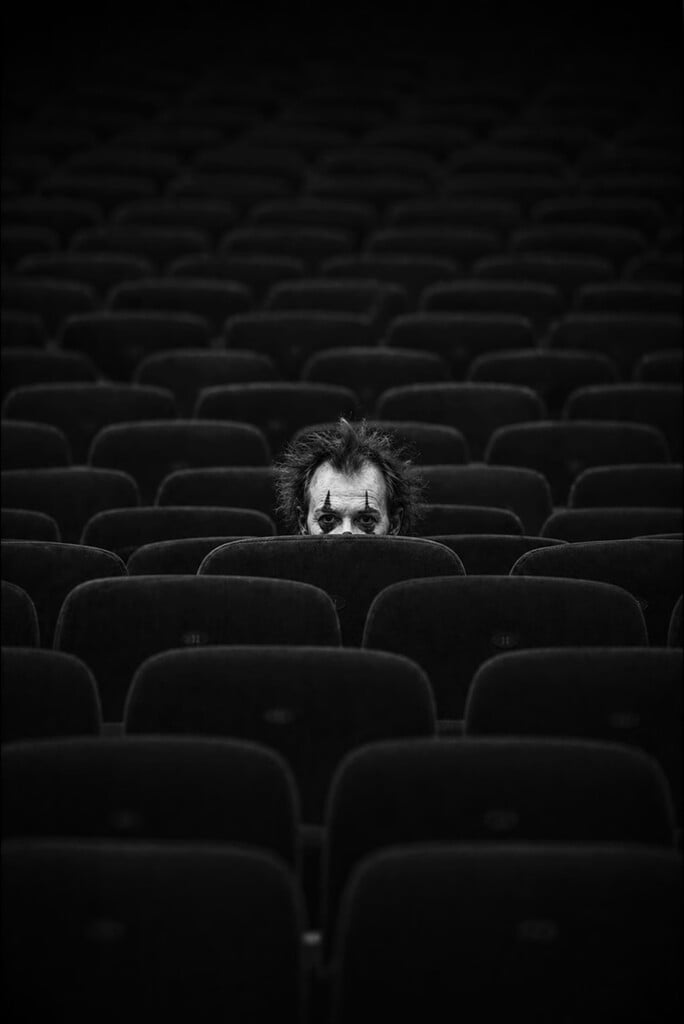
This dimension emerges especially when reality is recomposed until it becomes almost unreal. A row of chairs facing the water, for example, doesn’t need any obvious intervention to look like a staged scene. In the same way, in the black-and-white images, the contrast between a person and an empty space can push an everyday situation toward something more undefined. Georgiou also received an Honorable Mention at the Monochrome Awards in 2016 and 2019, both in the Photomanipulation category.
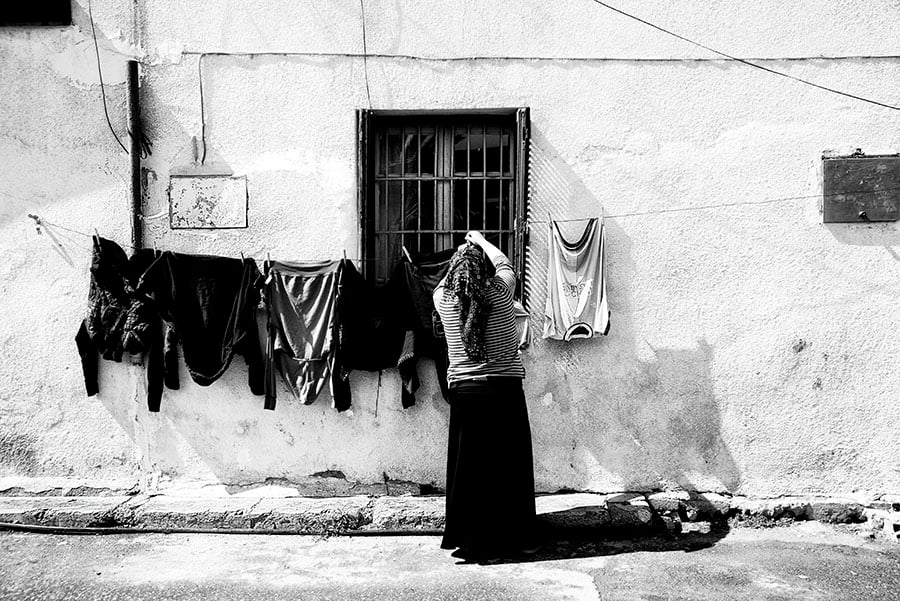
But it’s above all the relationship between observation and construction that makes her approach recognizable. The camera doesn’t seem to merely record what’s in front of it: it selects, orders, simplifies.
In many of her photographs, light isn’t simply what illuminates the scene, but part of the scene itself. In the black-and-white works, on the other hand, the transition between light and shadow accentuates the structure of the spaces even further. This attention also finds an explanation in the photographer’s own words: in various interviews she has emphasized the role of light, shadows, texture, pattern and symmetry in building her images, linking it also to her own background in design and architecture.
The result isn’t photography that necessarily seeks out the event. Helena Georgiou’s photography is one that focuses on the possibility of looking longer at something that, in everyday life, we would risk passing by without noticing.
Over the years Georgiou has exhibited in various international contexts. These include the European Parliament in Brussels and Strasbourg, and Somerset House in London, as part of exhibitions linked to the Sony World Photography Awards. In 2024 she was also a finalist in the National & Regional Awards of the Sony World Photography Awards.
Her research continues to move between the observation of everyday life and the construction of more suspended images, without giving up its documentary component. It’s this oscillation that makes her photographs interesting: what we see is real, but the way it’s organized within the frame forces us to consider it from another perspective.