For over two years, photographer Frederik Rüegger traveled across Great Britain and Ireland, following the Travellers’ horse fairs, the nomadic community historically associated with the Romani people. His book, I’m A Stranger In This Country, was born along provincial roads and in the squares of small towns where caravans gather. But let’s see what it’s about.

The images are vivid and layered: the smell of wet earth and leather, traders bargaining loudly, hands stroking glossy manes, children running, musicians improvising. The fairs remain places for horse trading, of course, but also for sociability and culture, for sales and encounters that strengthen family and community bonds.
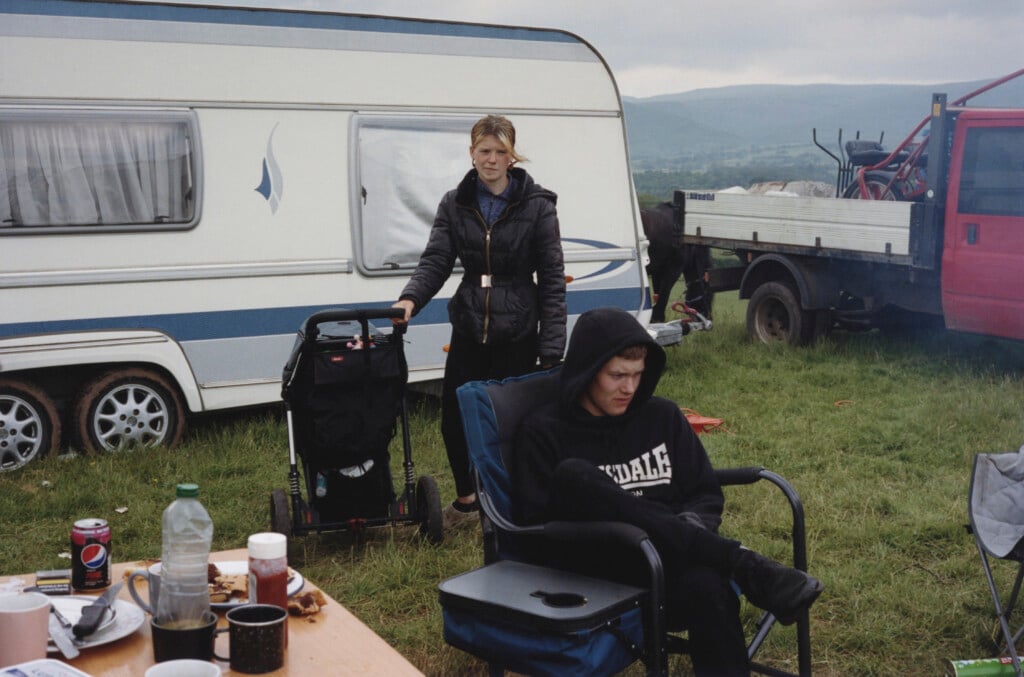
The title, however, declares a double estrangement: that of the author, who recognizes himself as a visitor, and that of the Travellers, often perceived as “outsiders” in British and Irish society. Rüegger’s camera moves with curiosity and respect, seeking the right distance: close enough to feel the crowd’s breath, restrained enough not to intrude.

The spark for the project is personal: a boxing enthusiast, Rüegger discovered that heavyweight champion Tyson Fury has Romani roots. From there came the desire to tell a way of life under pressure today, amid the shifts of contemporaneity and the prejudices of a post-Brexit Britain that struggles to recognize what does not fit into narrow identity frames.

The photographs do not aspire to an impossible neutrality: they are a celebration of gaze and invention. Dense compositions, sudden cuts, bodies entering and leaving the frame, a light that shifts as quickly as the northern weather. The image embraces the unforeseen: reflections on tack, gestures that burst, a horse rearing up against the backdrop of a fairground ride.

Between a handover of money and a handshake, the project reveals the community’s everyday fabric: caravans polished to a shine, stalls of tools, Sunday best, laughter, pride. There’s a sense of festivity that coexists with the toil of work and with the need to defend traditions that are not folklore, but identity in action.

“Being a stranger” here is not a label, but a point of view: a stance that questions the viewer and asks for stereotypes and snap judgments to be suspended. Rüegger doesn’t smooth away conflicts, but restores complexity and dignity, reminding us that photography can be both testimony and encounter.

I’m A Stranger In This Country is therefore more than a document: it is an act of presence. It archives without embalming, celebrates without exoticizing. It preserves the memory of a culture in flux and entrusts it to pages that carry with them the feel of the fair and the street, with the awareness that belonging is a verb, not a fence.