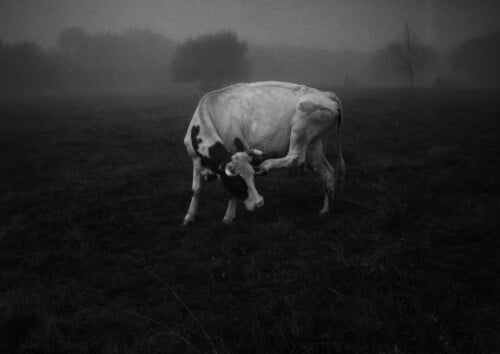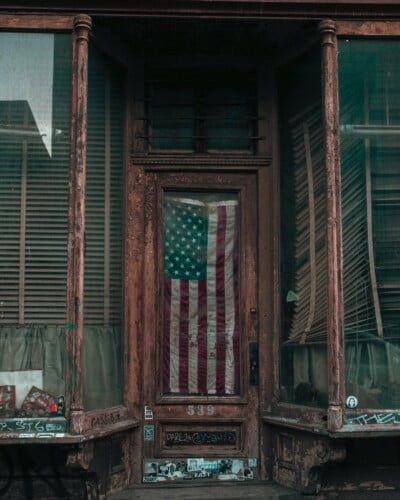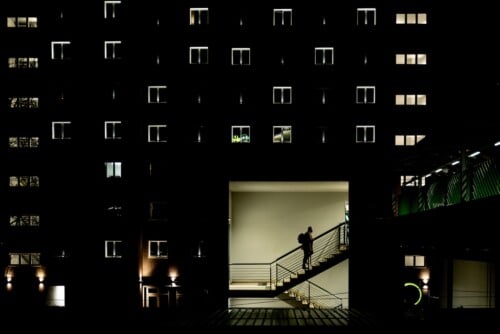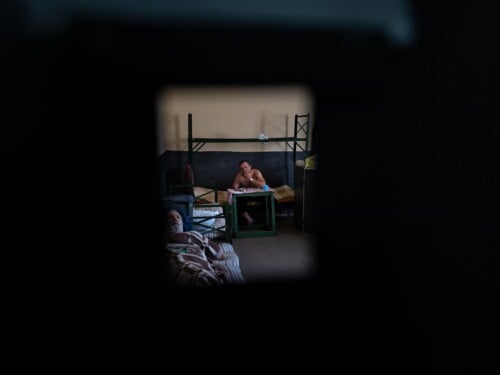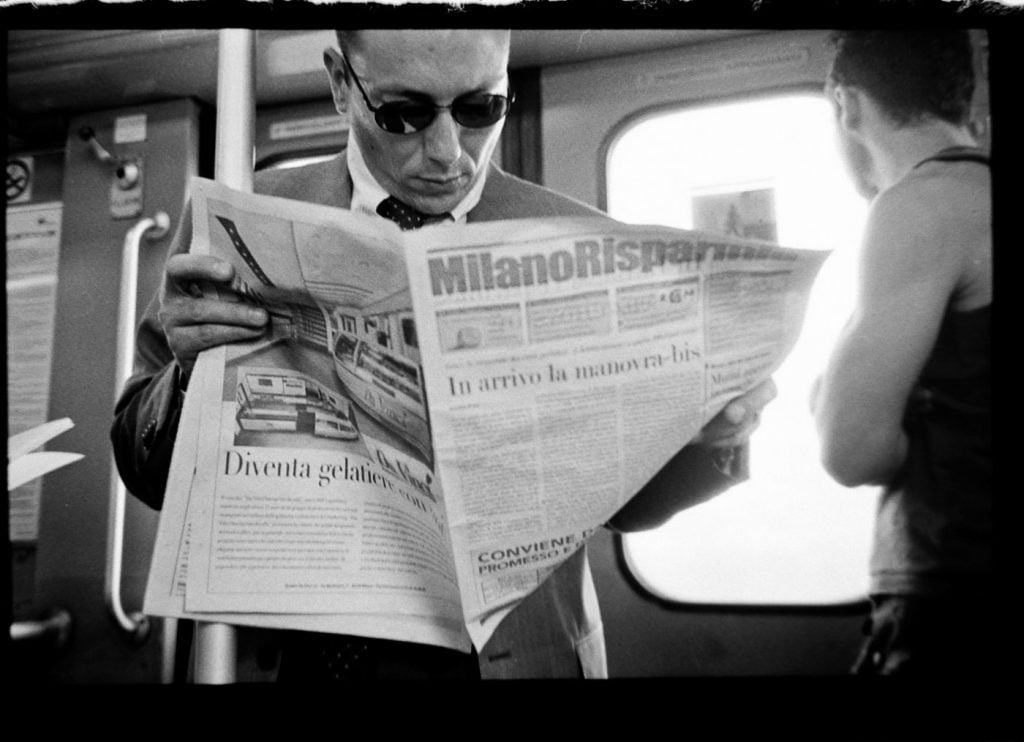
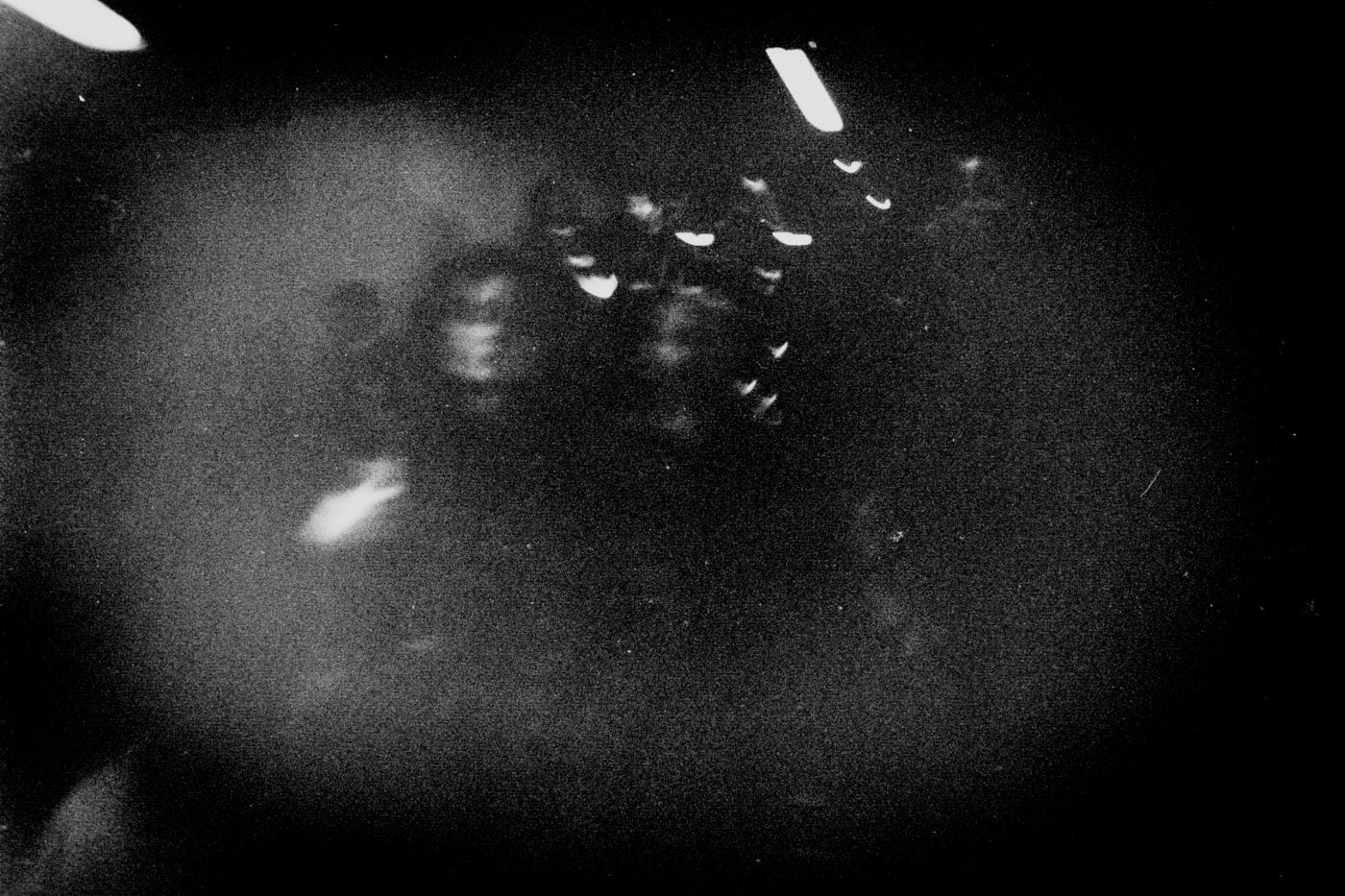
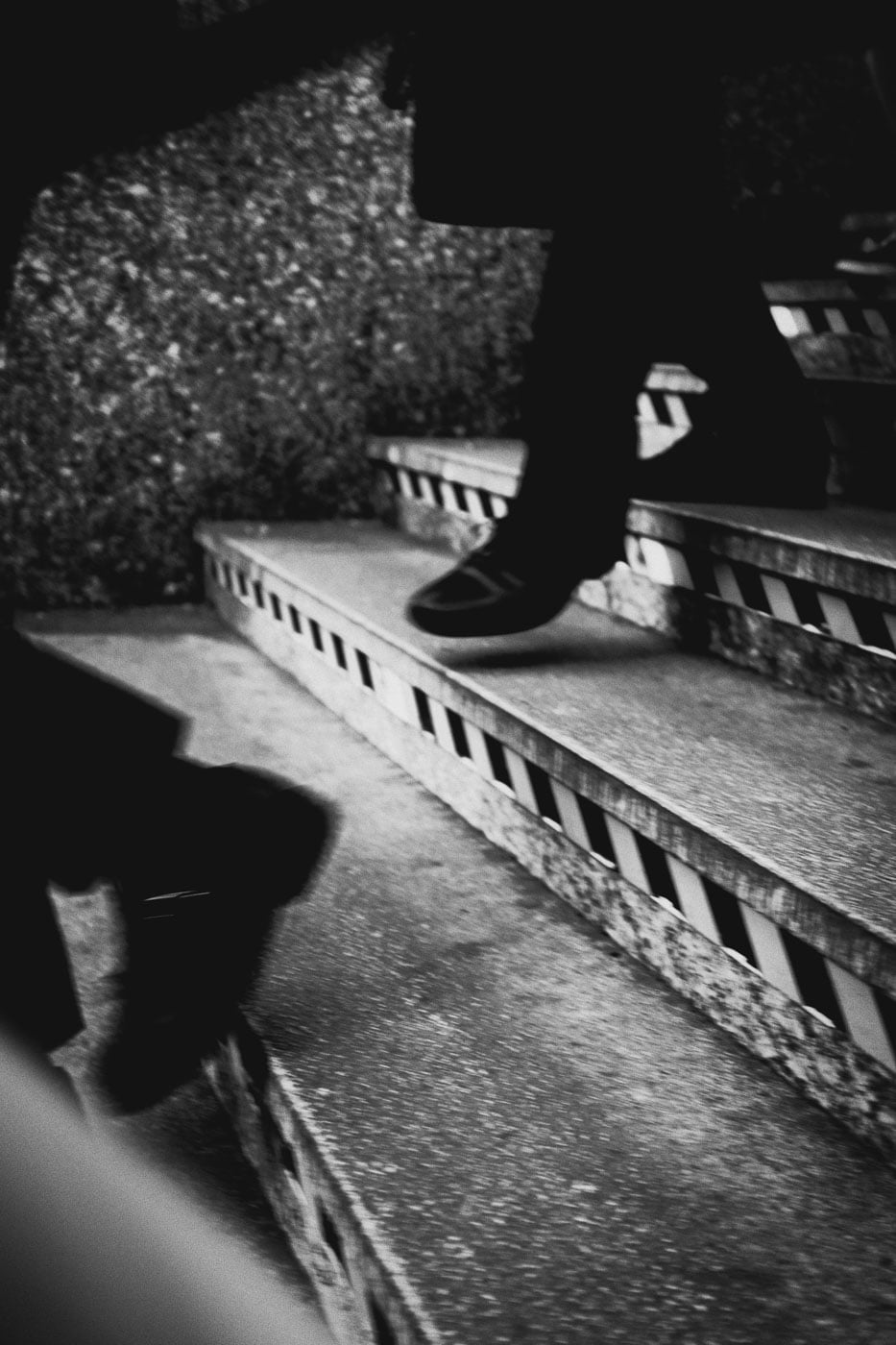
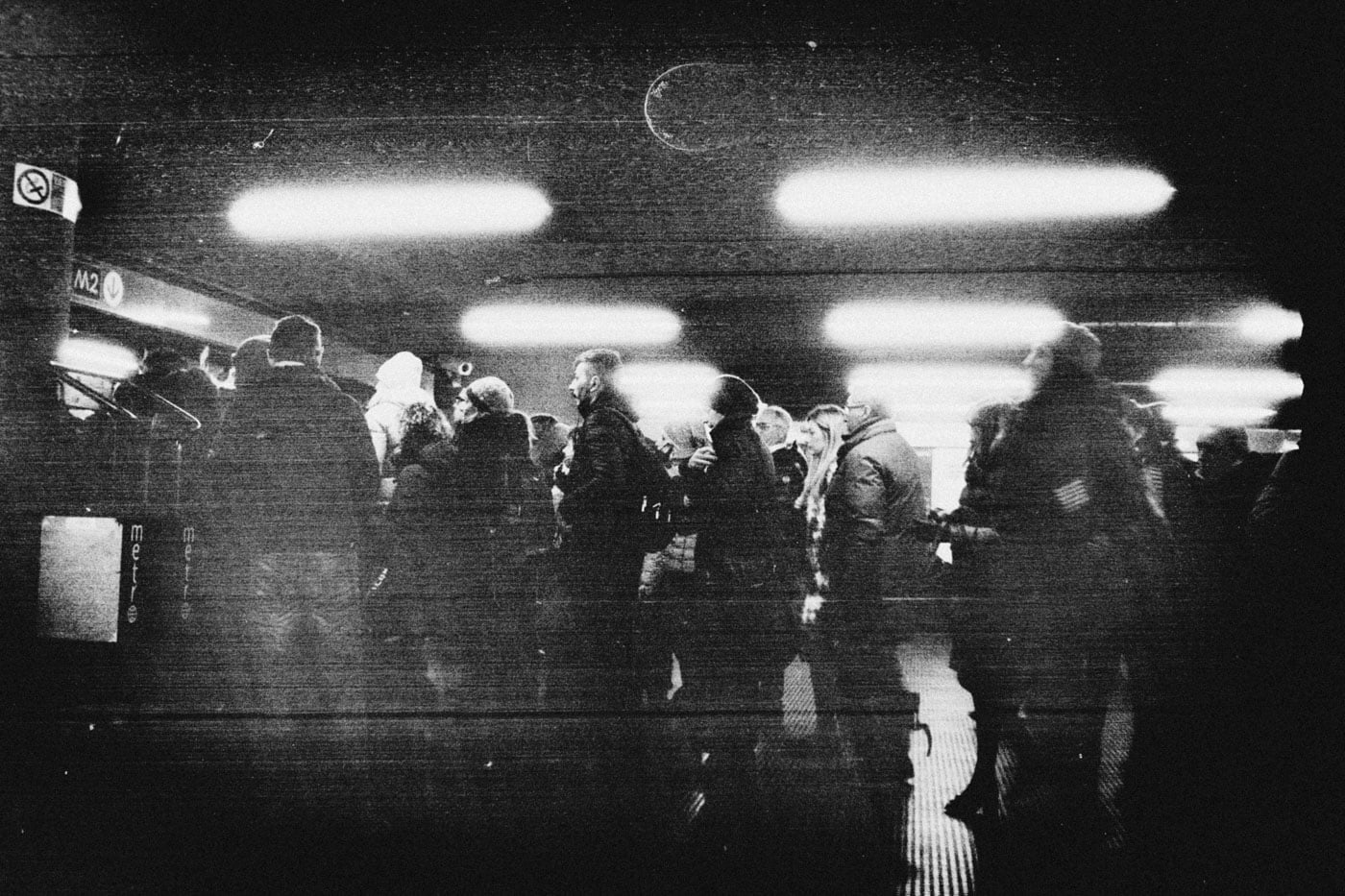
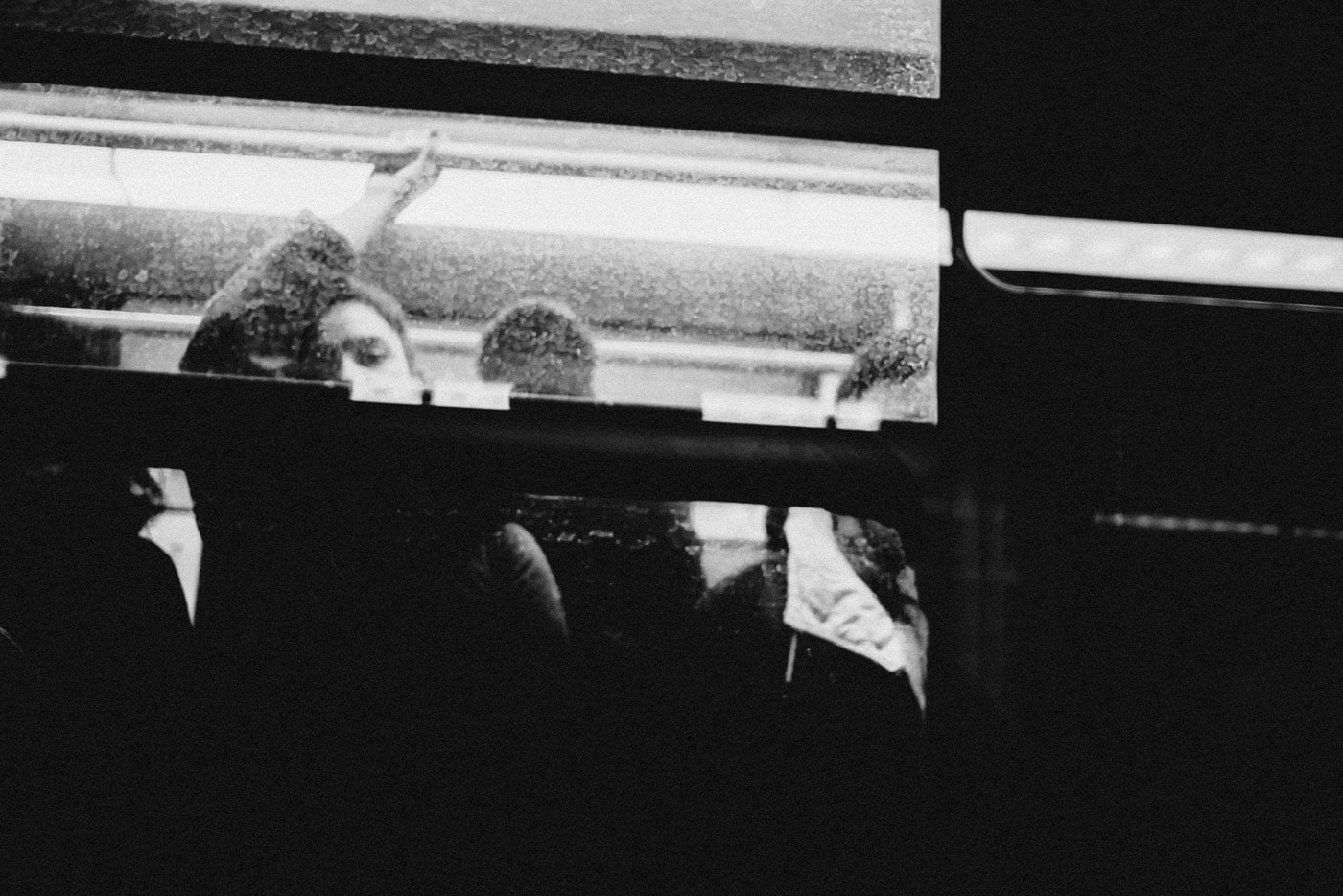
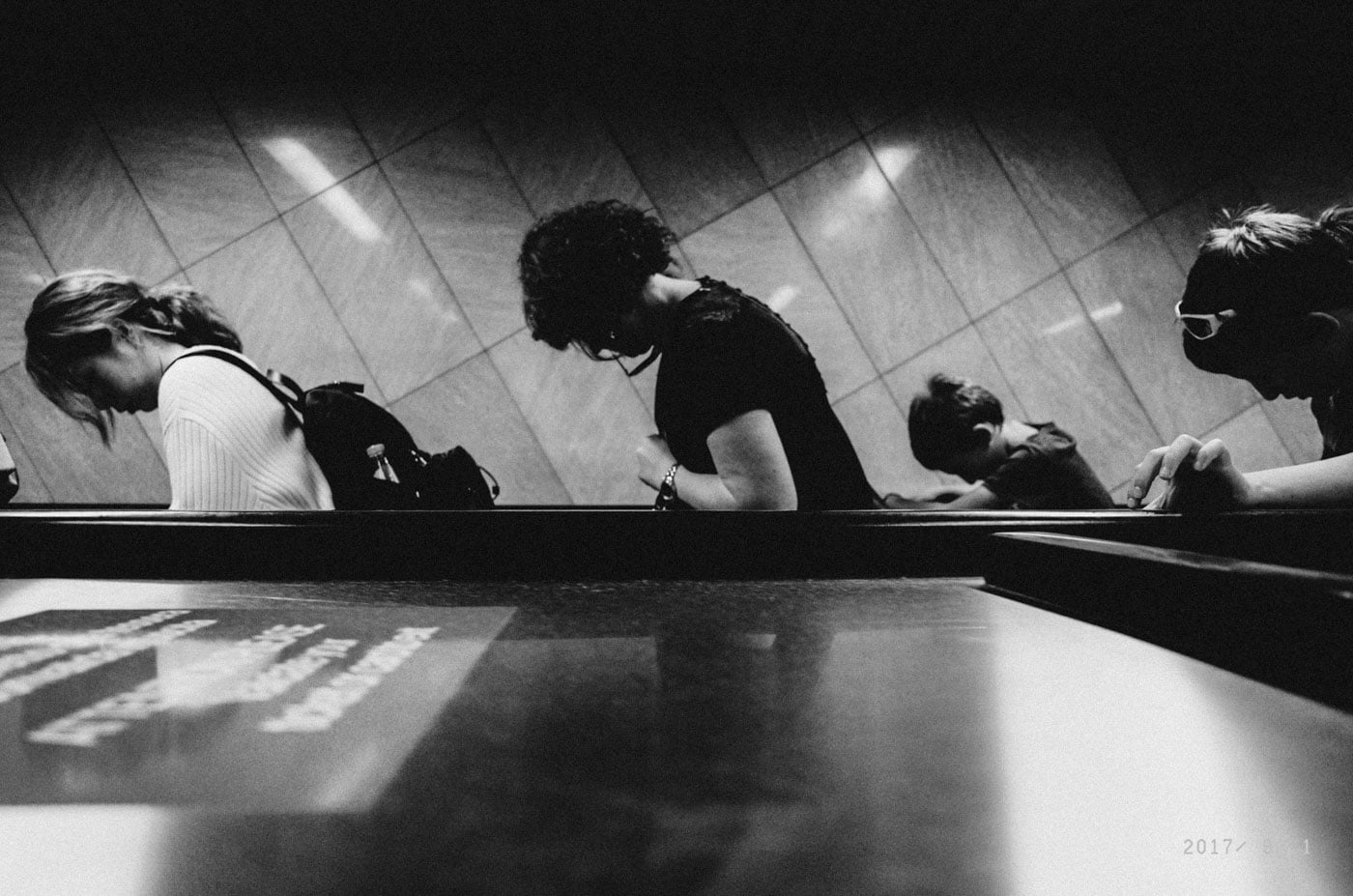
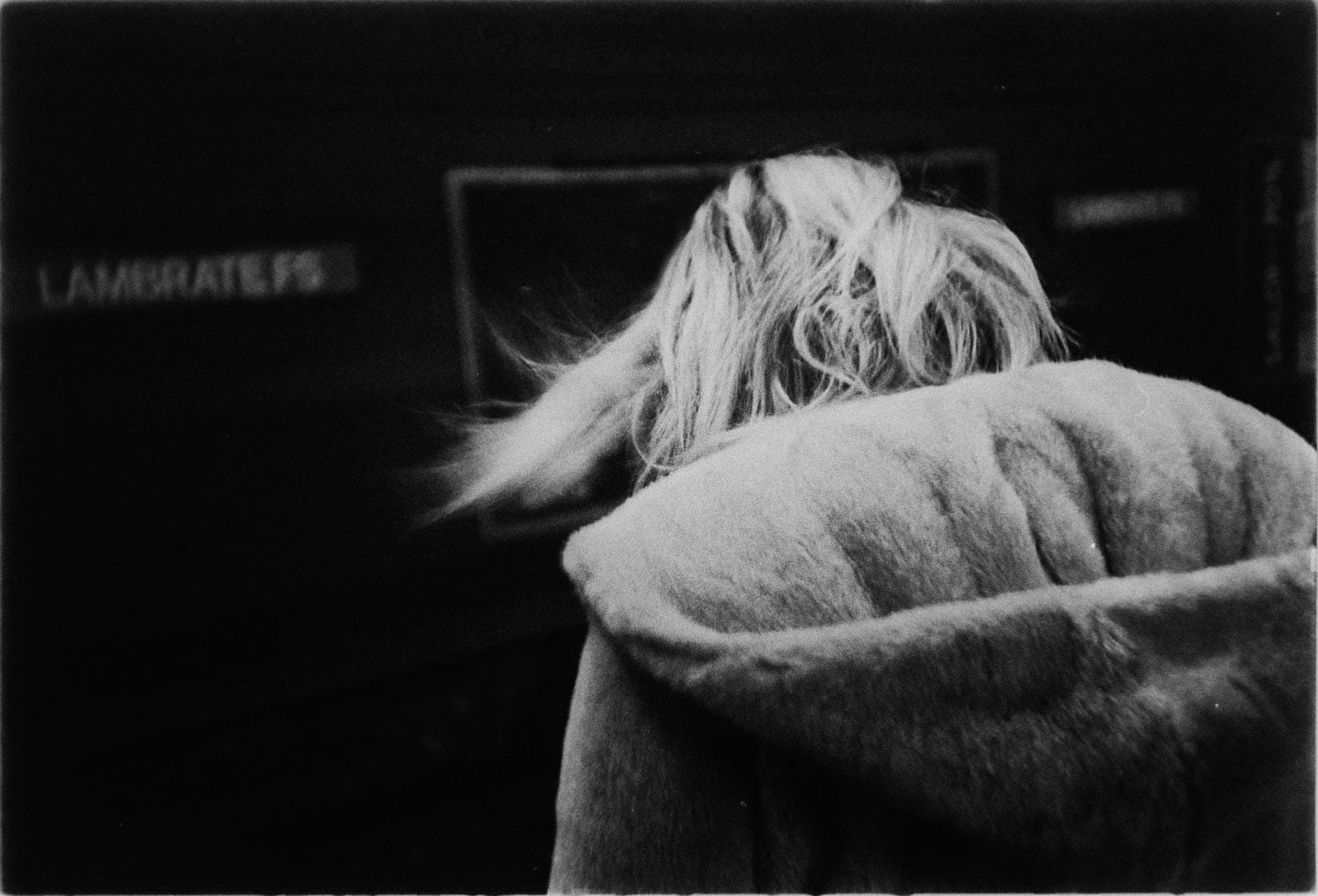
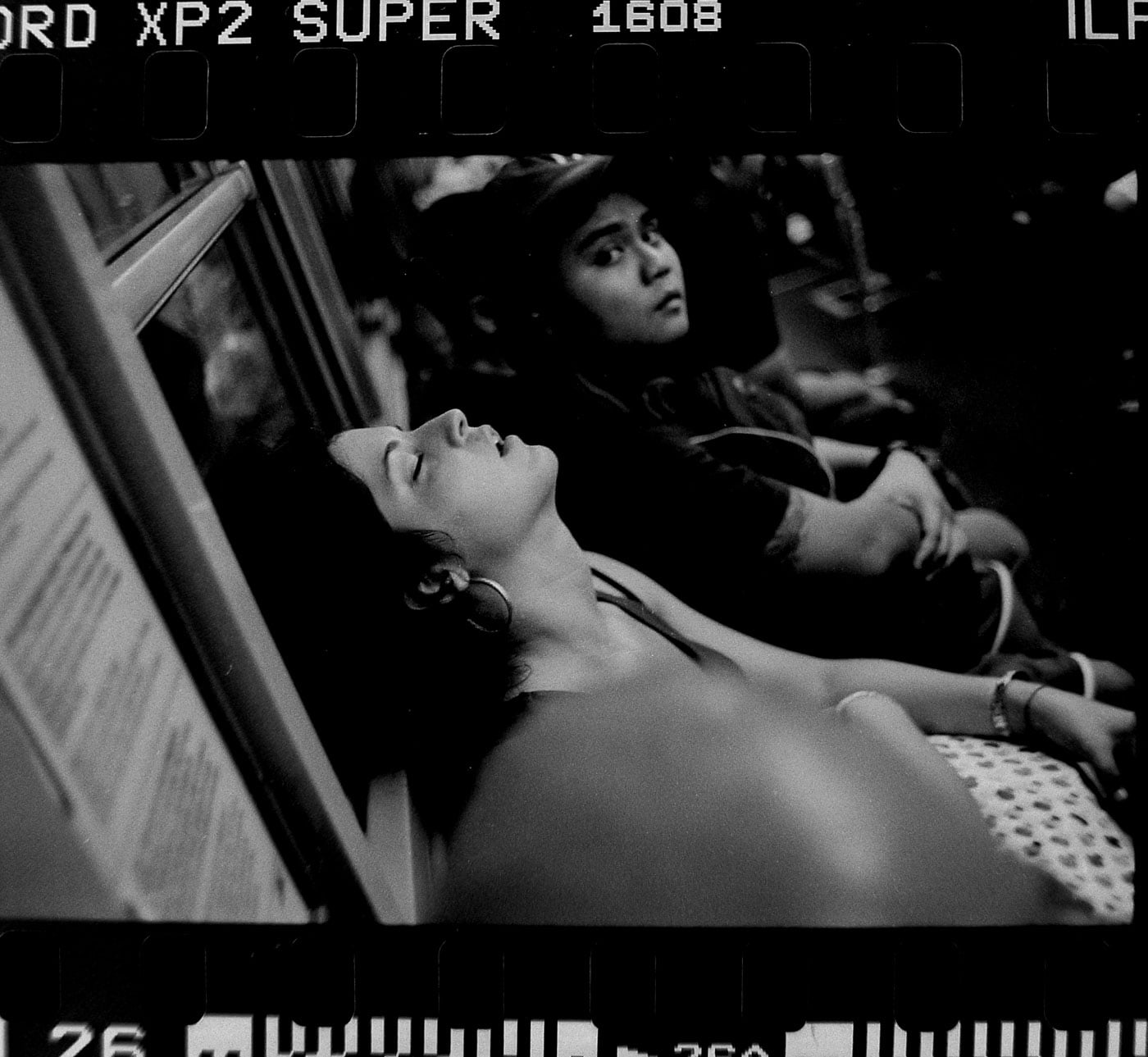
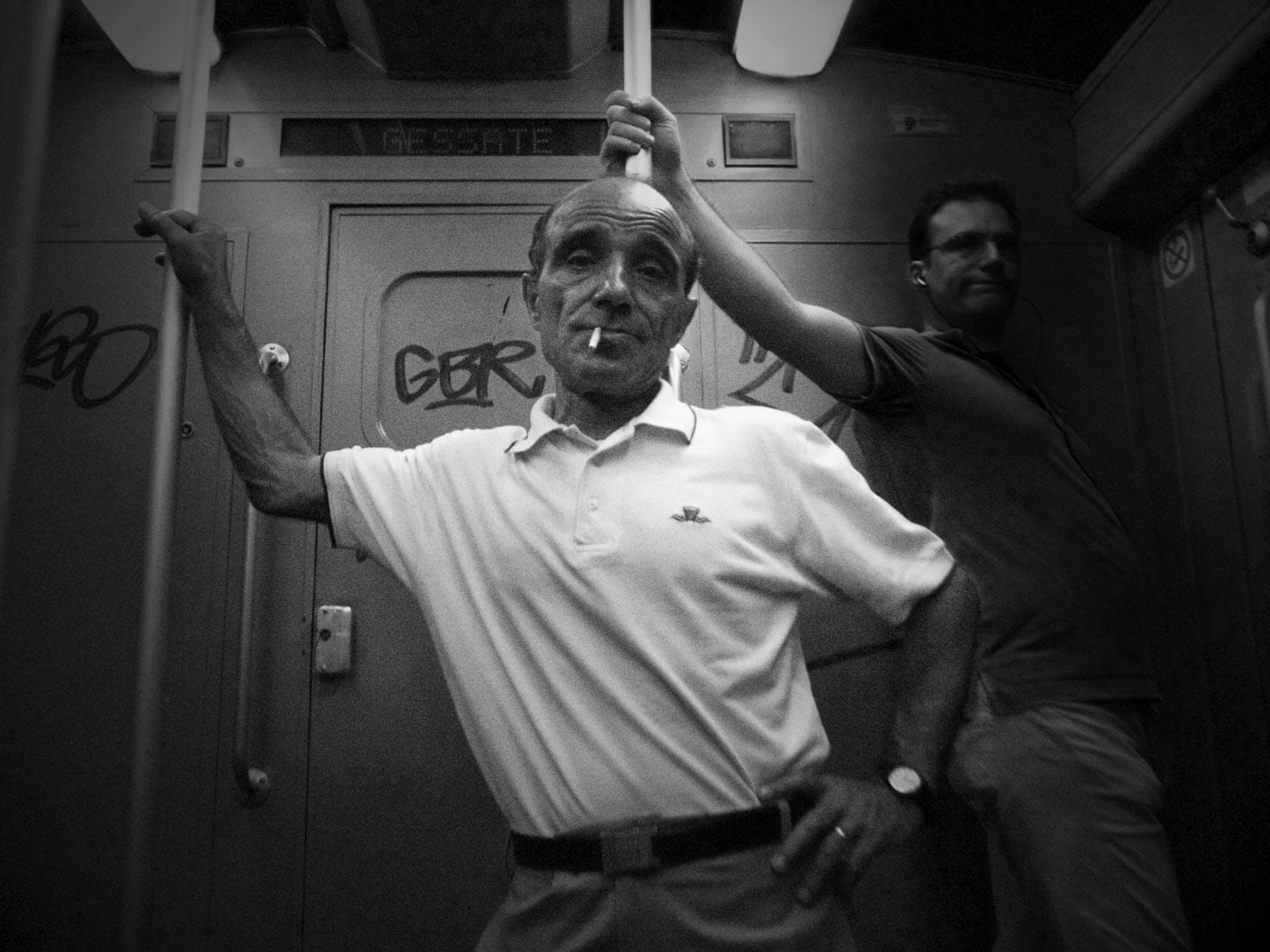
Subway Zen by Gabriele Lopez is an ode to the beauty of the moment. Each photo has a value in itself: it is sufficient in itself and would not need anything else to tell a story. However it is in the unitary vision of all the negatives that this project acquires an even stronger fascination, the fascination of poetic narration, of the personal journey of a person moving through the dark and light corners of life.
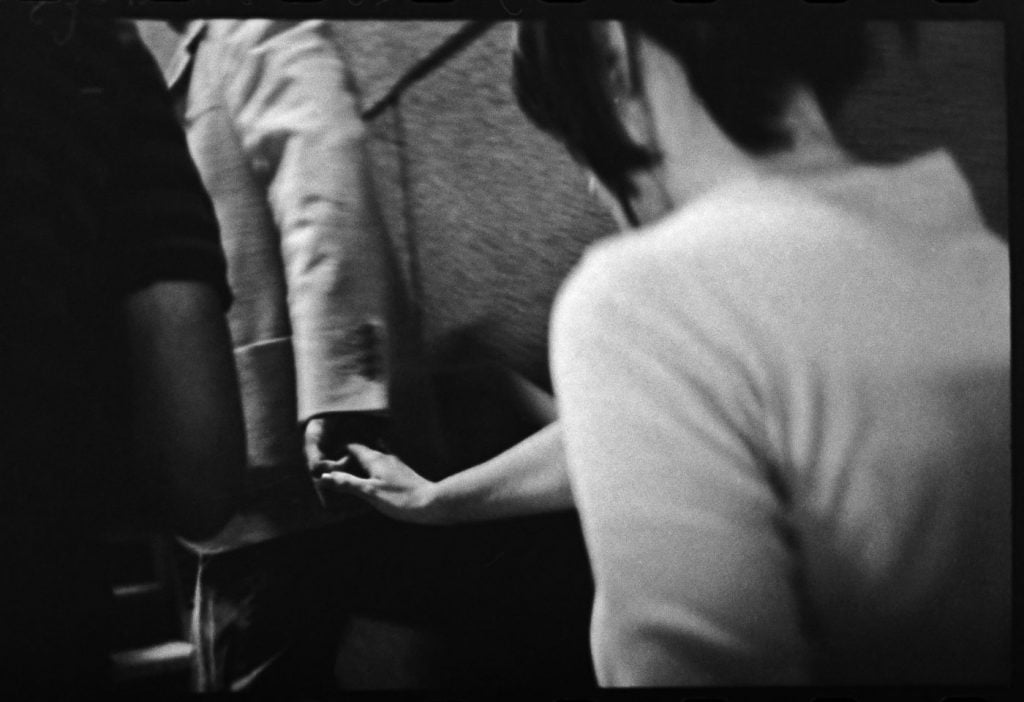
The subway becomes a metaphor for the journey where the perception of the self is overturned, enlarged, compressed, and the eye (the lens in this case) records all the changes and accepts them from the point of view with which it observes. Gabriele Lopez ‘s photographic vision is anything but predictable: his personal research leads him to deal with what has already been done and seen, but his authorial capacity gives back something new in the shots, something that was not there before (or that we had never noticed during our travels on public transport) and that is now strongly present.
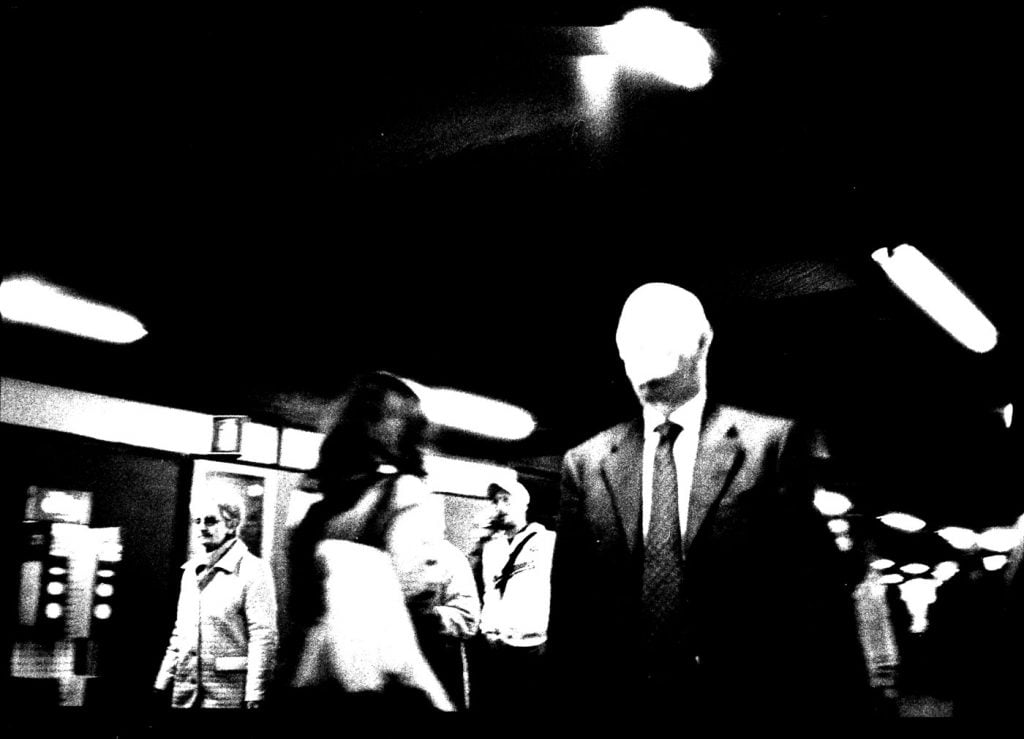
The choice of black and white gives the work a further introspective look, a sort of personal restlessness where shapes and lights speak, where colour cannot visually disturb the complexity of the shots. Gabriele Lopez has been shooting on the underground for over fifteen years to create this work, always maintaining a unique distinctive trait: nothing is constrained by formal canons, photographic “rules” are broken down in order to achieve a more sincere expressionism and the evident graininess creates the sensation in the viewer of a work conceived as his own, intellectually honest and disinterested.
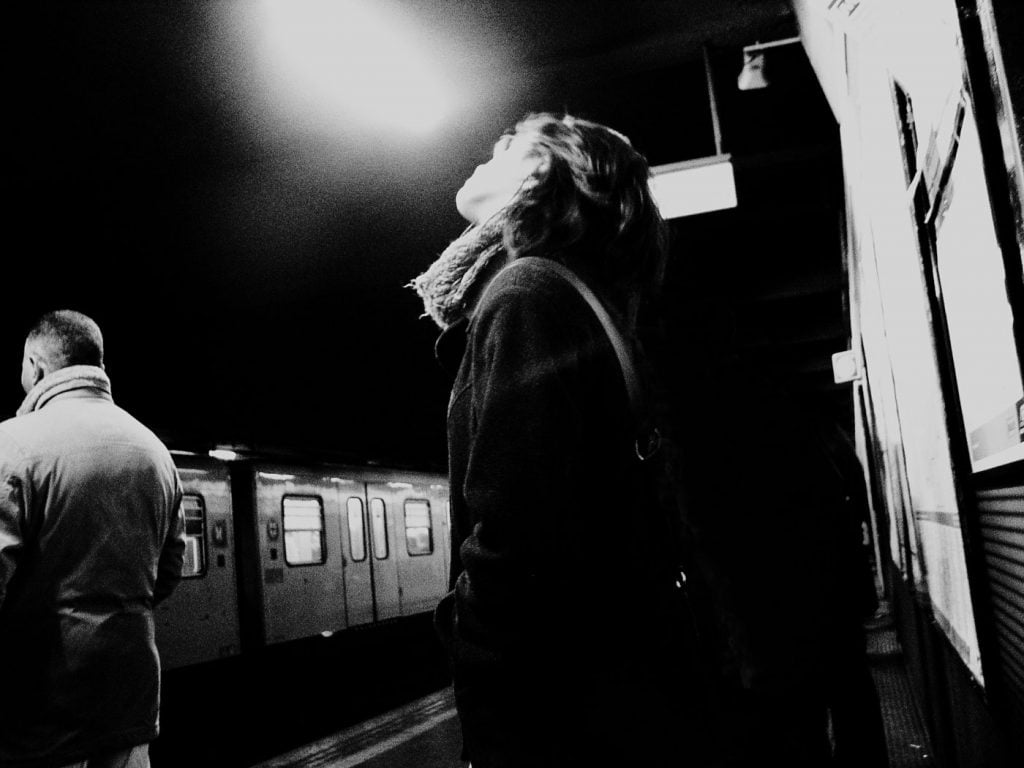
The fifteen years of photography are dilated and compressed by a sublime anti-aesthetics, which recounts the life of the underground: noises, aromas, glances, encounters, shaking hands, read newspapers and sleeping eyes. We can define this work not only as the personal and intimate journey of a person, but as a diary, where each photograph is a page written with a fountain pen. And in this case the camera, like a typewriter, “it helps me to face and understand all this, teaching me to look and see where there is supposedly nothing to see, recording and noticing fragments that I would miss if I were without it”.





Autore: Francesco Fusi