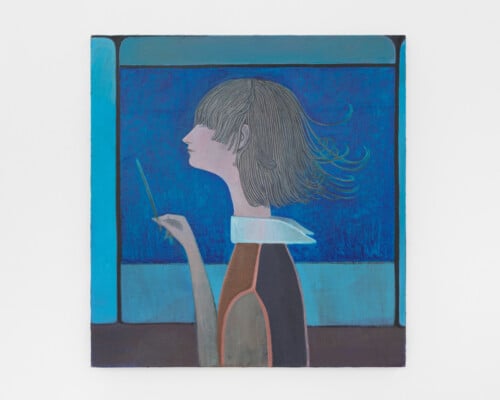
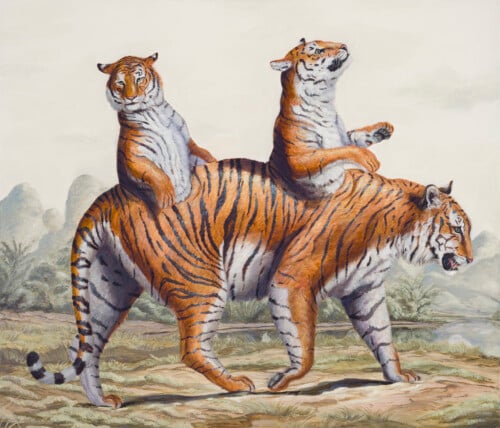
The chemist Michel Eugène Chevreul, while restoring tapestries, during the 1800s discovered the concept of juxtaposition of color. Chevreul discovered that two colors juxtaposed but not overlapping, when viewed from a distance create another with a brilliance that cannot be achieved by mixing fibers or pigments in a single shade. This technical research inspired the birth of some of the major artistic movements of the 19th century, including pointillism. The beauty of this technique continues to inspire artists and illustrators, among them Giacomo Nanni, Italian based in Paris, collaborator for magazines, but also author, with publications of illustrated books behind him. The technique is always that of overlapping layers of texture and color, whether dots or straight lines. The density of the signs creates atmospheres and shadows that well define the subjects of Giacomo Nanni’s works. The colors, as in the works of Georges Seurat and Paul Signac are many simple tones, but also few nuances that are created only through a deception of visual perception.


One of the most interesting aspects of Giacomo Nanni’s work concerns the search for the representation of light and all those elements that reflect the colors of the surrounding environment even in nature. The sun, the clouds, the fire, the shadows, a work full of research on light and its being no color and the union of all. The interventions of black lines and silhouettes bring many of Nanni’s works closer to comics. There are characters and subjects in which it is difficult to recognize a staticity, the atmosphere is always in movement, as if the dots were the particles moved by the action of the subjects of the works. You can follow many of Giacomo Nanni’s works on his profile, in which are also published the two covers made by the artist for the new Feltrinelli editions of two great novels of literature: Animal Farm and 1984 by George Orwell.