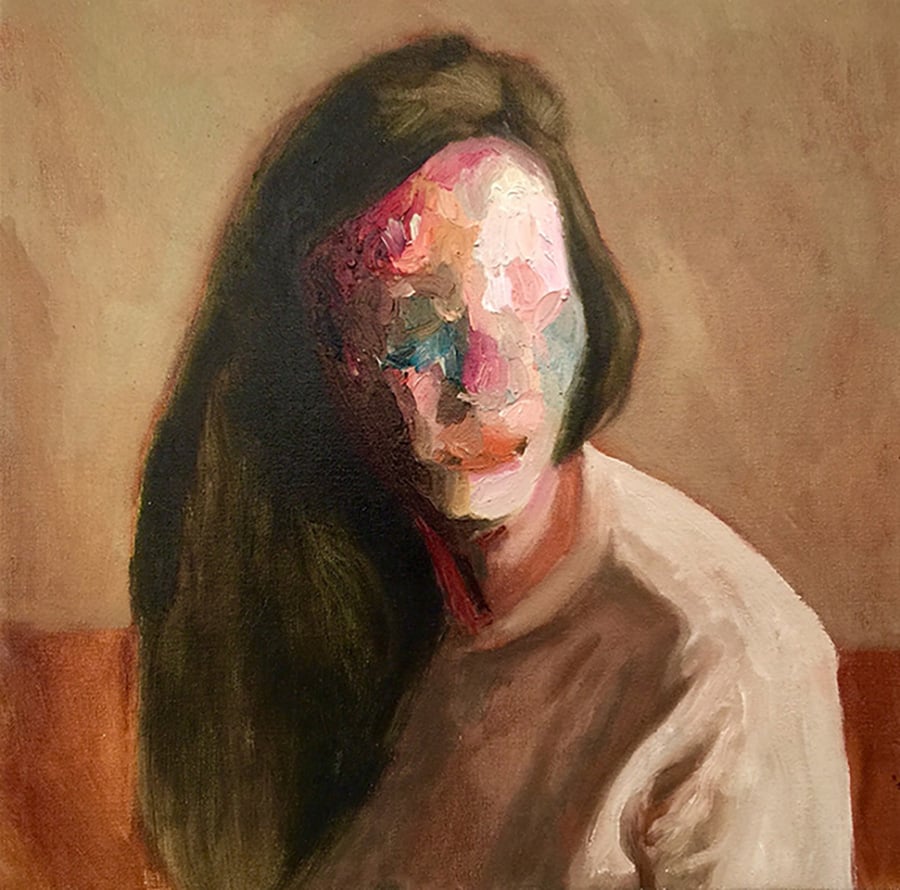
Guim Tió Zarraluki starts from an apparently simple gesture, that of looking at a face and making it unrecognizable, or rather hiding it. Not to erase the person or their identity, but to call into question everything we normally use to recognize them.
Born in Barcelona in 1987 and trained at the Faculty of Fine Arts of the University of Barcelona, the artist has built his own visual language around figurative painting, distortion, and a constant interest in how images, memory, and identity shape one another.
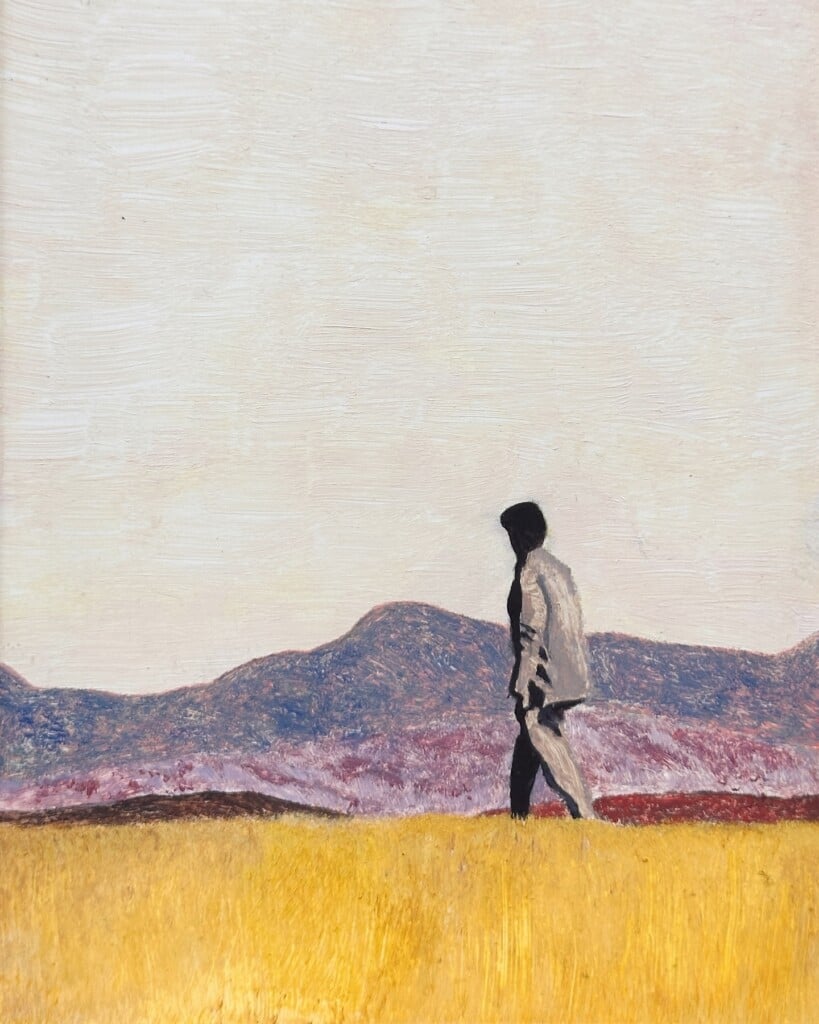
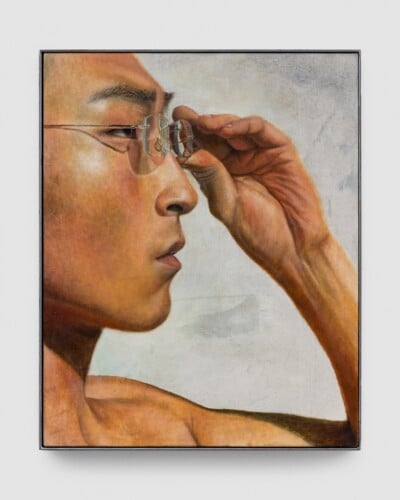
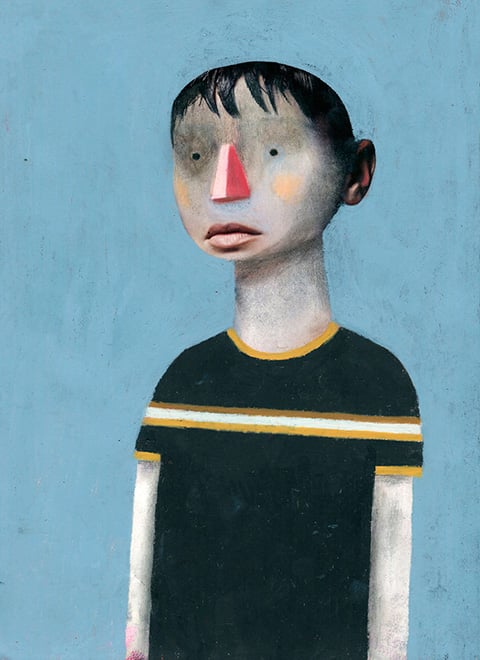
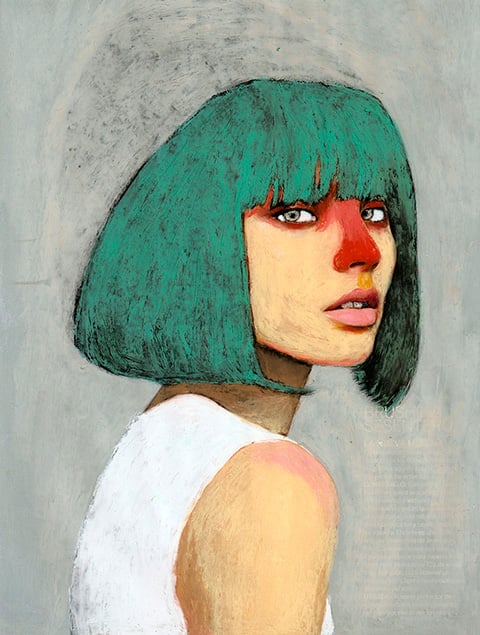
In his research over the years, the face has become almost a starting point for reaching elsewhere: toward suspended landscapes, tiny figures, memories, solitude, and an increasingly ambiguous dimension between reality and imagination. At the beginning of his career, Guim Tió Zarraluki took images from fashion magazines and intervened directly on them: models and faces built according to the codes of advertising were altered with oil pastels, solvents, and acrylics — enormous eyes, disproportionate noses, elongated necks, unnatural colors.
The process has something ironic, almost childlike about it, but behind that deformation lies a precise critique. The beauty of glossy images is subjected to a second manipulation, if fashion photography retouches the body to make it desirable, Tió retouches it again to expose its artificiality.
It is therefore inevitable to notice, in his research, a reflection on the human condition and on the taboos of a society subjected to the “visual tyranny” of television, advertising, and fashion magazines. What is interesting is that Guim Tió Zarraluki does not simply state that the contemporary image is false, he takes it seriously to its most extreme consequences, altering it from within.
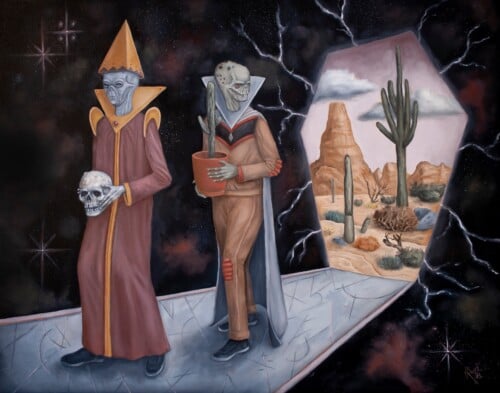
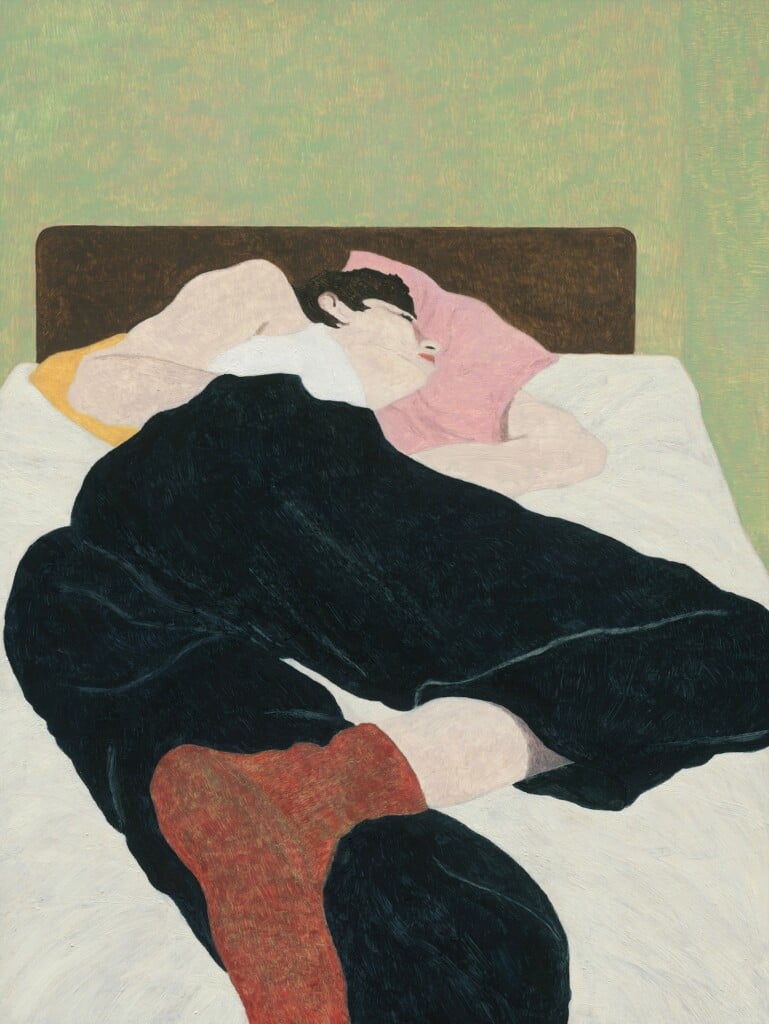
With the shift to canvas, his work changes and the references to fashion remain as a kind of visual memory, but the figures become less recognizable and more enigmatic. The face is no longer the place through which someone is identified, but becomes an unstable surface. The figure remains, but identity seems to slip away.
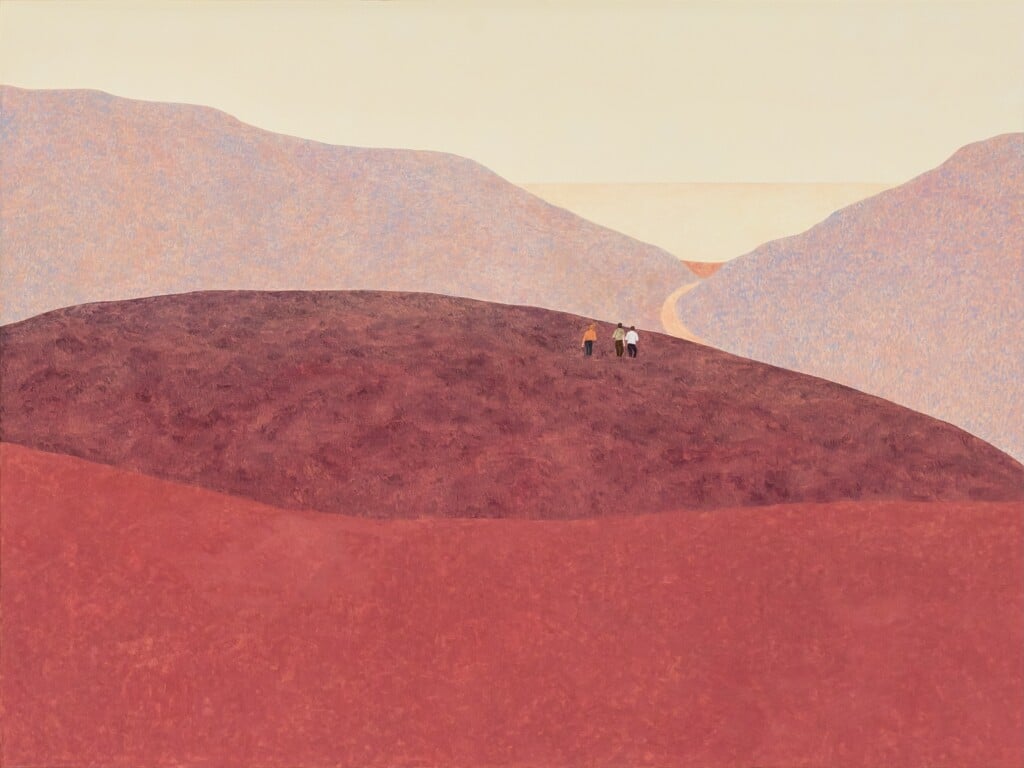
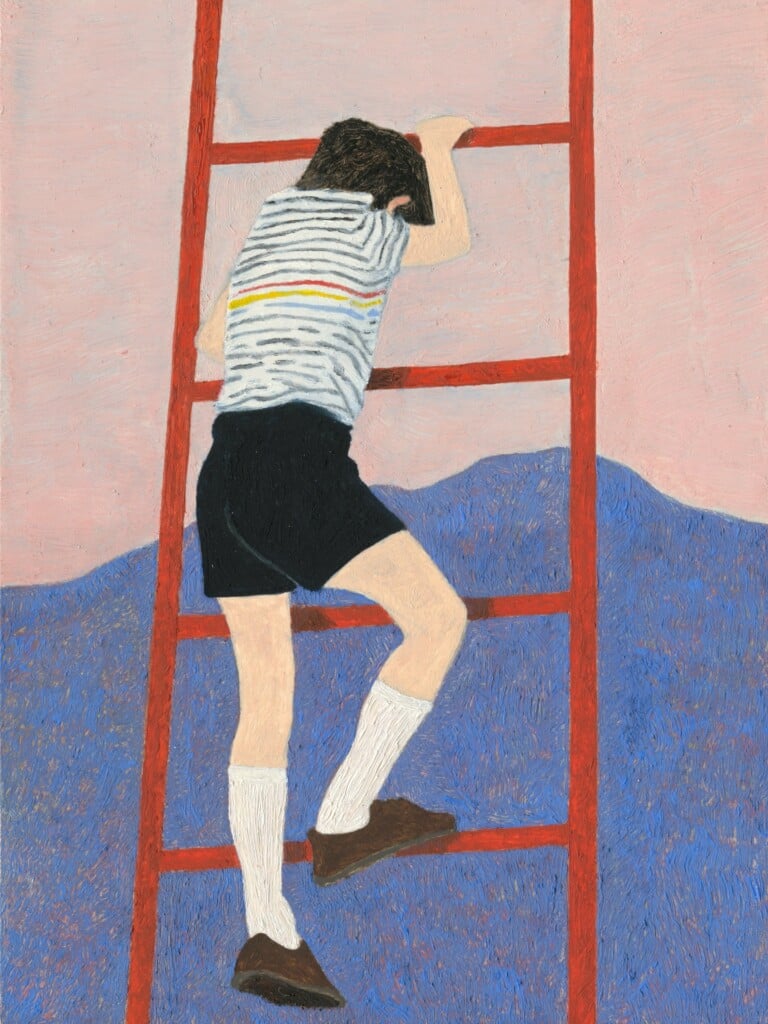
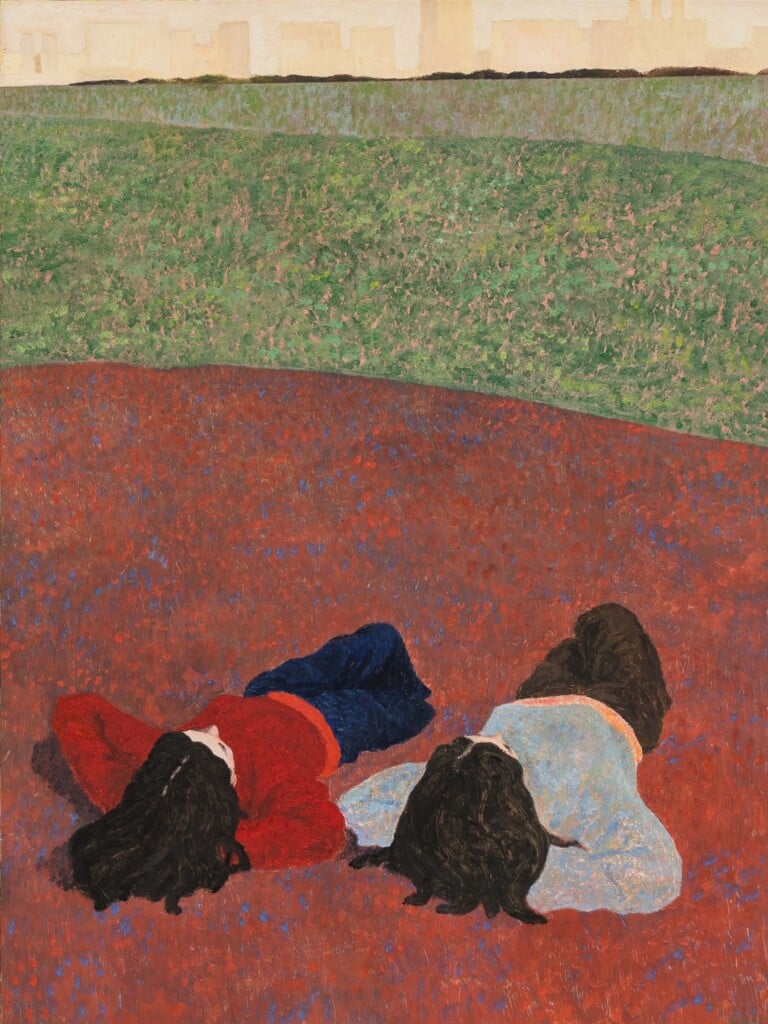
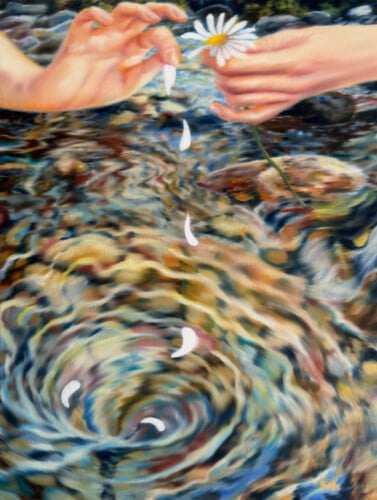
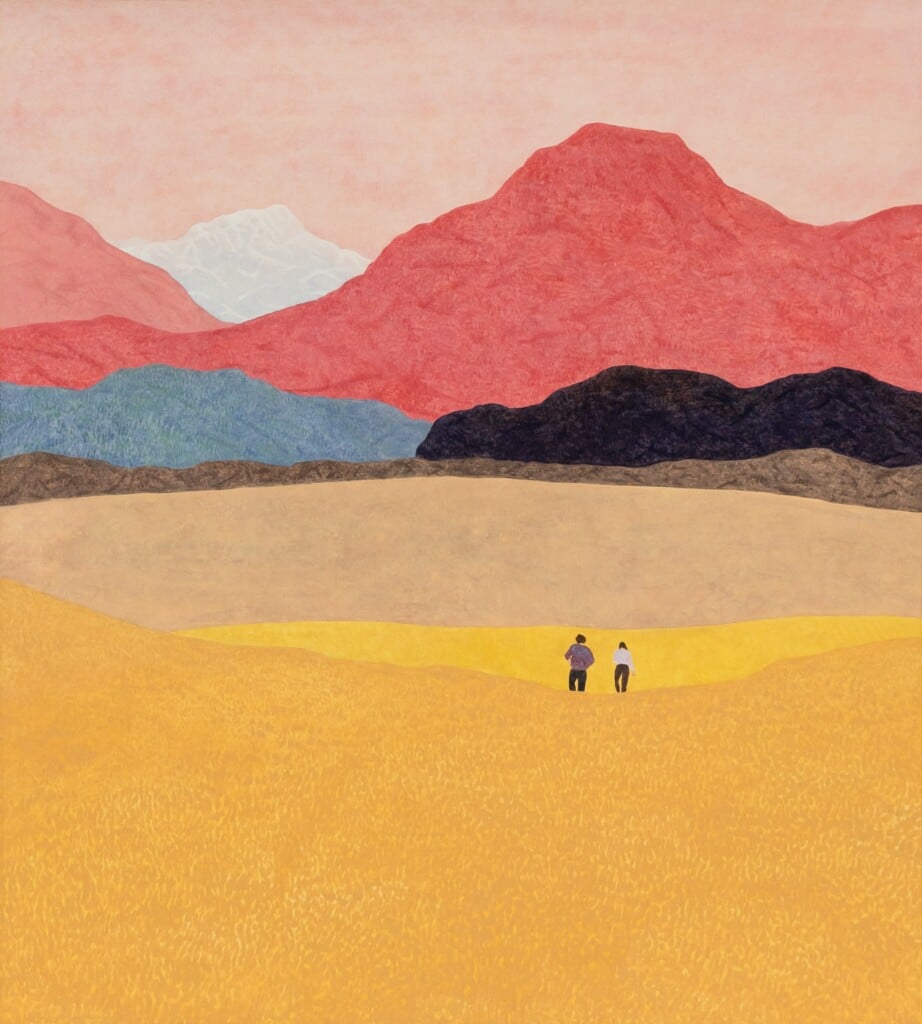
This makes Tió’s painting surprisingly contemporary, because in an era in which we are accustomed to building our presence through continuously recognizable images, his most radical gesture is to remove information. Proportions change, people become small, almost lost within enormous spaces. In some works the human figure seems on the verge of disappearing into a meadow, a body of water, or a landscape of unreal colors.
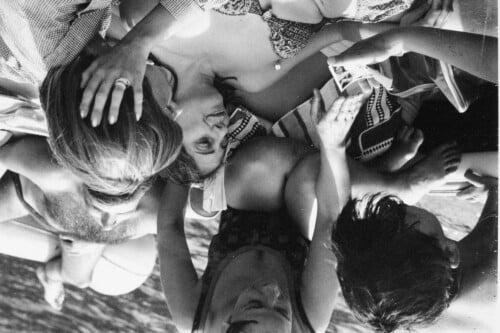
Not knowing who we are looking at becomes an essential part of the work, and this is an important shift because it changes the relationship between individual and environment. In the early works the question was how we see a person, in the later works it becomes how a person perceives themselves when placed before something far larger than they are. Painting thus becomes less satirical and more contemplative, without losing that sense of unease that characterized the early portraits. The theme of memory runs through another significant part of his research. In 2016, on the occasion of an exhibition in Barcelona, Tió worked on collective memory, on forgetting, and on the rewriting of history, also questioning the way in which the images accumulated daily on our devices end up replacing lived memory.
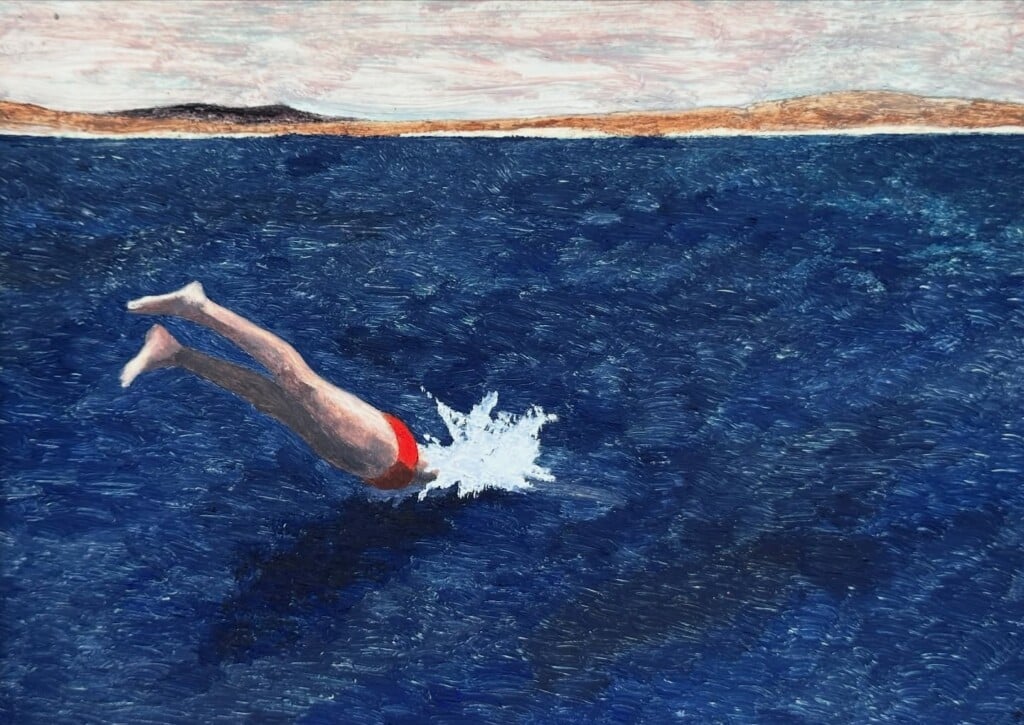
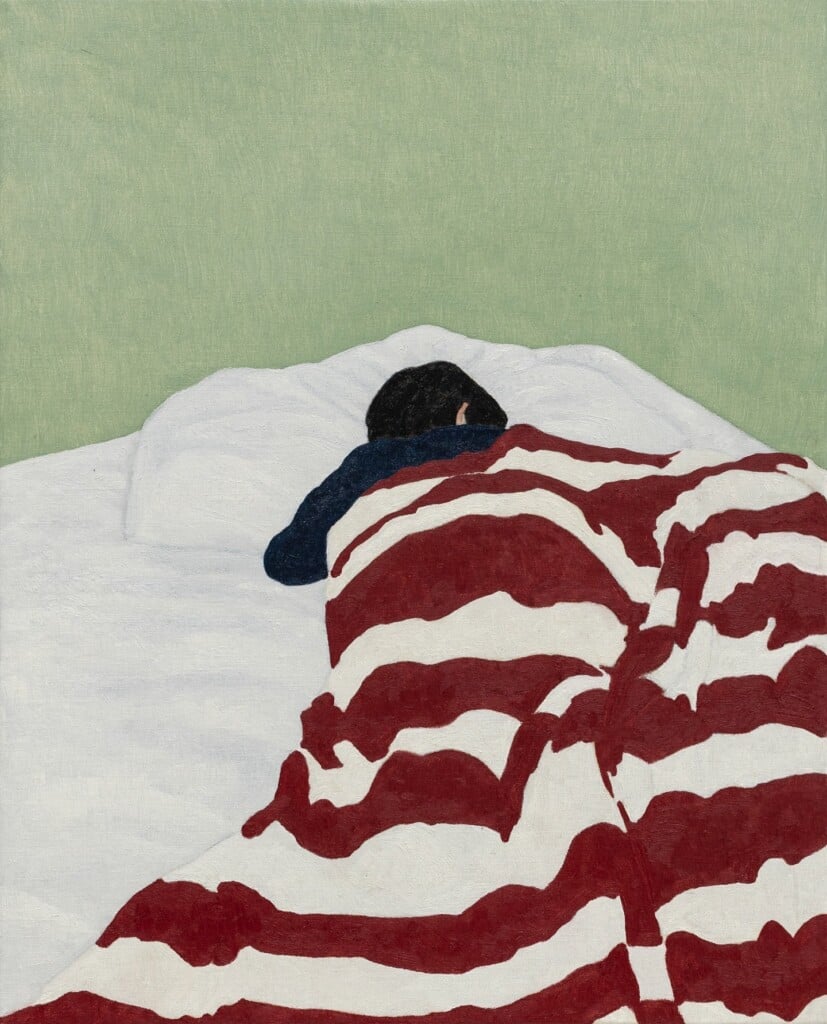
In his paintings there does not seem to be so much an attempt to reproduce a memory as to represent its instability. The images appear blurred, incomplete, almost worn away. They do not necessarily narrate a precise episode: they seem instead the residue of something we have seen and are trying to remember. Painting thus becomes an intermediate place, not photography, not dream, not exact memory. The body is no longer only something to be deformed, and becomes something to be remembered, lost, rediscovered.
And perhaps this is precisely the most interesting part of Guim Tió, his painting does not simply move from figuration to abstraction, but develops from certainty to uncertainty. First he takes a face perfectly constructed by visual culture and alters it. Then he progressively erases its contours. Finally he pushes the figure away into a landscape. As if, to truly understand what remains of an image once we stop recognizing it, it were necessary to lose the face and look at what surrounds it.