Born in Amsterdam in 2023 from the initiative of Việt Raider-Hoàng and Jeremy Raider-Hoàng, two design professionals who decided to do something apparently not very sensible: tell the story of contemporary queer nightlife through an object made of paper, meant to outlive the party it describes.
The first issue, published in April 2024, is dedicated precisely to Amsterdam, a city the project owes a great deal to: a history of squatting, harm-reduction practices and queer club culture, but also the urban transformation that is making it increasingly difficult for the spaces that culture produced to survive.
No One is born precisely out of this friction between the ephemeral and memory.
The name comes from a clear statement of intent: “we’re no one without each other, and none of us is like another,” which doesn’t mean the individual doesn’t exist without the community, but that the community must not turn into an undifferentiated mass.
Nightlife, in this case, isn’t the decorative backdrop of just another fashion magazine: it’s a social infrastructure. Music and arts, expression and aesthetics, places and atmospheres, physical and mental health, night policies and regulations are the five axes through which No One Magazine builds every issue.
Let me take a quantum leap here that I find fascinating, and bring in a philosopher like Michel Foucault, who in 1967 developed the concept of “heterotopia” to describe those real places that function as other spaces: places that belong to society but that, at the same time, reflect, suspend or overturn its rules. For Foucault, the prison and the cemetery were examples of heterotopias; but the definition is elastic enough to let us recognize something similar in the dancefloor. For a few hours, inside a club, bodies, identities, hierarchies, clothes and behaviors can take on combinations that outside those four walls would be impossible, or at least much harder. Queer nightlife is, in this sense, a heterotopic machine: it builds, at least temporarily — as Hakim Bey would later put it, calling them Temporary Autonomous Zones (or T.A.Z.) — another world inside the existing one. No One Magazine attempts a further, even more ambitious leap: taking that world and stopping it from disappearing at dawn, when the lights come on.
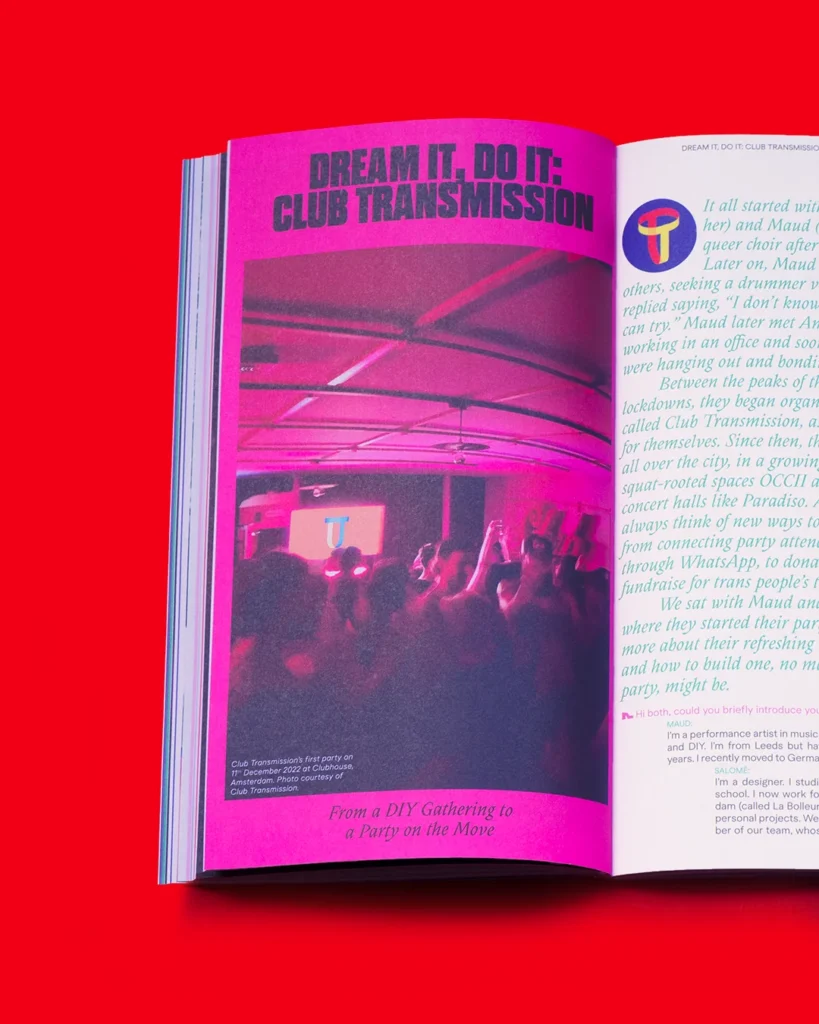
The first issue, from 2024, does this through twelve stories that bring together collectives, artists, organizers, historians, activists and community members. The editorial team starts from the archive and returns to the present, moving from historical realities like De Trut, Spielraum and Lesbique to more recent experiences like BODY, Club Transmission and De Reünie. The introduction by historian Manique Hendricks insists precisely on the need to preserve the city’s queer legacies. The cover perhaps contains the best metaphor for the whole project: a constellation of stickers, supplied by various collectives from the scene, applied by hand and therefore different from copy to copy. The stickers that, in nightlife, are often placed over phone cameras to prevent photography here become fragments of memory. A small, perfectly underground short-circuit: what normally serves to withhold something from view becomes editorial material.

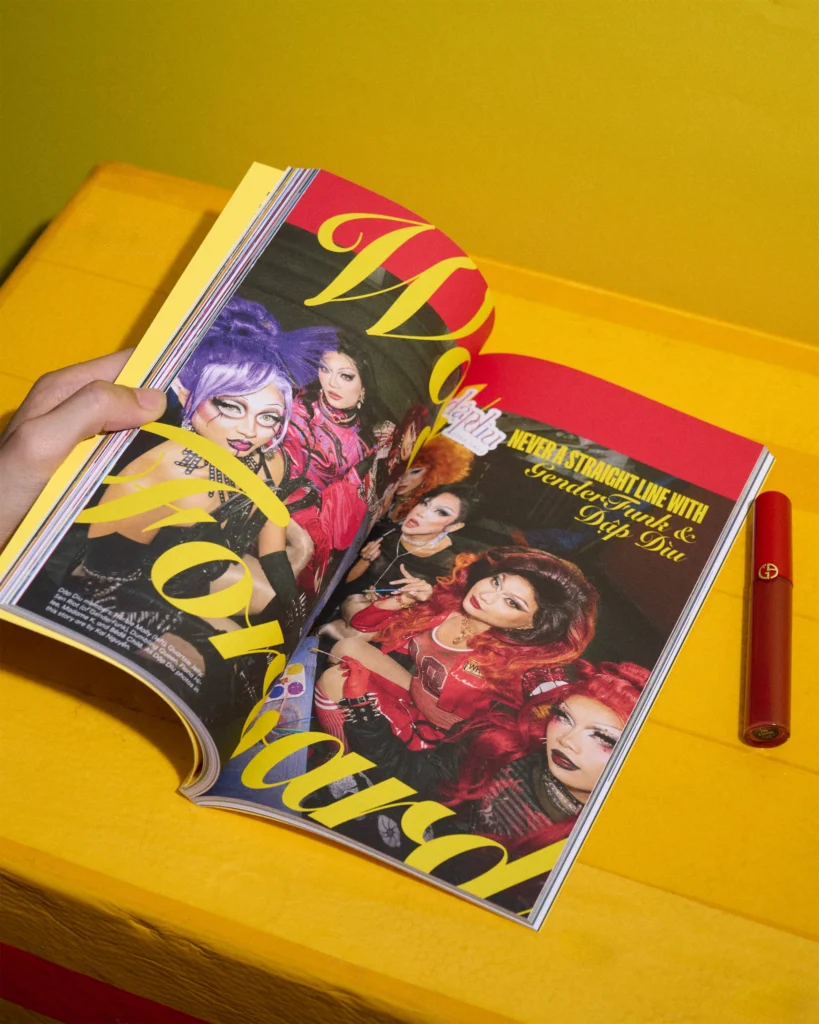
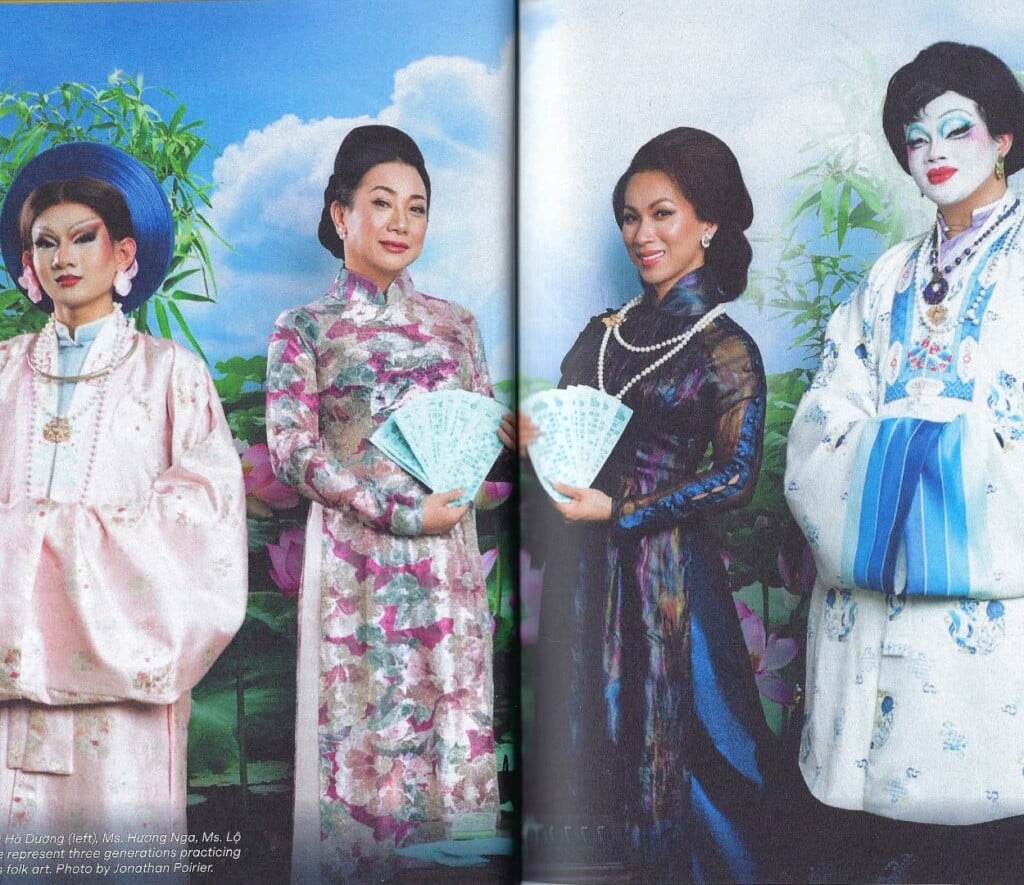
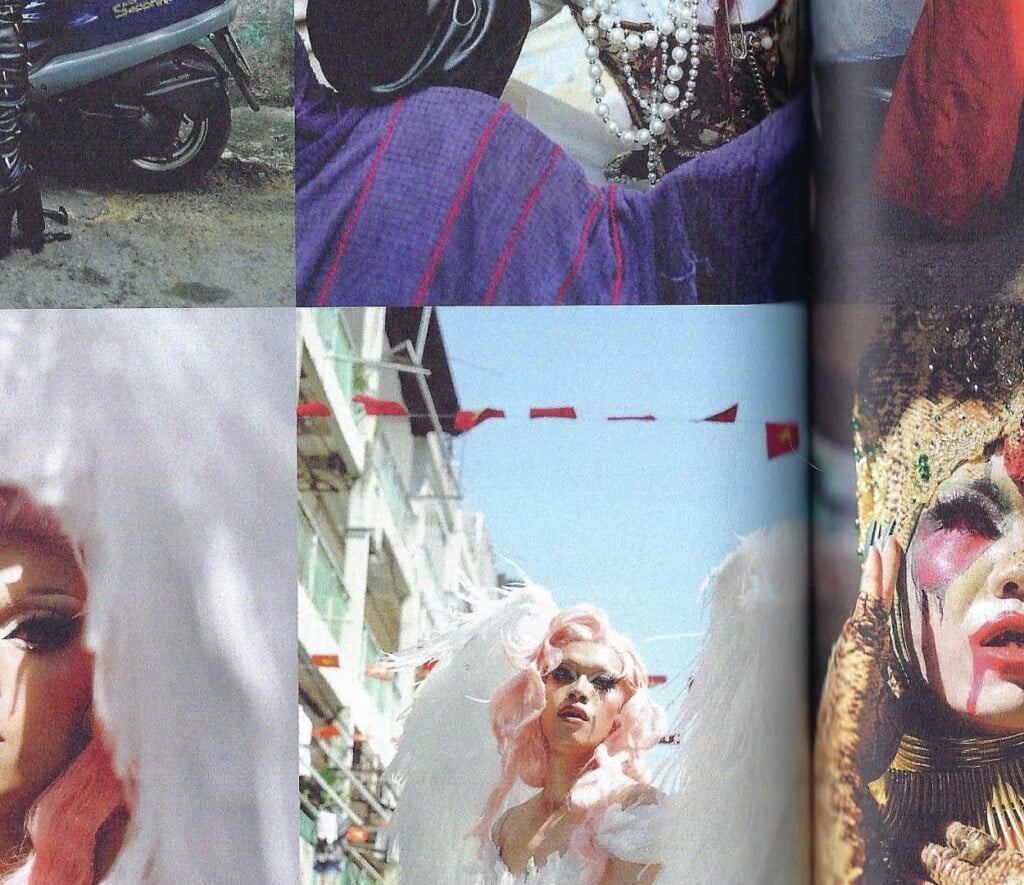
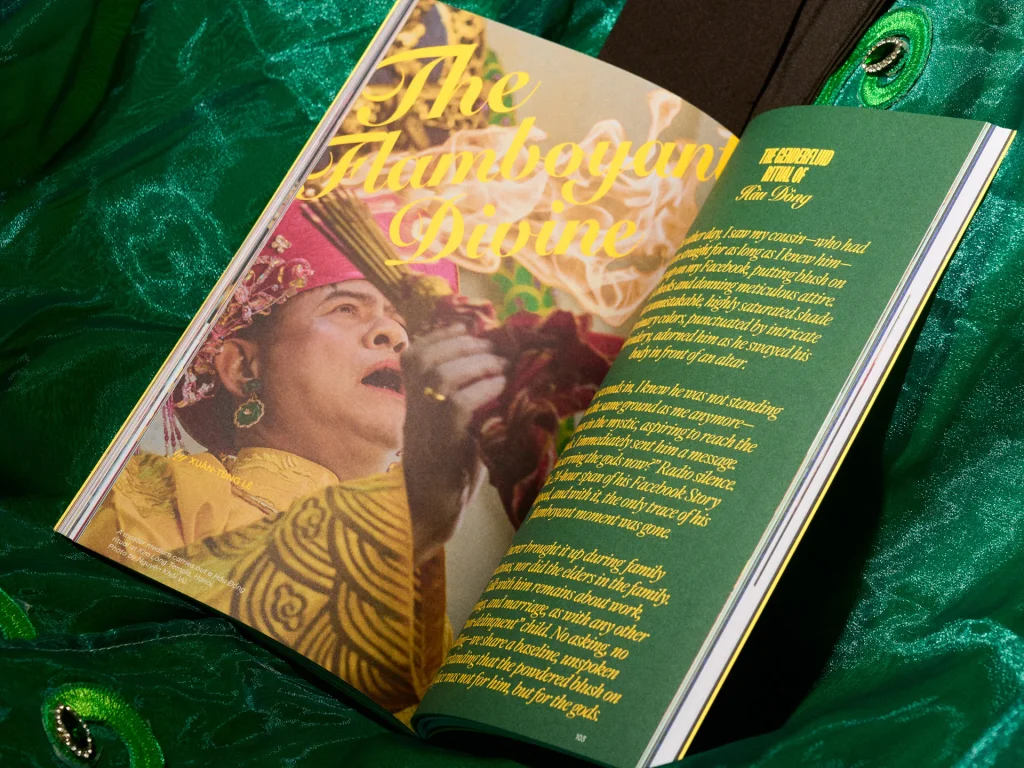
Across the 158 pages of the second issue (2025), No One shifts its radar toward Ho Chi Minh City and Hanoi. The project changes geography but not method: it enters the local scene looking for people, collectives and practices that don’t normally make it into the international narrative. The choice matters because it avoids the by-now rather worn-out idea that there’s a single, exportable global model of queer nightlife. Every city instead has its own grammar, its own contradictions, its own forms of resistance, and when the magazine can’t just tell the story, it tries to build other devices. The second issue is in fact accompanied by Đi Đi Đi, a seven-track vinyl compilation made with Vietnamese creatives, also meant to support the local A Queer Museum, a collective queer-feminist archiving space. This is where No One Magazine definitively stops being just a magazine and becomes a small nomadic infrastructure: print, events, zines, film, music, gatherings. The archive is no longer a room full of documents, but something that keeps moving along with the people who produce it.
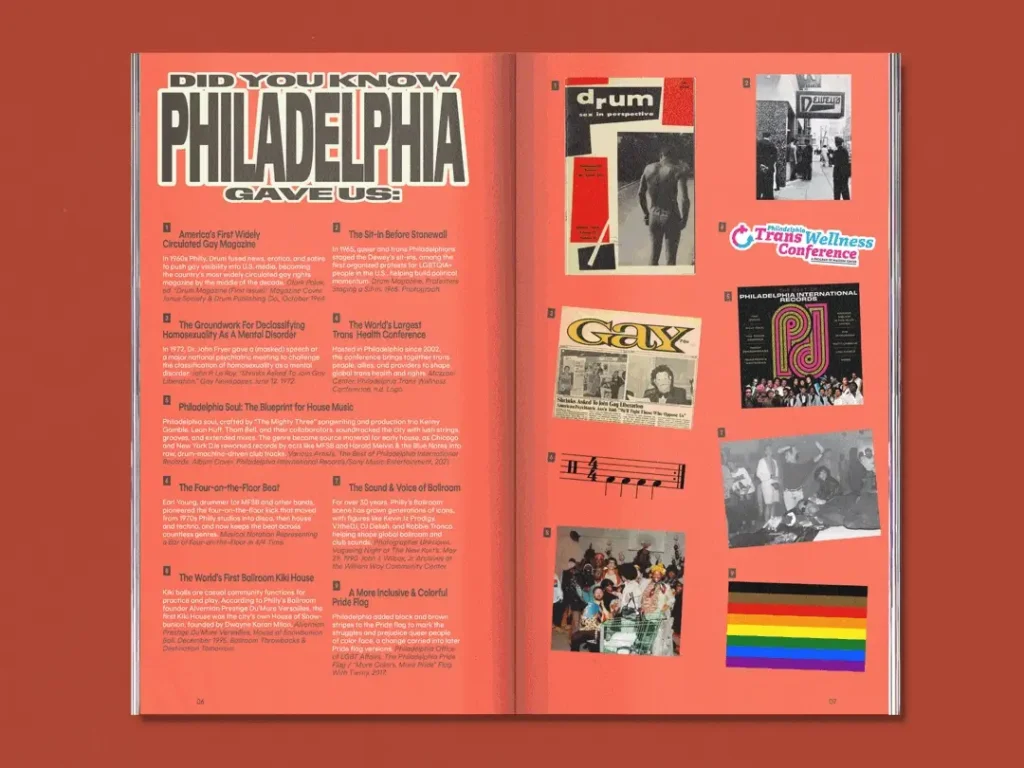
The third issue, published in June 2026, arrives in Philadelphia and takes on the theme of knowledge head-on. The city is told through genealogies that link the present to a much longer queer history: the homophile magazine Drum, founded right in Philadelphia in 1964; the Dewey’s protests of 1965; Philadelphia soul as the matrix for the future disco and house culture; ballroom, rave and DIY spaces. Among the stories is also that of Bounce House, a project where hospitality becomes a possible form of spatial politics, while the issue ideally closes at the edges of the city, with concrète’s pier-rave, the infamous rave held on the pier of the city of brotherly love. The trajectory is by now clear: Amsterdam, Vietnam, Philadelphia. Not a collection of scenes, but an alternative geography of the night.
No One doesn’t claim that all these experiences are the same — on the contrary, the magazine seems to be drawn precisely to the differences, the discontinuities, the things that don’t add up. Its independence lies here too: not building an editorial identity stable enough to become a new brand, but shedding its skin every time the place changes. It’s a magazine that prefers the map to the monument, which is also why its graphic design doesn’t chase the elegant (and vapid) neutrality of the traditional magazine.
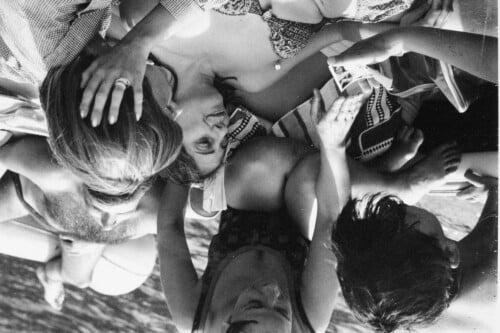
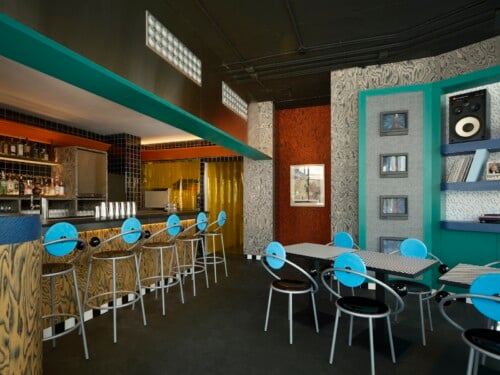
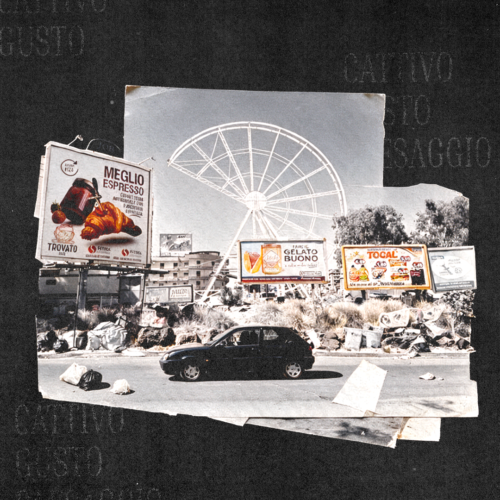
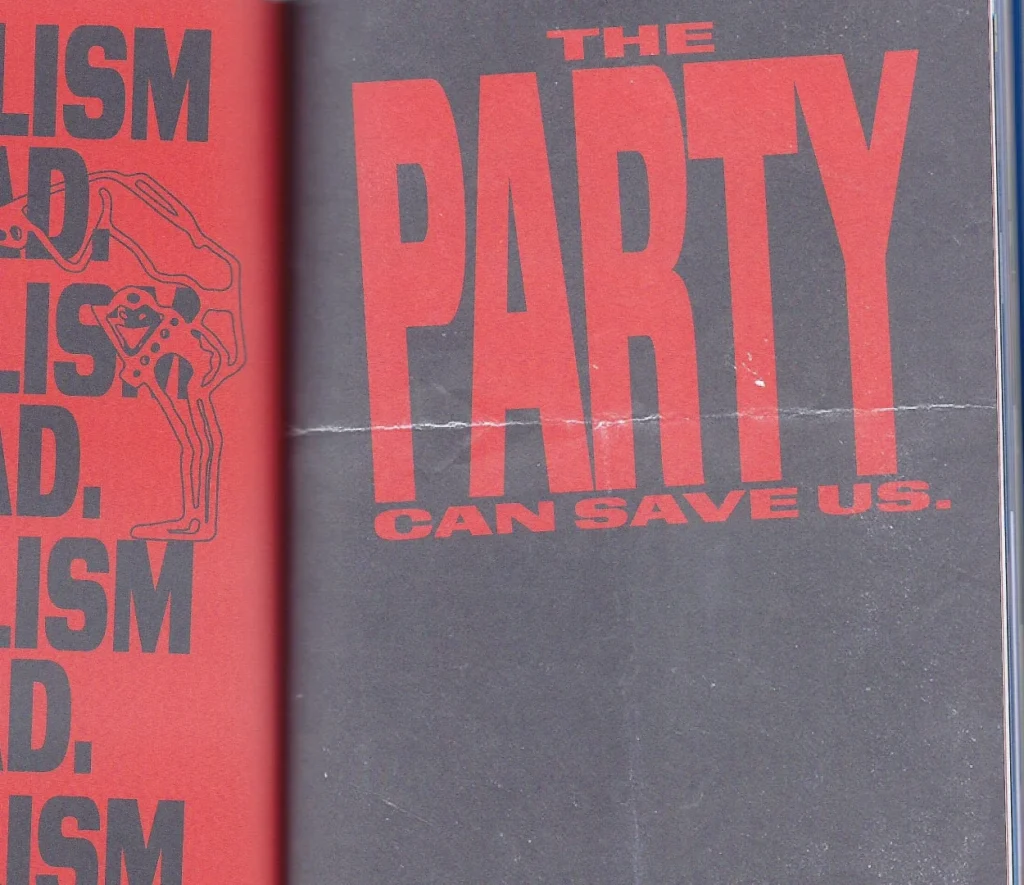
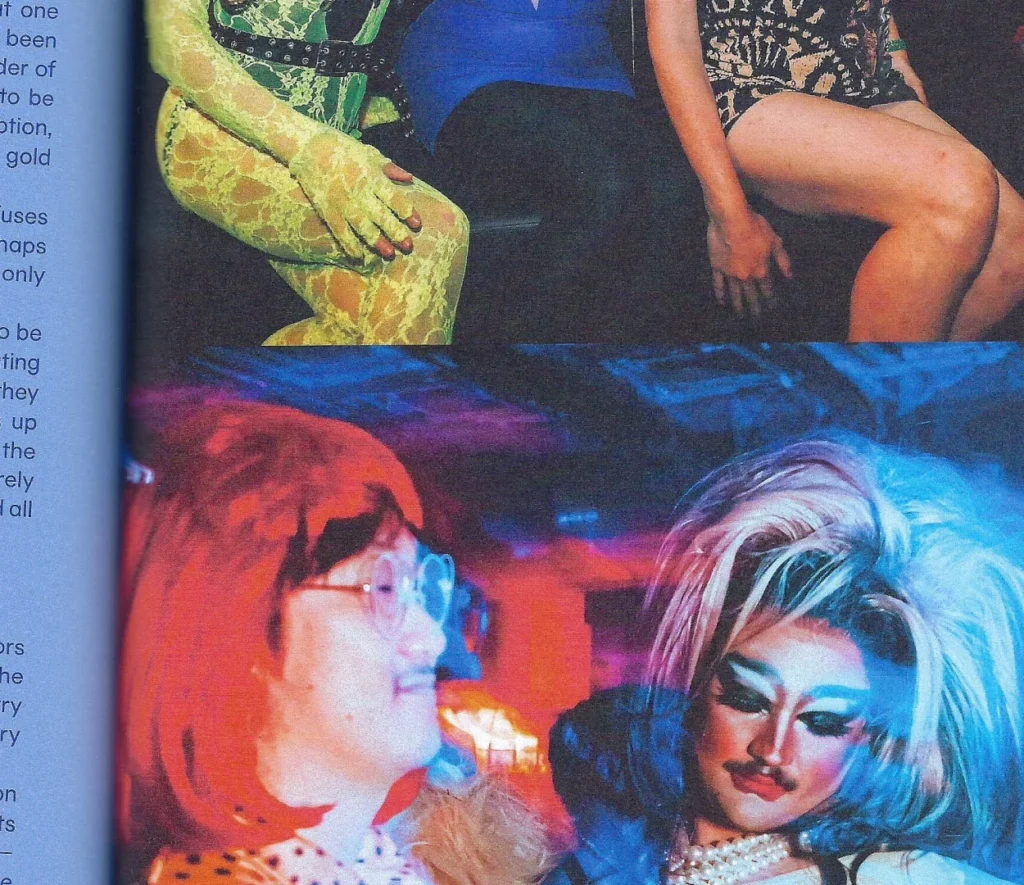
No One‘s aesthetic isn’t a filter, but a device. It doesn’t try to reproduce the energy of the night by imitating chaos, nor to tame it through the formal cleanliness of the glossy magazine. Instead, the magazine treats the page as a landing surface where heterogeneous materials — photographs, stickers, playlists, comics, ephemera and texts — can settle while keeping their own autonomy. There’s no visual hierarchy, no cage locking things in; every element occupies the space it’s owed. No One‘s graphic design favors addition over hierarchy, layering over linear narrative. The effect is that of a mental map rather than a showcase, where images don’t illustrate the texts, texts don’t explain the images, and reading becomes an active exploration, a movement among the traces of a scene the magazine doesn’t want to represent but to host.
No One Magazine openly states it wants to offer an experience opposite to the fleeting nature of digital media and to the very volatility of nightlife itself. It’s an almost paradoxical position: telling the story of a culture born in temporary places through one of the most static objects that exist.
But that’s exactly why it works.
In a cultural system where everything has to be immediately photographed, shared, indexed and replaced, No One holds a radical thesis: that preserving something may also mean withholding it from immediate disappearance. Underground publishing has always had this strange calling: it doesn’t necessarily come to be for the sake of eternity; it often comes to be because someone feels that, if they don’t print that thing now, tomorrow it might no longer exist.
No One doesn’t use the magazine to advertise the night — it uses the night to demonstrate why a magazine should still exist, and this is perhaps its most original insight. The underground is what continuously produces other ways of being together, other languages, other spaces. Like a party that ends but leaves behind something that can’t be photographed: a relationship, a memory, a possibility. No One simply tries to give shape to this elusive something, and so paper becomes the night’s provisional archive, and when the music stops, when the lights come back on and the club goes back to being just an anonymous building, a magazine remains to remind us that, for a few hours, another place existed in there — another way of living together.
Column curated by Francesco Ciaponi