Born and raised in Munich, textile artist Joana Schneider moved to L’Aia to study at the Royal Academy of Art. Her encounter with the Netherlands became fundamental to her artistic practice. Here, in contact with the nation with Europe’s largest seaport, she became interested in the fisherman’s trade and in particular the local craft of making nets. This purely male tradition substantially influences Joana’s art. She comes into contact with local fishermen and net-makers who “are textile artists in their own right, without even knowing it,” says the artist. From them, she learns different techniques that allow her to develop new ones, declining new methods of knotting and winding through the use of machinery. In addition to the creative process, this encounter also becomes fundamental from a material point of view. Joana Schneider mainly uses discarded materials that she retrieves directly from seaports, from those fishermen with whom she has established a professional but also human bond. Fishing nets, sailor ropes and old furniture are the main protagonists of Joana’s works. Hers is not intended to be a ‘moralistic’ choice but rather a stylistic self-imposition. For the artist, using recycled materials becomes a challenge and a test that stimulates her during the creative act.
Visualizza questo post su Instagram
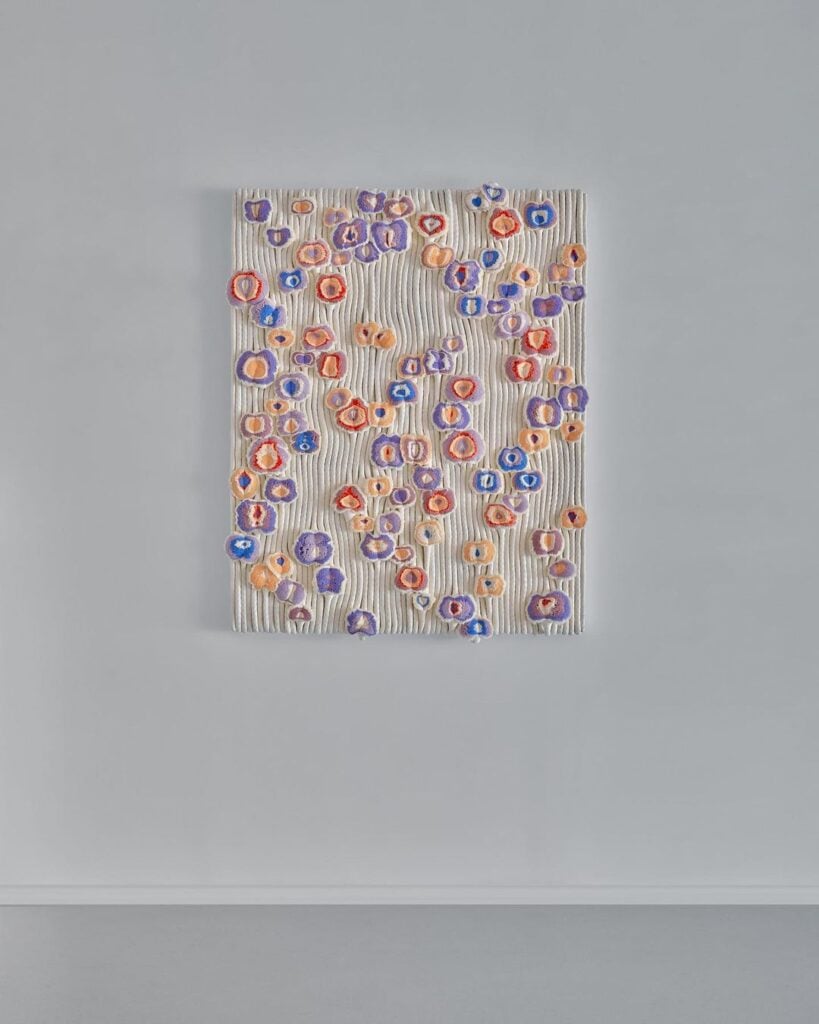
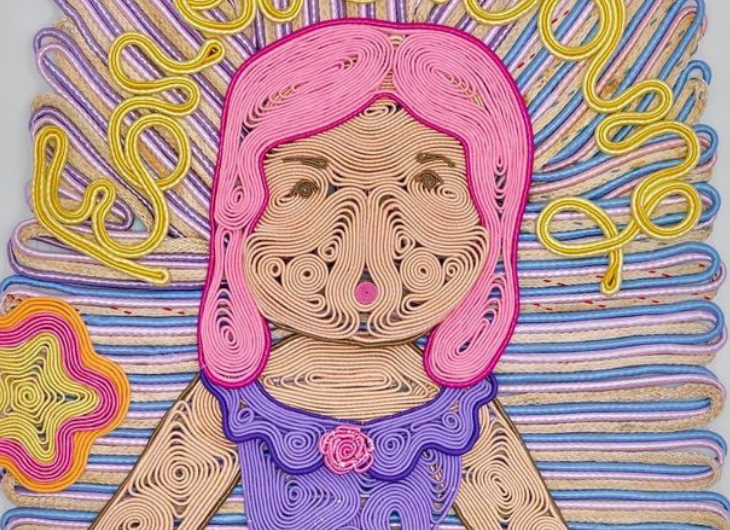
Wavy patterns and textures meet with the ‘rainbow’ colours that Joana Schneider chooses to paint her materials. The effect is a childlike aesthetic, tending towards a cartoonish sphere. This is especially evident in her latest project, currently on display in the solo exhibition ‘If you know who she is, it’s time for Botox’ at the Rademakers Gallery in Amsterdam until 22 July.
The works in the exhibition clearly express the artist’s interest in the world of children. A life-size work of Polly Pocket, the famous doll from the 1990s, dominates the scene. The artist thus creates imaginative and amusing imagery, with the intention of evoking feelings of nostalgia and warmth in the viewer. This serves the artist to deepen a more complex discourse. The Polly Pocket represents a childhood obsession, the object the artist herself spent the most time with and therefore responsible for her fantasies and desires, both in terms of professional and aesthetic aspirations. In this way, Joana Schneider reflects on the importance that childhood games actually have on our way of thinking and how they reflect on our psychology even once we become adults.
The imagery that Joana creates inevitably leads the viewer to think about the female gender. In this sense, the artist seeks a provocation that leads to questioning the separation of gender even within what should be a “unisex” and universal moment, such as the game.


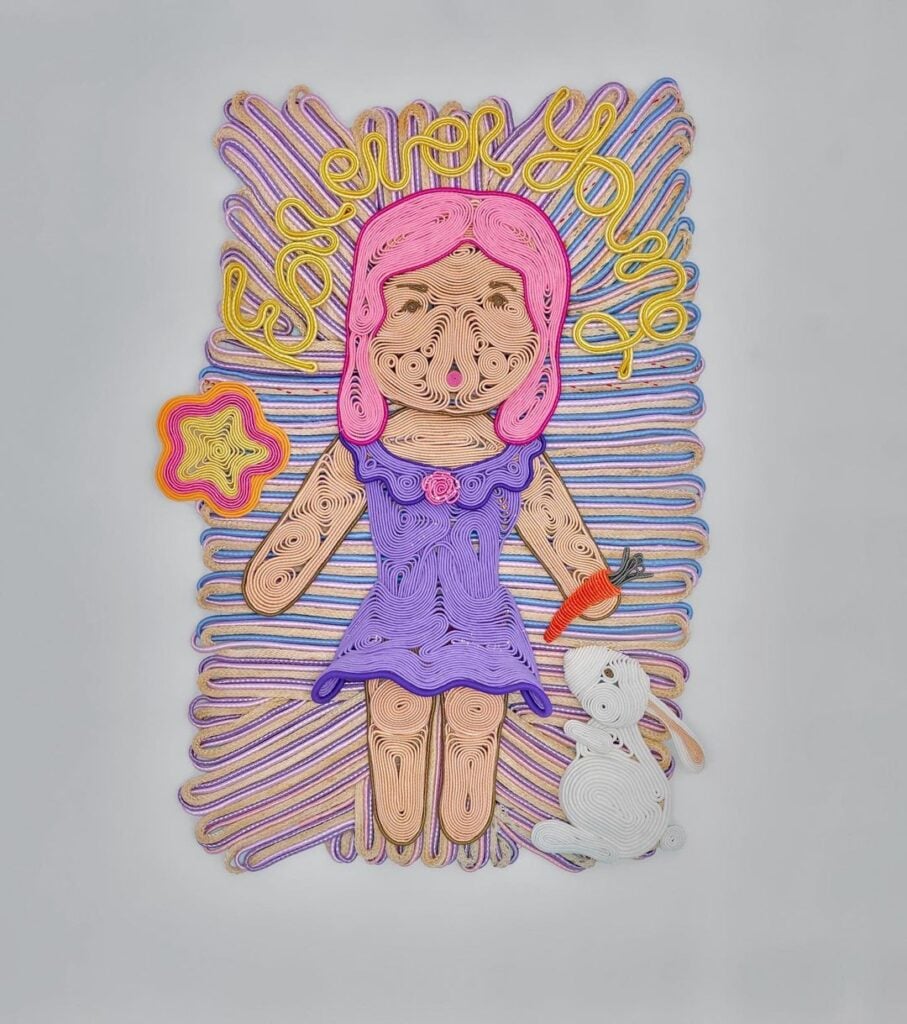


Courtesy Joana Schneider and Rademakers Gallery di Amsterdam