Article by Floriana Savino
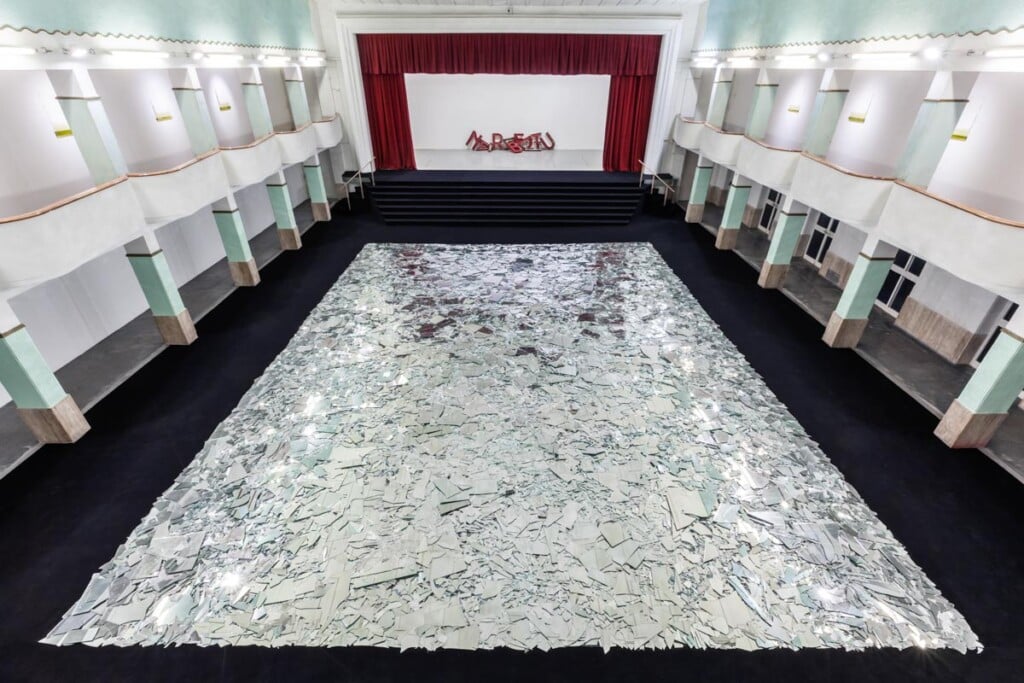
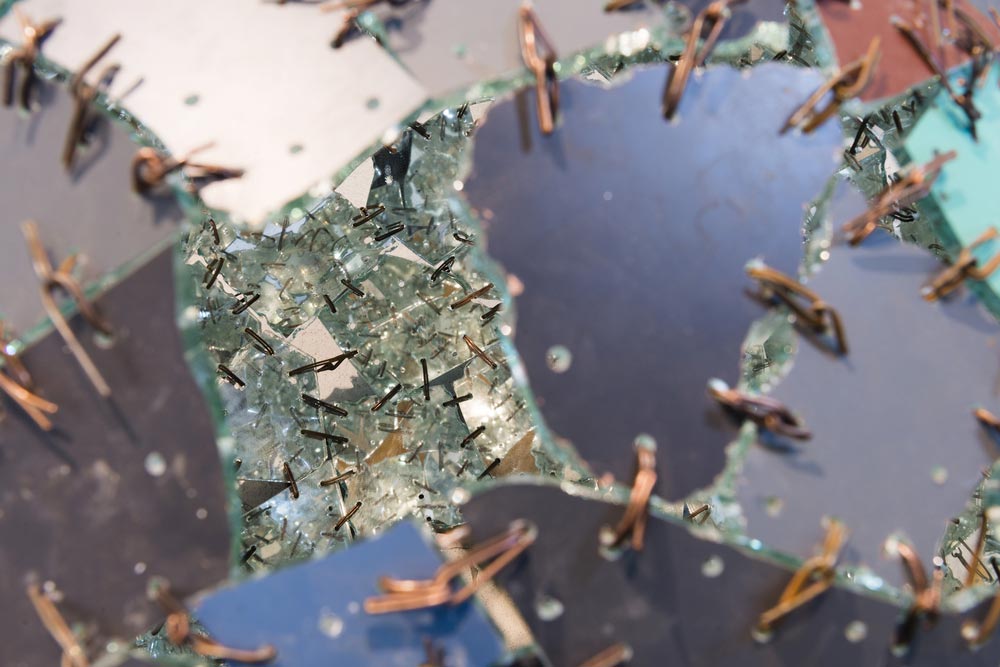
Silence kills, in 2019, was both the evocation and prophetic omen that the French-Algerian artist Kader Attia (Seine-Saint-Denis, 1970) felt compelled to bring into the spaces of Galleria Continua – Les Moulins in France. Weaving a journey through a world-context that communicates and represents itself through fragments and continuous fragmentation, the artist soon arrived at the mirror, considering in the possibility of rupture the most essential opening toward multiple horizons of vision and perspectives.
Over the course of decades-long research, Attia has focused his reflection on the theme of repair, understanding it as a longing for a form of reappropriation—an essential and persistent material of any sincere act of resistance. After embracing Venice with exhibitions at the Biennale in 2017 and 2019, the artist returns to the Lagoon for Venice Art 2026.
In a time shaken by countless wars, fractures, and the infernal killing of innocents, the specter of colonialism and the phantom limb, long investigated in the artist’s practice, re-emerges as a sharp and urgent call for an art committed to shedding light on the practices and distortions of the global system.
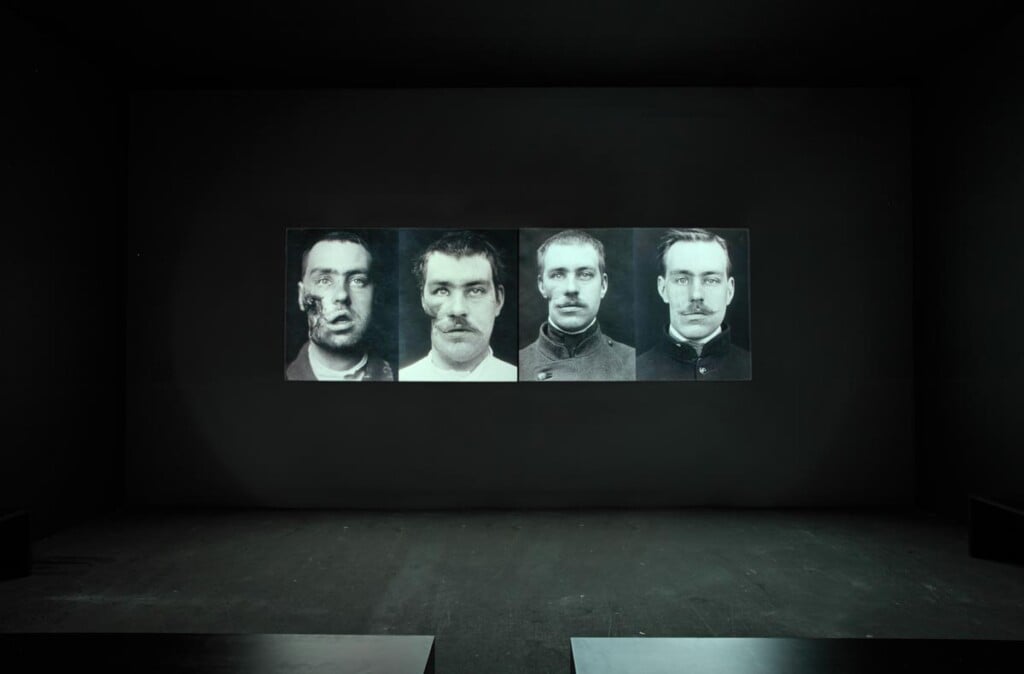
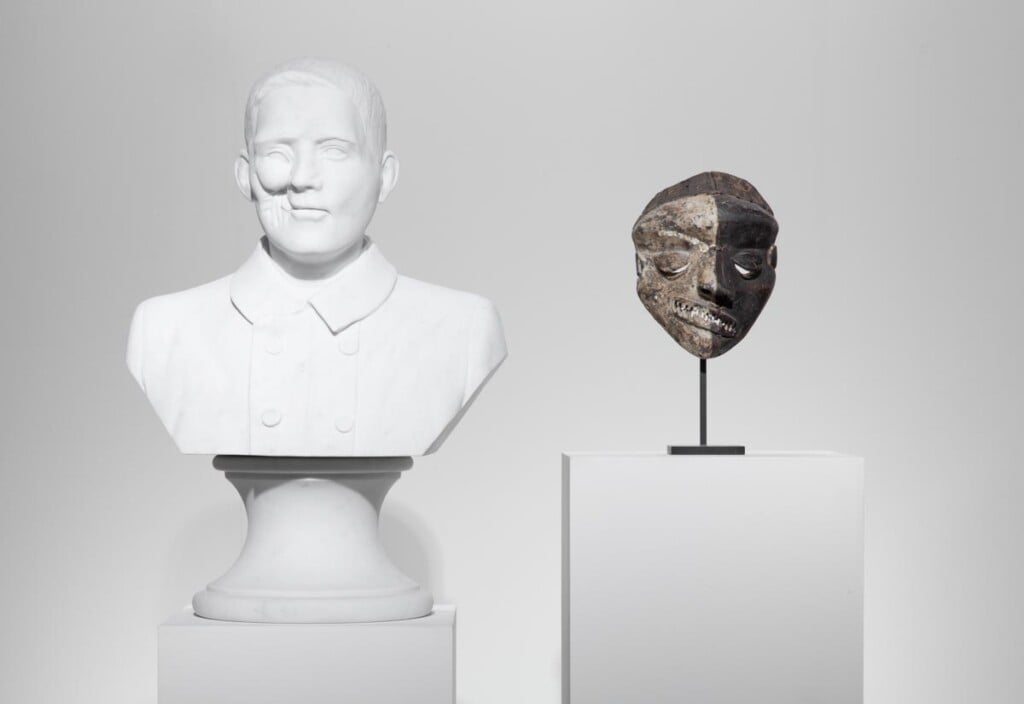
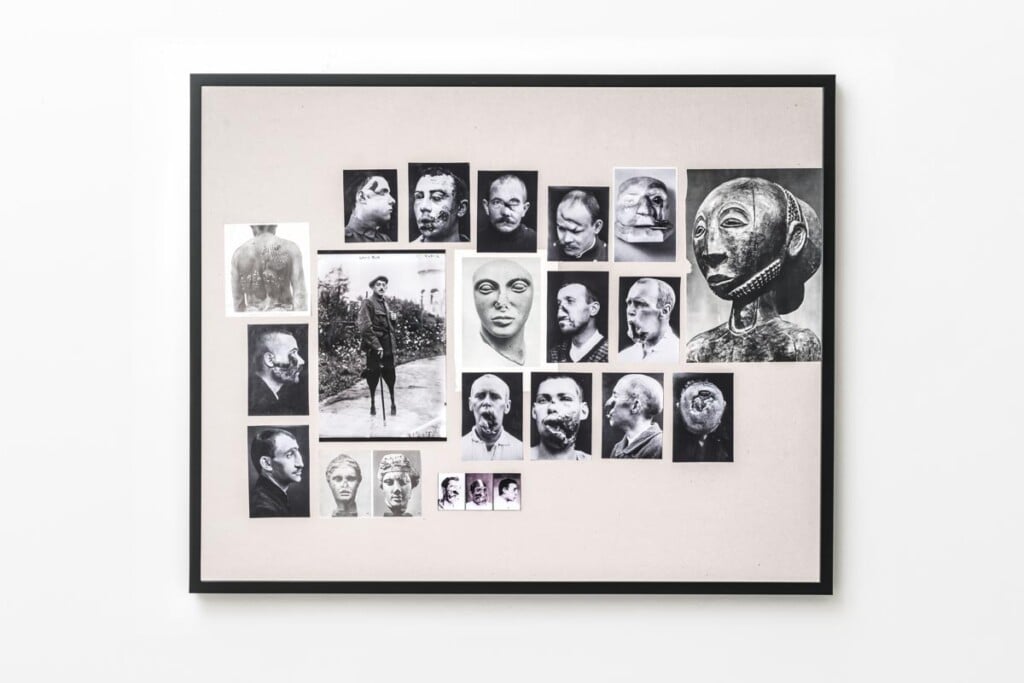
The so-called phantom limb syndrome, within the obscenity of a capitalist horizon that voraciously depends on war, accompanies a human history that spans centuries and devastating eras. Looking back to the time of the First World War, the work of Anna Coleman Ladd (Philadelphia, 1878) on the annihilated faces of surviving soldiers stands as a testimony to the need to mend and restore hope within the abyss of trauma.
As Denise Villa wrote in her novel dedicated to Coleman:
[…] When thinking about war, we speak of the loss of human lives, but we forget the totality of those harmed (physically or mentally) and their struggle to return to their previous lives. […] Where surviving soldiers were seen as outcasts or traitors […] and young mutilated men were called monsters or war fools, it must not have been easy to find the motivation to start again.
Anna’s ingenuity and creativity found their ground in Paris, where she moved after marrying Boston physician Maynard Ladd. Having come into contact with many soldiers and war veterans through her experience as a nurse and Red Cross worker, Coleman became aware of the importance of working on those facial features wounded or devastated by the living trace of death. At a time when little attention was given to reintegrating wounded bodies into society, the more than 185 facial masks she created for war veterans became an empathetic gesture—an act of care and participation toward those who had lost, and lost themselves, in war.
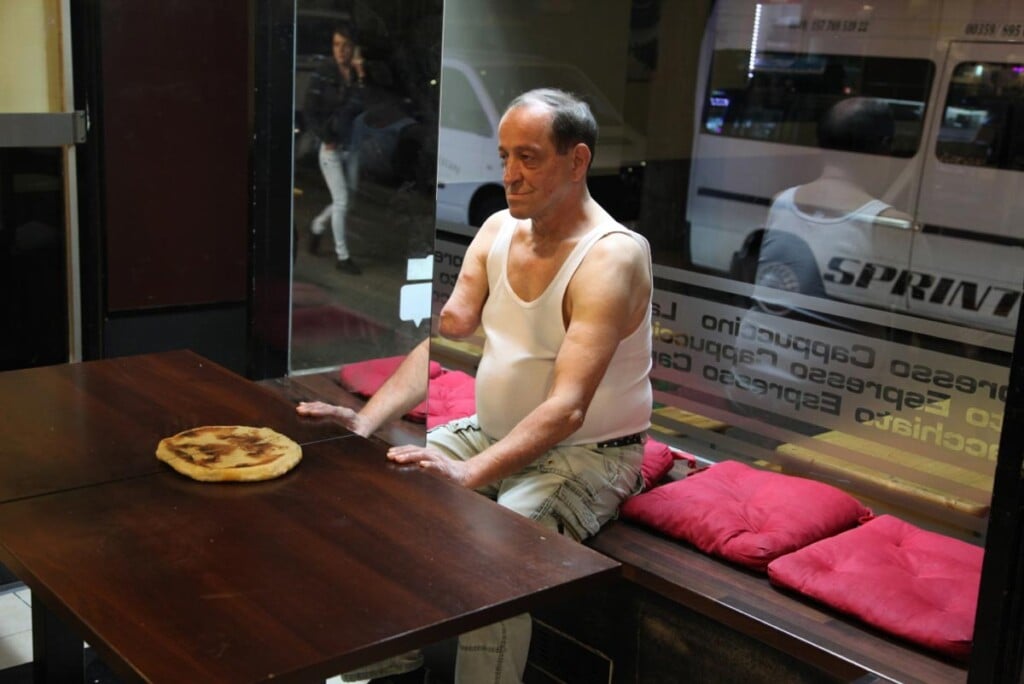
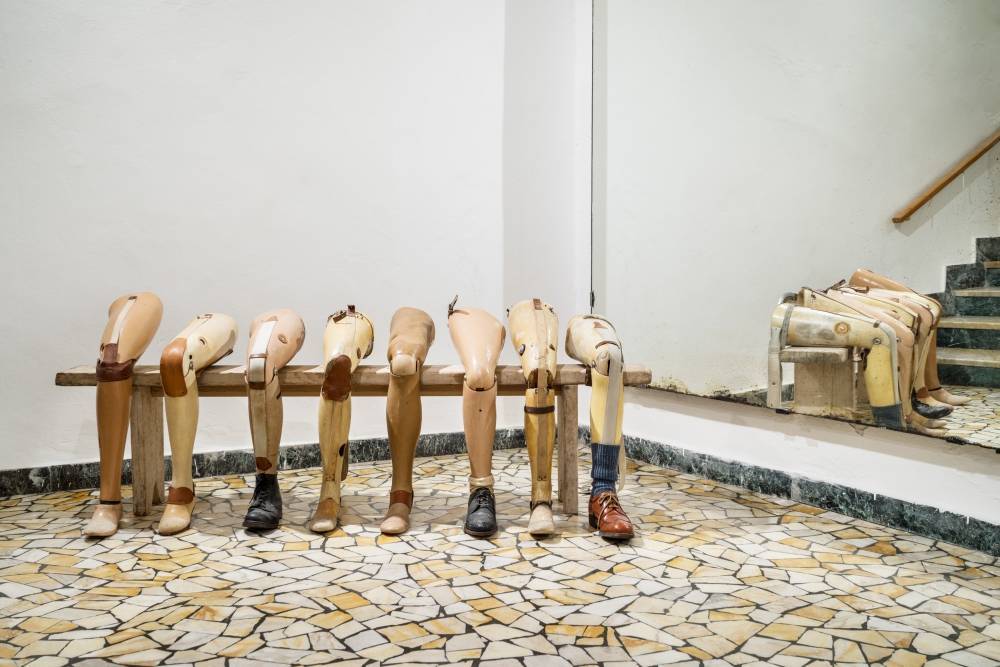
Drawing on installation, video art, anthropology, and neuroscience, Kader Attia reflects on the loss of a part of the body that continues to pulse and intellectually bleed, relying on a practice that is as conceptual as it is powerfully physical and radical. Weaving together an artistic approach that embraces experience, doubt, and life itself, the artist addresses inequalities, the exploitation of individuals and goods passed off as necessary and inevitable, and the possibility of making art a stone thrown beyond the wall of indifference.
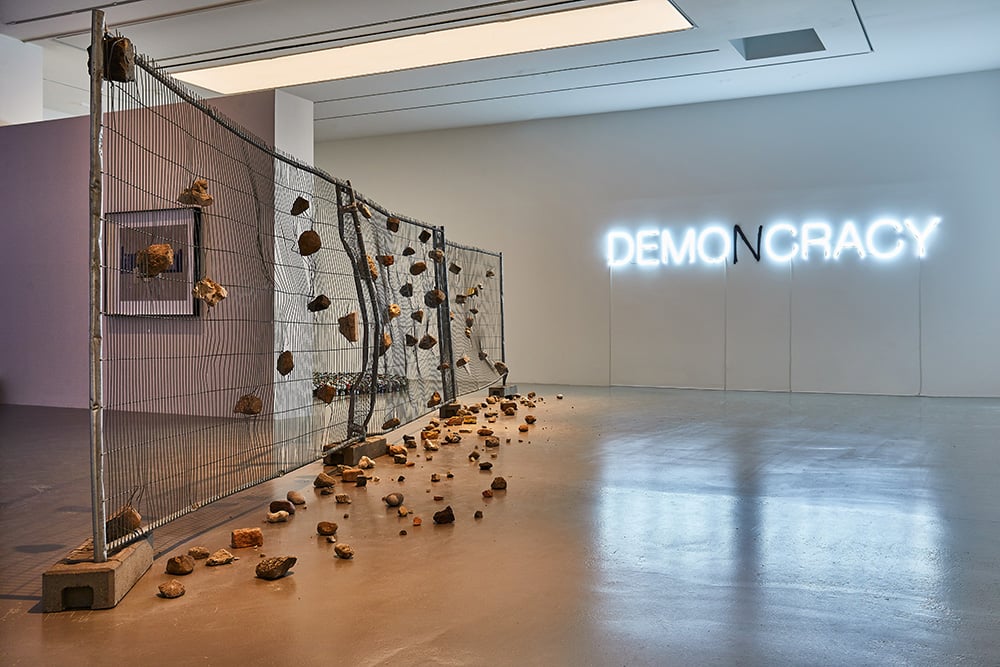
The powerful installation On n’emprisonne pas les idées (2019), exhibited at Les Moulins, paid tribute to the refugees of the Stalingrad district in Paris, who were subjected to harsh collective repression beginning in 2016. Within the tight mesh of an iron barrier—metaphor for segregation and division—the stones selected by Kader Attia appeared suspended between the fragility of an uncertain future and the necessary persistence of resistance against adversity and racism. Completing the installation was a series of standard BA13 plasterboard panels, typical of low-cost suburban prefabricated housing, on whose surface, as a sign of physical effort and pain, the word humiliation was carved in large letters.
“The greatest illusion of the human mind,” the artist warns, “is probably the one that humanity has constructed for itself: the idea that it can invent something, when in fact it only ever repairs.”