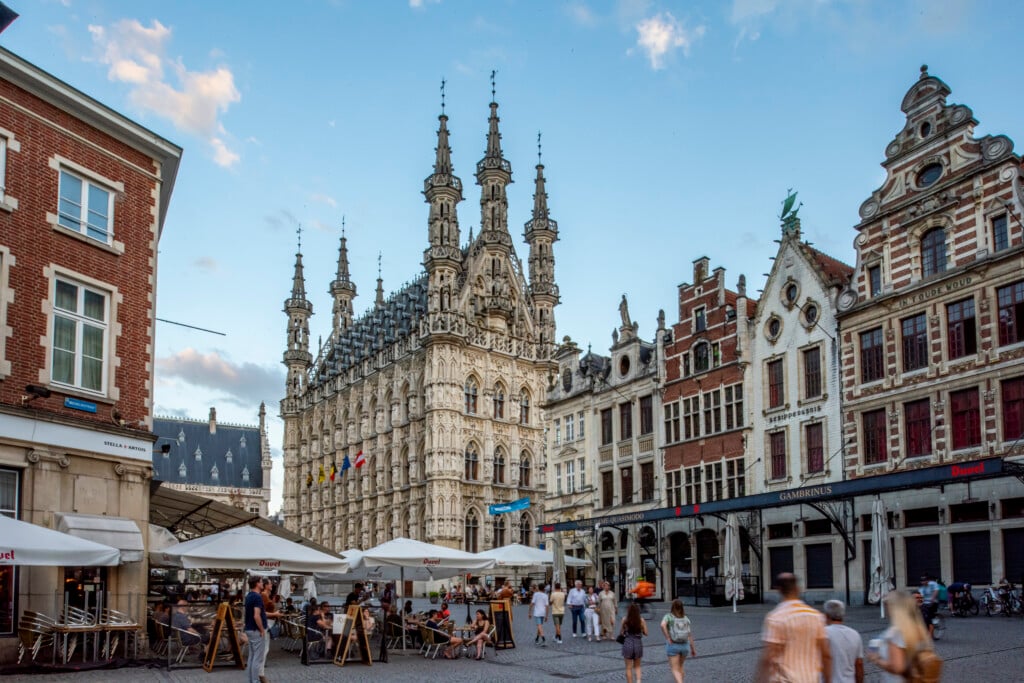
Six centuries of academic wonder translate into a year of widespread celebrations. Leuven, located in the centre of Belgium, 25 min east of Brussels, celebrates the 600 years of KU Leuven by turning the city into a stage where contemporary art, scientific research, and historical heritage engage in dialogue within public spaces.
This is not the usual institutional anniversary filled with ceremonies and commemorations. It’s something more intriguing: seventy scientists from all faculties have worked with sixteen artists and poets to translate research questions into installations, sculptures, and urban poetry. How malleable are human beings? What is the power of not knowing? How can education become more inclusive? Questions that turn into matter, form, and experience.
Leuven: a city that breathes youth
Leuven is one of those cities where the university is not a separate campus but the connective tissue of the city. Students don’t live in distant neighborhoods: they are the ones shaping the city’s identity together with the Louvanist citizens. Bicycles dominate the streets, cafés fill with academic discussions, and even historic buildings preserve that vibrant energy that keeps everything accessible, never fossilized.
KU Leuven, founded in 1425, is one of the oldest universities in Europe. From its core emerged IMEC, a world authority in nanoelectronics and digital technologies. But its most fascinating legacy lies in that typically Flemish ability to make knowledge part of everyday life. It’s not elitist, it’s not detached: it lives in the streets, the parks, the courtyards.
Public Art: And So, Change Comes in Waves
The Art and science route And So, Change Comes in Waves, which unfolds across Leuven and its surroundings, is the heart of the celebrations, permanent and freely accessible. The title says it all: knowledge moves in successive waves, answers generate new questions, and nothing is ever final.
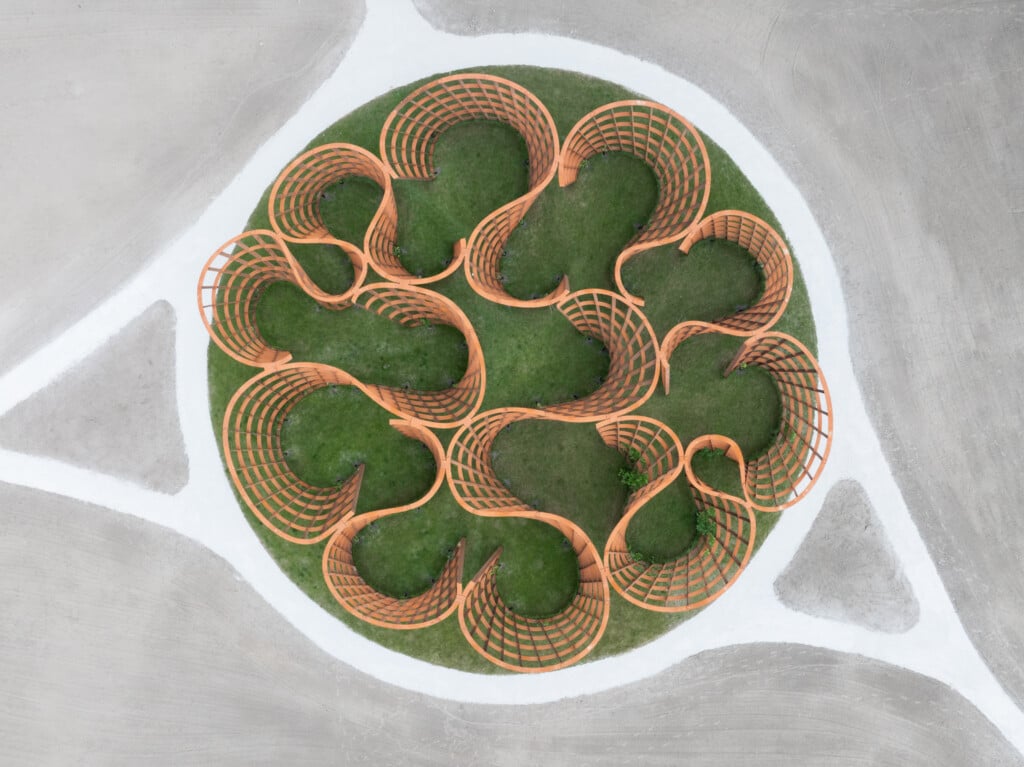
Among the works that impressed us the most is Wandering Garden by Gijs Van Vaerenbergh, located in the park of Arenberg Castle — a labyrinth in progress: hundreds of meters of curved steel grids that will, over the years, be completely overtaken by climbing plants. It’s a patient work, celebrating the slow rhythm of botanical growth. Getting lost among those metallic curves, knowing they’ll change shape season after season, is a necessary exercise in disorientation.
It’s a powerful metaphor for the freedom of knowledge — one that also emerges from error, deviation, and the act of “getting a little lost.”

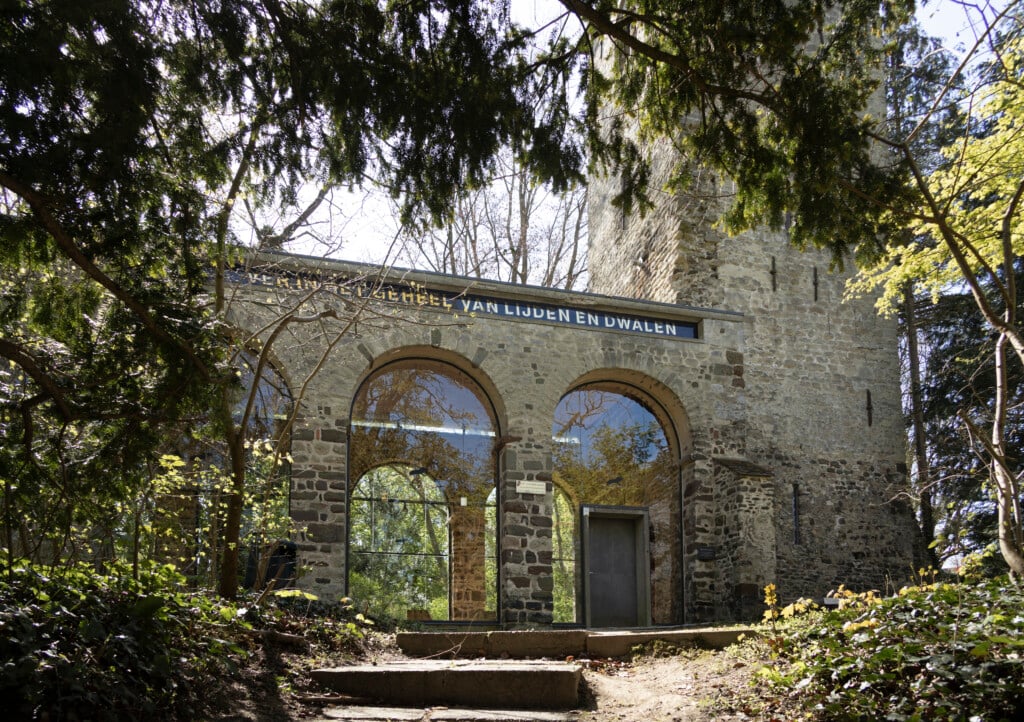
In the chapel of Sint-Lambertus, poet and neuroscientist Jan Lauwereyns presents Vision of Here and Now. It’s an installation of engraved and gilded verses where light plays the leading role: reflecting, vibrating, accompanying slow reading. The title recalls Hadewijch, a 13th-century Flemish mystic, yet the message is utterly contemporary: poetry becomes body, matter, experience. It’s not read — it’s crossed. In a city where science is a mother tongue, this work reminds us that sensitivity, too, is a form of knowledge.
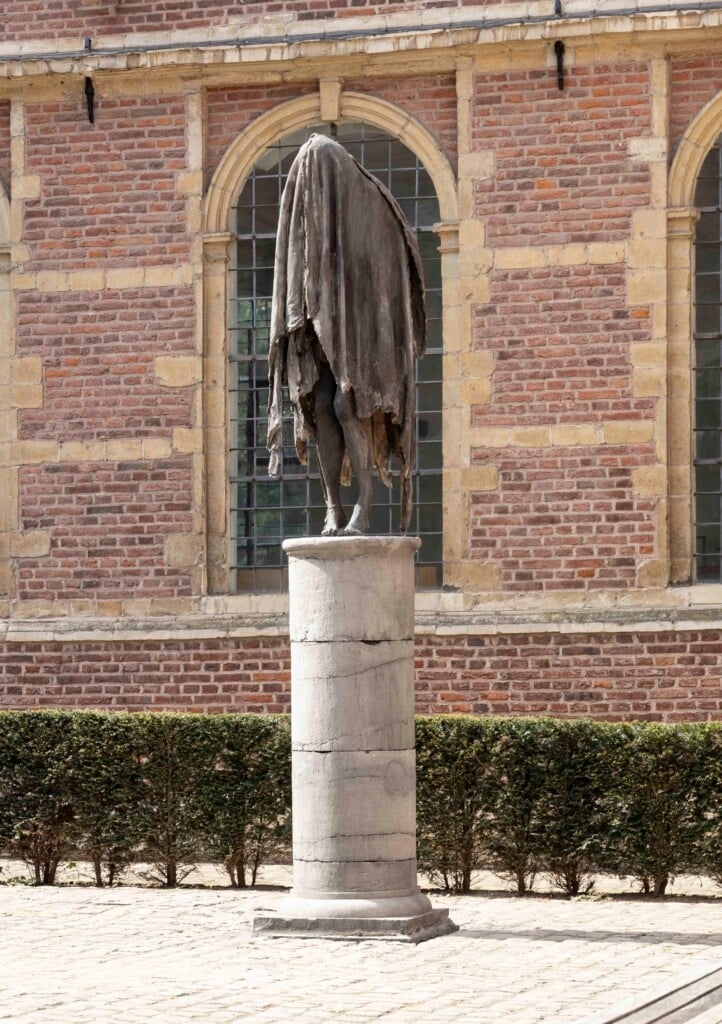
But it is Arcangelo IV by Berlinde De Bruyckere, in the courtyard of Van Dalecollege, that leaves a lasting mark. No traditional religious iconography here: this monumental figure, wrapped in a cast of cowhide, radiates a raw vulnerability that hits you in the gut. A hump between the shoulders hides wings that cannot open, while the body leans forward on a pedestal, suspended between ascent and fall.
De Bruyckere has long explored the boundaries between human and animal, between suffering and resilience. Here, the archangel becomes an anonymous intercessor carrying the world’s pain on its back — yet, in the position of its feet, one can read the possibility of flight. Weight and lightness coexist. It’s one of those works that stay with you for days.

Leuven’s Cultural Heritage
Beyond the new works of art, Leuven offers historical layers worth exploring. The Botanical Garden, the oldest in Belgium, was built in 1738 for medical students and remains active today. The tropical greenhouses provide the perfect counterpoint to academic rationalism.
The Great Beguinage tells another story: 300 houses across 3 hectares, a village within the city where centuries ago lived communities of Beguines — women who chose a religious life outside the convent. Today it’s a UNESCO World Heritage Site, where a sense of radical calm prevails, with bridges over the Dijle, cobbled streets, and a Gothic church with striking stained glass. A fairytale setting that doesn’t need to become a tourist attraction to thrive. Today, researchers, PhD students and university staff live in the red brick houses.

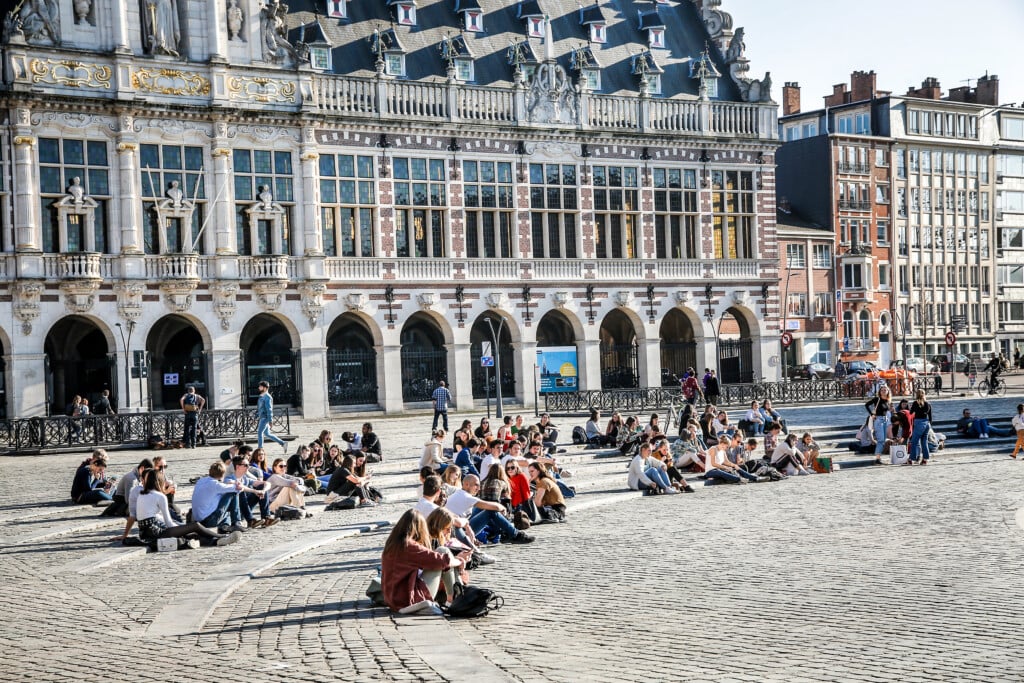
The University Library alone is worth the trip: not out of architectural fetishism, but to experience that student atmosphere that keeps places of knowledge alive. Just step inside for a few minutes, look around, and savor that special mood only certain places can preserve.

M Leuven: a possible dialogue
The museum M Leuven has done something fascinating: the Flemish Primitives (Dieric Bouts, Rogier Van der Weyden) engage in dialogue with contemporary artworks without clear separations. This duality makes the visit dynamic: seeing how artistic forms separated by centuries can share the same space generates visual short-circuits that keep your attention alive.
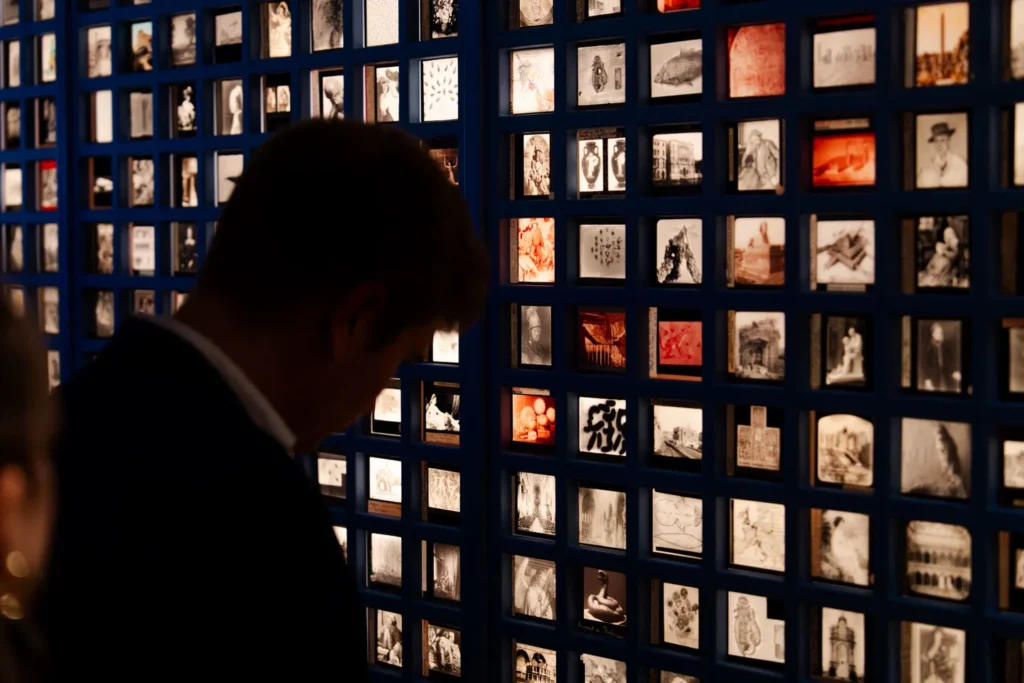
The museum also displays objects from the university’s study collections — early psychology instruments, fossil skeletons of giant deer, prototypes of electric engines — and addresses the institution’s colonial past without rhetoric. This is part of the temporary exhibition “The Pursuit of Knowledge”, that runs until 22 February 2026.

The right moment
Leuven in 2025 shows that an institutional anniversary can become an opportunity for cultural renewal. It doesn’t celebrate the past: it uses its 600 years as a springboard to question the present. The university’s walking tour app allows visitors to explore historic buildings and collections independently.
There are cities that don’t shout to draw attention. Leuven is one of them: it welcomes you, lets you cycle among canals and art installations, sit in a café full of students, and realize that this was exactly what you were looking for. An escape from the big city — culturally rich yet never heavy. This year, with this project of open research and public art, even more so.
If Belgium fascinates you with this blend of art and vision, also discover how Bruges and Antwerp are rewriting the contemporary scene.

Cover Photo: Jan Crab