Between Belgium and London, photographer and visual artist Marcel Top has developed a visual practice that moves through the increasingly elusive territory between photography, technology, and power. Born in 1997, his work investigates contemporary surveillance systems, data collection, and the use of images as tools of control, combining documentary research with technologies such as facial recognition, motion analysis, and deepfakes. His projects seek to make visible what usually remains invisible: algorithms, surveillance mechanisms, and the infrastructures that shape the way we see and are seen.
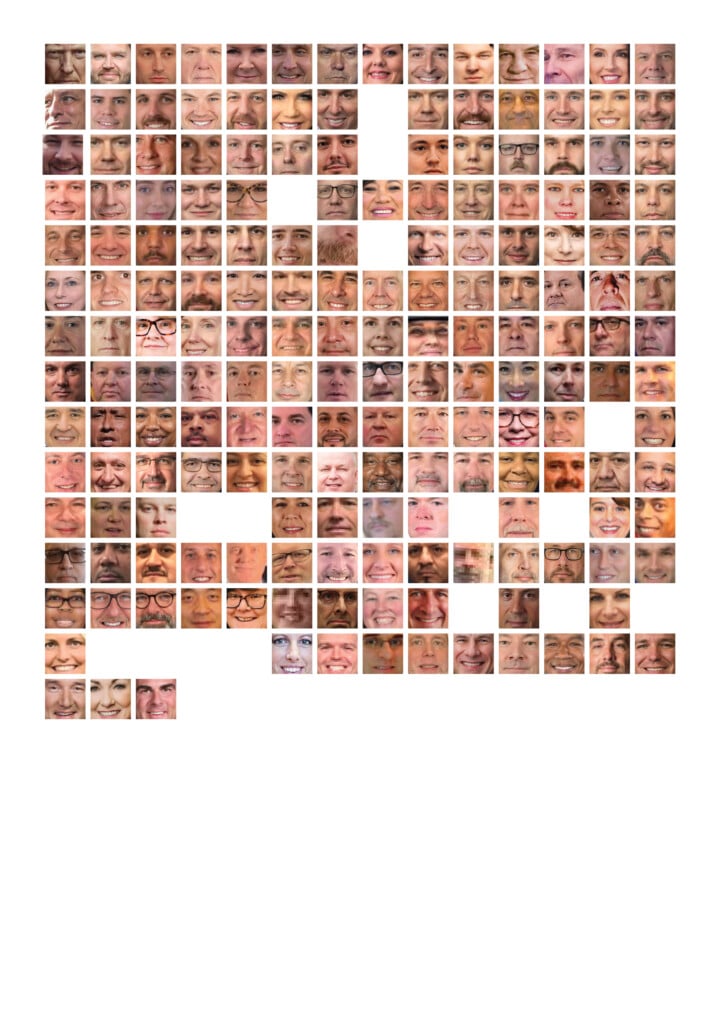
In his project We Will Not Be Stopped, Top analyzes and archives content posted on social media by government agencies, focusing on how the visual language of online culture is used to normalize institutional violence and turn it into entertainment. Through scanning and slowing down images designed to be consumed quickly, he freezes them, allowing for a more critical and conscious reading. In this interview, we spoke with him about propaganda, algorithmic aesthetics, visual memory, and the role of the image in an age of permanent surveillance.
In We Will Not Be Stopped, you work on images and videos posted on social media by American government agencies, which use a language very similar to that of online content to describe control and arrest operations. When did you first notice this similarity, and what made you realize it wasn’t just a communication strategy, but something deeper, tied to the way we perceive these images today?
The first clear realization came when they posted an edit from a deportation raid where agents blew up a door and violently detaining people, set to the theme music from Pokémon. This was at the end of September 2025. Something about that specific combination was deeply unsettling: the collision between a piece of childhood nostalgia and physical state violence against real people. It pushed me to systematically look at all the social media posts on X (before Twitter) and Instagram from the DHS, the White House, and affiliated figures such as Kristi Noem. It was there that I realized a fundamental shift in communication had taken place since the re-election of Trump. The shift was particularly visible on the DHS Instagram grid where you could pinpoint the moment the tone changed from institutional messaging to something designed to function as content.
The second thing that made me understand there was something deeper going on was the recognition that these edits were not random or simply trend-chasing. For the last four to five years, I have been closely following the far right in Europe, specifically in France and Italy, and studying their use of social media, looking how they have been working to normalize their ideology through edits and photo montages. I recognized a very similar use of filters, songs, and visual strategies in what the U.S. agencies were producing. One of the most consistent elements was the use of “VHS” or “grain” filters applied to footage, designed to make it look more user-generated and less institutional. But this aesthetic choice also serves a deeper ideological function: it appeals to the fascist logic of nostalgia, the idea of an idealized, historically pure nation. They would also put so called dog whistles within their posts. Links to contemporary fascist or racist imagery, while still having deniability.
These two factors together made me realize it was essential to archive and preserve this material as a historical record, especially because it was produced specifically to integrate itself within algorithmic content consumption. Designed to be seen, to generate an immediate emotional reaction, and then to be forgotten as the viewer scrolls to the next piece of content.
In this shift, it’s sometimes difficult to know whether we’re watching propaganda or entertainment. In your opinion, is this ambiguity intentionally constructed, or is it something that’s now part of our way of looking?
I think it is very intentional. Before this shift (in general) government content had a polished, institutional feel, both in its graphics and its visuals. It would resemble advertising or what we would typically recognize as “official communications.” Now, that official communication has become content. We can see this across dozens of examples. In February 2025, the White House posted a video of shackled immigrants boarding a deportation flight captioned “ASMR: Illegal Alien Deportation Flight”. Later, they used the viral Jet2holidays TikTok trend to soundtrack deportation footage, and set ICE raid montages to Cynthia Erivo’s “Defying Gravity” from Wicked with the text “Ahhh that deportation feeling…”. This is normalizing violent imagery and desensitizing people to state violence. It is very much a deliberate choice by the people creating this content to position themselves within this ambiguity, they could easily decide not to participate in it.
From the consumer’s point of view, any piece of information will eventually be transformed into content. We saw this with Luigi Mangione, where there was no big government-created content but users themselves turned the story into edits and memes. So the user already consumes news as content through these algorithmic platforms. But the critical shift is that it is no longer just user-to-user content creation. What is new is that the government itself is becoming the user, adopting the language, the tools, and the vernacular of online culture to push its own messaging, with the full infrastructure of the state behind it.
We could argue that private companies have tried to insert themselves into this chain, but it was always more about trying to hijack the trend or, often unsuccessfully, forcing a trend. And most importantly, it was always about selling a product instead of normalizing certain ideas or state violence.
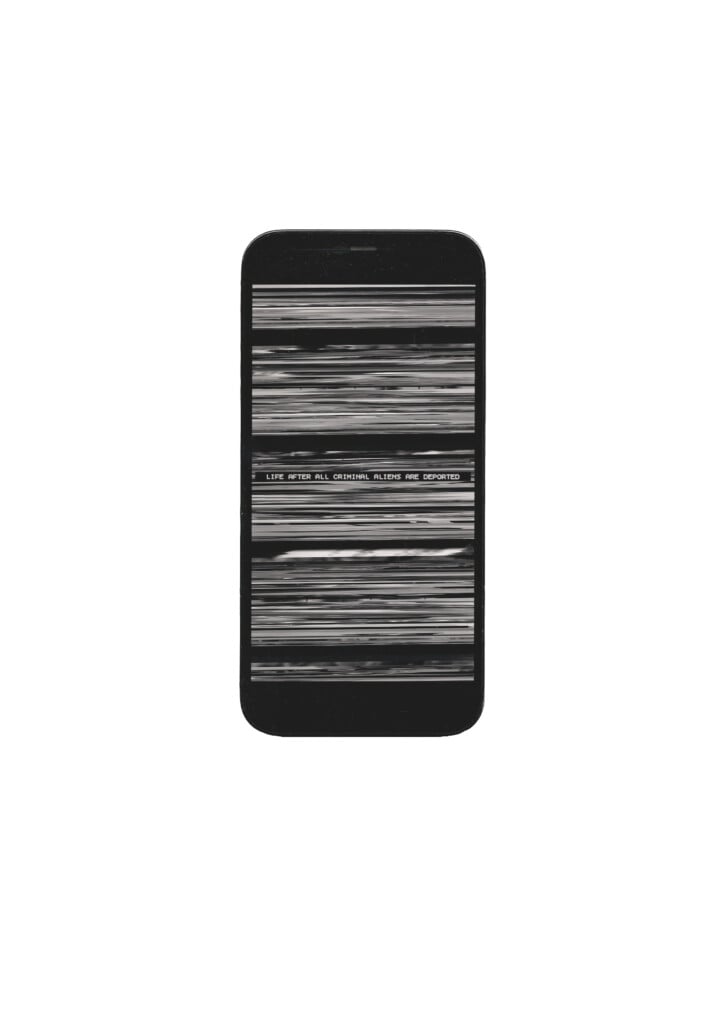
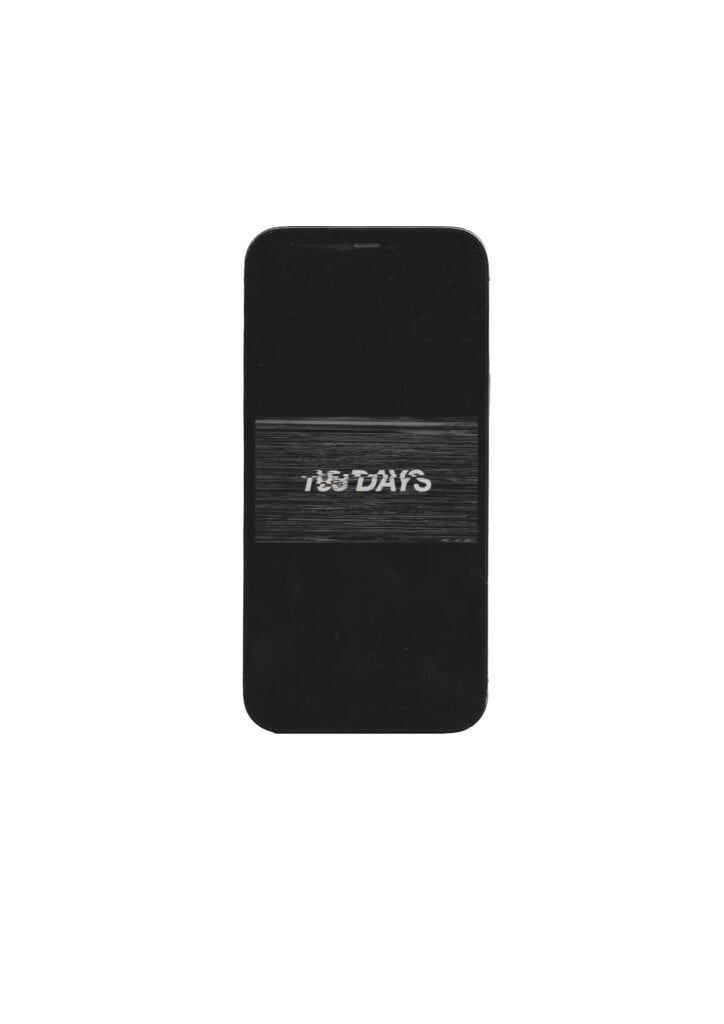
You chose to scan images and videos to freeze and analyze them. What changes when content intended to be viewed quickly is instead observed calmly?
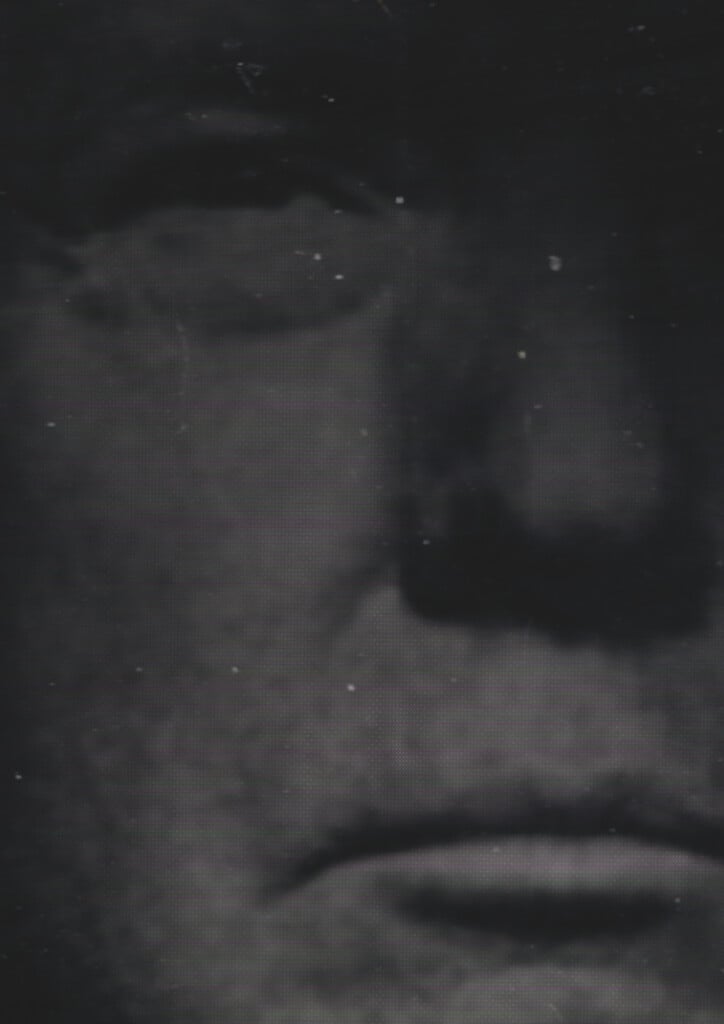
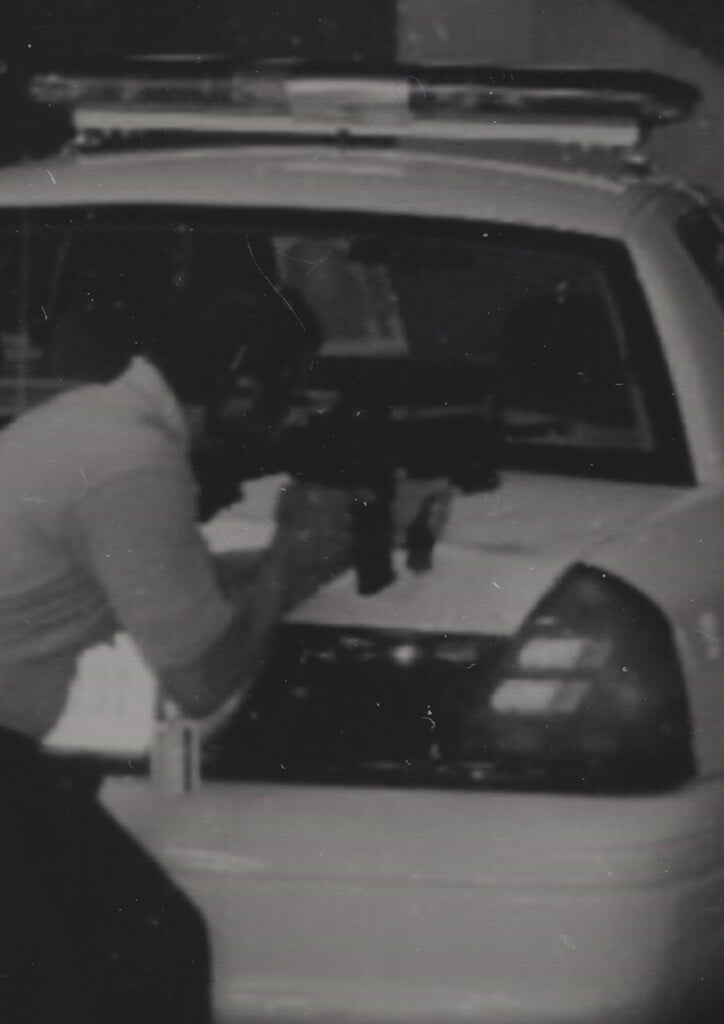
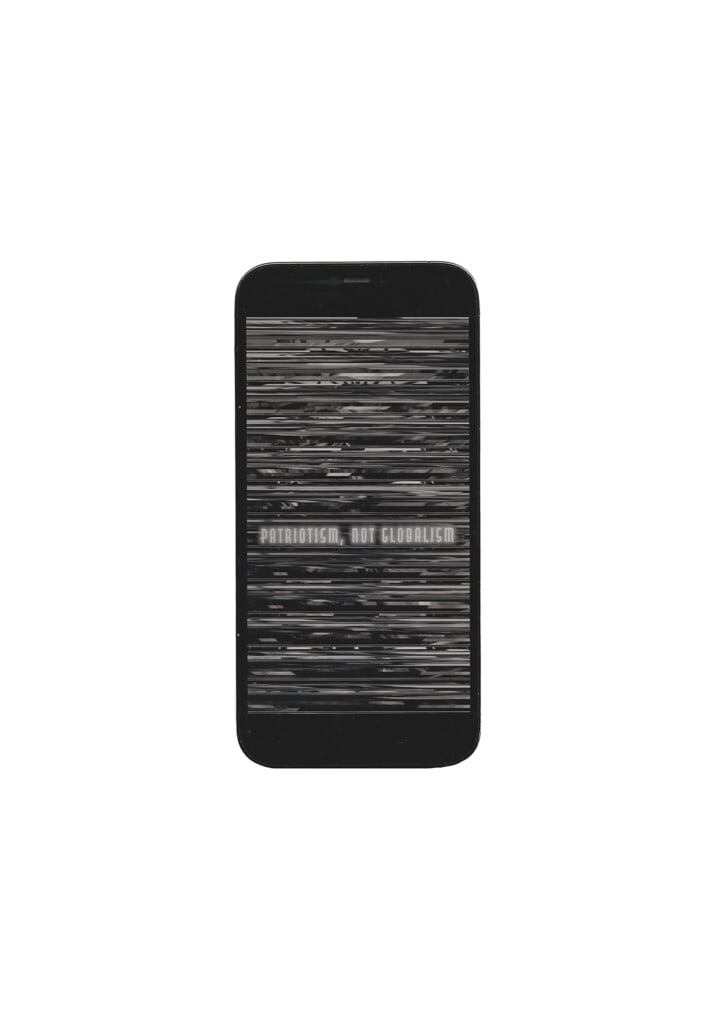
When you scan a video as it plays, the text overlays persist but the rapid editing in the background dissolves. The scanning also strips color, because the phone screen only emits light, so everything becomes black and white. That uniformity removes a significant layer of distraction: the music disappears, the quick cuts disappear, and what remains is the core message, which is almost always violent.
I wanted to find a method that allowed the same media to be seen, but in a way that resisted the logic it was built on, where the message vanishes with the content. Slowing it down, flattening it, makes what was designed to be felt and forgotten instead available to be read. Also putting them all together, shows the deliberate and overall message that is brought. Individually they can be denied or dismissed as the odd one. All together the purpose can’t be denied and forgotten.
In the project, you talk about a sort of “spectacularization” of violence. Do you think the problem is who produces these images or who watches them without question?
I think the responsibility lies especially with the producers of the images and the owners of these platforms. The algorithm inherently favors content that generates emotional reactions, because emotional engagement means longer time spent on the platform and more revenue for their owners. The result is that violent imagery or messaging is frequently published precisely to provoke that kind of reaction, a mechanism now being capitalized on by the state. This dynamic also means that users become normalized to that sort of content and progressively desensitized to its violence. What might have been shocking the first time is no longer so after seeing it for the fifth or tenth time, as we sadly have witnessed with the news and imagery of the genocide in Gaza.
This is something that has been discussed extensively within the photography world and photojournalism for decades, but I feel that it is now happening on an entirely different scale, at an entirely different speed and crucially, governmental institutions are now actively exploiting this desensitization to push their agenda.
I also feel the government is playing into this feeling of the surreal. It would almost seem impossible that a government would post a TikTok-style edit of ICE agents conducting raids, so it makes the violence within also feel surreal. It makes the viewer detached from what is depicted, with the phone acting as a barrier between the real and the surreal.
You archive content that is created only to flow and disappear on social media. Do you feel closer to a work of memory or a critical gesture toward these images?
I hope it functions primarily as a critical gesture toward these images. It is very important to me not to show the original content itself, either through the distortion that the scanning process introduces to the video, or through zooming into specific fragments within the images. In this way, I believe the message of the media still comes through clearly, but I also avoid participating in the propagation and sharing of this violent content. I do archive the original material as well, but that is more for historical purposes than for publication.
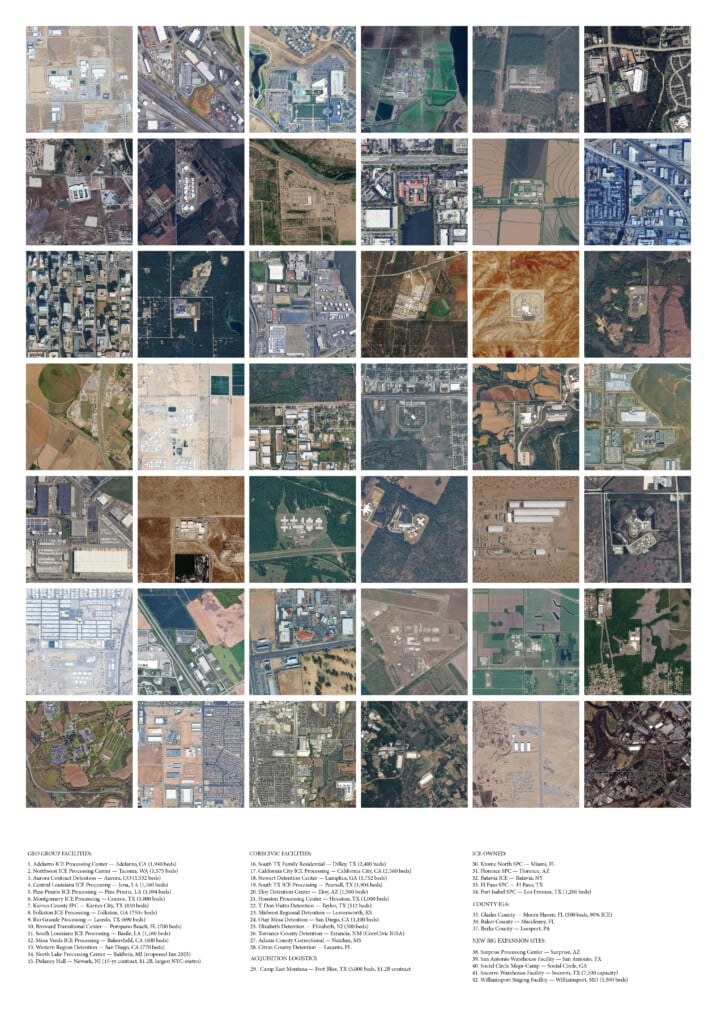
Part of archiving this content also meant for me archiving the people and the companies behind it. So the project extends beyond the images themselves, it includes documenting the faces and names of the individuals and institutions driving these shifts, as well as the companies funding them. The goal of archiving these messages is to have future accountability and proof.
The project title, We Will Not Be Stopped, comes from a phrase in one of the videos you analyze. What struck you about those words, and why did you decide to make them the title of the work?
Those words struck me because they encapsulated how something has been set in motion and it is already too late to simply undo it. Whatever we try to do about it, they are telling us plainly: they will not be stopped. I think it is a very important message for people to hear and to understand to see clearly what is happening.
On the other hand, I also want to re-appropriate the phrase. It is not only their declaration, it can be ours as well. About how we, the people, also will not be stopped. They can continue pursuing their agenda, but resistance against it will not be stopped either. And that starts by informing and becoming aware of their propaganda.
Working on these images for a long time means continually exposing yourself to a highly normalized representation of violence. Has this process also changed the way you look at the images, outside of the project?
I think I got desensitized when encountering violent imagery, because I don’t feel that much disturbed anymore by the violence depicted, but I still get very disturbed by its commodification. Not only in the case of this project, but in general on social media. But this is something I was already confronted with when conducting research on the far right, where it is common to encounter edits of people beating up immigrants or activists, set to music and designed to entertain or aestheticize this. I still get unsettled every time I see videos like that, so I don’t think I have become completely desensitized. I think being very conscious of what is depicted, of the underlying message, and not allowing myself to be distracted by the edit itself is what helps prevent that full desensitization from taking hold. Also reminding myself that what I see on the screen is a reflection of real world events, with real people being depicted.
Your work is reminiscent of projects like How Not to Be Seen: A Fucking Didactic Educational .MOV File by Hito Steyerl, where contemporary visual language is analyzed and challenged from within. Do you identify with this approach, or do you feel that, working with content produced directly by institutions and designed for social media, your project moves on different ground?
I think I align with her work in the sense that, by exposing the institutional mechanisms behind the use of imagery for propaganda, we can help people understand these strategies and hopefully develop the tools to resist them. In How Not to Be Seen, Steyerl dissects the logic of contemporary visibility, who gets to be seen, who is made invisible, and how image technologies serve power. My project operates in a similar space, but from the opposite direction: rather than examining how people disappear from images, I’m looking at how institutions insert themselves into the visual language of the people in order to be seen differently, not as the state, but as a peer, a fellow user.
Her essay In Defense of the Poor Image was particularly important for this project. Steyerl defines the poor image as a low-resolution, compressed, ripped, remixed copy, an image that trades quality for accessibility, that circulates freely and belongs to no one, that is made by and for people. She saw in the poor image a democratic and even subversive potential: an alternative to the polished, high-resolution imagery controlled by institutions and markets. What I see happening now is precisely the hijacking of that concept. Government agencies are deliberately degrading their footage, applying VHS filters, grain, and compression artefacts, not because the images are poor, but to make them appear poor. They are simulating the aesthetic of the people’s image in order to appropriate what is perceived as authentic and grassroots. The poor image, which once signaled an alternative to institutional media, is now being weaponized by those very institutions to disguise their messaging as something organic and user-generated. In that sense, my project does move on different grounds from Steyerl’s: she was defending the poor image from institutional dismissal, while I am documenting its co-optation by the institution itself.
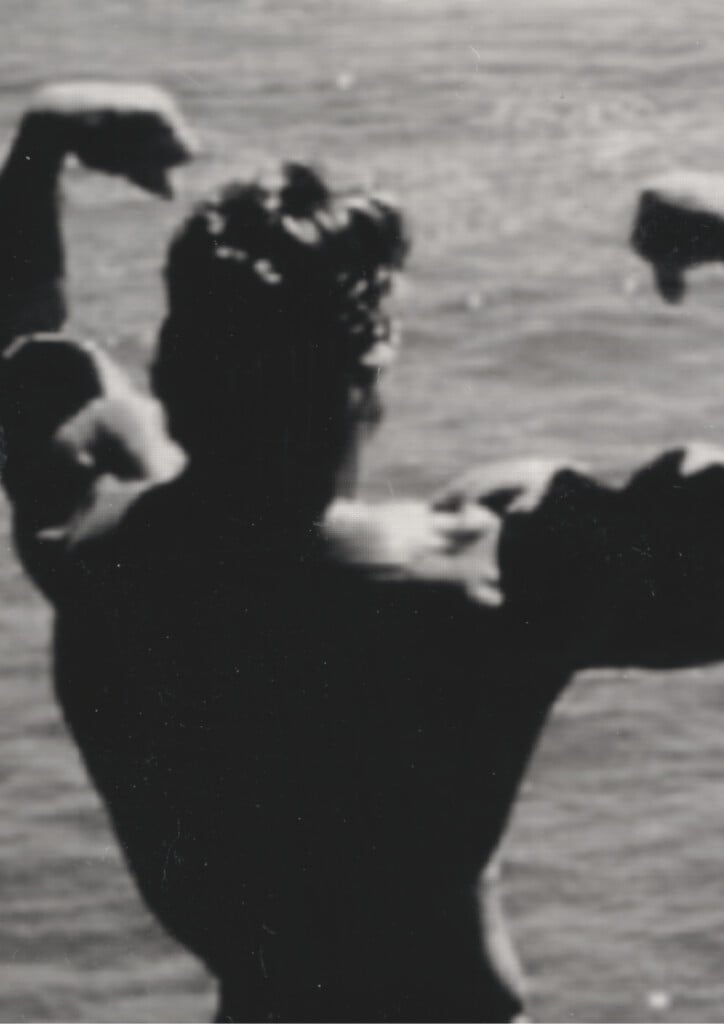
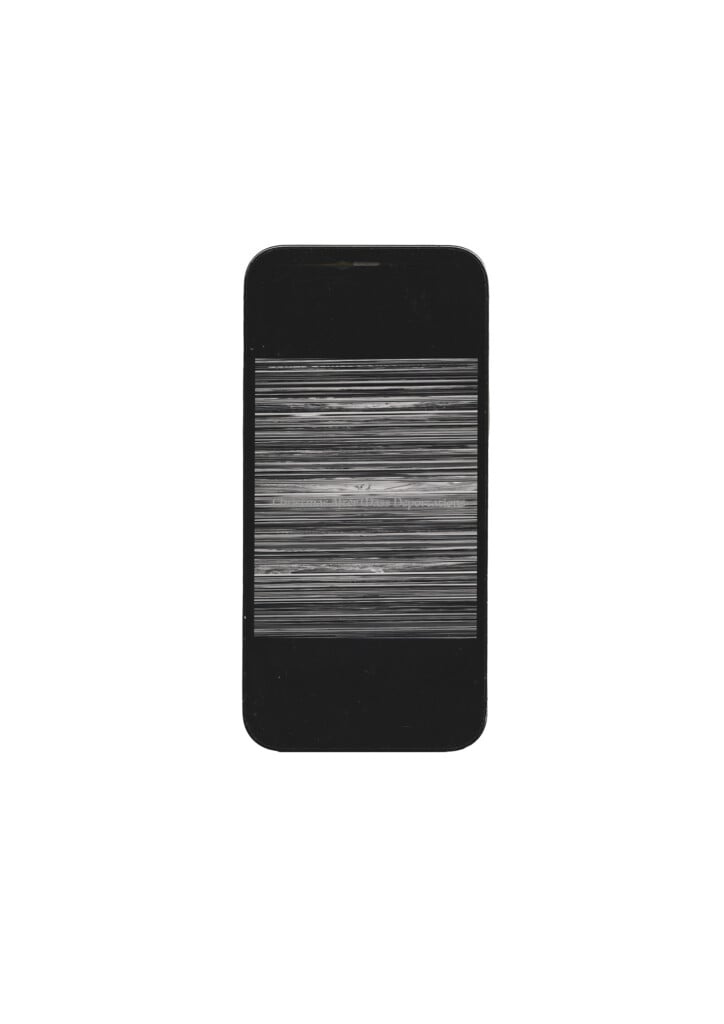
The scanning process in my work also creates an interesting inversion of Steyerl’s framework. By scanning these deliberately degraded videos and images at high resolution (4800dpi), I am essentially doing the opposite of what these agencies do: I take their artificially poor images and render them into rich, detailed, archival objects. The poor image is arrested, slowed down, stripped of its ability to flow and disappear. What was designed to be consumed in seconds and forgotten becomes something that demands sustained attention, which is perhaps the form of resistance most relevant to how these images operate.