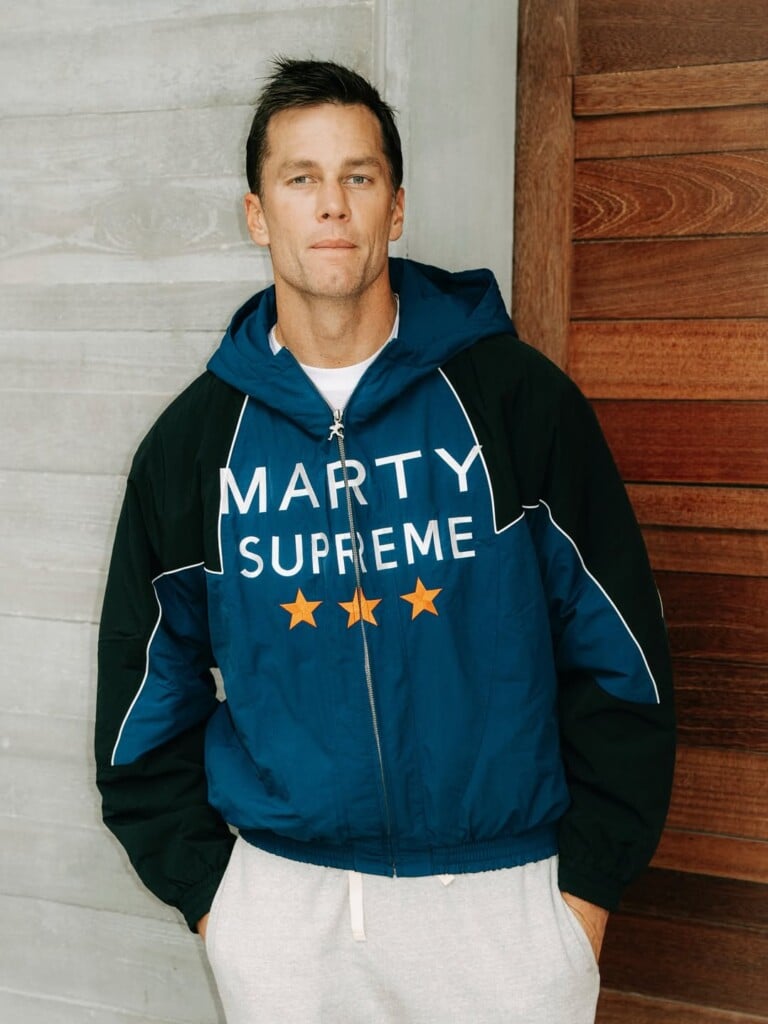
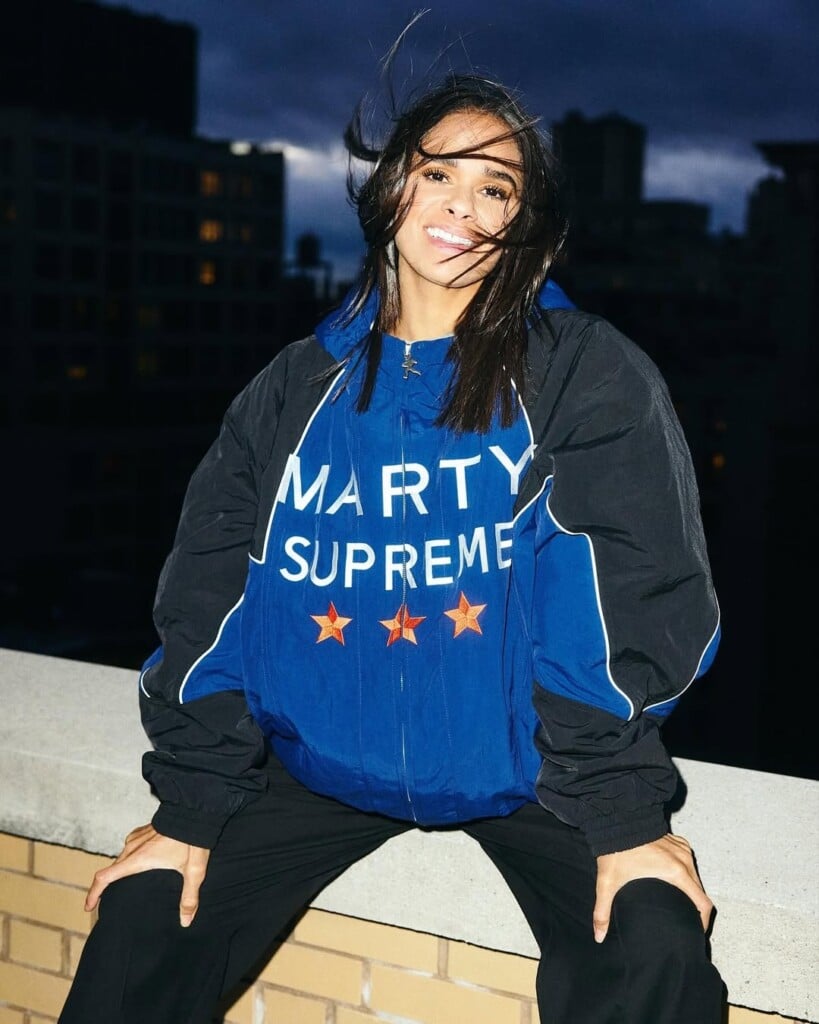
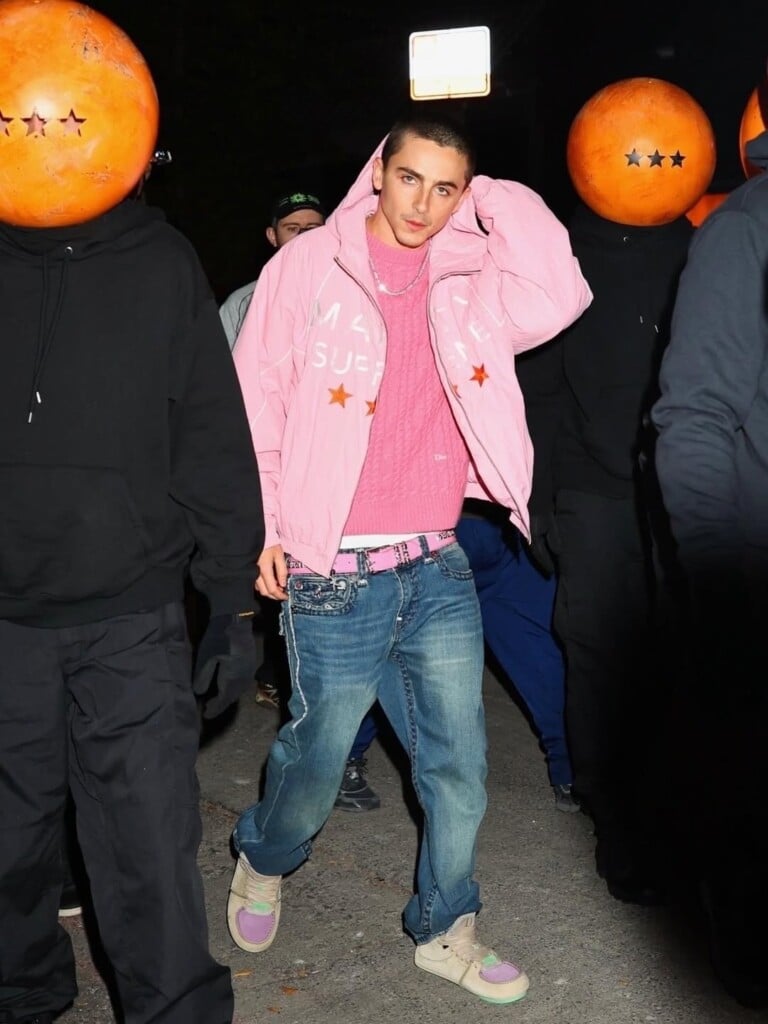
The merch for Marty Supreme seems tailor-made to make ping pong cool. The film, directed by Josh Safdie and starring Timothée Chalamet as an aspiring champion, is already getting people talking thanks to the capsule collection inspired by the movie and designed by Doni Nahmias – a designer Chalamet had already collaborated with on A Complete Unknown. The film will only hit theaters at Christmas (in the United States), and very few people have seen it in advance. Yet the capsule is already everywhere: Kendall and Kylie Jenner have worn it, as have Tom Brady, Misty Copeland and Kid Cudi.
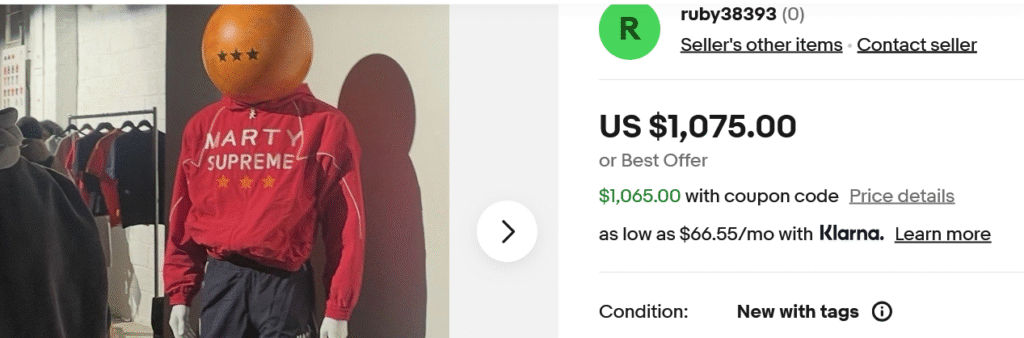
There’s also the merch pop-up in Soho, which sold out in just a few minutes, with hoodies ending up on eBay for over a thousand dollars, windbreakers worn by Kendall Jenner, and the reselling machine already in full swing. The question, inevitably for us, is whether this rush on merch is a way to build hype around a film the public doesn’t know yet, or if it’s proof that by now it’s the object – not the content – that sets the rules of the game.
@cody_blanc Replying to @Andrew I’m so happy you have no idea @Marty Supreme @A24 #martysupreme ♬ Presentation – wouldliker
Obviously, it’s not the first time cinema has leaned on the fashion world to amplify its cultural impact. We talked about it here, taking as an example the most iconic T-shirts that became famous thanks to film. But there are countless other examples, like JW Anderson’s collaboration for Queer, and many more besides.

The capsule designed by Doni Nahmias for the release of Marty Supreme fits perfectly into the world of cinema as we know it today. Riding a wave of overwhelming hype, it reaches the public by flooding our feeds and once again rewriting the dynamics of film promotion.
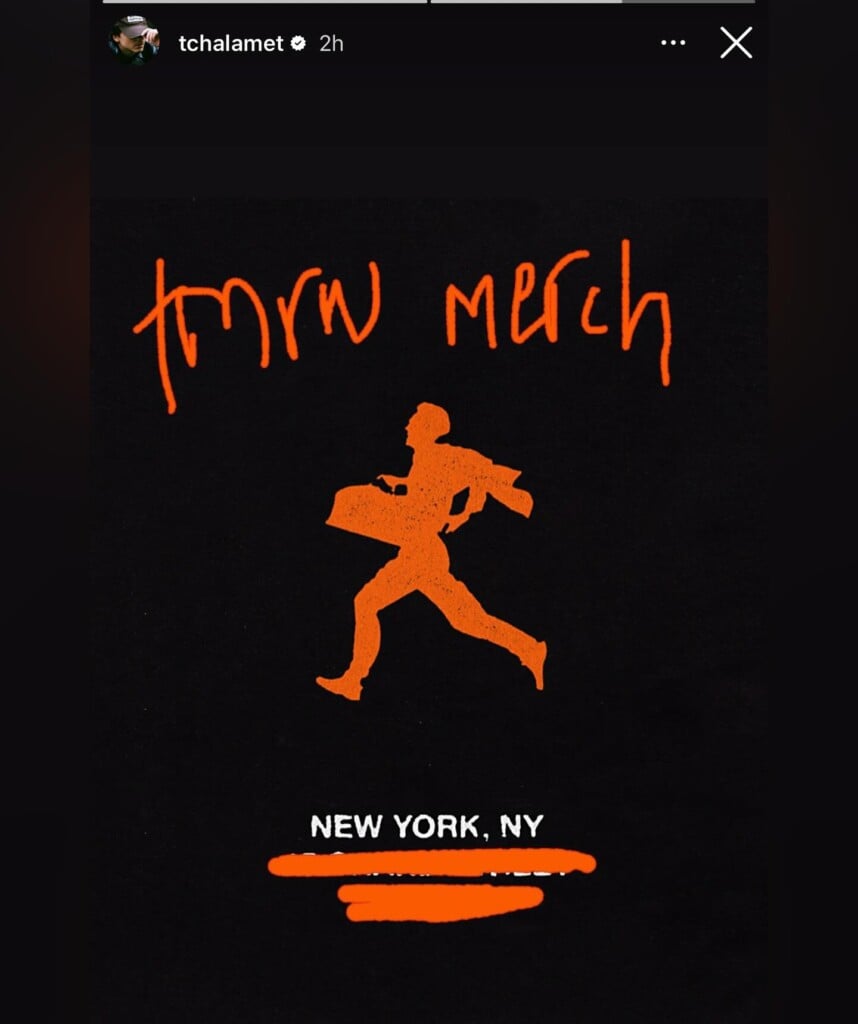
The centerpiece of the collection is the windbreaker, a 1950s training mid-layer reworked through a luxury-sport lens, which in theory should usher us into the aesthetic universe of Marty Supreme, a young athlete dreaming of becoming a ping-pong champion. In practice, it has already turned into a kind of pop relic, powered by a perfect ecosystem: carefully chosen celebrities, secret pop-ups, limited quantities and a retro aesthetic that speaks to those who live on curated nostalgia. The jacket, more than a costume piece, is conceived as a gateway to the idea of “greatness” running through the film, which Nahmias has distilled into a clean silhouette, saturated colors and materials that turn a sports garment into a collectible object.
Looking at the operation as a whole, it’s clear this isn’t just about merch, or even just about hype. We’re faced with a promotional model that precedes the film, surpasses it and perhaps even replaces it, turning Marty Supreme into an aesthetic phenomenon before a narrative one. After a difficult summer, in which box office numbers hit historic lows, the American film industry has to find new ways of capturing attention. And the fashion world, understood as an aesthetic universe, is faster and more viral than cinema. Which makes it the perfect amplifier.
What still leaves us wondering is whether this strategy will work once Josh Safdie’s film is actually out. Will the movie live up to its own hype, fueled by windbreakers and hoodies resold on eBay?