In recent days, the name of Banksy has started circulating everywhere again. Once more. Yet another wave of speculation about his identity, fueled by tabloids, Reddit threads, and creators building entire videos around who might be behind that signature. On the music front, it’s now Tony Pitoni’s turn—the Italian artist with the Elvis mask—who has sparked the same obsessive curiosity on social media. We had been holding onto this deep dive for a while, and the timing couldn’t be better.
Why are we so drawn to those who hide? And more importantly: are we attracted to the person we cannot see, or to what they create? These are two different questions, and keeping them separate is the only way to truly understand what happens when an artist chooses to disappear or to become someone else.
The mask in art: an ancient history of fascination
We don’t have the space here to retrace the origins and etymology of the mask—a topic that would require an article of its own, considering that the earliest documented examples date back over 9,000 years. What interests us is its symbolic function, which has persisted through the centuries without losing its power.
The mask has always been a tool for breaking conventions. In medieval Carnival, wearing one meant suspending social rules: roles were reversed, morality loosened, the collective body was set free—it wasn’t deception, it was codified freedom.
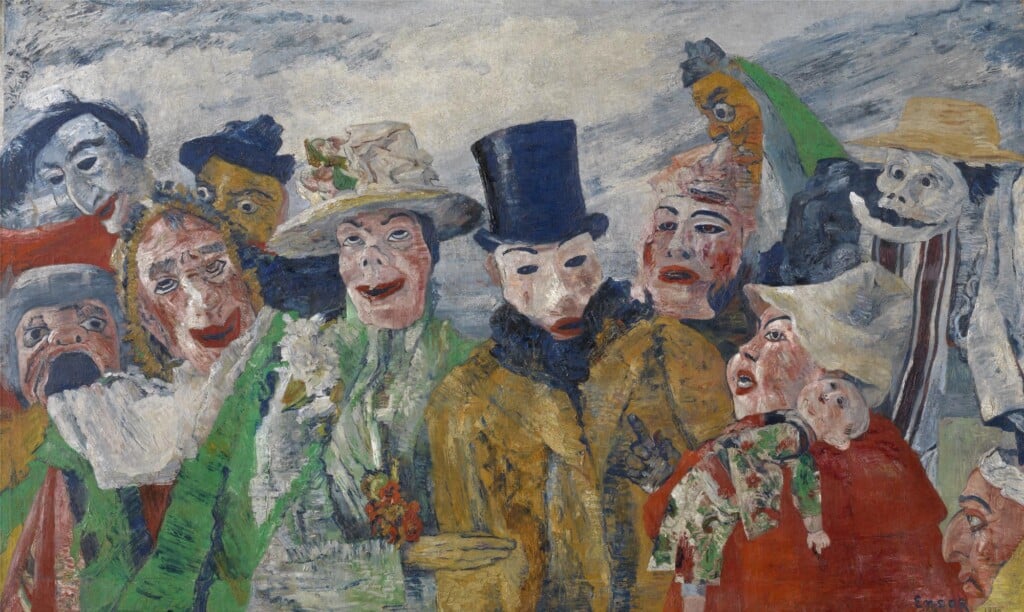
This link between mask and identity has fascinated modern art in an almost obsessive way. James Ensor, the Belgian painter who anticipated Expressionism and Surrealism between the late 19th and early 20th centuries, made it an unmistakable stylistic signature: in his paintings, masks surround the artist, stare at him, replace him. In Ensor’s work, the mask is not a disguise—it is the emptiness of public image, the alienation of those who feel estranged from their own social representation. Painting masks was his way of saying that uncovered faces lie just as much as covered ones.

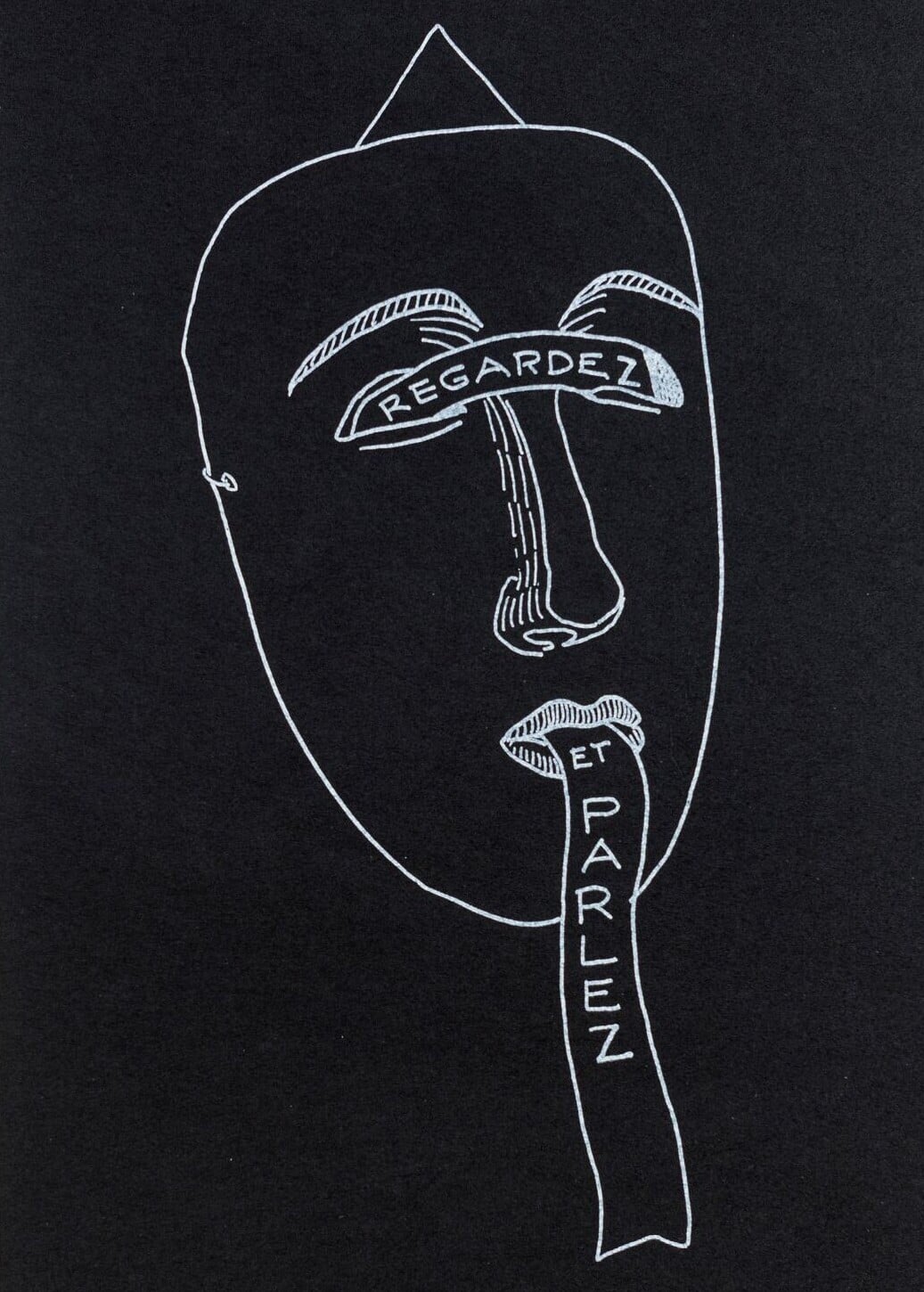
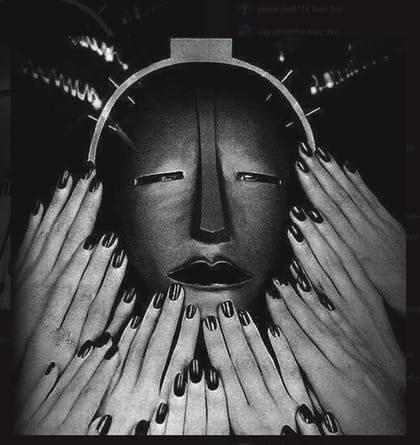
A few decades later, Surrealism radicalized this intuition. Man Ray is the clearest example: in his rayograph experiments with carnival masks and in the lithograph series Les six masques voyants created for Elizabeth Arden in 1932, the mask reveals. It becomes the boundary between reality and fiction, between the social face and the inner one. The Surrealists were fascinated by the mask precisely because it destabilized the certainty of identity: if you can cover your face and become someone else, what is the self, really?
Graciela Iturbide, one of the most important Mexican photographers of the 20th century, documented the mask as a collective ritual in Día de los Muertos: her most famous photograph, Novia Muerte (1986), transforms identity into something in transition. Here, the mask is a bridge between worlds—a visual poem that does not ask to be explained.

Novia Muerte by
Graciela Iturbide
The mask and anonymity are not the same thing
Before moving forward, it’s necessary to make a distinction that is almost always ignored in public debate: the mask and anonymity are different choices, with different intentions. Treating them as synonyms is the first mistake we make when talking about “hidden” artists.
The mask is a presence. It is a constructed identity—visible, deliberate—a character that takes up space and occupies it forcefully. Anonymity is an absence: the choice not to attach a face, a name, a physical person to the work. They are opposite strategies that lead to the same apparent result: shifting attention from the individual to the work.

The mask: building another self
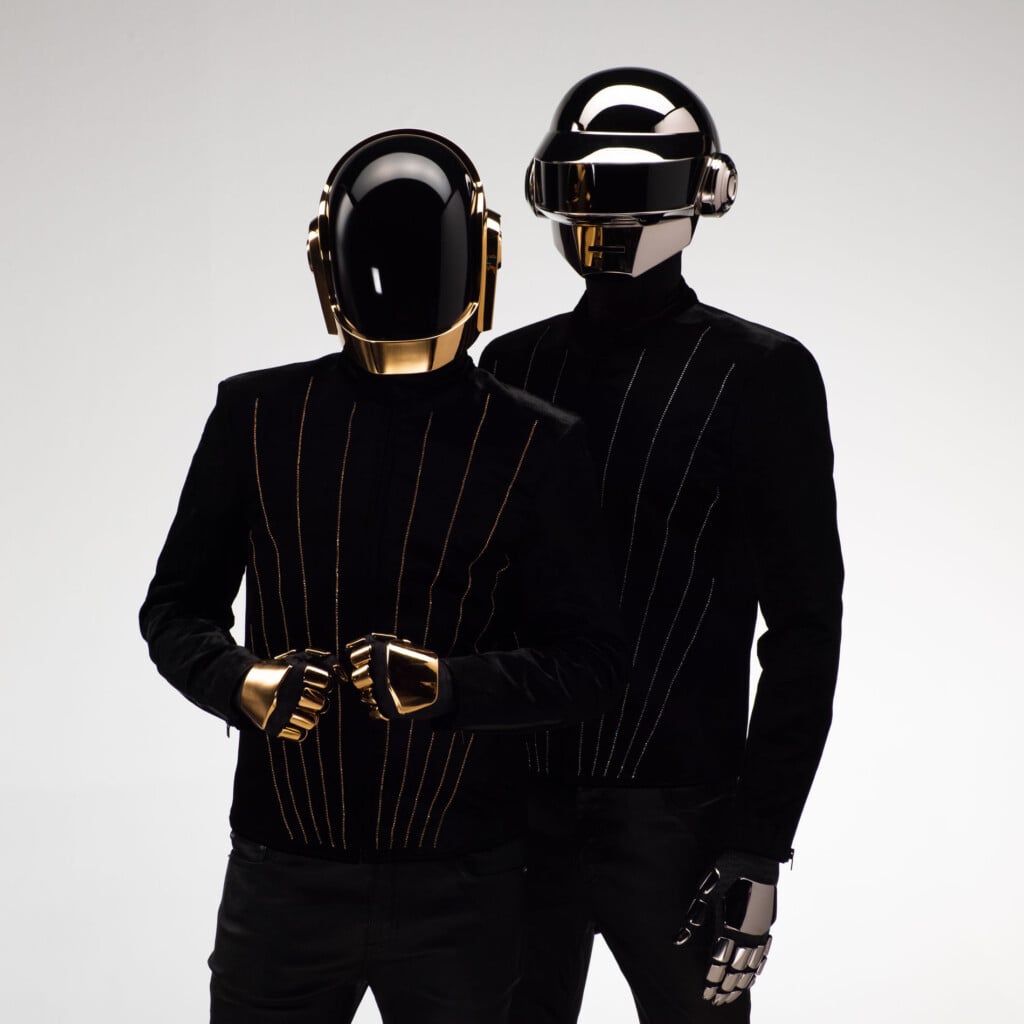
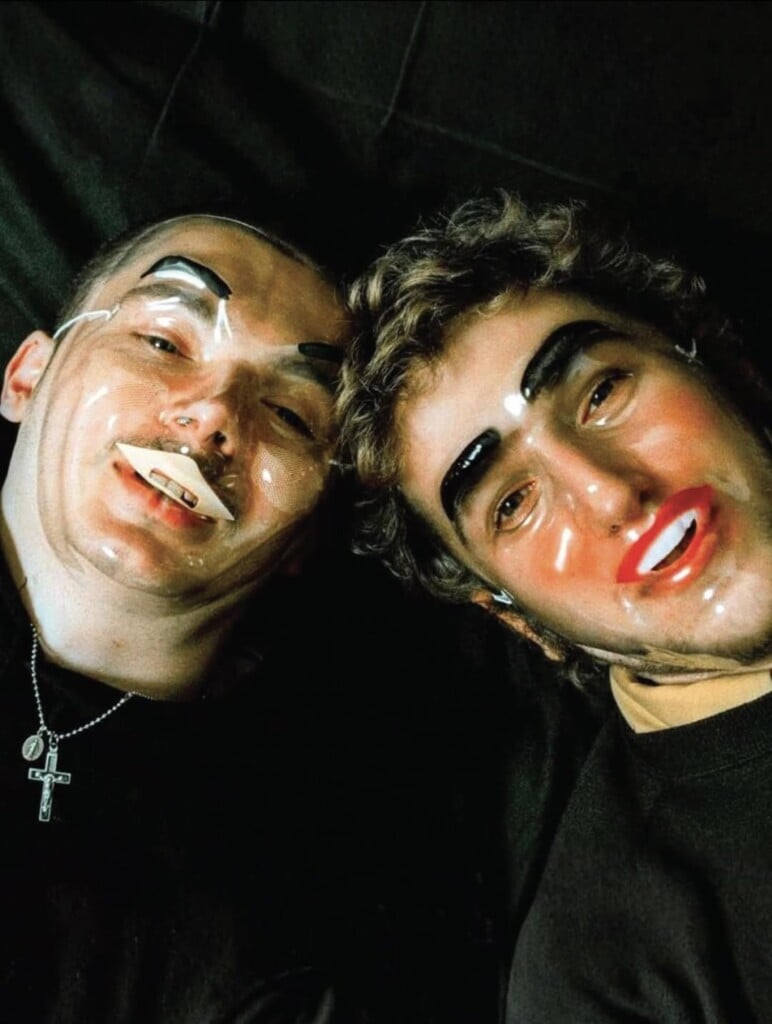
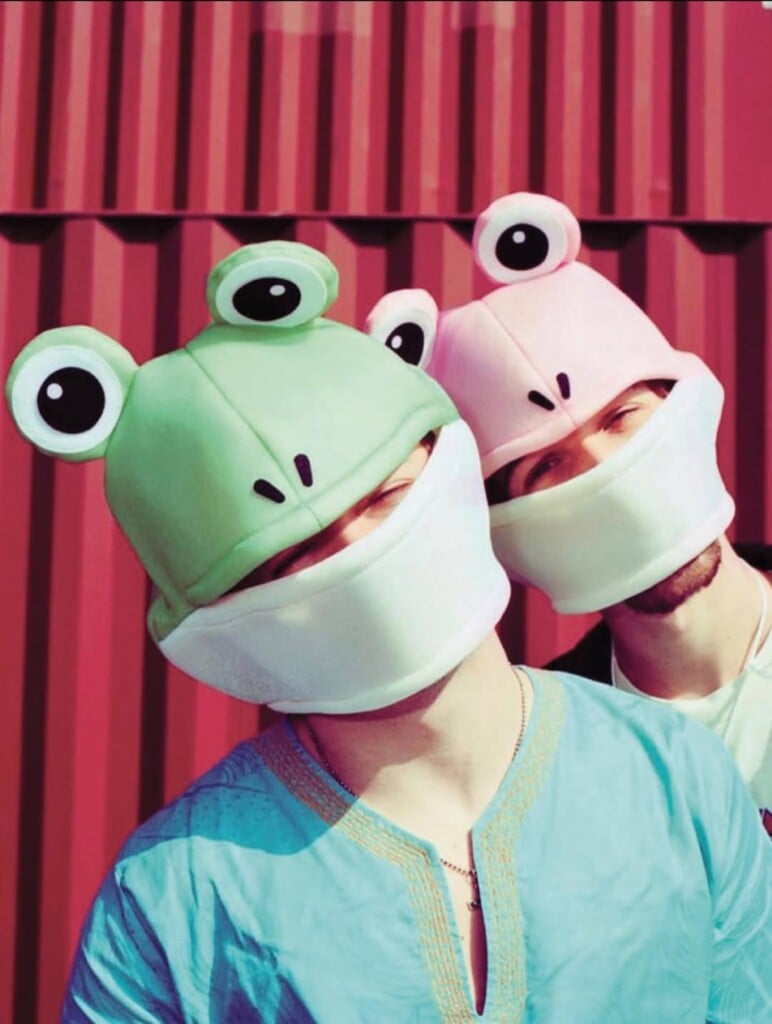
Daft Punk were not born as robots. Before the chrome iconography of Discovery, Thomas Bangalter and Guy-Manuel de Homem-Christo were two Parisian guys hiding the awkwardness of success behind carnival masks and improvised costumes. The transition to their definitive helmets in 1999 was an act of image engineering: removing the human to make room for pure rhythm. A world-building so successful it turned two producers into timeless icons, allowing their music to travel while their faces aged in private.
If Daft Punk chose technology, MF DOOM chose mythology. His metal mask inspired by Doctor Doom (and later Gladiator) was not a disguise—it was a narrative armor. After the death of his brother DJ Subroc in 1993 and a long silence, Daniel Dumile returned as a comic-book villain: the mask served to separate the man from the myth, making the artist’s body interchangeable. When he sent impostors to perform in his place, he pushed the concept to its extreme: if the character is everything, who is beneath the metal becomes irrelevant.
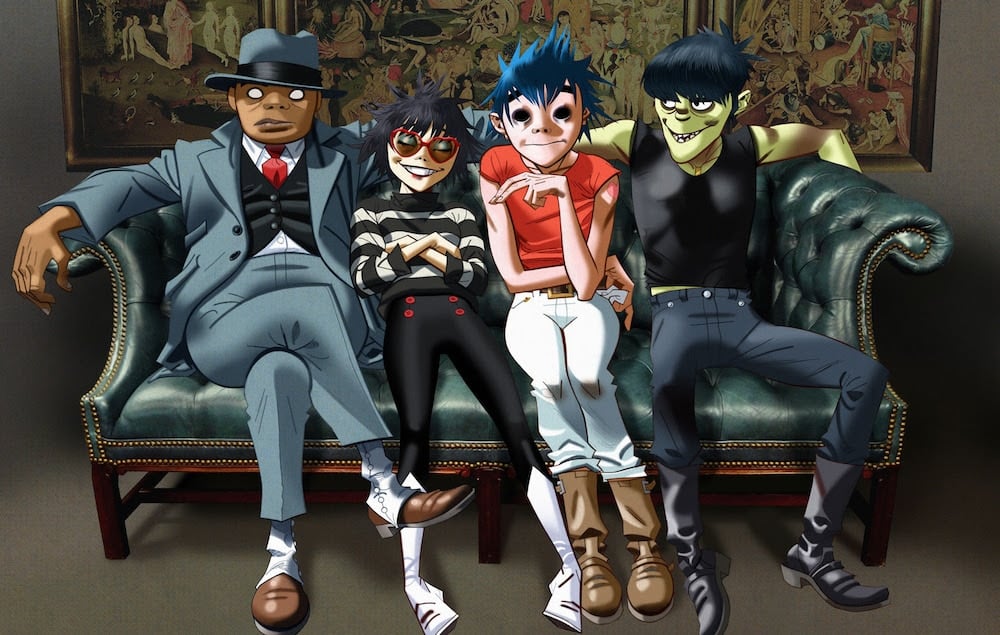
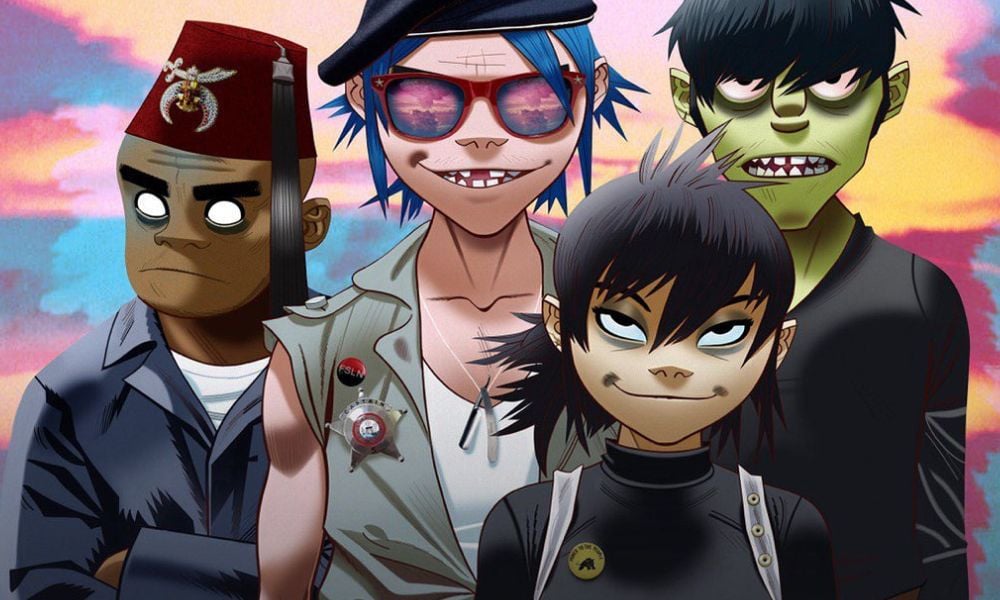
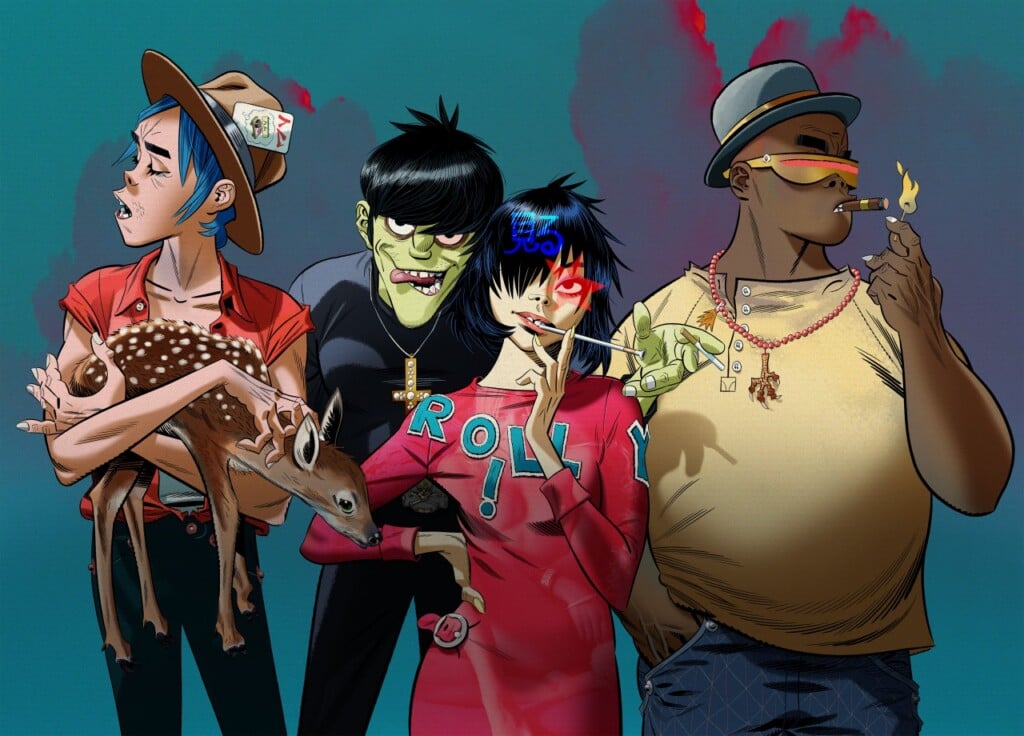
The Gorillaz took the next step, eliminating the real body entirely. Damon Albarn and Jamie Hewlett created a band that exists only through drawing: 2-D, Murdoc, Noodle, and Russel are not masks protecting an individual—they are the identity itself. This freed Albarn from any expectation of coherence between artist and work, opening a narrative format that still has no real equivalent today.
Anonymity: disappearing to remain free
Anonymity works differently. It does not build a character—it avoids one, and the reasons can be political, existential, or simply human in the most concrete sense of the term.
Romain Gary (born Roman Kacew) is the only writer to have won the Prix Goncourt twice: in 1956 with The Roots of Heaven and in 1975 with The Life Before Us. The second time he won it under the name Émile Ajar, pretending to be a debut author and creating one of the greatest literary hoaxes of the 20th century. It wasn’t a mask in the visual sense: Gary didn’t disguise himself, didn’t build a public persona. It was a complete identity, engineered to escape the expectations that success had crystallized around his name. When the deception was revealed after his death, he had left a text explaining everything: he wanted to prove that an already famous author could still surprise—provided he was not recognized. Anonymity as a critical act against a literary system that rewards names before works.
Banksy operates on the same logic, but in public space. His murals are highly visible, exposed, photographed millions of times—and yet the author does not exist as a verifiable person. It is a signature without a body. Every attempt to unmask him is not only a violation of his will: it is an act that contradicts the very meaning of the project, which lives precisely on that tension between hyper-visible work and invisible author.
Blu is an even more radical case. An Italian artist working under a pseudonym, listed by The Guardian in 2011 among the world’s best street artists, he built his anonymity not as a hype strategy but as a life choice. He rejected the art market, avoided lobbies and institutions, and chose a form of isolation that is not a carefully constructed mystery but a precise stance. Unlike Banksy, who turned invisibility into a highly recognizable brand, Blu chose to truly disappear, without leaving even the shadow of a character to chase.
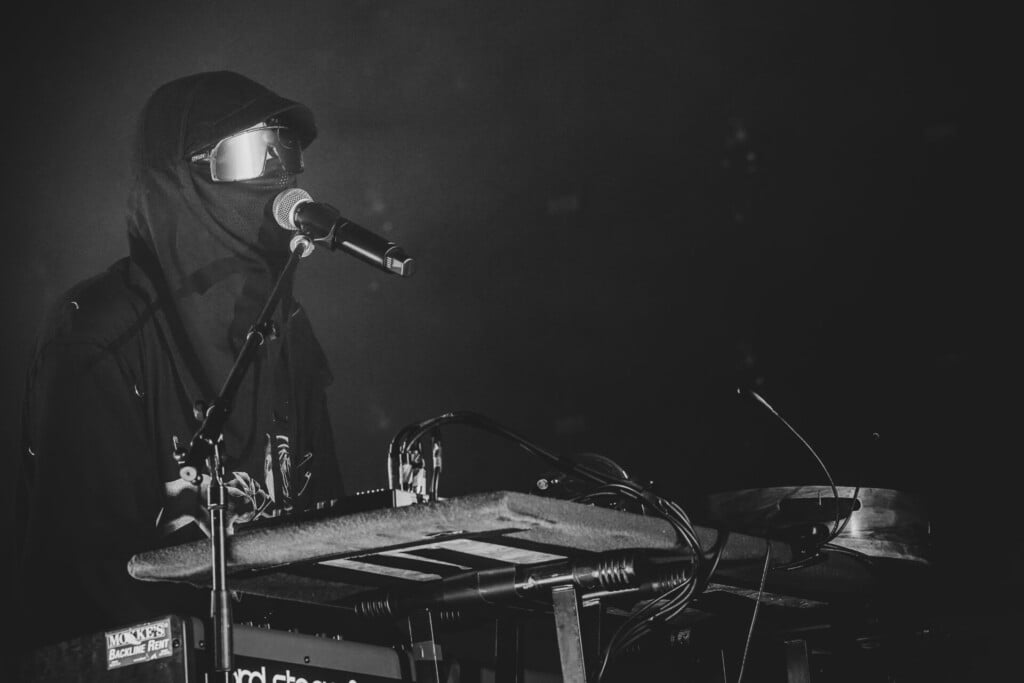
Liberato sits somewhere between these two worlds. No one knows for certain who he is—and that is exactly the point: he has proven that it is possible to build a meaningful career without ever revealing a face, without giving interviews, without signing with a real name. Whether it is a mask or anonymity, his is first and foremost a manifesto.
Are we drawn to those who hide or to what they create?
In an era where an algorithm can become a tool for collective doxing—where every mole, every reflection in a pair of glasses, every vocal inflection is analyzed by thousands of users in real time—keeping a secret has become an extreme sport. But this obsession with the spoiler of identity reveals something precise about how we have changed as an audience: we have learned to consume people even before their work. And yet, if we pause for a moment, the real question is another. Do we follow Daft Punk because we want to know who is behind the helmets, or because Around the World is still unstoppable thirty years later? Are we obsessed with Banksy’s identity because we care about his legal name, or because his murals continue to say something that the rest of the art system struggles to articulate? Do we read The Life Before Us thinking of Romain Gary or Émile Ajar—and does it change anything, in the reading, to know they are the same person?
Each case is different. Some use the mask to protect a creative space, some choose anonymity as a political act, others build a character to free themselves from the expectations tied to their name. But in all these cases, what we should ask is not who is underneath—it’s why what they do affects us so deeply that it makes us want to know.
There’s an expression we can’t stand: your mask has fallen. As if there were always something more “real” underneath to reveal, as if the work were less real than the person. But for the artists we’ve discussed, the mask—or the absence of a name—is the space where artistic truth exists without being devoured by the machinery of visibility. Continuing to try to tear it away tells us nothing interesting about them. It tells us something about us.