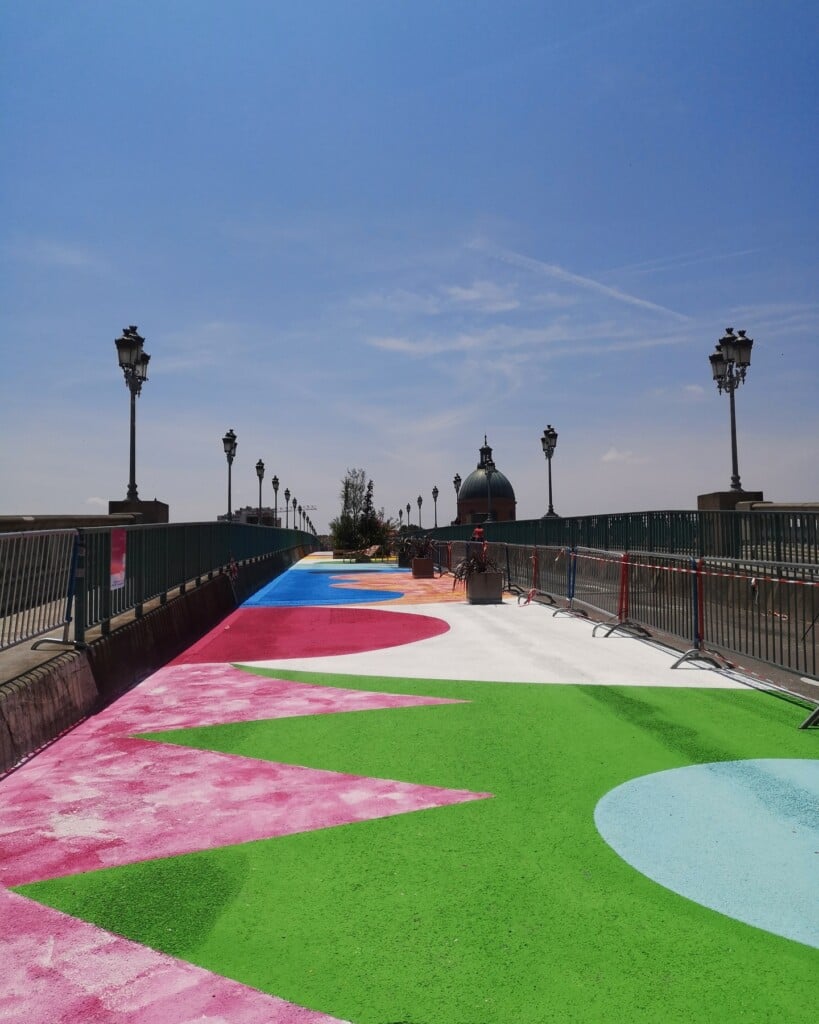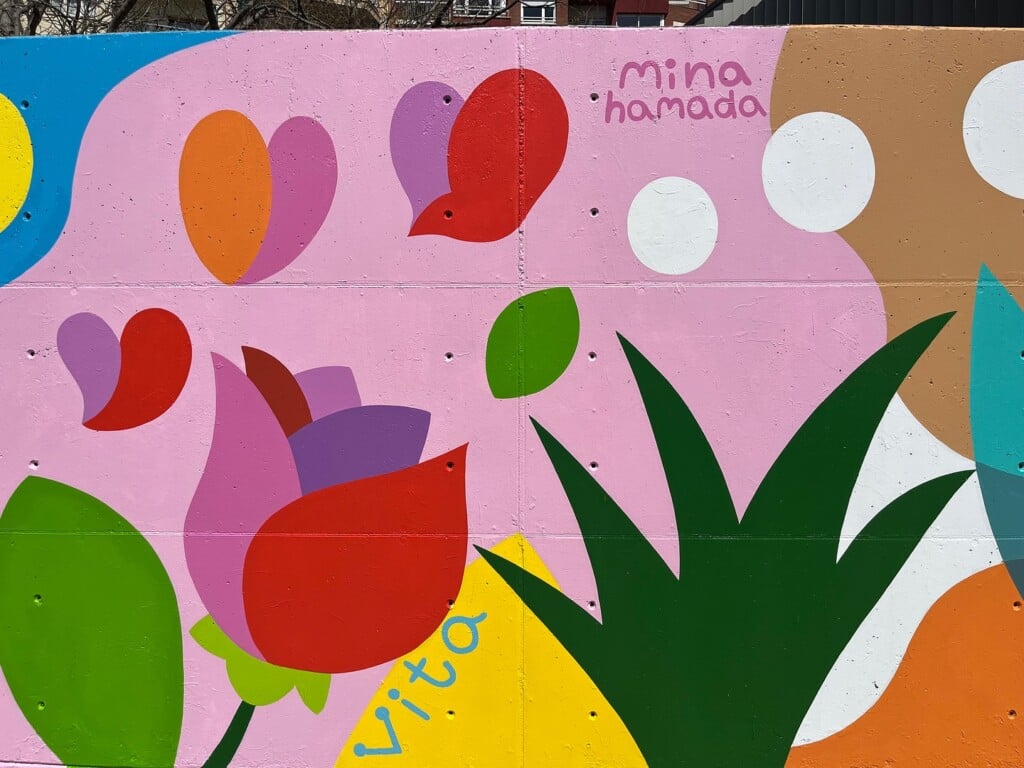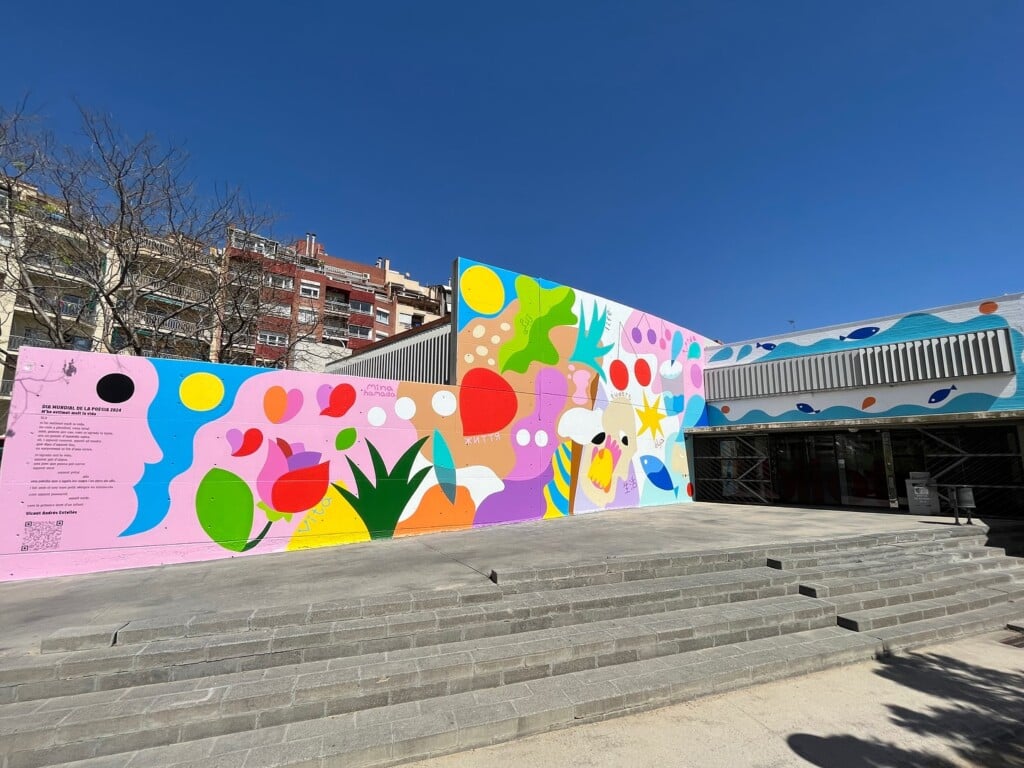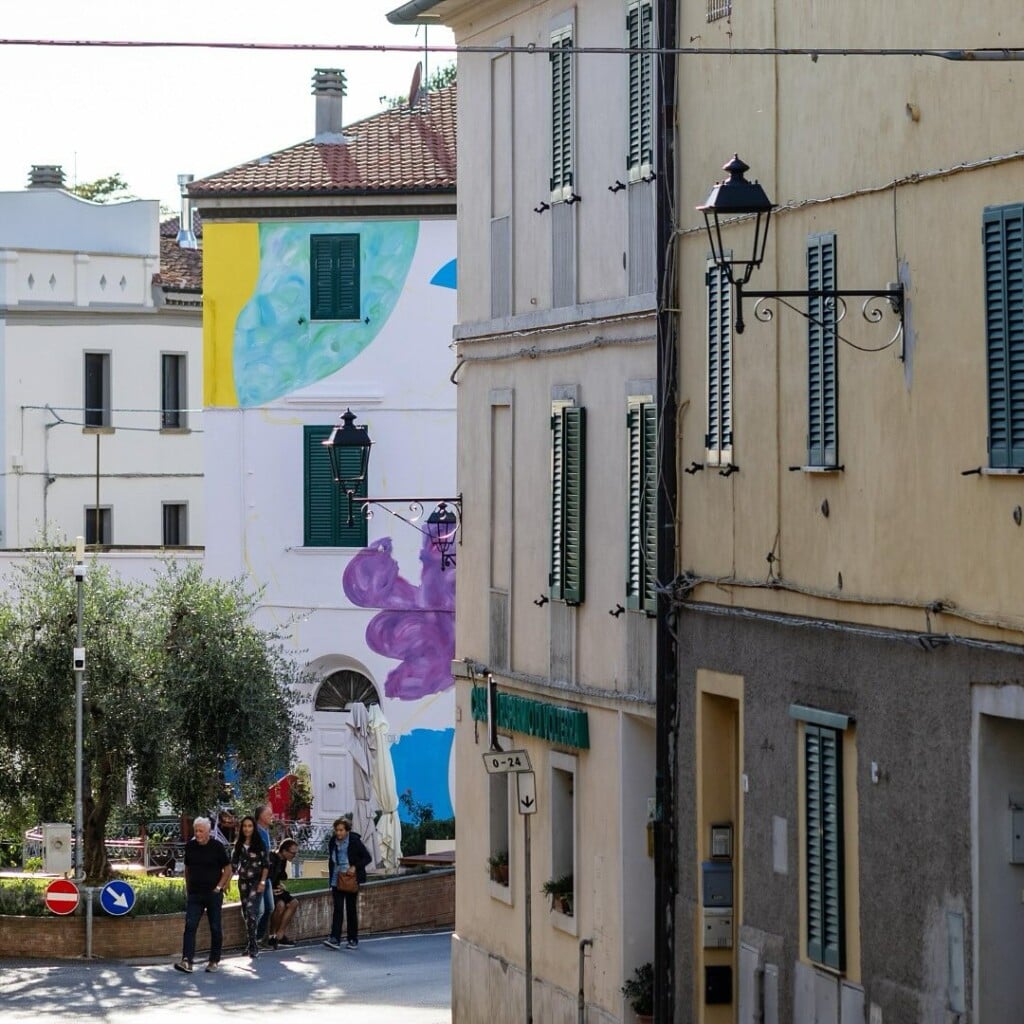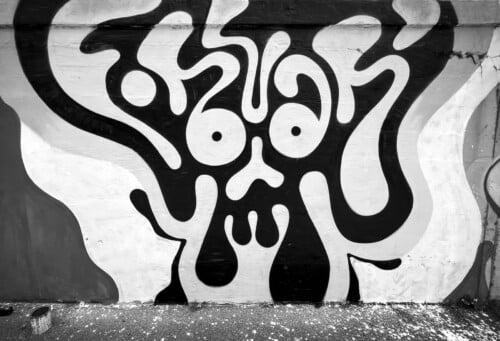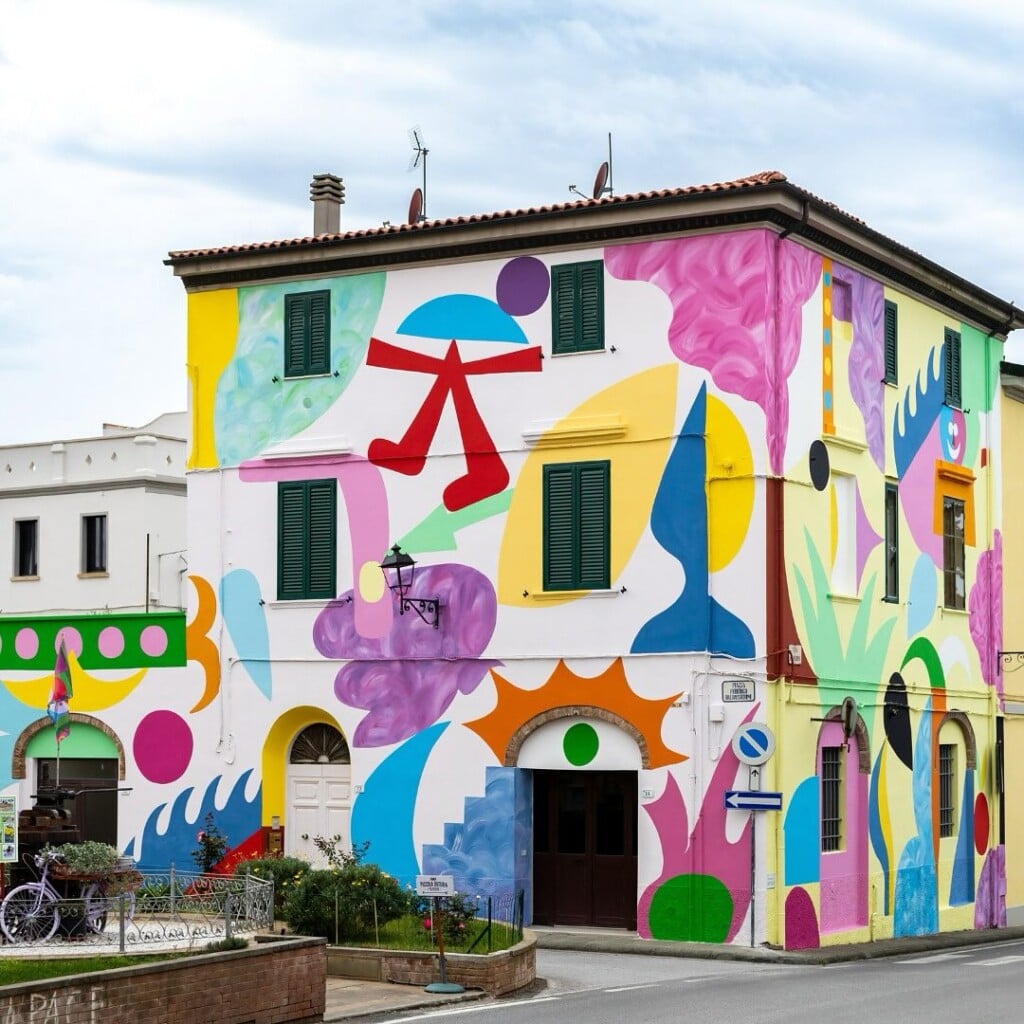
Murals turn a wall into an image and change the way we move through a place. Those by artist Mina Hamada are built from organic shapes and sinuous lines, with fields of color spreading across surfaces without following an immediately recognizable narrative. They don’t tell a story from beginning to end, but suggest a world to explore, leaving viewers free to find connections, figures and meanings.
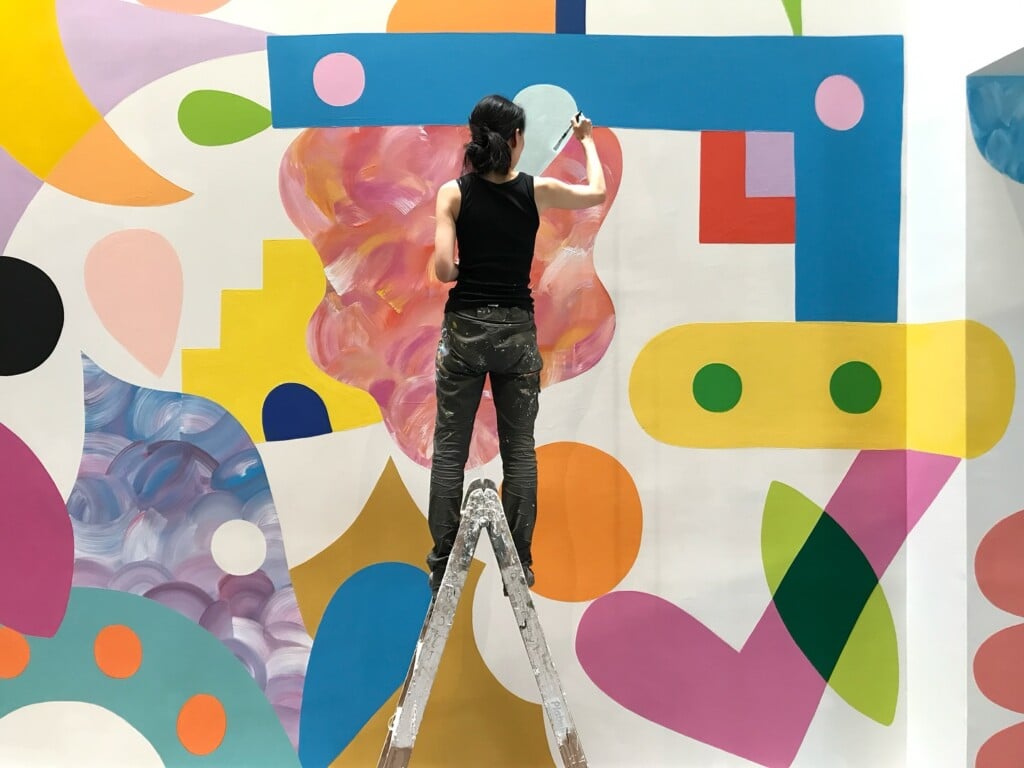
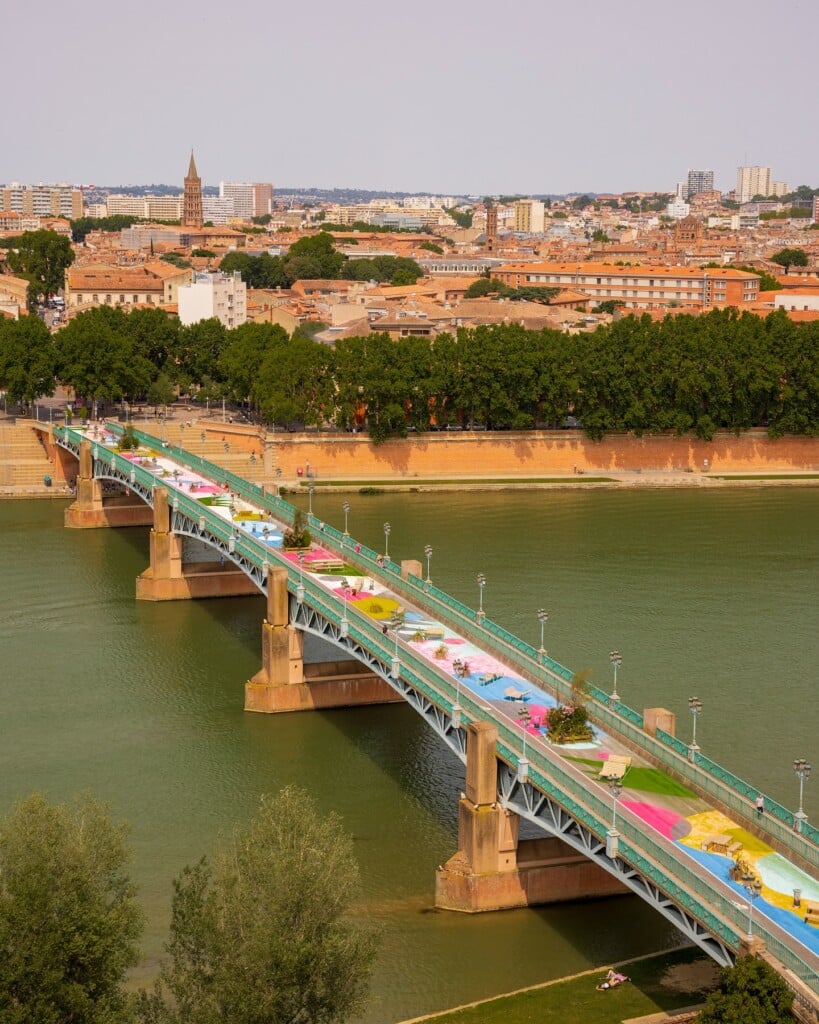
In street art, where the wall often becomes a space to assert an identity, send a message or engage directly with the urban landscape, Hamada chooses a different path. Her language is abstract, spontaneous and playful, but not for that reason superficial. Color doesn’t merely decorate: it organizes space, alters the perception of architecture and brightens the everyday experience of a place.
It is also this ability to intervene in the environment without imposing a single meaning on it that makes her work interesting, especially when she takes on the large surfaces of the city.
From Japan to Barcelona: Discovering the Wall
Mina Hamada was born in Louisiana, in the United States, and grew up in Tokyo, where she studied design and illustration at the Sokei Academy of Fine Art & Design. Before turning to murals, she developed a practice rooted in drawing, painting and handmade books, in which she combines images, short stories and poetic texts. Her path, then, doesn’t begin on the street, but in a personal visual universe built through signs and associations.
The turning point came in 2009, when she moved to Barcelona. There she came into contact with an urban art scene that allowed her to experiment with graffiti writing and, above all, with large-scale mural painting. The shift from paper to wall changed the conditions of her work: forms can expand, occupy architectural surfaces and engage with a context that is never completely controllable.
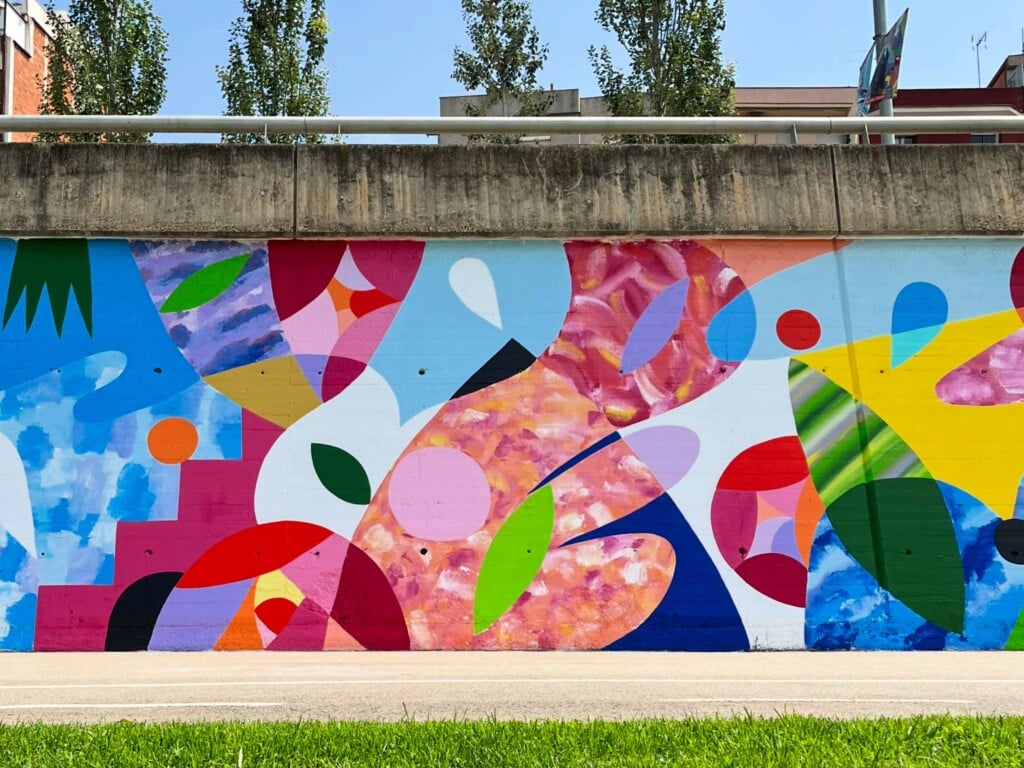
In an interview with Tokyo Art Beat, Hamada recalled that she initially came to the urban scene with a certain shyness, accompanied by people who encouraged her to paint outdoors. It’s a detail that helps explain how her relationship with street art grew out of shared experience, meeting other artists and gradually discovering the possibilities offered by public space.
An Abstract Language That Takes Over the City
Looking at her murals, you notice that Hamada doesn’t build her images through a rigid composition or a sequence of easily readable elements. Forms seem to grow next to one another, alternating curves, irregular geometries and bright fields of color. Sometimes they recall plants, objects or imaginary creatures; other times they remain completely abstract. The ambiguity is part of their charm: there is no single interpretation to find, but an open space for the imagination.
Her practice develops through improvisation and the exploration of forms that seem to come from an inner imagination. As B-MURALS, a Barcelona-based organization dedicated to mural art, also points out, in her work color and rhythm coexist with a repertoire of organic forms, while her intercultural background helps define a personal visual universe.
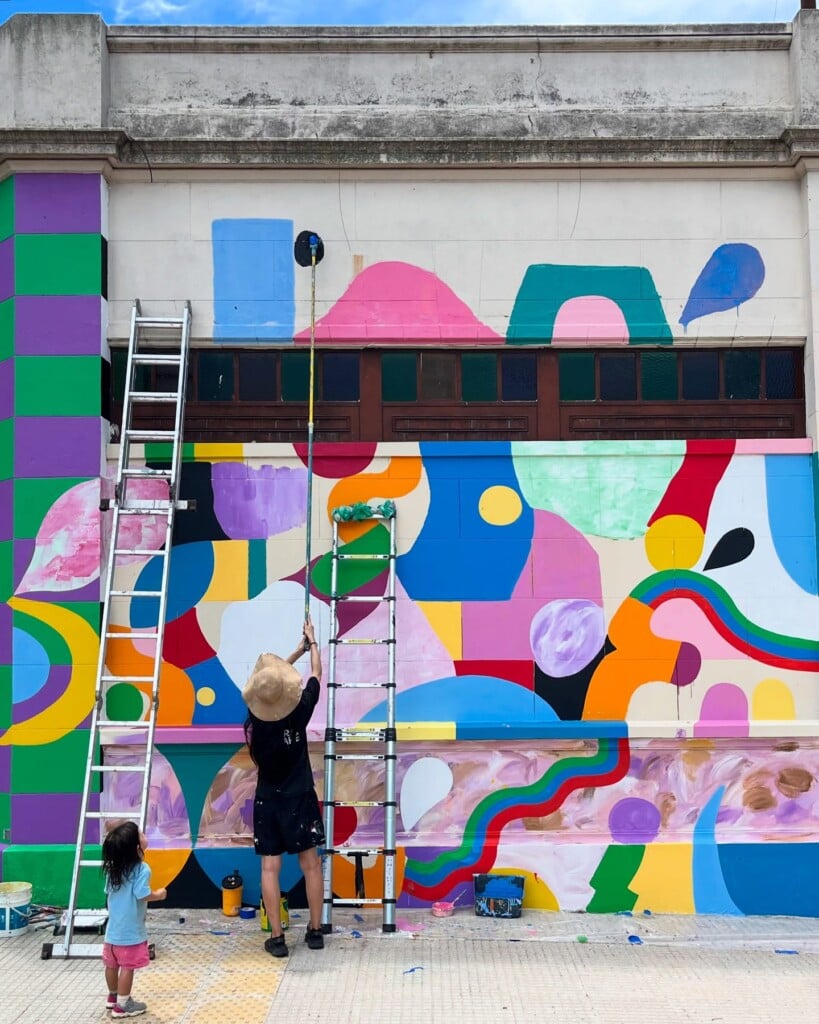
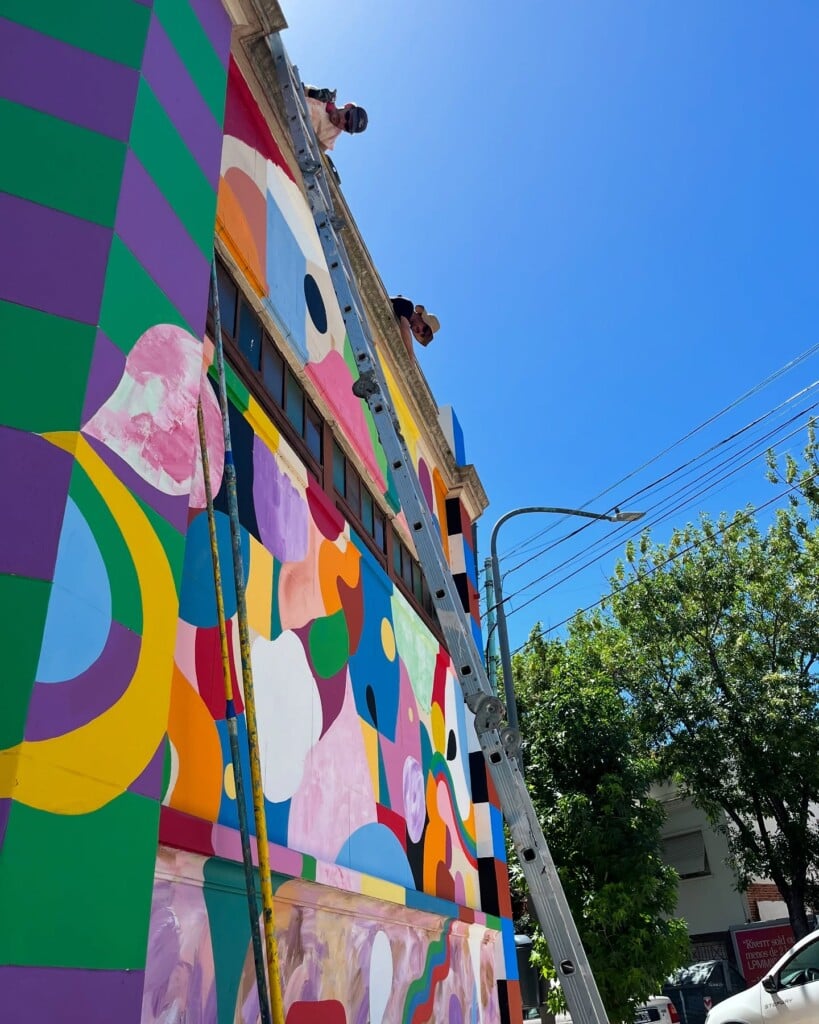
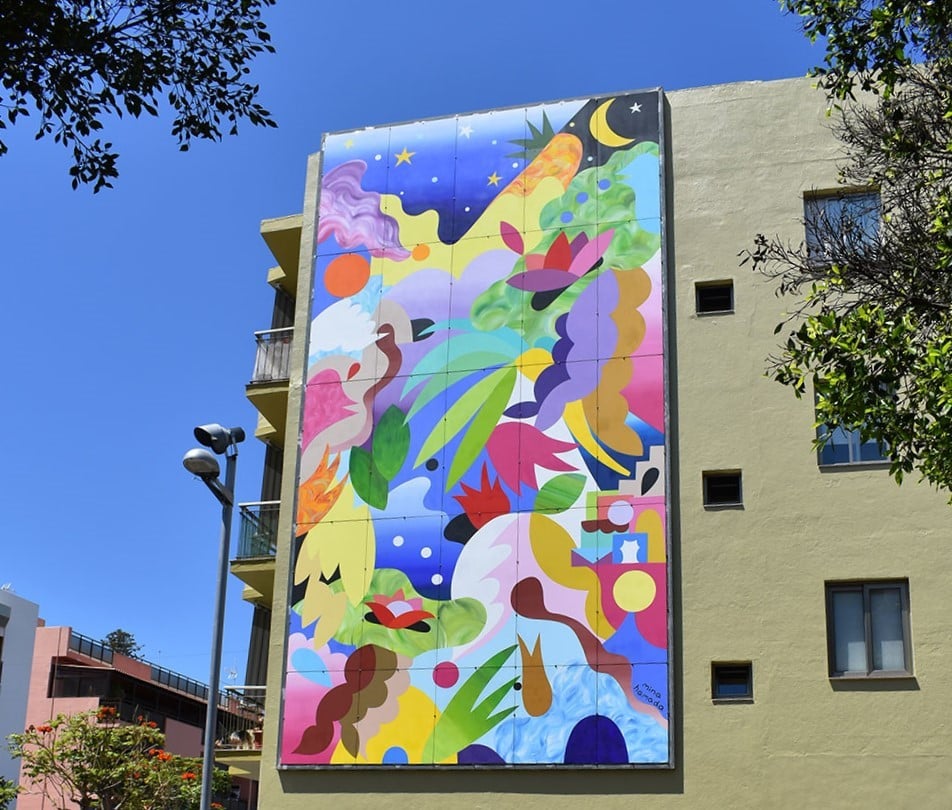
The difference is most noticeable when these images move from canvas to street: a wall is not a neutral surface. It has dimensions, openings, irregularities and a precise relationship with its surroundings. Painting it means engaging with all of these elements. Hamada uses the wall as a field of possibilities, letting color alter the perception of the architecture and letting the composition guide the eye along the surface.
The result is not necessarily an image to be deciphered, but an environment to move through. This is where her work meets one of the most interesting possibilities of street art: affecting everyday life without necessarily asking passersby to stop in front of the work.
The Street as a Space of Freedom
Mina Hamada’s work shows that street art doesn’t have to rely on slogans, explicit messages or immediately recognizable images to leave a mark on urban space. Her painting works in another way: it changes the atmosphere of a wall, introduces new relationships between forms and architecture, and offers viewers the chance to build their own interpretation.
There is also something interesting in the contrast between the spontaneity of her compositions and the permanent, or at least durable, nature of the surface they are made on. The forms seem free, almost born by chance, but they must contend with real surfaces, architectural proportions and environmental conditions. Improvisation thus becomes a way of working with space, not simply of ignoring its constraints.
From her first experiments in Barcelona to the murals she has created in international contexts, Hamada has developed a recognizable language without locking it into a single formula. Her path crosses painting, illustration and public art, keeping at its center the exploration of color and the expressive possibilities of form. Mina Hamada’s murals don’t impose a story on space, but turn it into a place where new associations can arise. And in a city crossed every day with our eyes looking elsewhere, a wall capable of interrupting the automatism of passing by, even for a moment, has already produced a change.