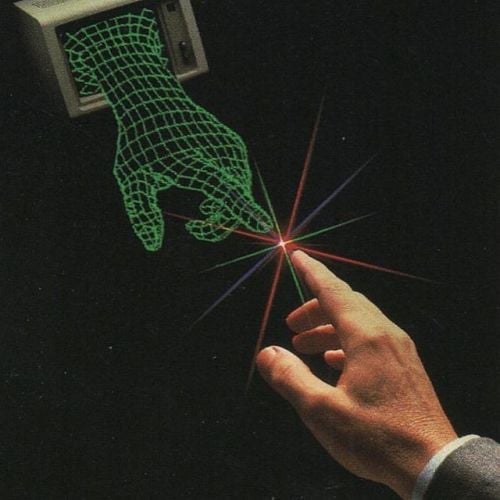
Marshall McLuhan, the Canadian philosopher and media theorist, had grasped the problem long before artificial intelligence. In Understanding Media he describes technology as an extension of human faculties. The club extends the arm, the wheel the foot, electronic media the nervous system, and tools amplify capacities that once belonged to the body alone.
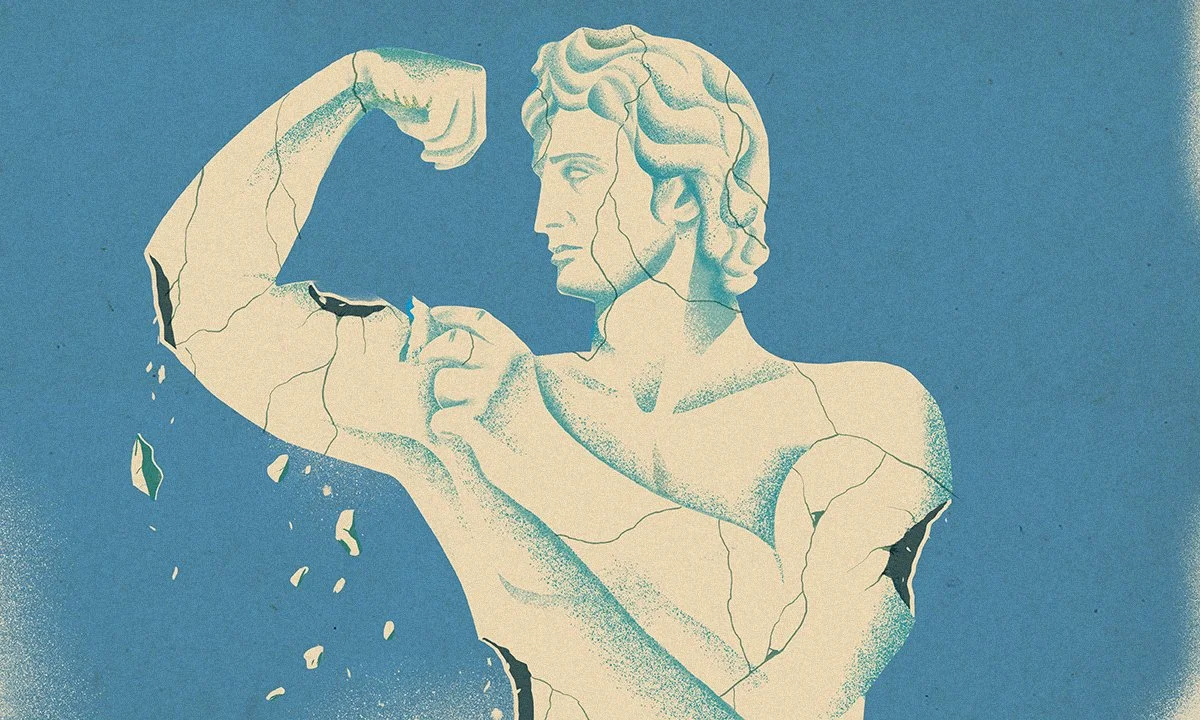
Every extension, however, also brings with it what McLuhan calls “auto-amputation”. When a function is moved outside of us, our relationship with that capacity changes. It doesn’t necessarily mean losing it, but ceasing, at least in part, to exercise it in the same way.
Contemporary neuropsychology allows us to read this intuition in less metaphorical terms. The brain is plastic, it changes according to what we do, repeat and train. One of the best-known examples concerns the London taxi drivers studied by Eleanor Maguire and colleagues. In drivers who had spent years memorizing an enormous number of streets and routes, some areas of the hippocampus involved in orientation showed structural differences compared with controls. It wasn’t a better brain, it was a brain adapted to the demands of its environment.
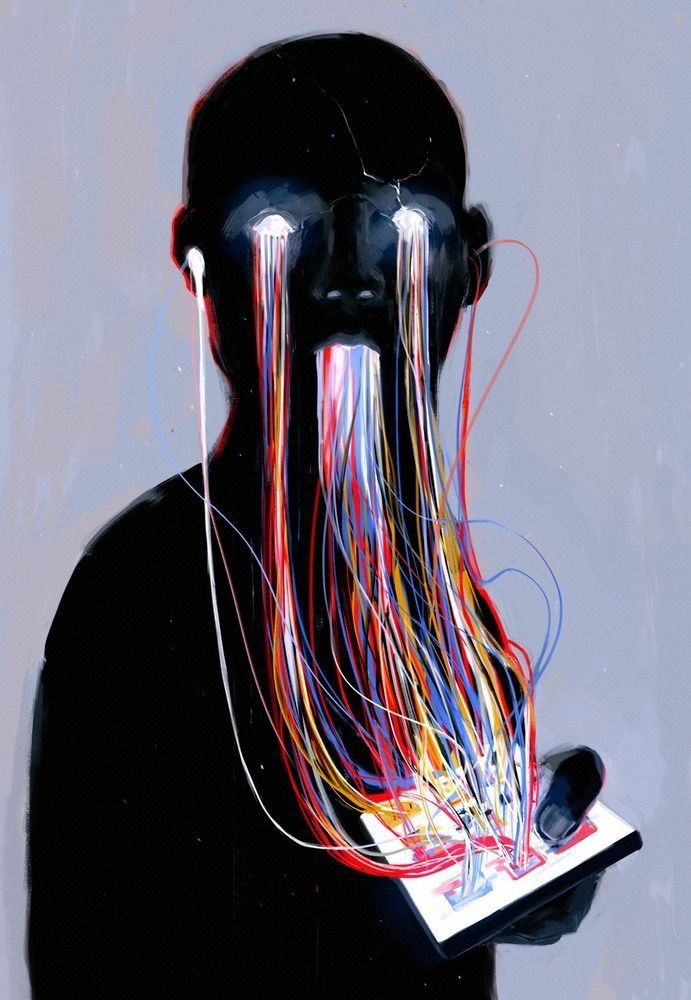
This is the point, and it is a simple one. The brain adapts to the cognitive environment in which it lives. Over the last thirty years, though, that environment has changed very rapidly, perhaps as never before in human history.
We have long been delegating pieces of our cognition to tools, from appointments to calculations to orientation. Cognitive psychology speaks of cognitive offloading, moving part of the mental work outside ourselves to reduce the internal load. It isn’t necessarily a bad thing. Human beings have always extended their capacities through tools. But where is the limit?
In 2011 Betsy Sparrow, Jenny Liu and Daniel Wegner described what would become known as the “Google effect”. When we know that a piece of information will remain easily available, we tend to remember the content less and remember better where to go to retrieve it. In other words, we don’t necessarily remember the thing. We remember how to find it again.
The internet has become a form of external memory. With artificial intelligence, however, delegation takes a further step. We no longer externalize just a piece of information or a calculation, we can also delegate part of the process through which a thought takes shape. Searching for arguments, organizing them, comparing hypotheses, summarizing, finding the words, formulating a question.
And here, the matter becomes more delicate.
Writing, for example, isn’t just a matter of giving form to a thought that is already complete. We often write precisely in order to understand what we think. An idea changes as we look for a word, a contradiction emerges as we build a sentence, an argument takes shape as we try to explain it. Effort is not always an obstacle to thought. Sometimes it is the thought.
If we eliminate it systematically, we may get a faster, cleaner result. But one question remains, what are we ceasing to exercise? Here it becomes important to distinguish between performance and competence.
A tool can make us produce a better result while we are using it, without necessarily making us more capable of reaching the same result without it. This is still a young field of research, especially when it comes to generative AI, but the question is already central. Does being more performant thanks to a technology really mean having become more capable?
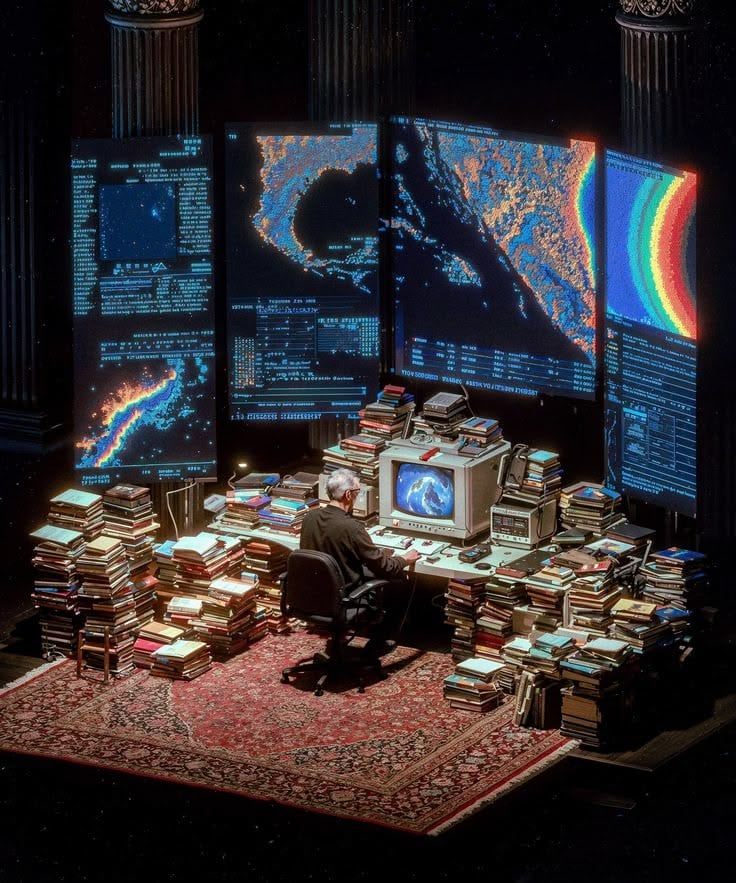
There is also another well-studied phenomenon, automation bias. When an automated system offers us an answer, under certain conditions we tend to trust it more than we should, especially if we are tired, under pressure, or if verifying takes more effort than accepting.
Automation can therefore make us more efficient and, at the same time, less vigilant. This is where McLuhan becomes relevant again. A technology doesn’t only change what we do. It changes the environment in which we think, and we adapt to that environment. Without even noticing.
The question, then, is not only how powerful artificial intelligence will become, but what cognitive environment we are getting used to. Writing, maps, books, libraries, calculators and the internet have allowed our species to do things no isolated brain could have done. AI can do the same, freeing us from repetitive tasks, speeding up research, helping us organize complex materials. The point is not to stop delegating. It is to understand what we are delegating and how capable we still are of doing without it.
For years we have entrusted pieces of our memory to the digital world, from phone numbers to appointments, routes and information. With Google we learned that there is no need to remember everything, if everything can be found again. With artificial intelligence we are beginning to entrust outside ourselves also part of the process through which we come to know, understand, connect and formulate. This doesn’t mean demonizing AI, but bringing a fragility to light.
Much of contemporary knowledge is no longer possessed, it is accessible. Of course, as long as the network, servers and electricity work, the difference seems irrelevant. Well, it isn’t.
A prolonged blackout, a collapse of digital infrastructure, a world conflict or a particularly intense solar storm, given the times we are living in nothing is impossible, would suddenly make evident something we tend to forget today. This knowledge, the one we read on these screens, is evanescent, and is not truly ours.
Here the Google effect returns too. If the brain knows that a piece of information can be retrieved later, it may invest less in remembering it and more in remembering how to reach it. It is an efficient strategy, as long as access remains guaranteed. The problem arises when access determines competence. At that point, what kind of competence is it?

The risk is not imagining a humanity that becomes stupid overnight, but rather what is already happening. We have built a society that is very capable as long as the prosthesis works and decidedly fragile when it fails.
We are able to find answers in a few seconds, but increasingly less trained in building them. A civilization that entrusts memory, orientation and ever larger parts of reasoning to the outside can become extremely powerful. But it also becomes dependent. The question, therefore, is not whether or not to use artificial intelligence. It is deciding which capabilities we want to keep training even when a machine could exercise them in our place.
Read also: