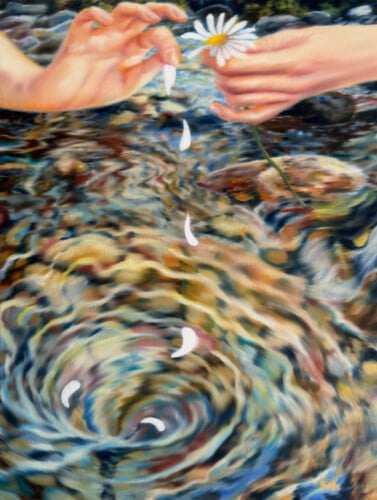
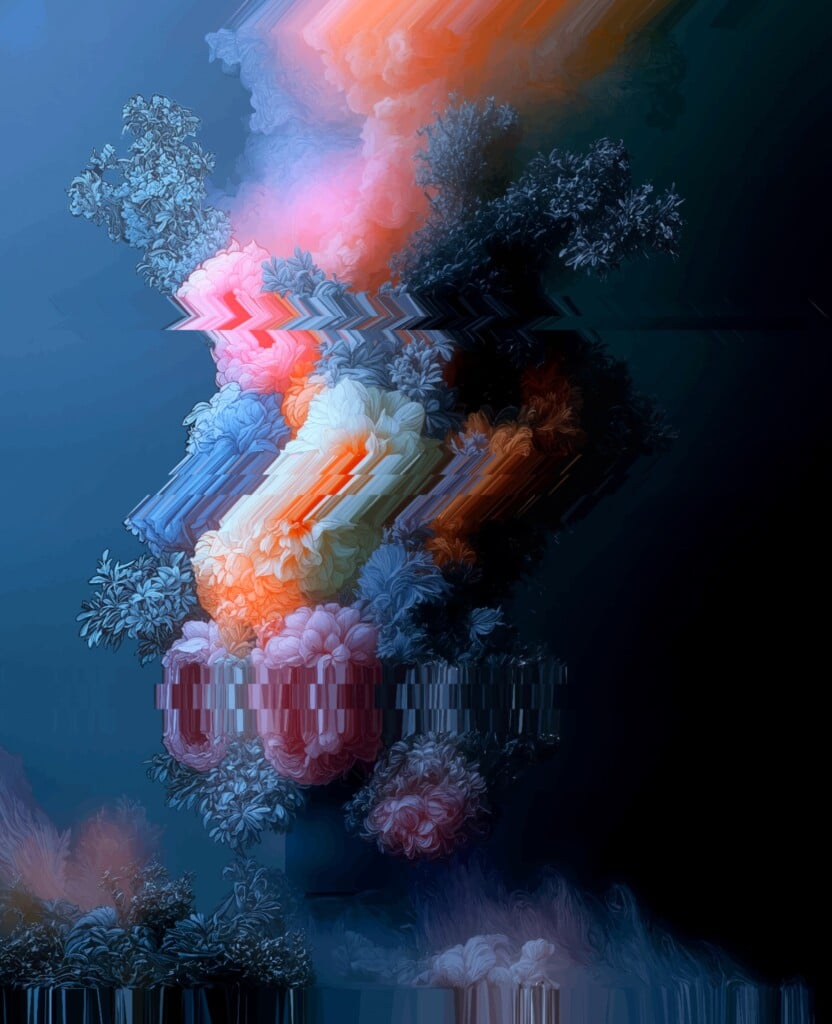
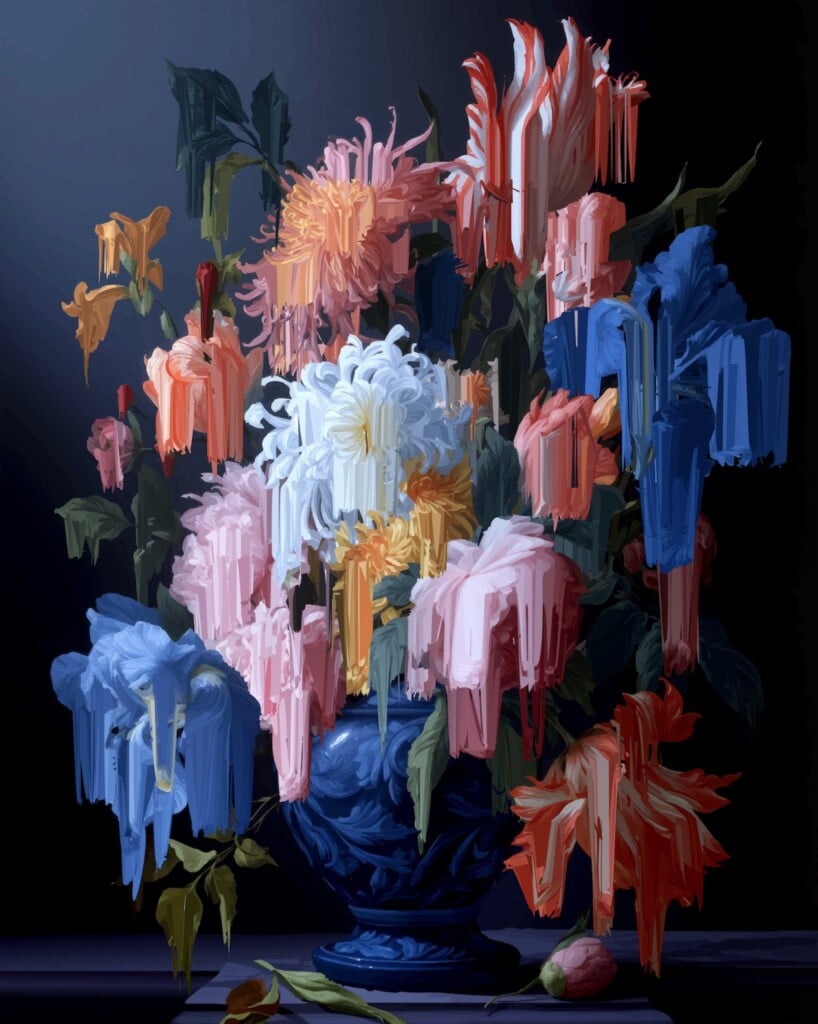
What would have happened if Salvador Dalì had met glitches? Yes, those very small malfunctions of electronic systems. The end result would probably be very similar to the work of Alexis Mata.
Born in 1981, Alexis Mata lives and works in Mexico City. His artistic journey did not begin with the canvas, but with the street, through interventions in public and urban spaces designed to generate social criticism and dialogue in a country marked by inequality, violence and simulation. The problem was the ephemeral nature of those actions, which disappeared as soon as they were over. Hence the decision to move toward collage, painting, drawing and installation, and above all to start thinking about how to preserve images. That is the moment when the digital enters his work.
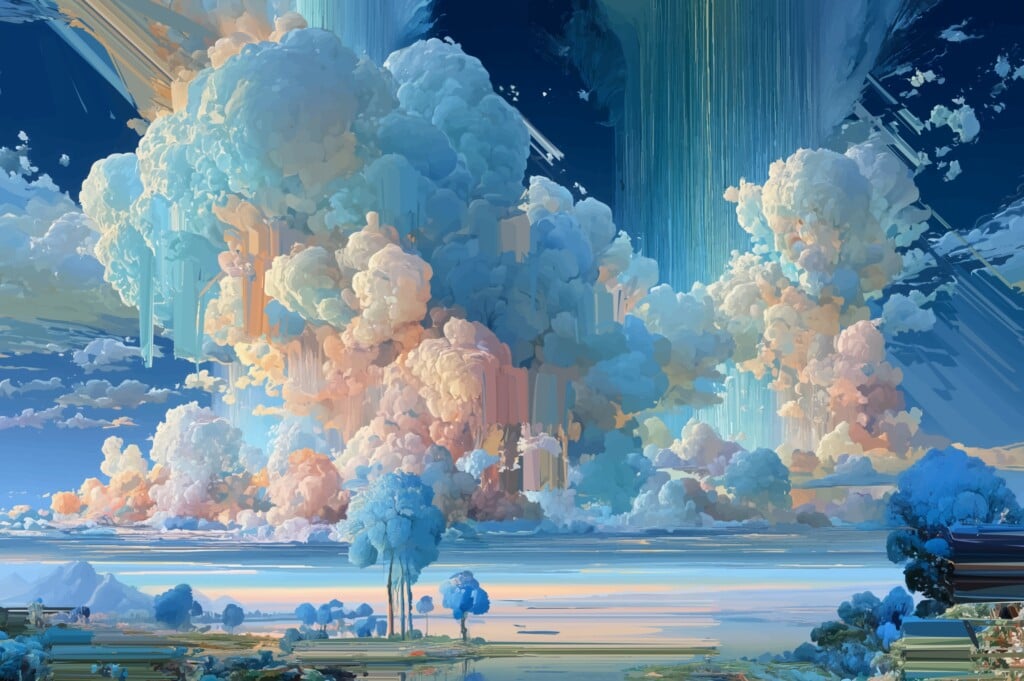
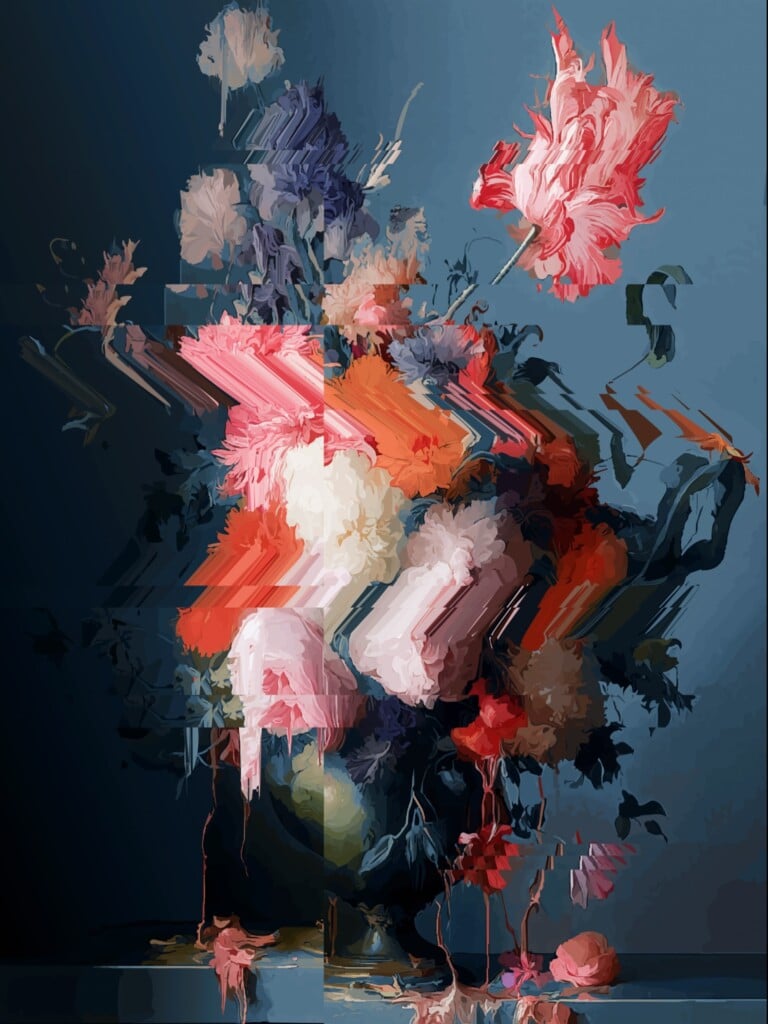
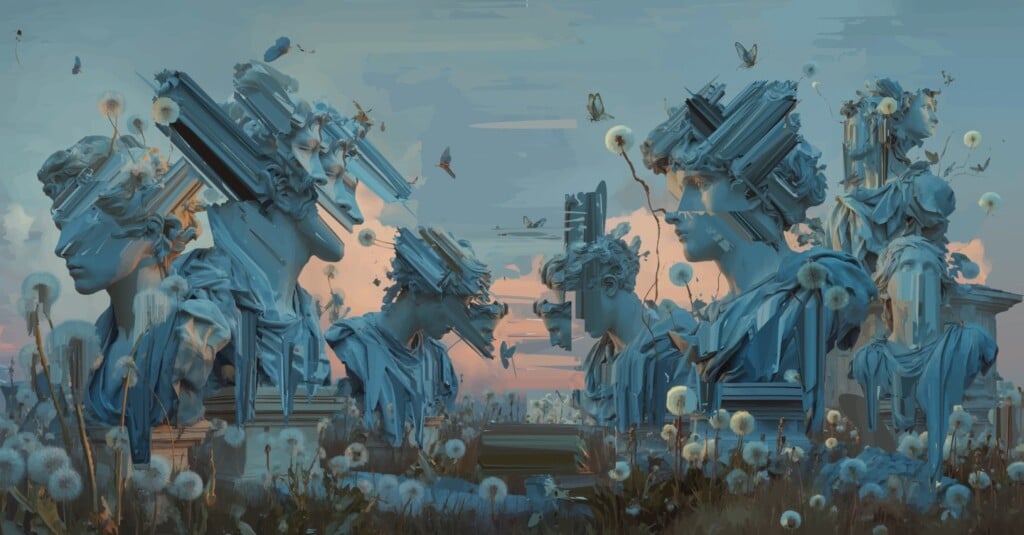
His practice in fact moves between analog and digital, with scanners, manipulation and editing used to reflect on what happens to an image when its format changes. Something is lost, something is transformed, something is born. And it is precisely from that margin of error that Mata builds his visual vocabulary of pixels, glitches and cuts. His work also spans stained glass, textiles, drawing, sculpture and ceramics, with sketchbooks that follow him everywhere and photographs and videos collected as reference.
Mata makes contemplation the central axis of his research and meticulously documents dreams, sensations and experiences related to landscapes, in the form of notes, poems, haikus, photographs and drawings. He then opens a dialogue with artificial intelligence, trying to explain what he has gathered, and it returns an image that concentrates not only his references but also all the data that we, as human beings, deposit in the tool, a kind of collective unconscious. That image is not the point of arrival but the beginning, because Mata reworks and edits it until it becomes an artwork.
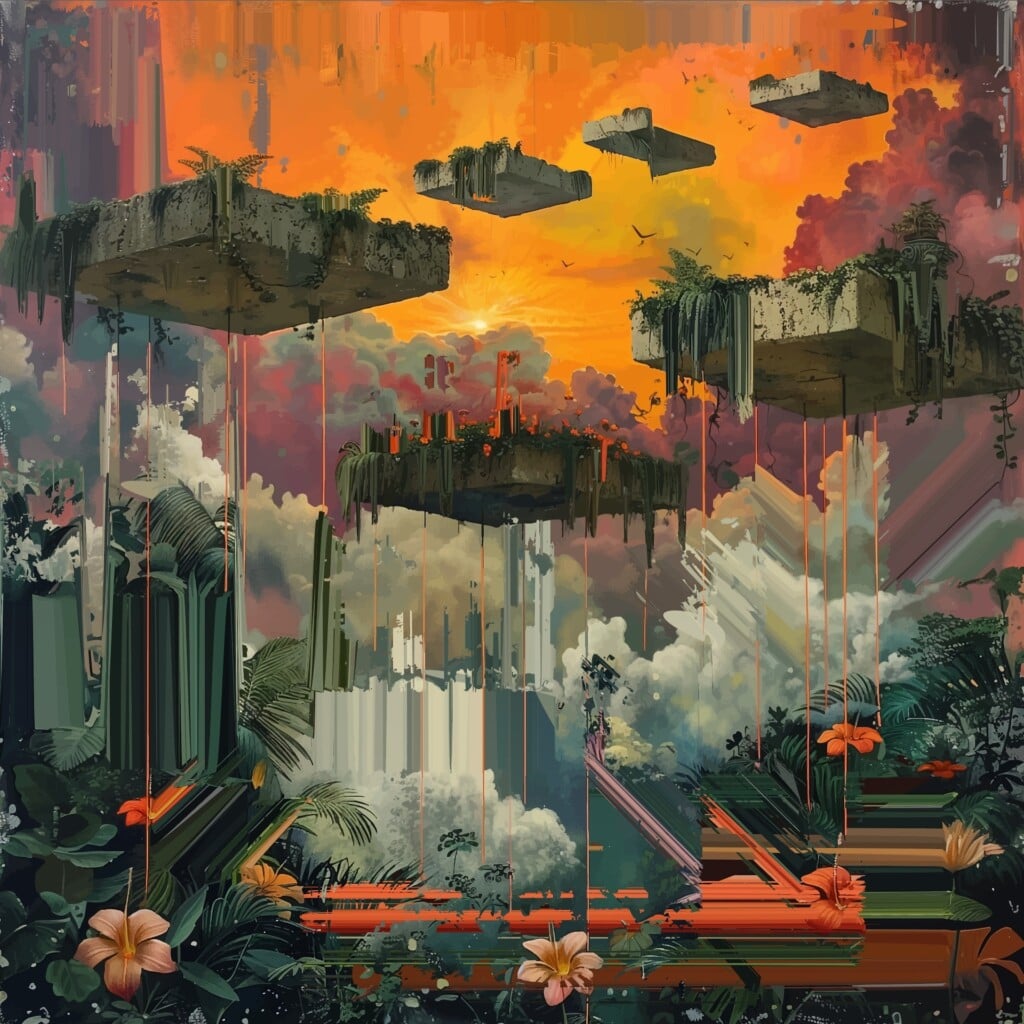
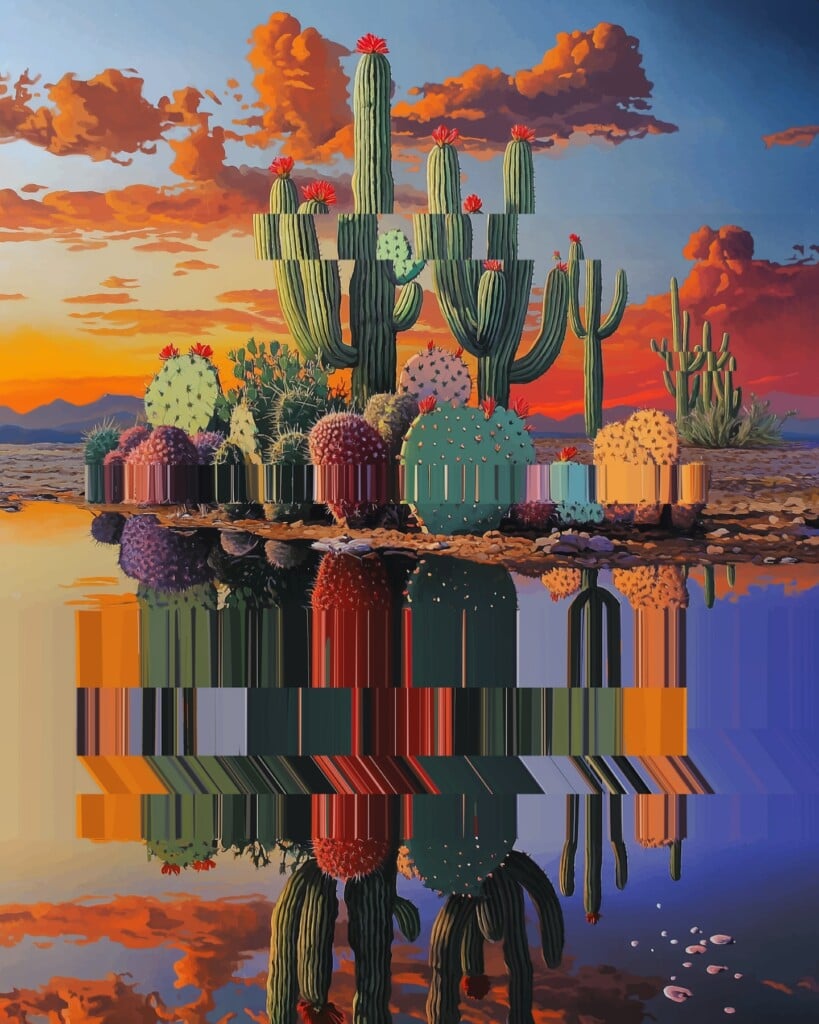
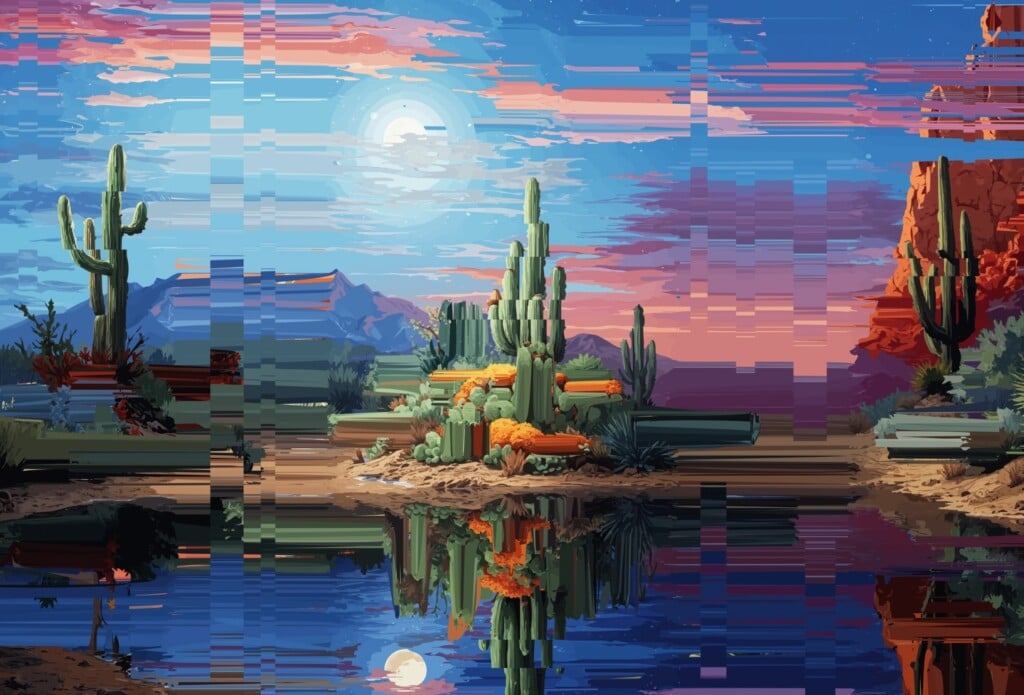
His subjects have become increasingly recognizable. For “Fata Morgana”, the exhibition at The Hole gallery in New York in December 2024, he painted deserts and cacti in oil, born from his travels to three different desert areas near Mexico City, where he used medicinal plants to become more receptive to color and interiority. Nopales and Mexican flora look like hallucinations, with lines that slip and pixels that stretch across the canvas. The artist explains it in a simple phrase, saying that when your eyes look too long at the same thing, your mind makes the change.
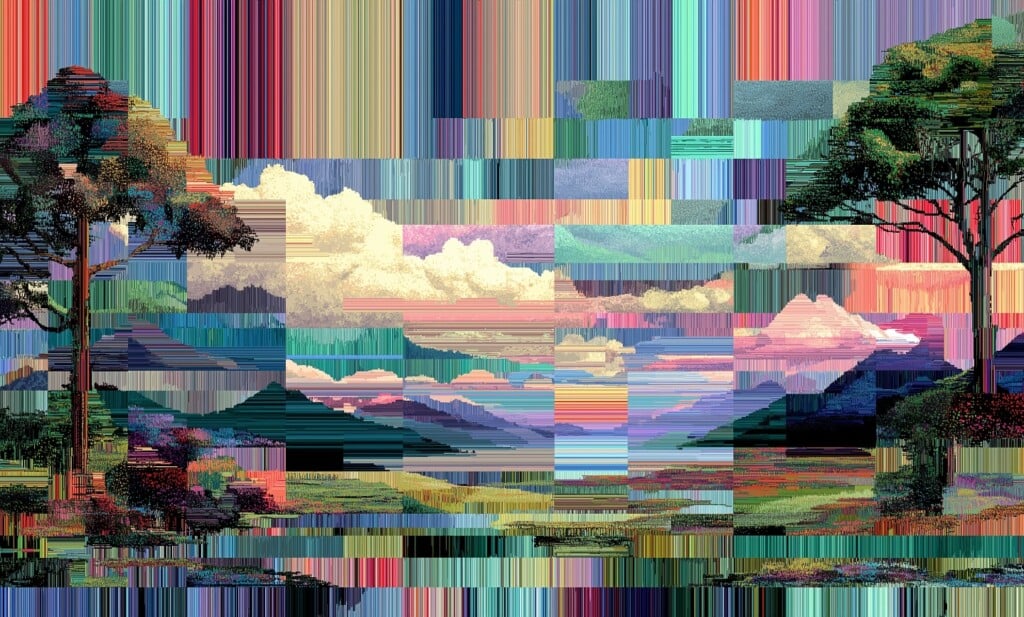
This brings us to the latest step (maybe), that of animating his glitched landscapes, allowing those who look at them to move through them and experience them in every direction. The end result recalls old video games, but also the whole universe of augmented reality.
The glitch thus stops being an error frozen on the canvas and becomes movement, an element thanks to which the landscape never stays the same.

Read also: