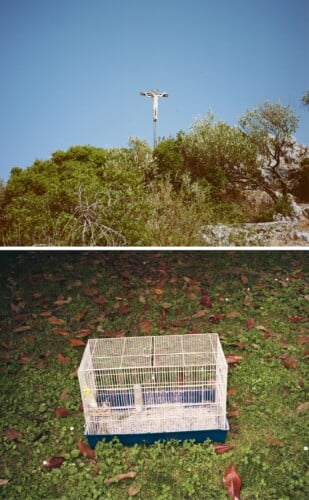
Some types of photographs open our eyes to issues and events that are distant from us or unknown. Often they aim simply to document objectively; other times, instead, they become much more: an empathetic gaze that creates a bridge between observer and subject. This is exactly the case with the photojournalistic shot that made Nick Út famous worldwide: his Napalm Girl.
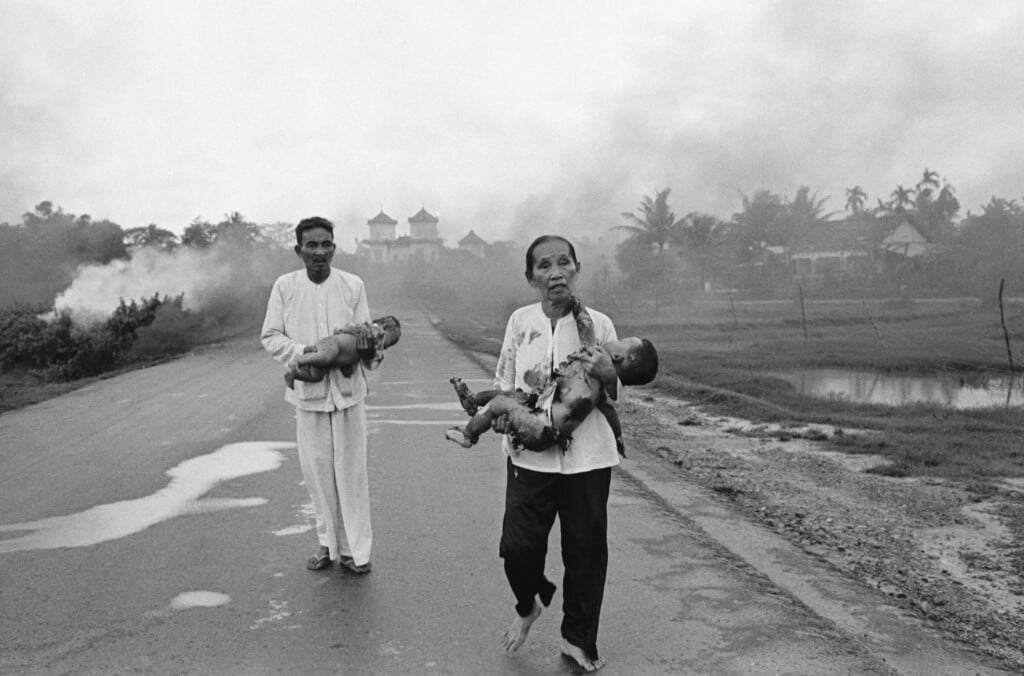
A clear photograph with a simple composition, yet with a revolutionary perspective: a low-angle shot—or rather, taken at the same height as the young victims fleeing the explosions we see in the background. It is precisely this choice—physically lowering himself (unlike all the other photographers) to place himself on the same level as the children—that makes the image so powerful and universal: Nick Út doesn’t look down from above, but runs with them, sharing their fear, and that is also why the picture immediately became iconic and known around the world.
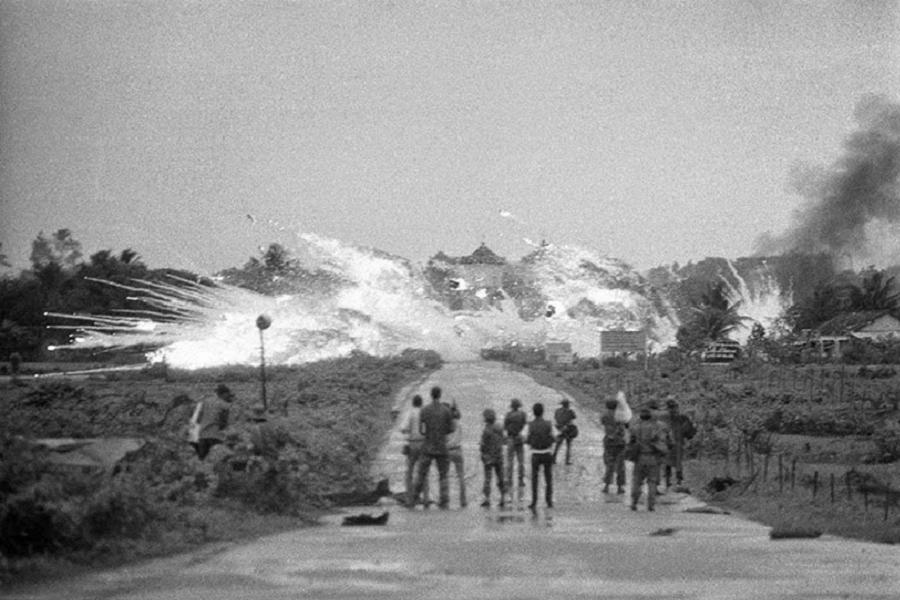
It is June 8, 1972, when a group of South Vietnamese fighter-bombers drops napalm bombs on the village of Trang Bang. The young Kim Phúc is hit by the lethal substance and within seconds her clothes are completely burned away, her skin is on fire, and she can do nothing but run—terrified and writhing in pain—straight toward the camera lens of the then twenty-one-year-old Nick Út, an Associated Press correspondent.
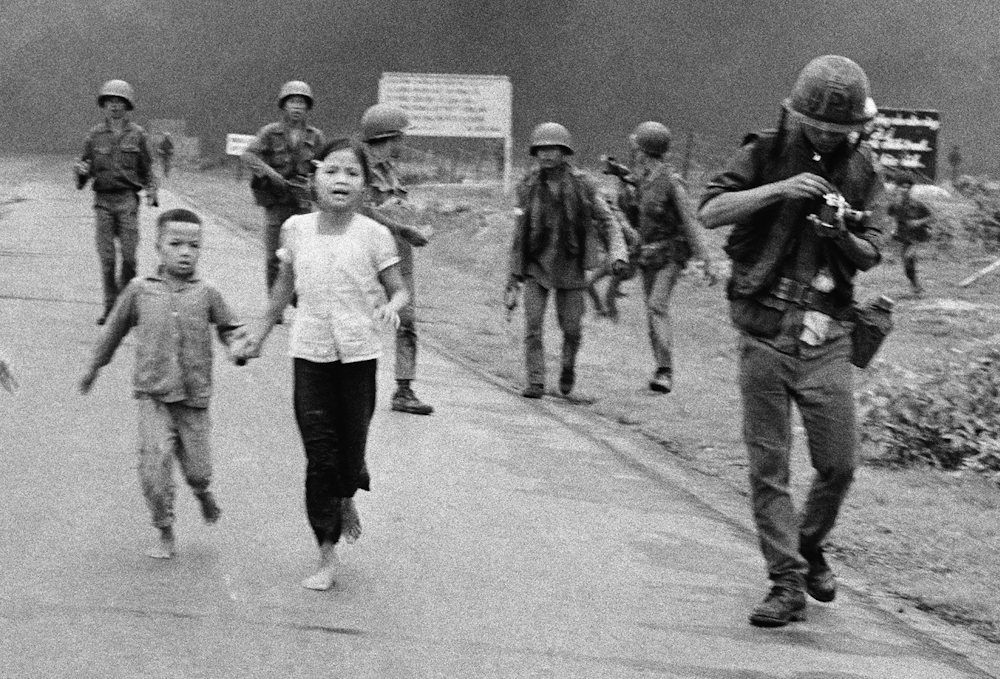
The girl stands at the center of the composition, her arms spread as if searching for relief, and her mouth open in a cry of pain that still strikes us today. In the background, other children flee in terror, in stark contrast with the calm and indifferent march of the soldiers, while behind them everything is swallowed by a black cloud of gas, dust, and destruction.
The Terror of War—the title initially chosen for the photograph—would later become Napalm Girl.
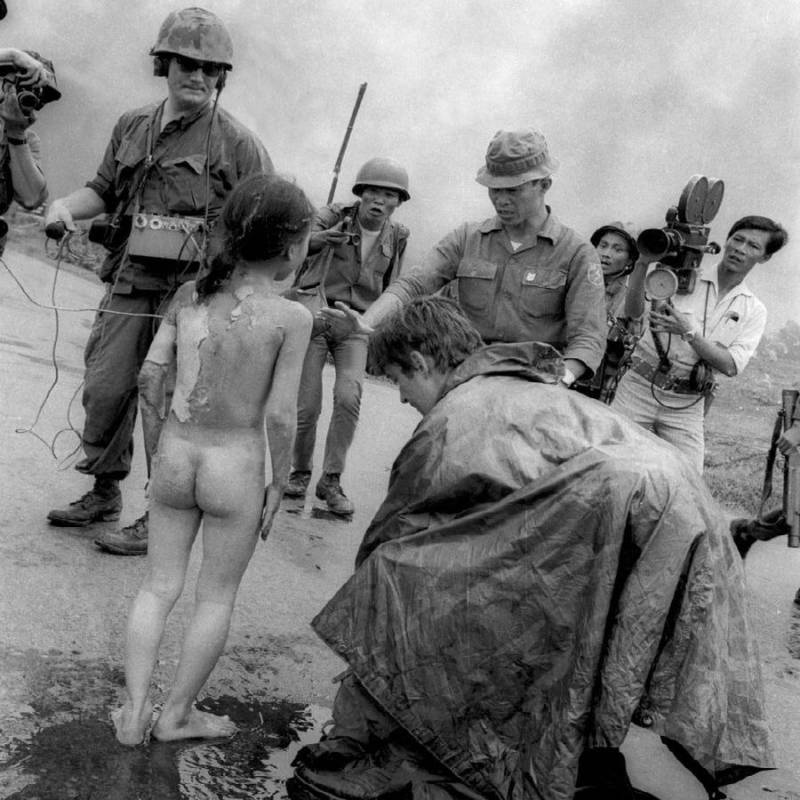
Napalm Girl is Nick Út’s best-known work, the one that earned him the Pulitzer Prize and the World Press Photo award. The latter, fifty years after the recognition, has cast doubt on Út’s authorship, crediting it instead to another photographer present at the scene: Nguyen Thành Nghe.

Despite the doubts and the recent debate sparked around this shot, what remains is the strong empathy and sensitivity of Nick Út’s eye. A humanity that also shines through the rest of his work—different in subject and depiction, yet always faithful to that distinctive perspective that allows viewers to identify with and empathize with the people portrayed, letting us see the world with different eyes: theirs.
This article was produced in collaboration with Luigi Falanga and Gaia Forlin aka @super8otto.