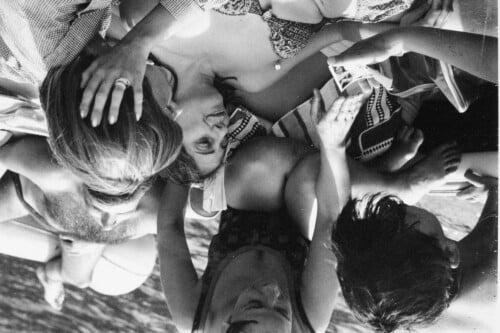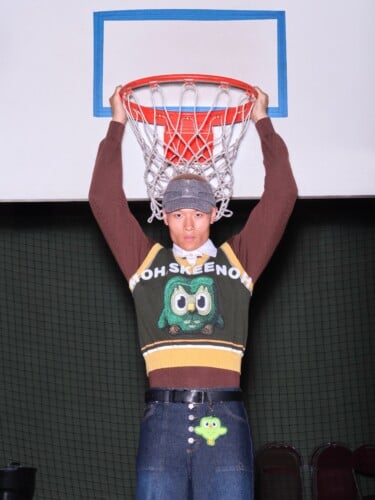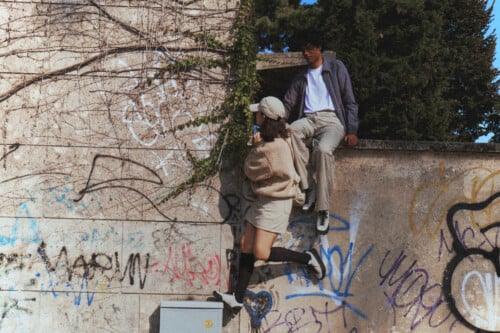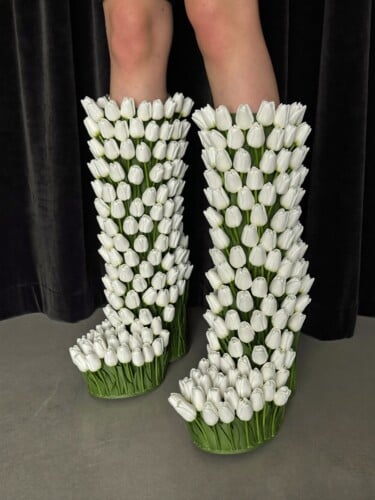
There is one detail about Saelf that never gets quite enough attention: the brand by Giulia Spitaleri does not stage clothes, it stages itself. On Wednesday, September 23, at 54 Via Carlo Poma in Milan, Traccia III — Under the Same Sky will unfold, the third chapter of a project we already know, and one that says more about the identity of the brand than any runway show could on its own.
This time, the starting point is not a fabric: it is a date. August 10, on the slopes of Mount Etna, between the burning day and the night of San Lorenzo opening onto shooting stars. “I come from a land that burns and protects,” writes Spitaleri in the collection’s manifesto, “I carry it on me even when I don’t name it.” And in the invitation, in a line that is worth more than any technical sheet: “it seems to me that there are moments when we feel we belong to something, without knowing exactly what. To a land, a season, a sound. To a memory that won’t leave us.” This is not an added layer of values introduced during the communication phase: it is, quite literally, where the collection begins, in the ashes of a Sicilian mountain.

A material that still carries the ashes on its skin
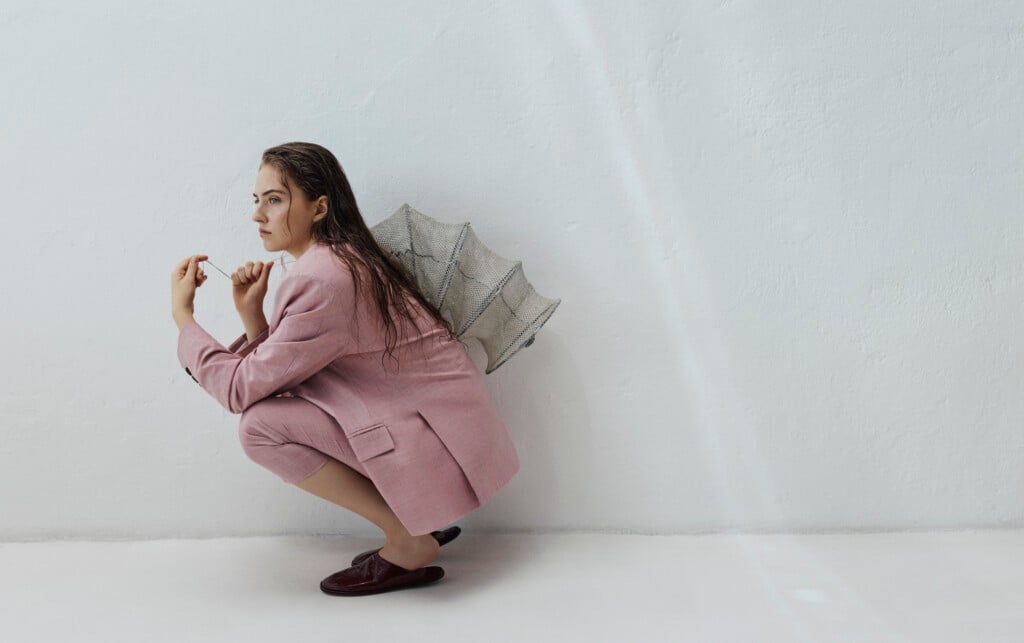
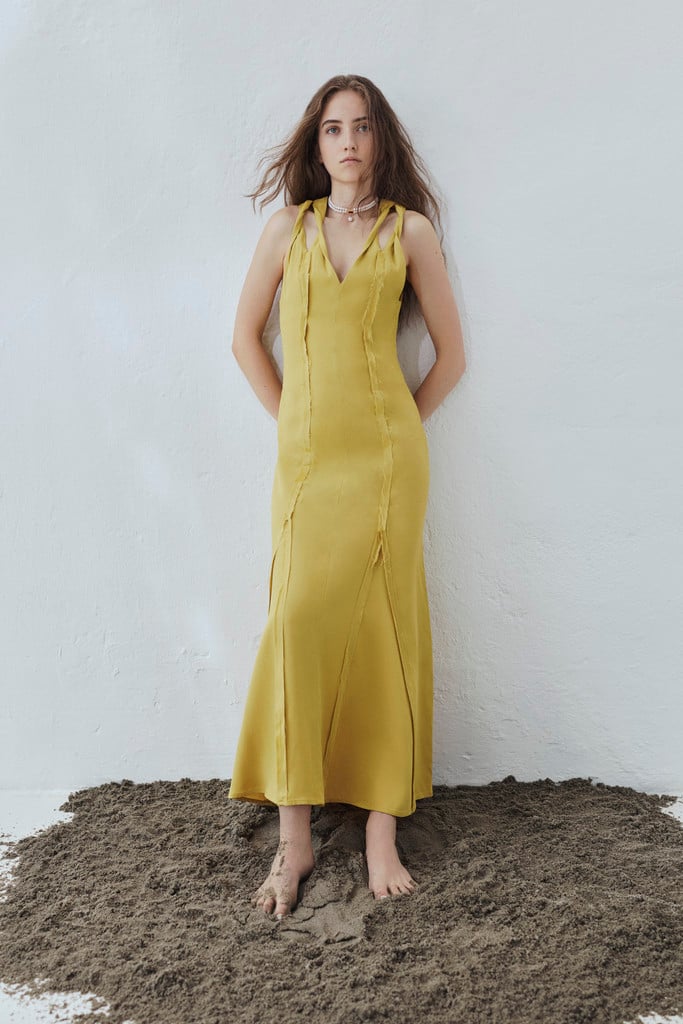
That ash, that land, that night become material in an almost literal way. The palette of Under the Same Sky moves between lava black, a dry earth brown, rust red, dusty ivory and a yellow that seems stolen from dusk. Raw cottons, washed silks, linen, canvas and lightweight jerseys tell the story of garments that feel lived-in, never ostentatious. The detail that carries everything else with it is the rolled-up sleeve, an everyday gesture, tied to effort, heat and sweat. And then there is the fringe, which continues a research process begun with the apron from Fall Winter 26/27: no longer a direct quotation, but what remains of it, dismantled and reabsorbed into the garment, always anchored to a functional element, a memory that, quite literally, hangs. It is through this material that the silhouette of Spring Summer 27 takes shape: clean cuts, a low waist, and layering conceived through subtraction. Saelf is not looking for the perfection of construction: it is looking for—and this is the point—the trace of a garment already lived in, fully consistent with the story that gives rise to it.
After all, Spitaleri had already said it, in her own way, when she told us that what drove her to found the brand was not a strategy but the need to give form to “the culture surrounding the act of dressing.” Two years after that statement, it sounds less like a good intention and more like a promise kept: here, the personal layer does not accompany the collection, it constitutes it.
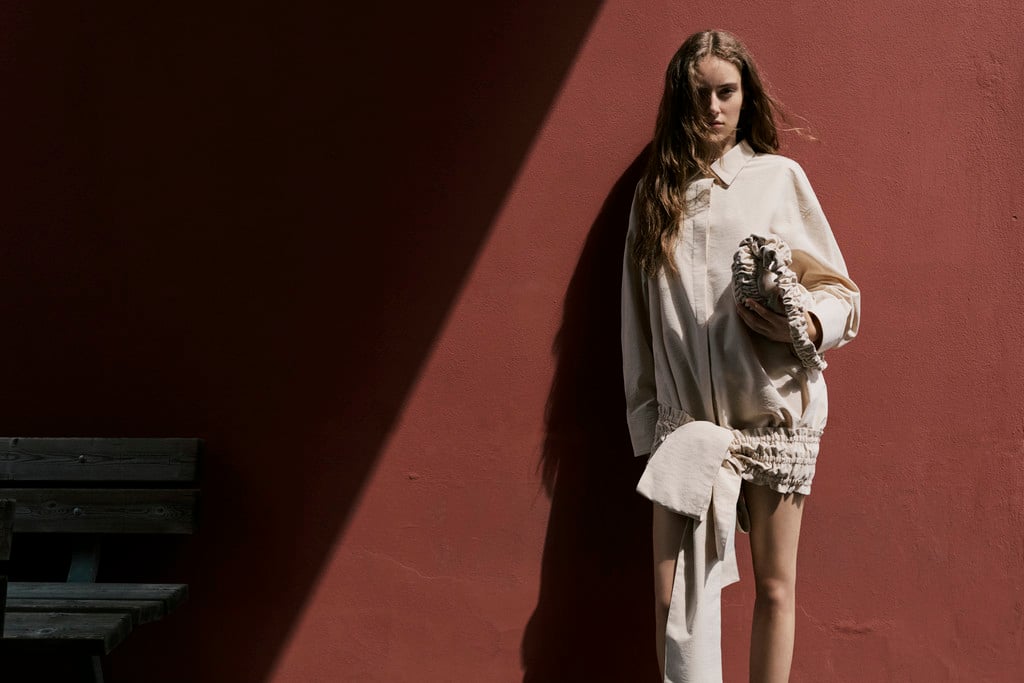
The artistic universe is never just a backdrop
That Saelf treats art as raw material rather than a secondary component was already clear from Traccia I, when the work of Alessandro Calabrese became a print on three garments exhibited at Fondazione Sozzani. In Traccia III, the principle is repeated and strengthened: the installation once again bears the signature of Nicola Pantano, and the continuity of the collaborator, from one episode to the next, is itself a statement of intent, transforming the space into an archive of presences, garments suspended in a vacuum alongside dust, earth and dry leaves, like a landscape that refuses to let itself go completely. Completing the ritual is a two-hour performance by Emanuele Algeri, the awakening of a dormant body attempting to reconnect with those who came before. Each episode of Traccia generates the physical and symbolic material for the next: not seasonal collections, but episodes of the same narrative, written through collaboration each time with a different artist.
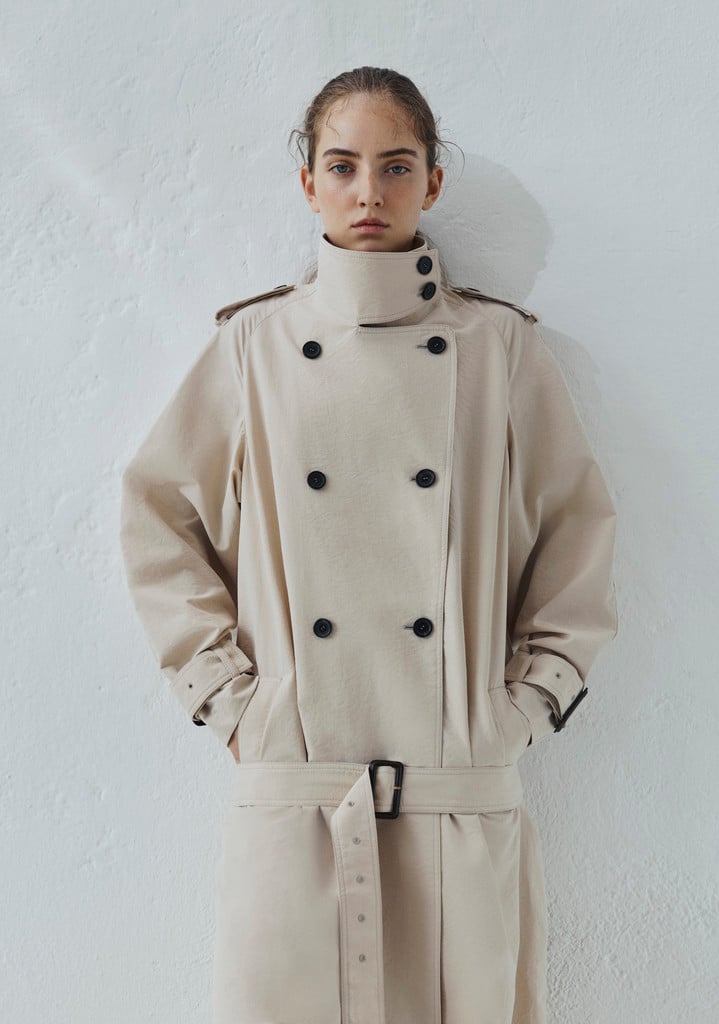

Credits ph: Giuseppe Vaccaro