What if the value of a material depended not only on what we can extract from it, but also on what we are used to not seeing? This is the question through which the work of Studio ThusThat can be read, a design and research studio based in Amsterdam that explores the possibilities of unconventional materials, focusing in particular on residues from the mining and metallurgical industries. Its approach starts from what remains at the margins of production processes to imagine new applications, connecting scientific experimentation, design and material culture.
Founded by designers Kevin Rouff and Paco Böckelmann, the studio works across different disciplines, collaborating with companies, academic institutions and industry professionals. The goal is not simply to recover materials destined for waste, but to understand their characteristics, explore their potential and change the way we perceive them. Two projects, Crust and This Is Copper, illustrate this research well, showing how behind an object there can be a production story far more complex than its form suggests.
Crust: aluminium shows its lesser-known side
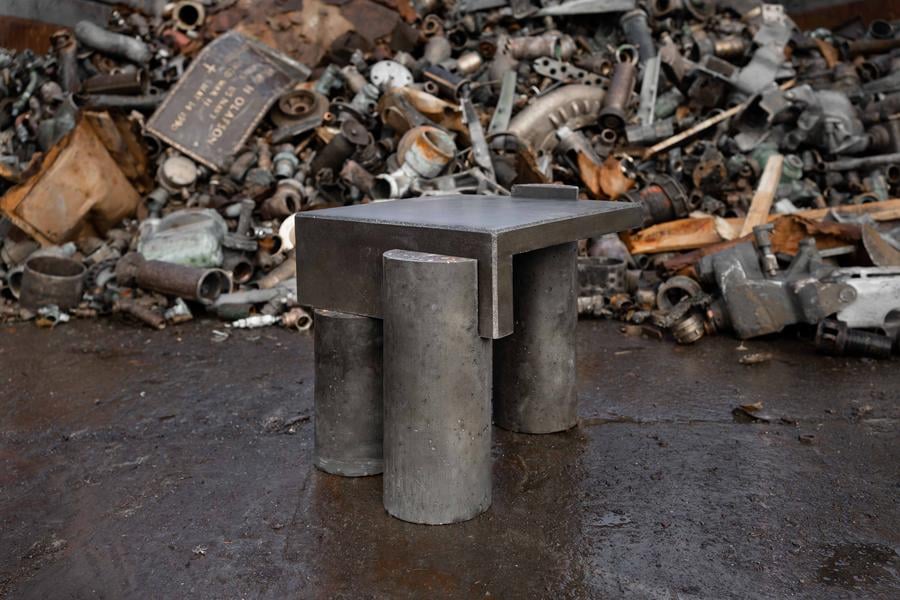
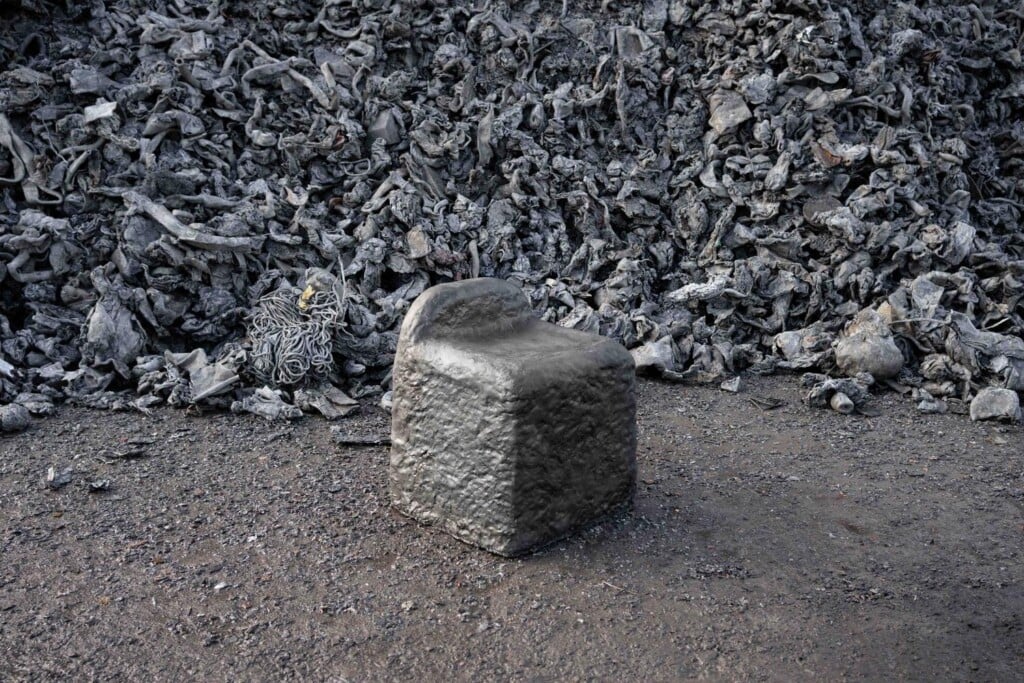
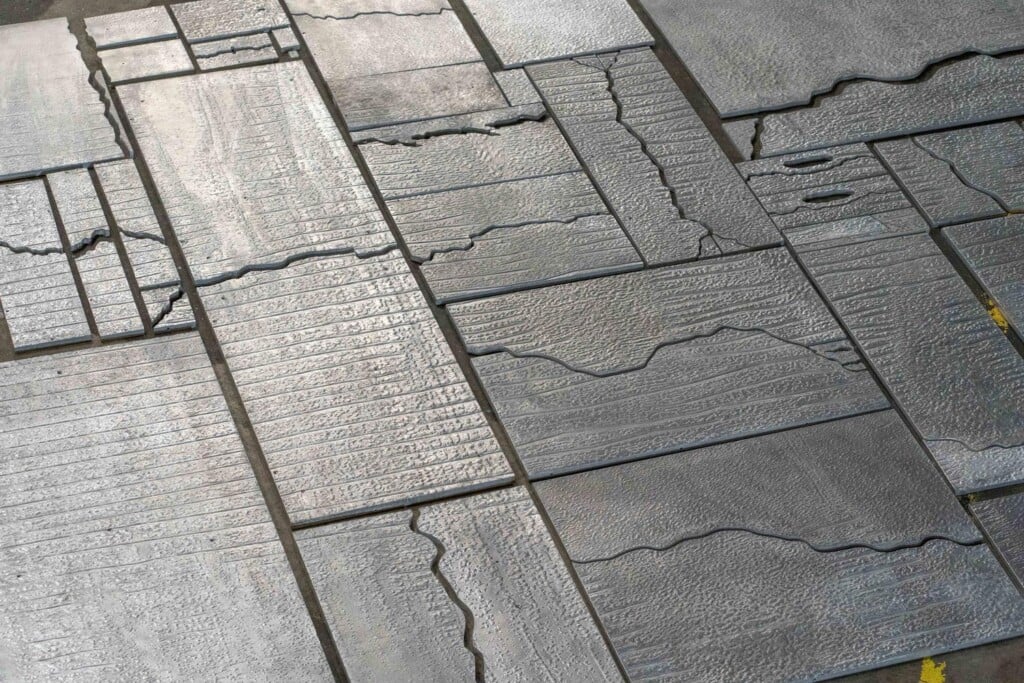
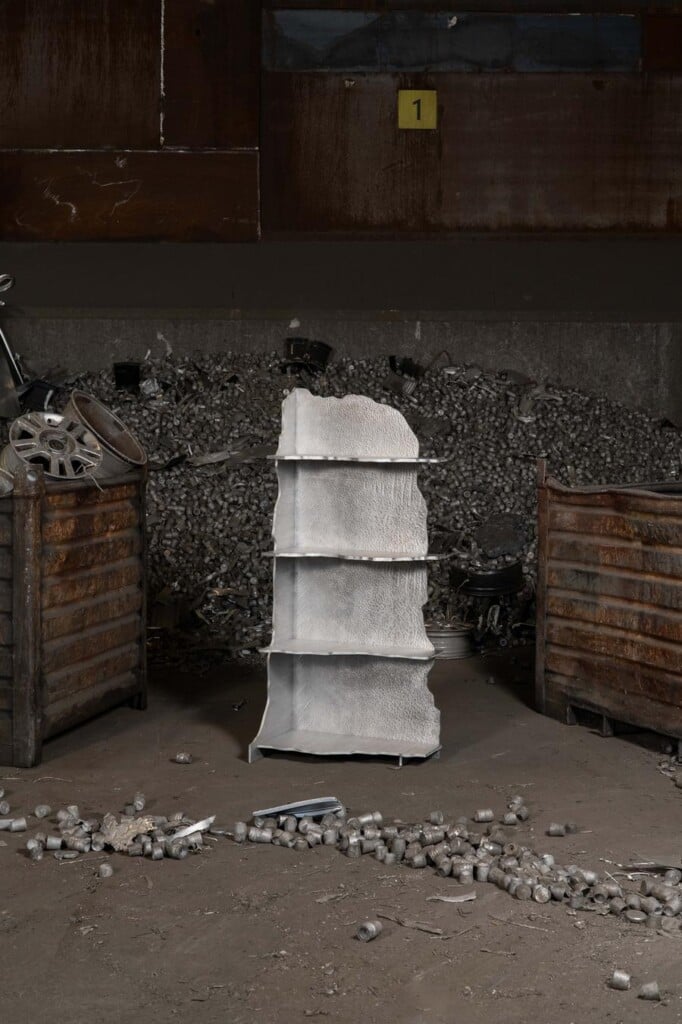
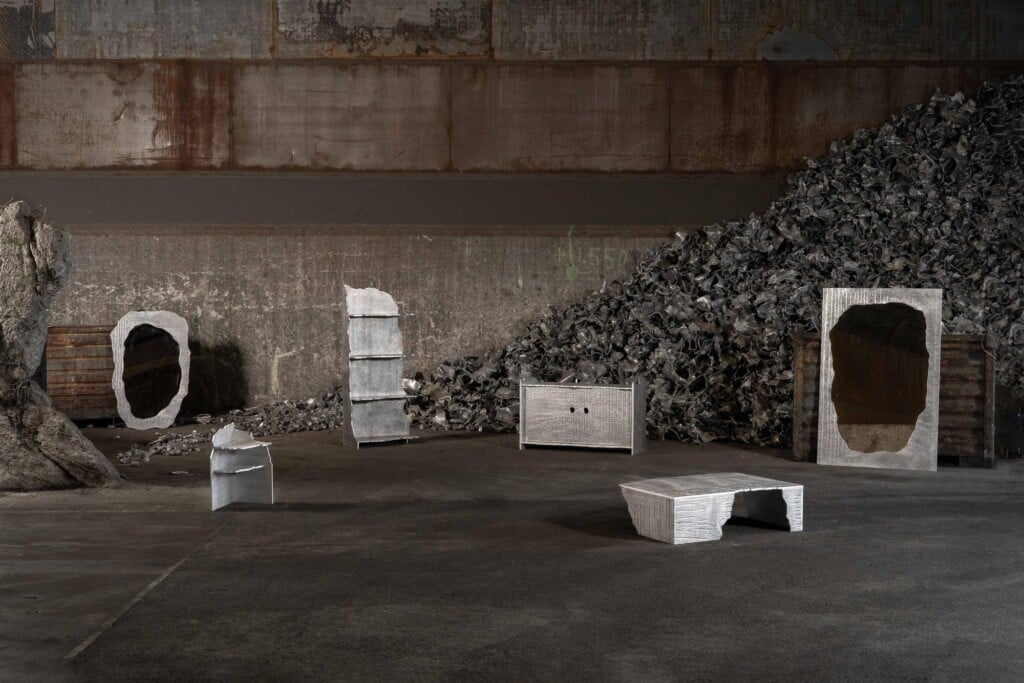
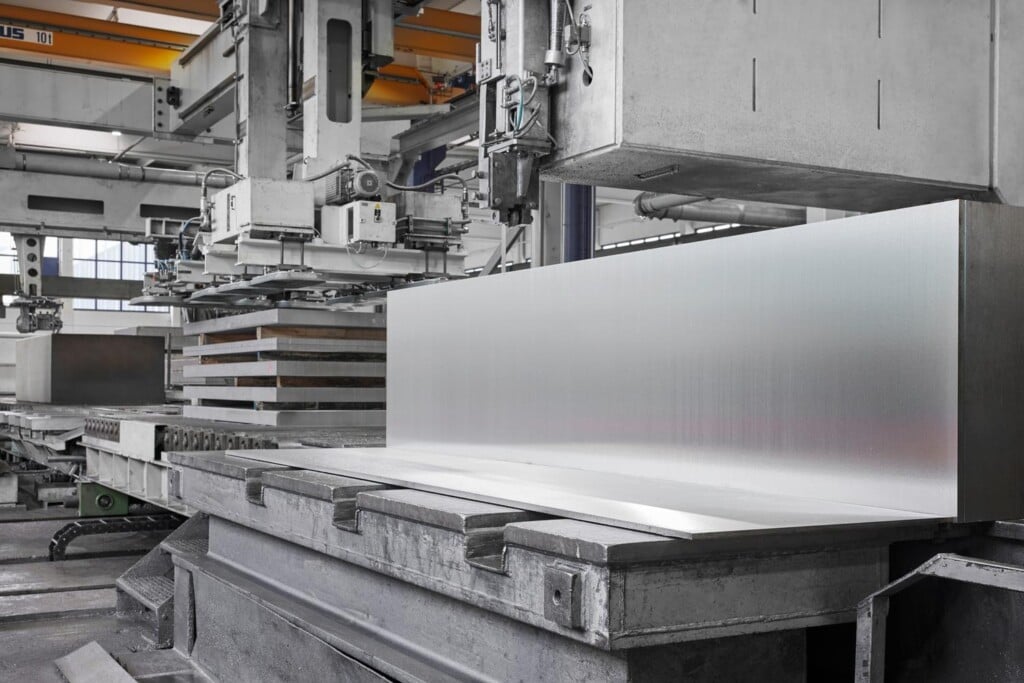
Aluminium is a material we often associate with smooth, light and uniform surfaces. Yet, before taking on the appearance we know, it goes through complex industrial processes, during which its surface can display very different characteristics. It is precisely in one of these stages that Crust was born, a furniture collection comprising tables, shelves and mirrors made from thin slabs obtained from the processing of large aluminium blocks.
In the early stages of production, molten aluminium is cast into enormous blocks, which can exceed 26 tonnes. Before being transferred to the following plants, the sides are cut off, leaving irregular slabs characterised by a wavy, organic surface. These portions, called crusts, become the starting point of the project. Studio ThusThat chooses not to hide the traces of industrial processing, but to make them an integral part of the objects’ aesthetic language. The jagged edges, imperfect surfaces and irregular shapes contrast with the idea of perfectly finished aluminium, giving the material a rawer, almost sculptural presence.
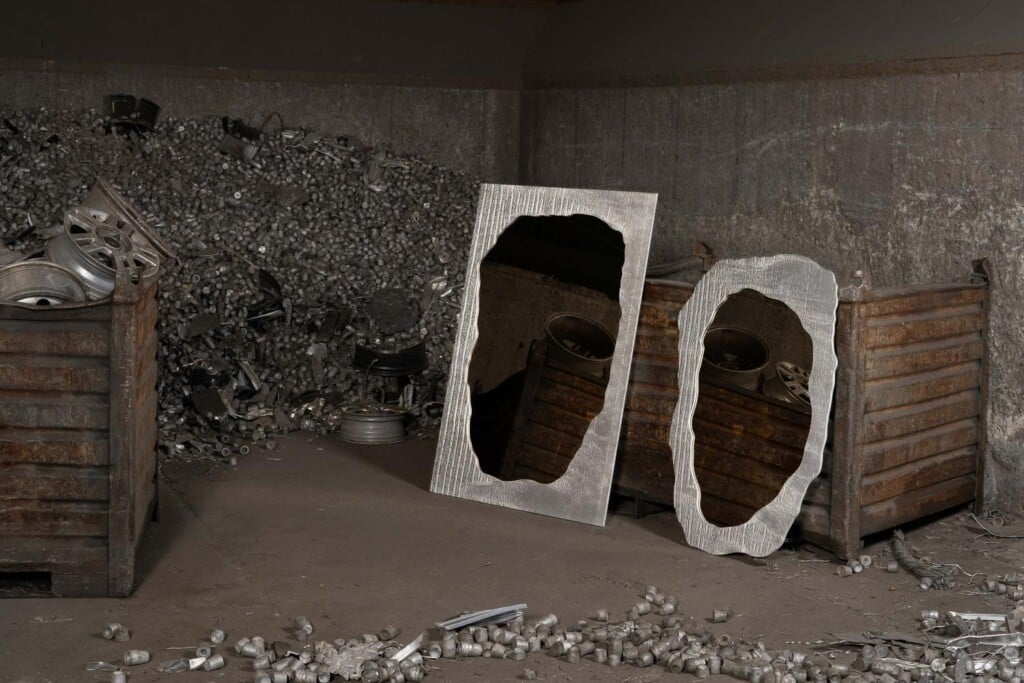
The interesting aspect, however, concerns the way the collection is designed. Each element is made from a single slab, and the cuts are planned so that the remaining portions can also be used to make other objects. The shape of one piece thus helps determine that of the next, until a system is formed in which every part finds a possible destination. The furniture is also designed to be assembled, disassembled, transported flat and recycled.
In Crust, therefore, recovery does not come into play only at the end of the production process: it becomes a principle that guides the project from the very beginning. The need to limit waste directly influences the forms, turning a constraint into a creative resource. The result shows that designing more carefully does not necessarily mean giving up aesthetic exploration; on the contrary, it can lead to solutions that would hardly arise by following the conventional logic of production.
This Is Copper: rethinking what remains after extraction
With This Is Copper, the research shifts from aluminium to copper and addresses an even broader question: how much of the material we use every day remains invisible, along with the consequences of its production?
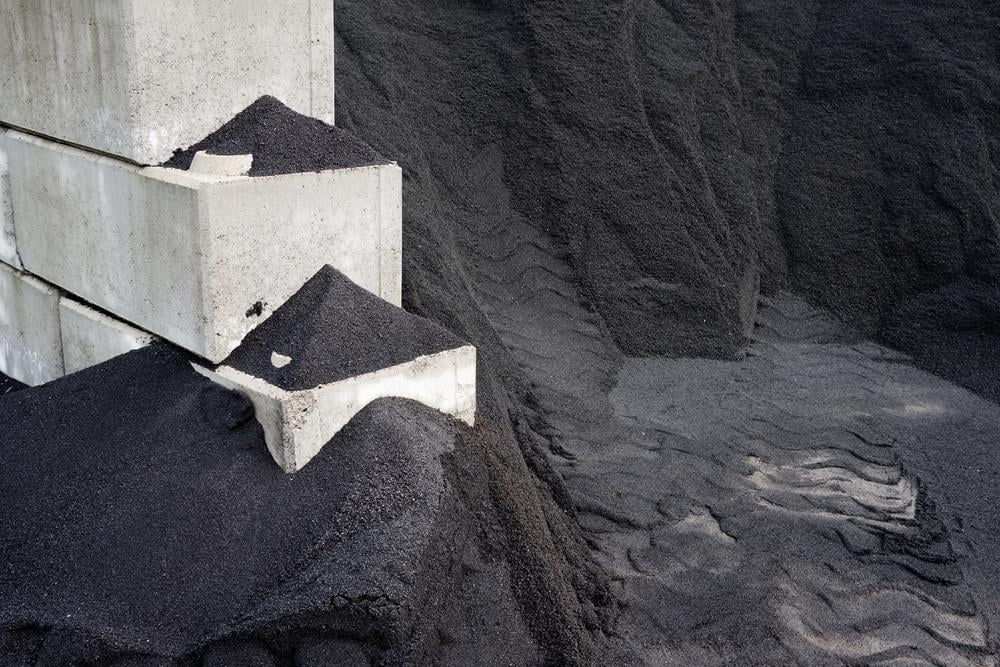
Copper is essential to numerous systems that support contemporary life, from electrification to communications, all the way to the infrastructure for the energy transition. However, its story does not coincide only with the metal that ends up in finished products. Extraction and processing also generate residues, including the slag produced during smelting, which accumulates in large deposits and represents a challenge for industrial management.
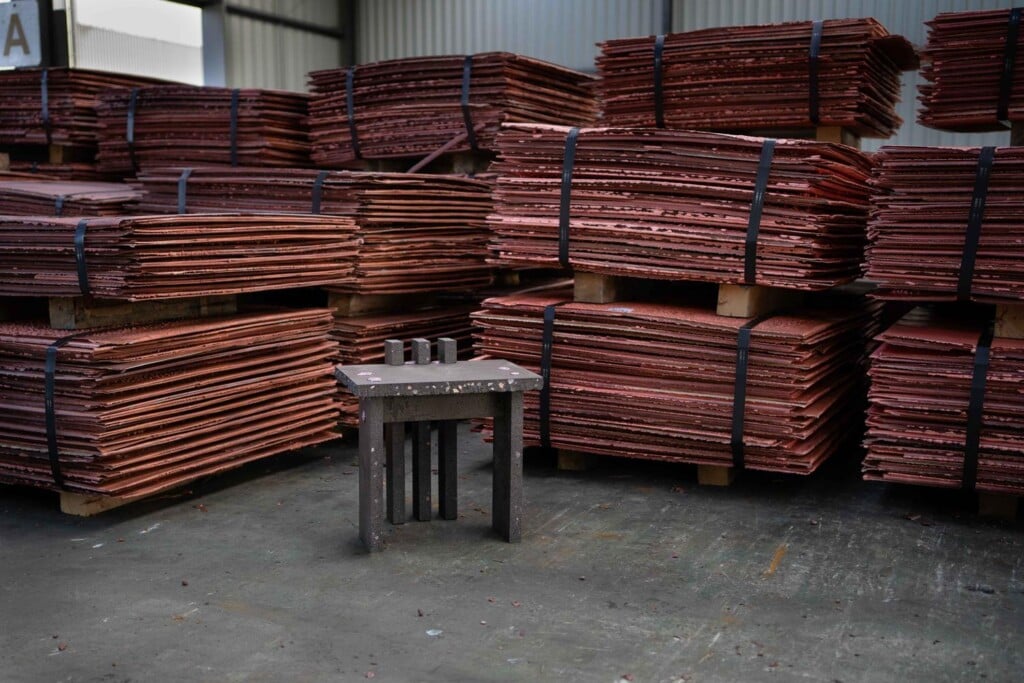
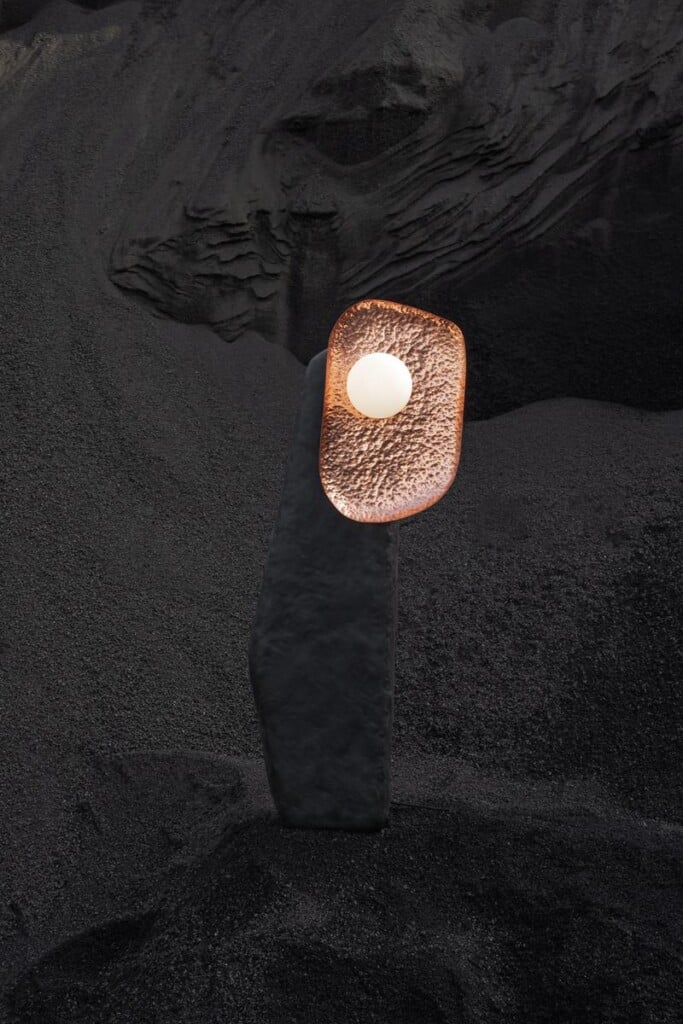
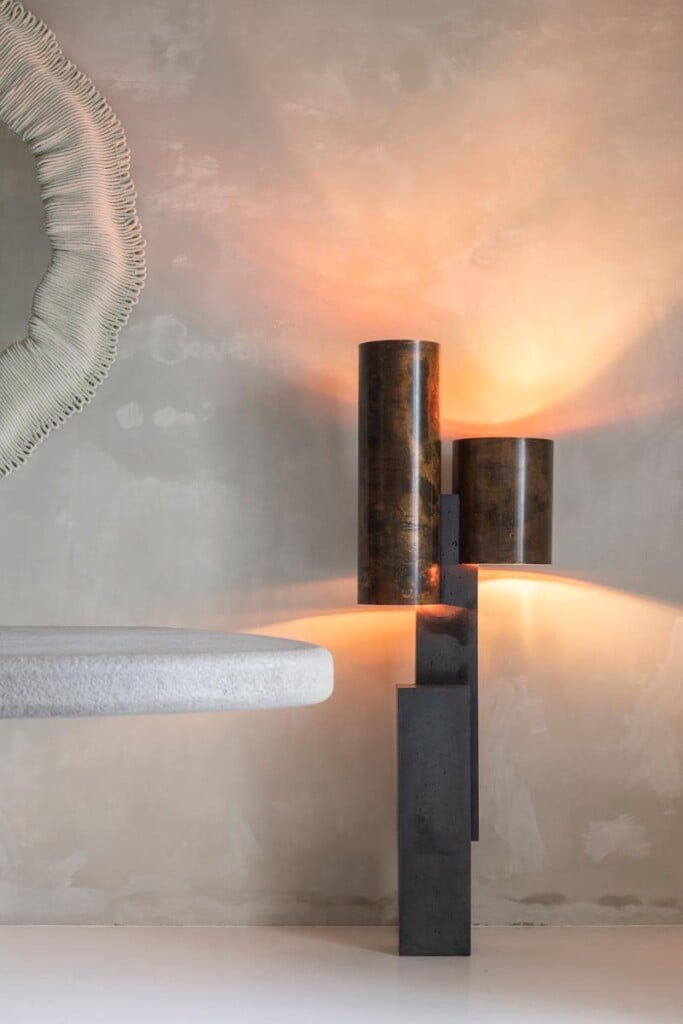
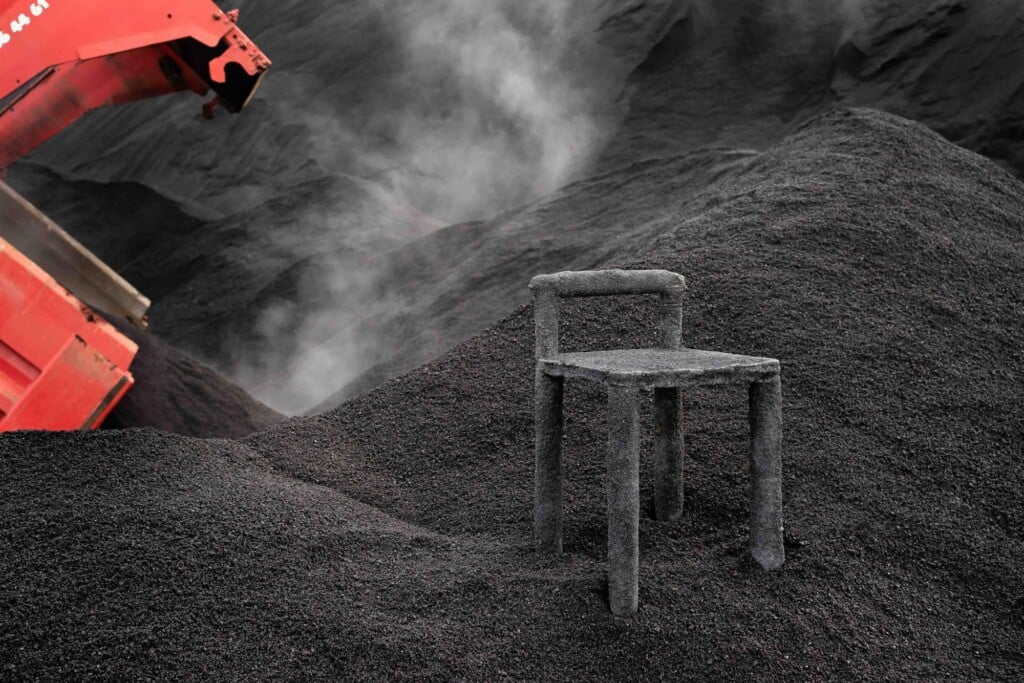
It is on this material, dark in appearance and similar to volcanic rock, that Studio ThusThat’s project focuses. Developed in collaboration with researchers from KU Leuven and commissioned by the copper recycling company Metallo Group, This Is Copper investigates the possibilities of using slag as a binder for construction materials with lower CO₂ emissions than traditional Portland-based cement.
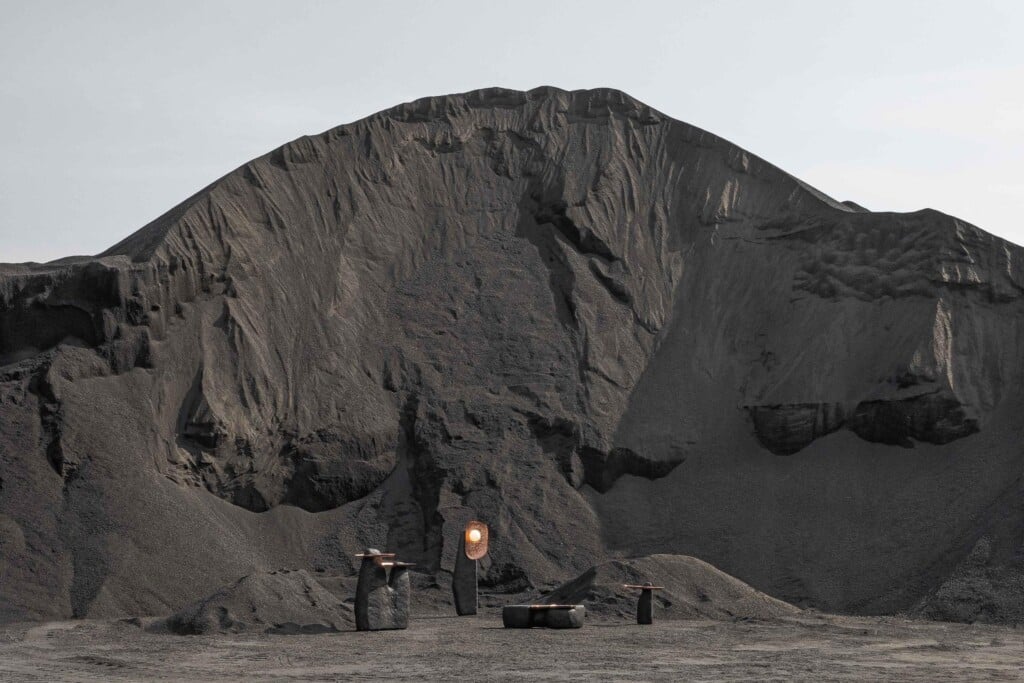
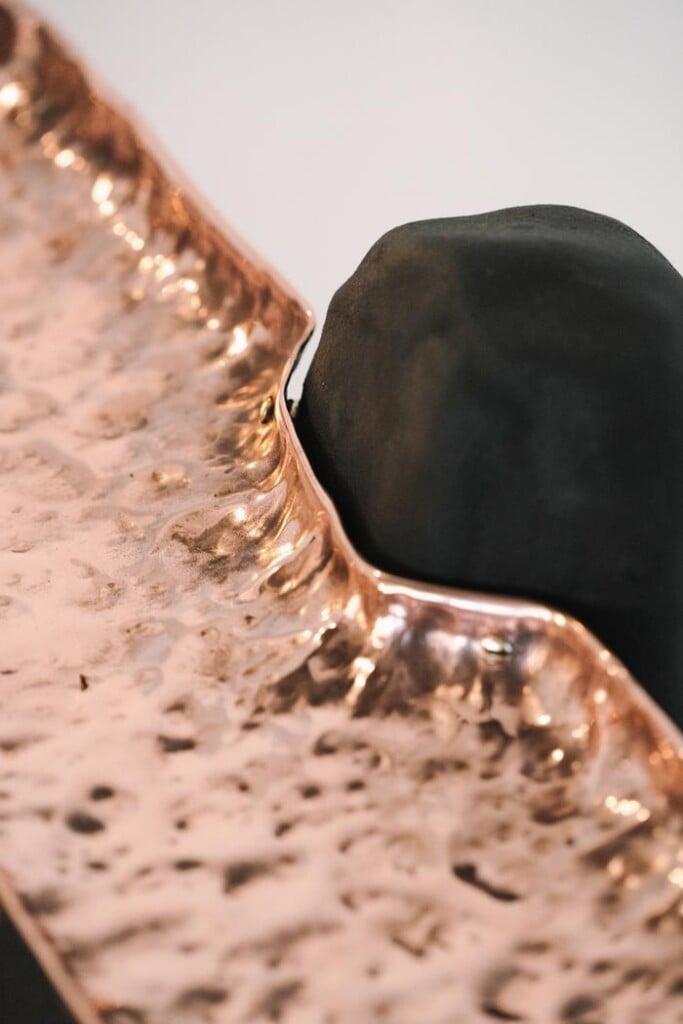
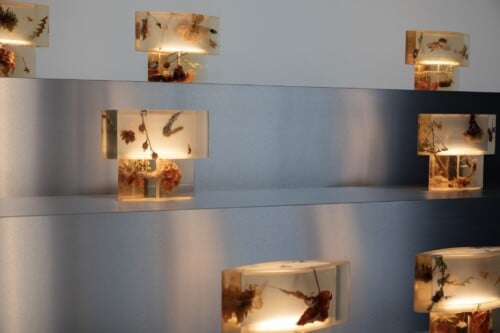
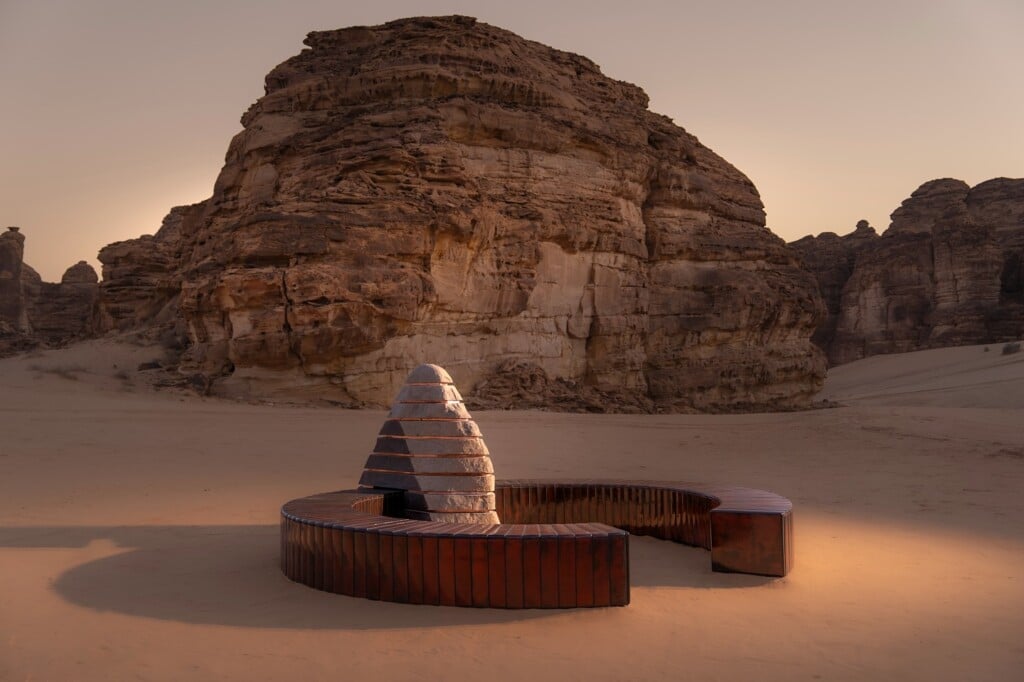
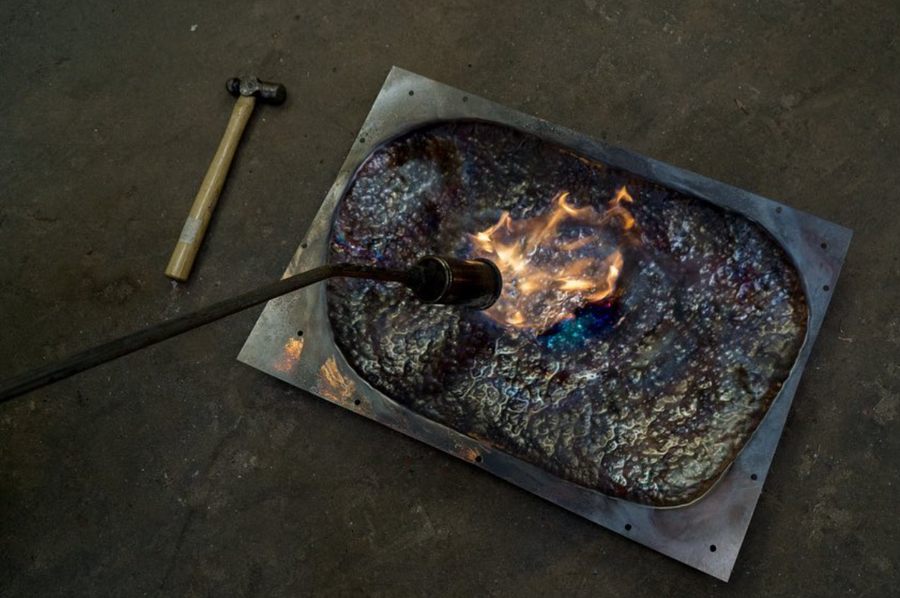
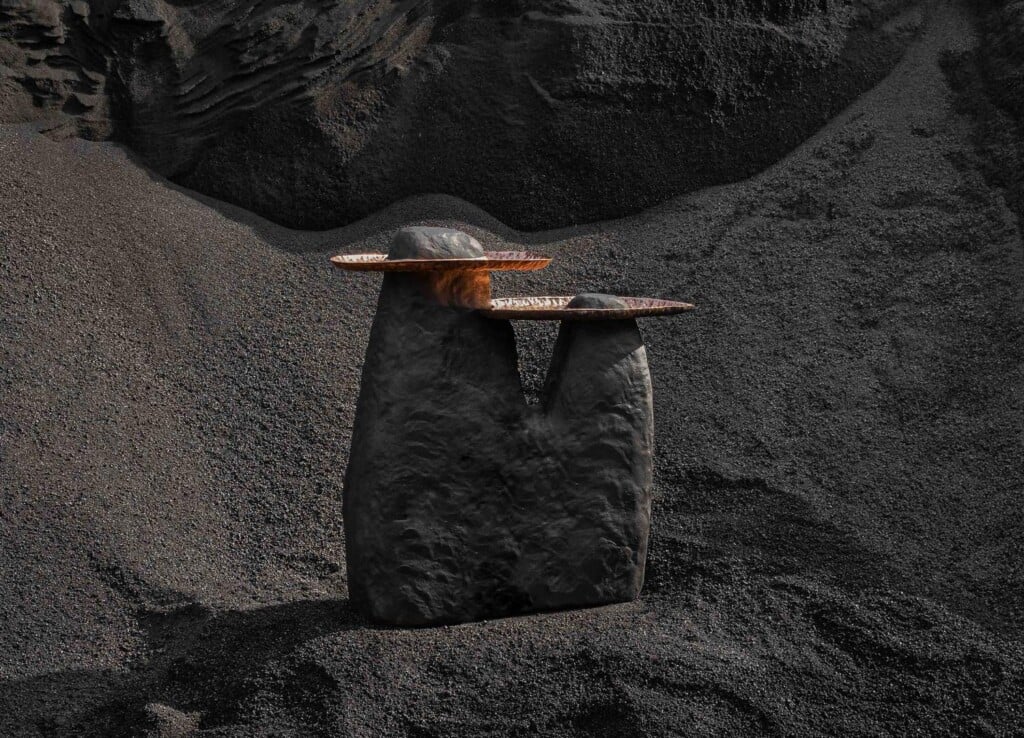
The research translates into a series of experimental objects and furniture, including seats, side tables and lamps, through which the studio tests the properties of the material. Some elements explore the possibilities of modelling and casting, others work on the consistency of surfaces and on the relationship between the slag and the copper. In particular, the pairing of the dark compound with worked copper elements creates a contrast that makes the different components of metallurgical production visible. These objects are not only the result of formal experimentation: they also serve to show what could happen if an industrial residue were considered a resource for new production processes.
The research is still oriented towards the development of alternative applications and materials; this does not mean, therefore, that all slag can be reused automatically or without specific treatments and checks. Its use in fact requires consideration of composition, contaminants, performance and safety conditions.
Design as a way of changing perspective
Crust and This Is Copper share the same insight, but develop it through two different strategies. In the first case, the design exploits the physical characteristics of a residue and organises the cuts to use the entire slab. In the second, the work focuses on the properties of an industrial by-product and on the possibility of transforming it into a material useful for construction and design.
In both, matter is not a mere means of obtaining a form, but the point from which the entire creative process begins. The irregularities of the aluminium and the consistency of the copper slag are not corrected to fit a predetermined aesthetic, but become elements that define the final result.
This perspective also leads to a broader reflection on the meaning of sustainability. We often associate it with choosing a recycled material or reducing waste in a specific phase of production. Studio ThusThat’s work suggests instead looking at the entire chain: where the matter comes from, how much energy its processing requires, what residues it generates and what possibilities remain once its initial use has ended. It is not enough, then, to turn waste into an object to solve the problem from which it originates. But a project can help make visible what normally remains hidden and show that some resources considered worthless deserve to be studied before being abandoned.