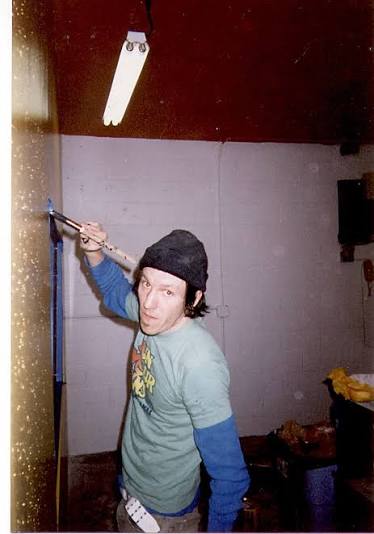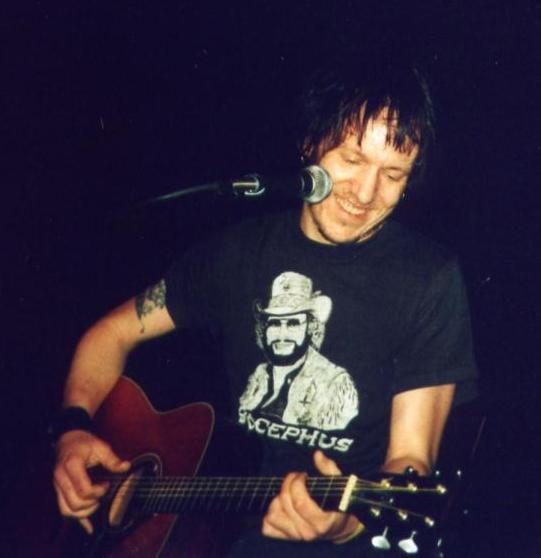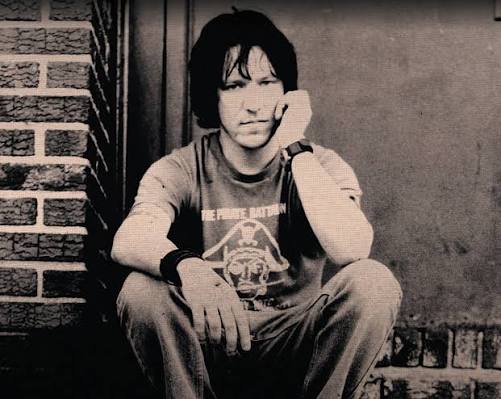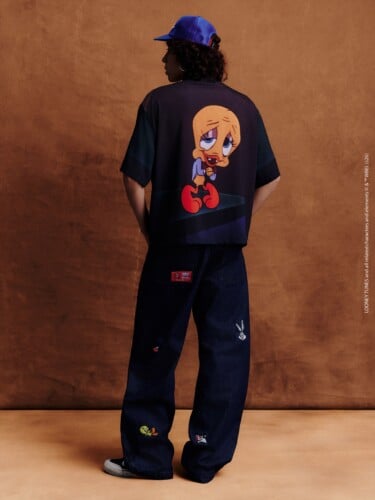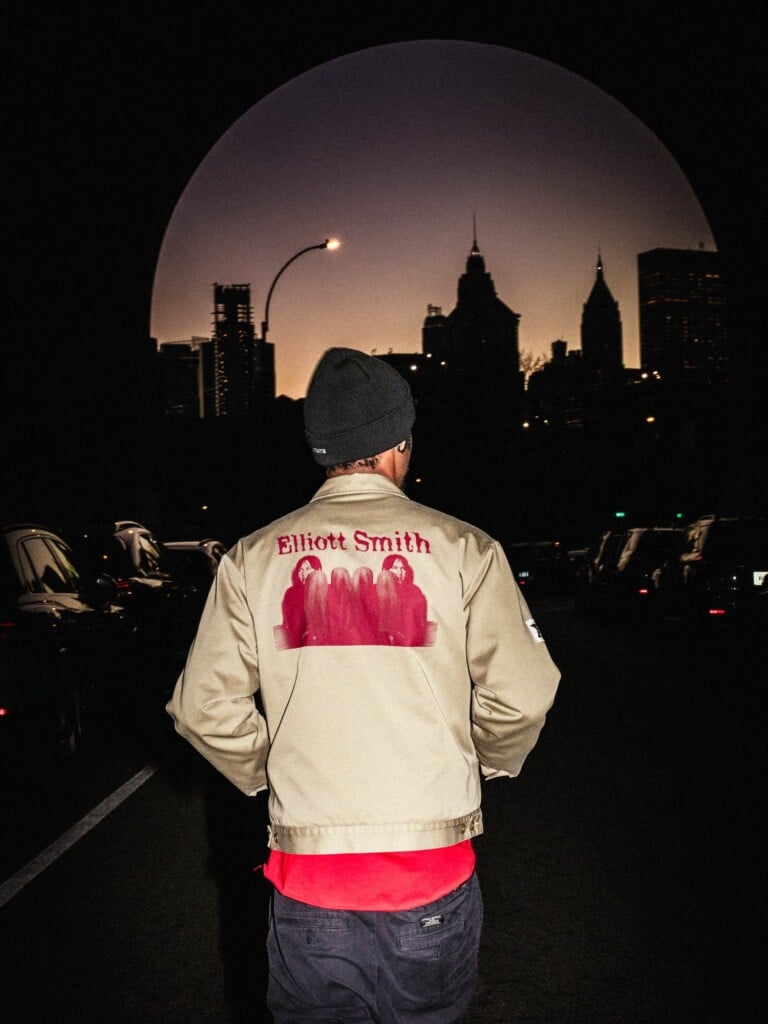
Yesterday afternoon Supreme announced its collection dedicated to the American songwriter Elliott Smith. He died at 34 in October 2003 after stabbing himself twice in the heart while his girlfriend was in the bathroom. Starting the day after tomorrow, Thursday, November 12, 7 pieces will be available: a work jacket, a zip-up hoodie, a thermal shirt, three t-shirts and a cap. The Capsule Fall 2026: a collection authorized by Smith’s heirs, for which original photographs by Autumn de Wilde, who shot the cover image of the album Figure 8, and by Deb Pastor were used – but one of the t-shirts pays homage to the album Either/Or.

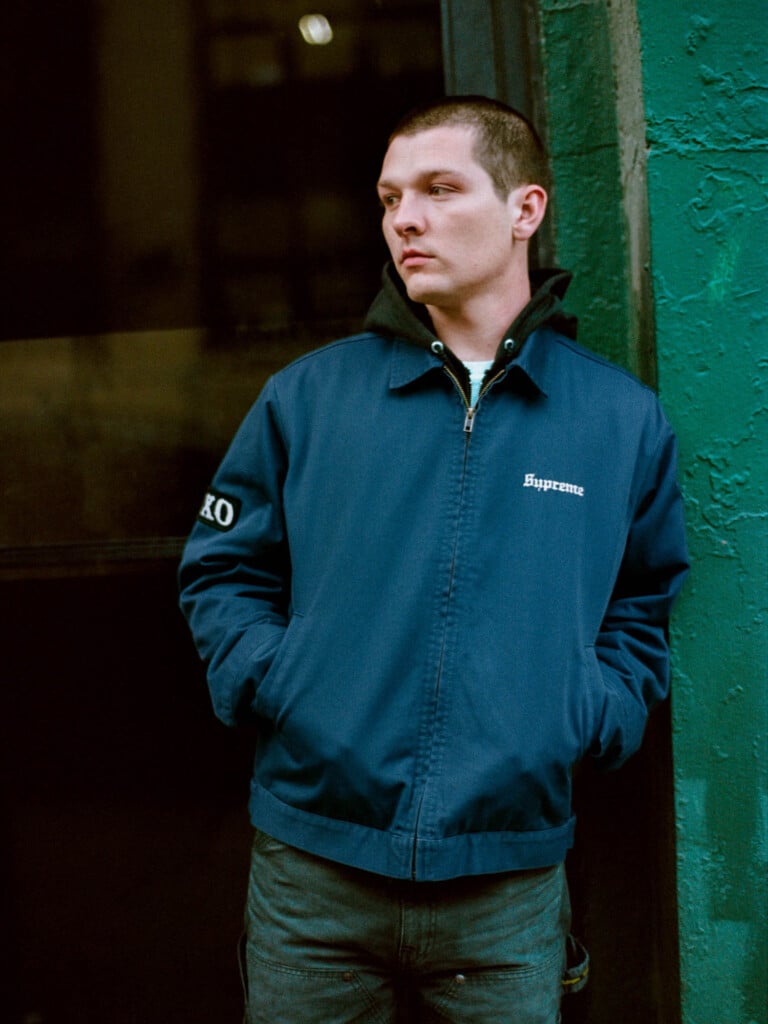
The move is an apparent short circuit: a cult artist, one of the most vulnerable, reserved songwriters, the furthest from ostentation, turned into a streetwear icon. It’s as if Palace Skateboards announced one dedicated to Nick Drake, or Diesel one dedicated to Luigi Tenco and Cesare Pavese. Elliott Smith, in fact, is loved because he was able, like very few others, to squeeze beauty out of his own despair: an extraordinary composer who turns human contradictions into three minutes of pop perfection.
In other words, he was not a symbol of provocation or transgression: he’s a guy who had Ferdinand the Bull tattooed on his right bicep, the protagonist of a Disney cartoon from the 1930s who gets sent off to fight in bullfights but doesn’t want to fight, because his only ambition is to sit in a meadow, minding his own business, smelling the flowers. A sensitive soul inside a clumsy body, that kind of thing.
Yesterday I had a great time reading, under every post that reshared the press office’s take, the comments of the music purists (a category I belong to but dissociated myself from many years ago, because it can be fun to play at not using your opposable thumb, but after a while it’s called idiocy). The ones who own the first edition of Roman Candle, the ones who even have the Heatmiser records (a minor Portland indie rock band with which Smith made a name for himself in the early ’90s, “before the solo turn”) and so on. Most of it is the usual rant against capitalism and the offense to the authenticity of feelings. I’ll quote just one: “I’m so sorry for what they did to you, Elliott.” Honestly, so boring. Although every now and then a bit of verve popped up: under the classic “Elliott Smith is rolling in his grave,” a guy replied “Dude, that can’t be, he was cremated.” My favorite, though, is from an American girl: “Can’t wait to get the worst urinary tract infection of my life from a guy wearing this collab.”
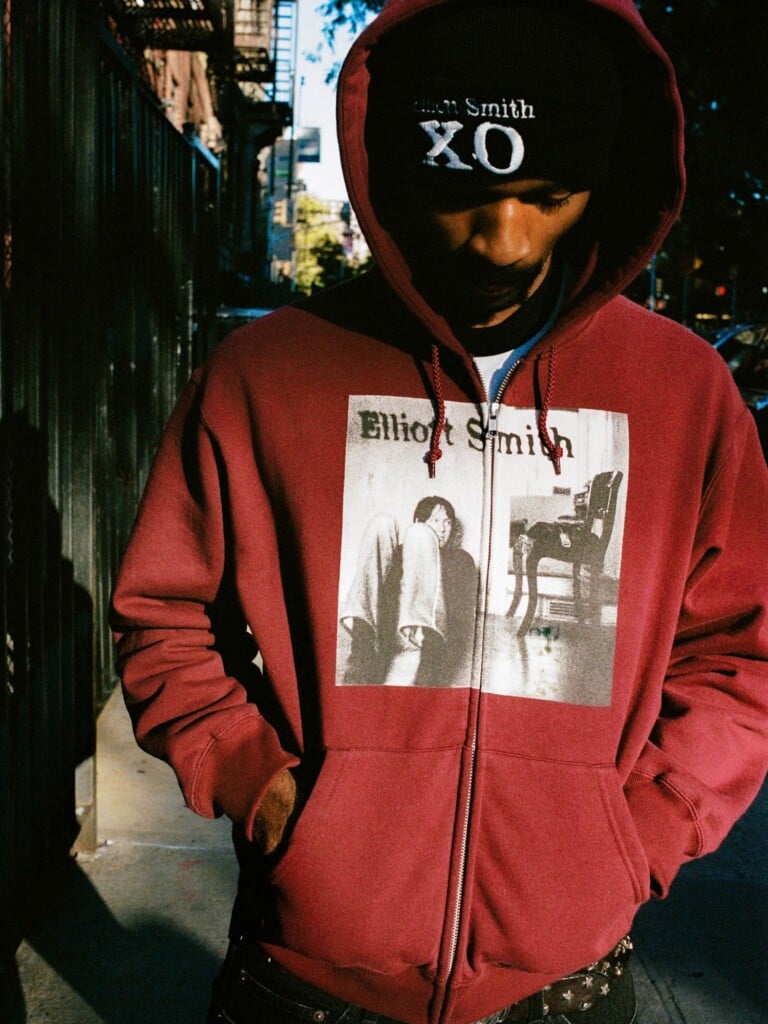
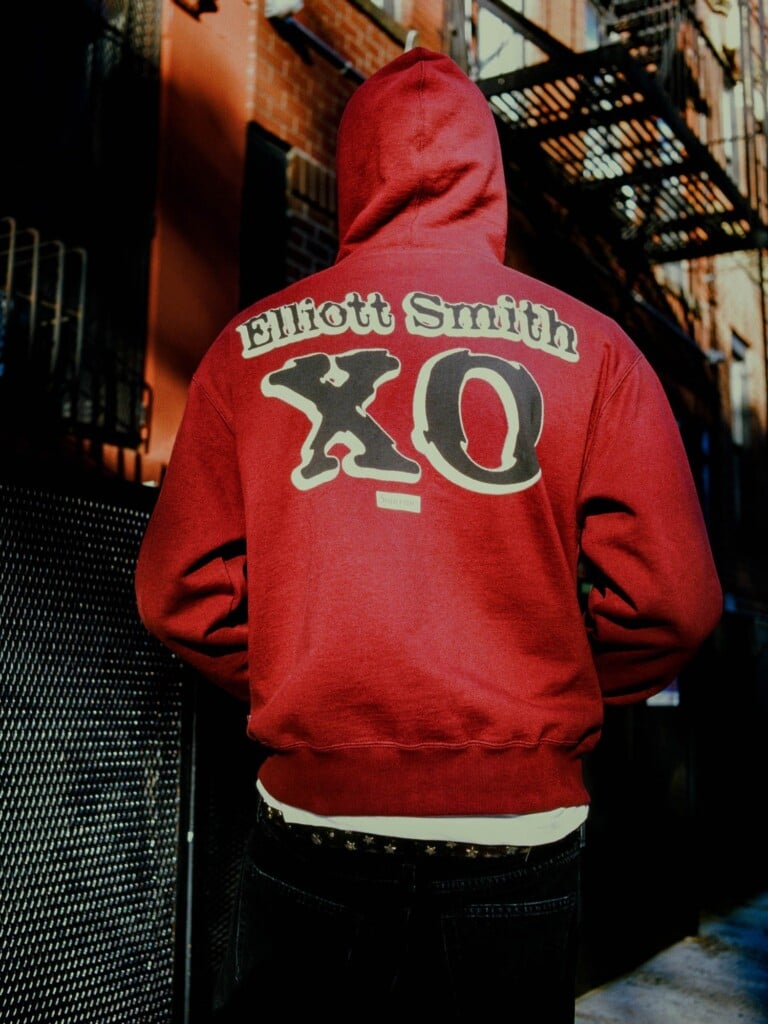
All of this, though, is pissing on our own shoes, so it isn’t interesting, let alone useful. Much better to think about Supreme, because this move is a pretty good lens for reading the brand – which isn’t betraying its identity, it’s simply taking it to its most logical conclusions. From Supreme’s point of view, in fact, the move makes perfect sense. Born in 1994 in New York, amid skateboarding, hip-hop and underground culture, it built an empire on a simple and formidable insight: there’s no need to invent a culture when you can turn the symbolic heritage of existing ones into merchandise.
The brand doesn’t just sell clothes: it sells codes of belonging, signs of recognition, cultural credentials that let you stand out without the burden of having to explain why. Its history is a long and meticulous operation of extracting symbolic value: from punk to hip-hop, from contemporary art to experimental music, Supreme has turned the languages of subcultures into a catalog of desirable objects. Elliott Smith, from this perspective, is not an anomaly. He is an almost inevitable choice. A musician who died in 2003 and became a reference point for an entire alternative sensibility. Not just an artist to listen to, but a name through which people recognize themselves.
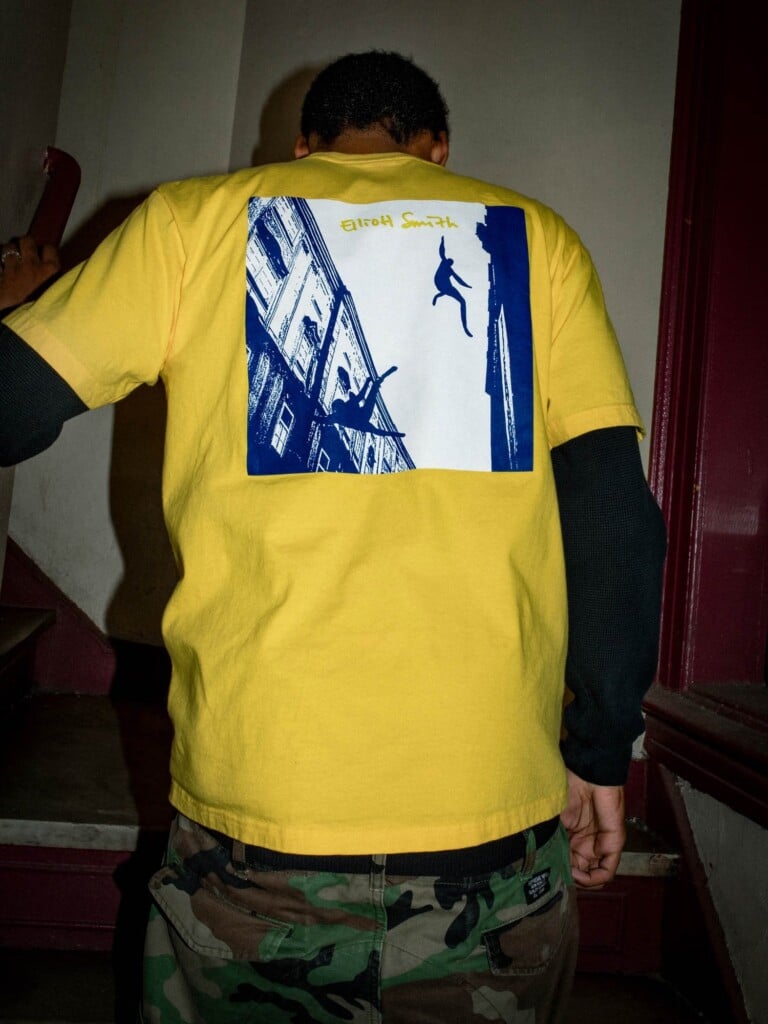
And this is precisely what interests Supreme. Not Smith’s pain, his biography or the meaning of his songs, but rather the cultural capital accumulated around his figure. The fact that his name means something to an audience large enough to generate desire, yet selective enough to preserve an aura of distinction. The mechanism is perfect. Those who know Elliott Smith recognize the reference. Those who don’t can buy the impression of knowing him. Indeed, another of the disappointed fans’ comments that I found repeated several times is “Big day for larpers”, meaning a big day for people who pretend to be someone else – larpers being participants in live-action role-playing games.
In both cases, Supreme has something to sell. After all, the idea that subcultures are territories untouched by the market is one of the most tenacious fairy tales of popular culture. Punk, grunge, rave and hip-hop produced aesthetics, consumption, hierarchies and systems of recognition long before anyone decided to turn them into seasonal collections. Supreme didn’t invent this contradiction, it merely industrialized it.
It understood that even the rejection of conformity can become a mass-market product, as long as it preserves the appearance of difference – so that nonconformism works magnificently as merchandise when it allows consumers to feel less conformist than other consumers. The collaboration with Elliott Smith pushes this logic one step further. Supreme no longer limits itself to intercepting the subcultures of the present: it administers their memory. It retrieves symbols, images and figures of the past, removes them from their original context and puts them back into circulation as contemporary objects. It’s a form of commercial archaeology in which the digs serve to fill the shelves.
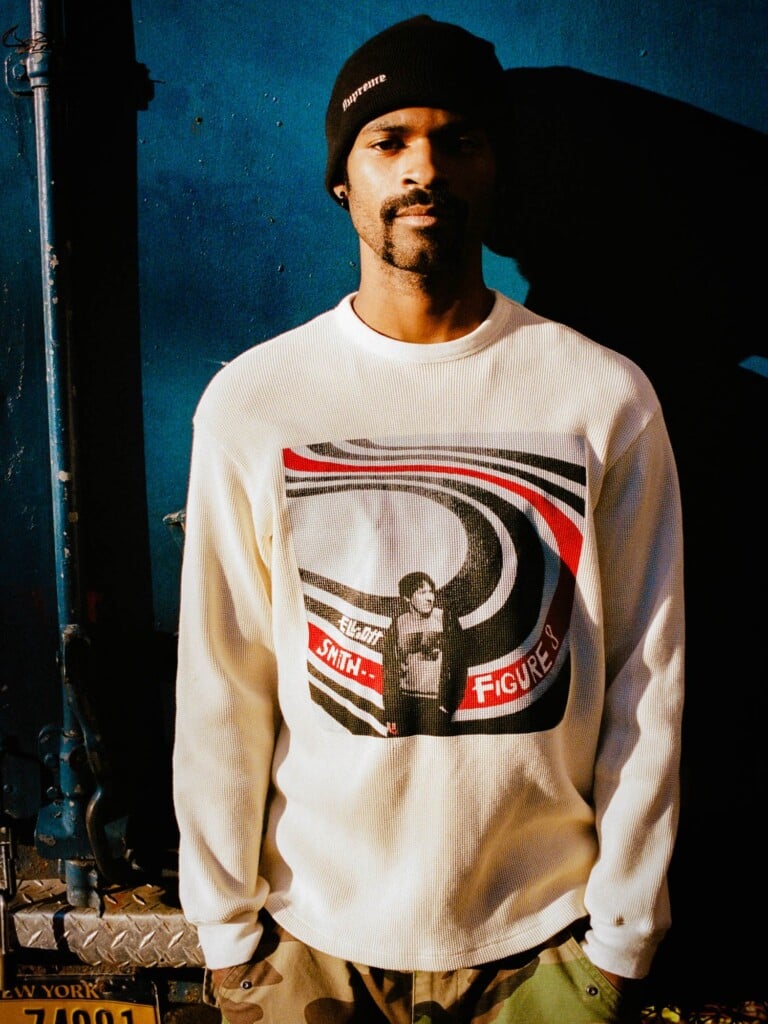
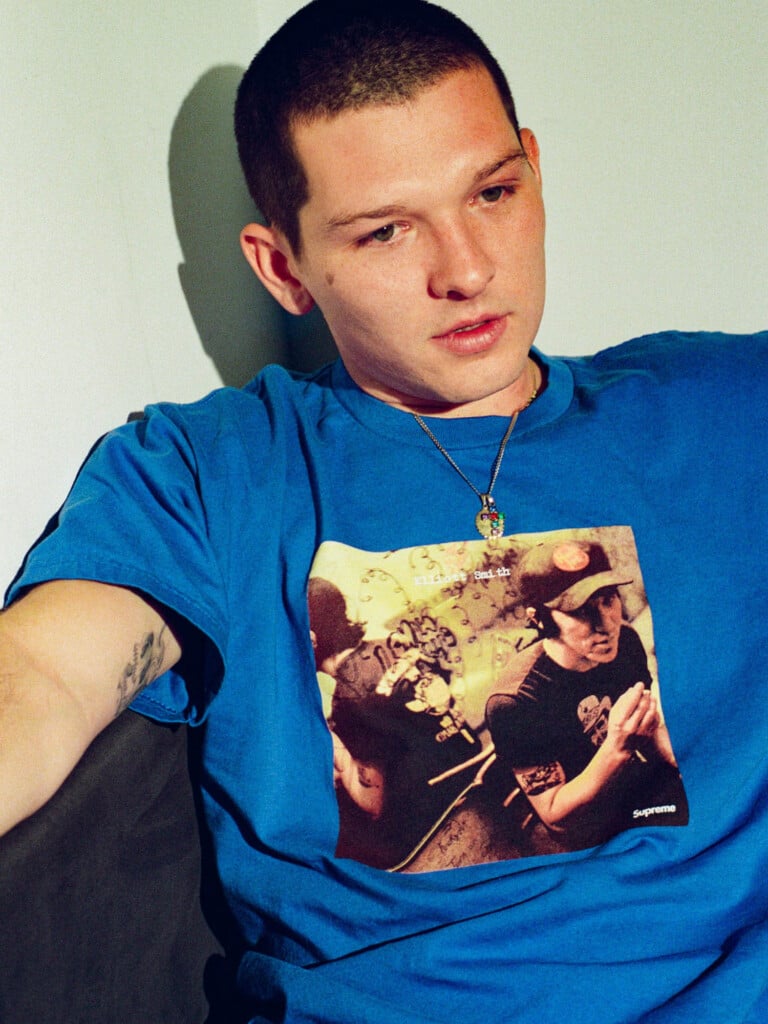

Now let’s go back to the reaction of the outraged. Many seem to consider Elliott Smith the moral property of the community that listens to him. A heritage to be defended against the invasion of the market, as if an artist could belong exclusively to those who believe they understood him better than everyone else. It’s the paradox of authenticity: to prevent a brand from symbolically appropriating Smith, his listeners end up claiming ownership of him in turn.
Have you really not understood that for Supreme this indignation is a seal of quality? It means the symbol has kept its value, that it hasn’t become indifferent. It means it can still produce belonging, exclusion and conflict: and therefore desire. There is also a decisive detail. Supreme is no longer just the brand that drove teenagers crazy in front of its stores, with inflated prices on the resale market. After going through a phase of downsizing, it passed into the hands of EssilorLuxottica for 1.5 billion dollars. Its challenge isn’t simply to sell sweatshirts, but to keep its own system of meanings relevant.
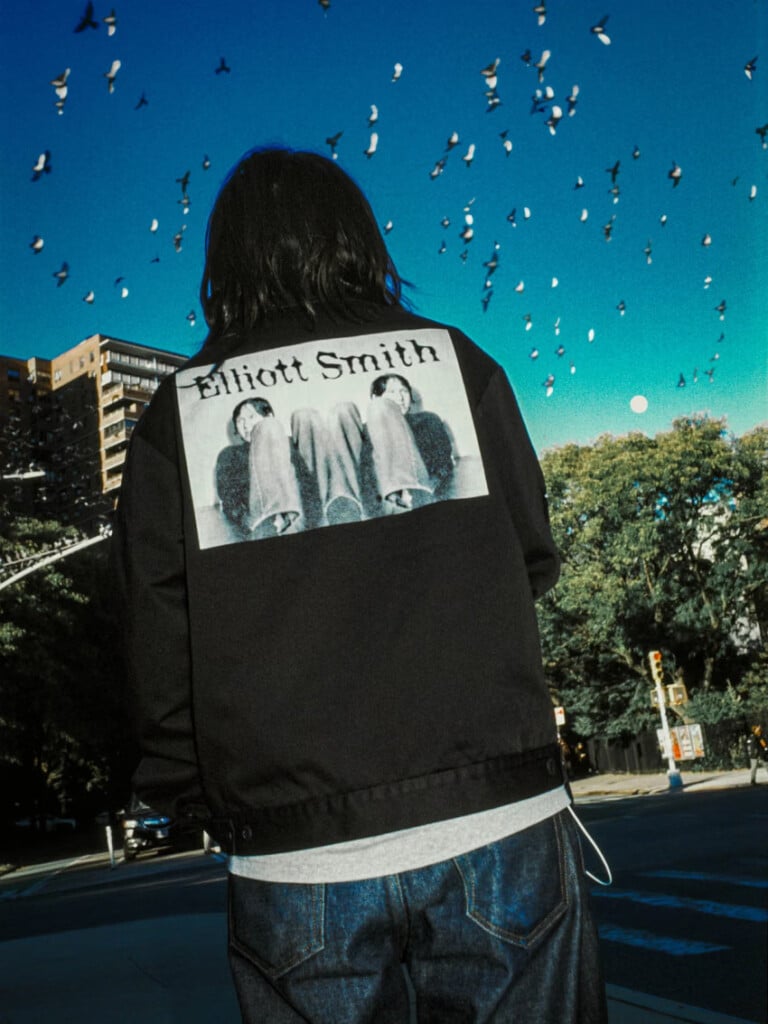

From this perspective, Elliott Smith is not a nostalgic fallback. He is an investment in the brand’s cultural depth. A way of showing that Supreme still knows the codes of the underground, even when it operates with the size and logic of a multinational. It doesn’t even matter to establish what Smith would have thought of the operation. Attributing opinions to the dead about collections they never saw is a particularly convenient exercise in ventriloquism. But pointless.
What matters, rather, is what this collaboration reveals about the present. The market no longer needs to destroy counterculture. It’s enough for it to preserve it, catalog it and periodically repackage it as merchandise. Even melancholy, once turned into a shared language, becomes commercially exploitable territory. Supreme’s real masterpiece isn’t having printed Elliott Smith on a t-shirt. It’s having built a system in which even those who find the operation disgusting contribute to increasing its value.
The protest defends the authenticity of the symbol, the brand cashes in the value of that authenticity.
Amen
Article written by Gianluca Runza