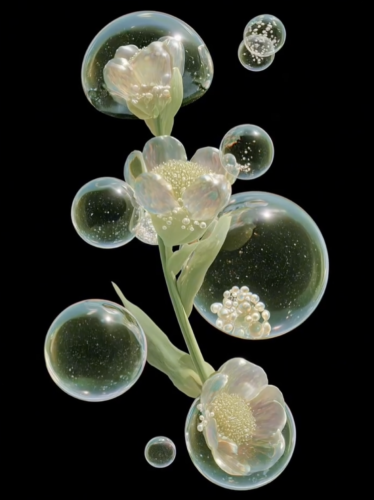
In the heart of Abu Dhabi’s Saadiyat Cultural District, surrounded by iconic museums and futuristic architecture, a new temple of imagination has come to life. It’s called teamLab Phenomena Abu Dhabi, and it’s much more than a museum: it’s a living art ecosystem where sensory experience, technology, and nature blend into a visual and physical symphony that transforms with you, every time you enter.
Opened in April 2025, teamLab Phenomena is the renowned Japanese art collective’s first permanent space in the Middle East, following its immersive museums in Tokyo and Shanghai. Created in collaboration with the Department of Culture and Tourism – Abu Dhabi and the Miral group, the project spans 17,000 square meters and is designed entirely to “explore new perceptions of reality.”


The works within teamLab Phenomena are not static objects or simply reactive digital installations. They are “environmental phenomena”—entities that exist and evolve based on the conditions of the space and the interaction with visitors. Water, light, sound, wind, and even human movement contribute to the real-time generation and transformation of these creations. Each experience is unique, and every visitor’s presence alters the work, as if they were a vital particle within the environment.
As teamLab explains, these works are not merely placed within a space—they are the space. They are reactive, alive, and ever-evolving. This is living art, powered by change, by human presence, and by natural phenomena.


Designed in harmony with the collective’s core concepts, the building itself is part of the experience. Its soft, organic forms evoke folds of fabric, sand dunes, ocean waves. The curved lines guide the body, stimulate movement, and make the surrounding environment feel fluid. The inside and outside blend, just like the artworks blur the boundaries between nature and technology.
The museum is divided into a series of immersive, interconnected environments, each designed to evoke primal emotions, surprise you, or completely strip away any rational point of reference.
Dry Area
In this expansive “dry” zone, visitors move through kinetic and visual installations that challenge logic and perception. Light is the main character here: it takes shape, floats, solidifies, and shatters.
You walk among digital sculptures that respond to your presence—transparent, pulsating structures that seem to have a soul. It’s a place where gravity loses meaning, and every movement becomes part of an ever-changing choreography.


Water Area
Everything shifts here. Sound becomes liquid—and so does space. Visitors walk barefoot through shallow pools where the water’s surface becomes a responsive, animated screen.
Light-fish swim around you, your footsteps generate ripples, blooming flowers, or dissolve into currents. This deeply immersive, almost meditative area merges technology and nature into a poetic digital ecosystem. Water isn’t just a backdrop—it’s a living part of the installation.


Lamp Tea House
Amid all this hypersensory wonder, there’s also room for quiet contemplation. The Lamp Tea House is a cozy, intimate environment where art meets the ritual of tea.
It’s not just a tea room—it’s a living artwork. When a drink is served, the cup triggers a delicate light reaction that spreads across the space, a subtle echo of your presence. A poetic moment of stillness that reconnects you to your body, your senses, and the beauty of slowness. It’s the nature of silence, transformed into light.

Sketch Factory
Here, visitors become co-creators. In the Sketch Factory, children and adults can draw creatures, plants, or characters on special sheets, which are then scanned and digitally animated within a virtual world.
Watching your own creation come to life and move through the digital space is one of the most thrilling experiences of the entire visit—especially for younger guests. It’s a tangible reminder that art is an open, accessible, and shared language.