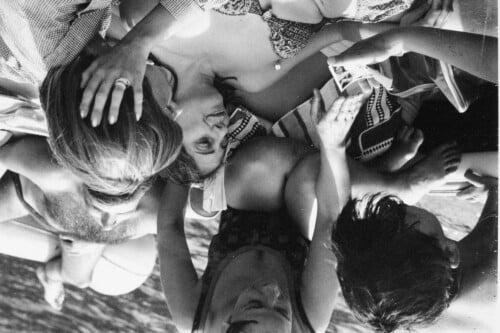
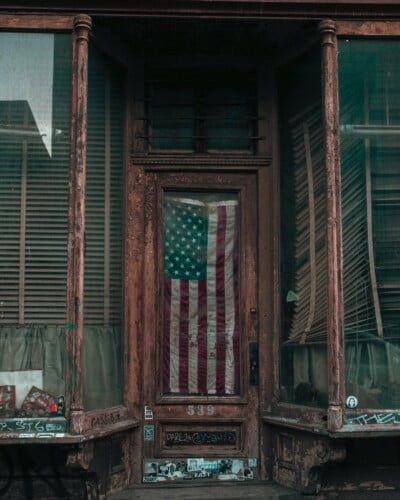
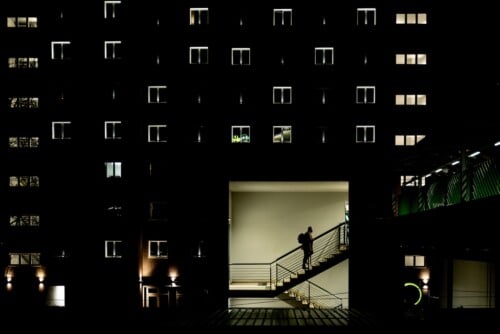
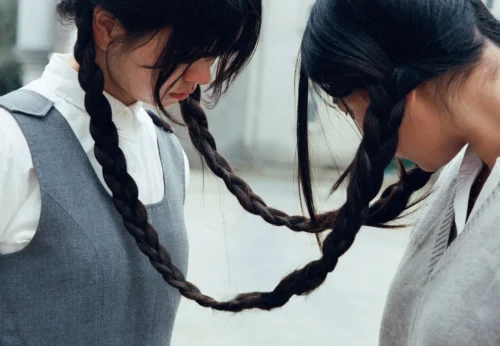
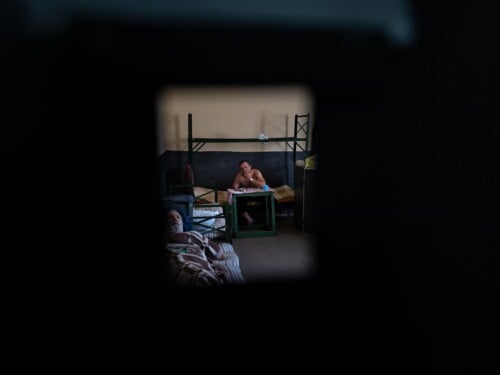
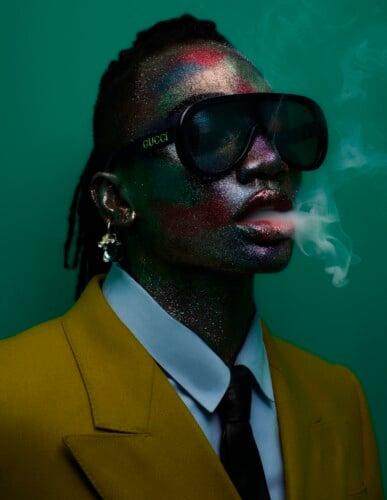
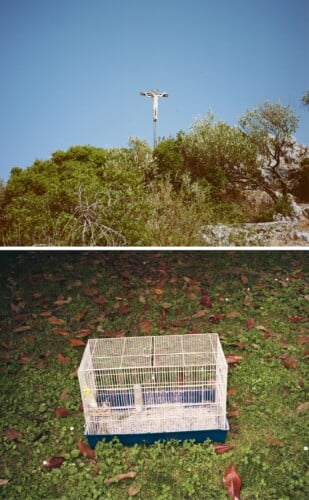
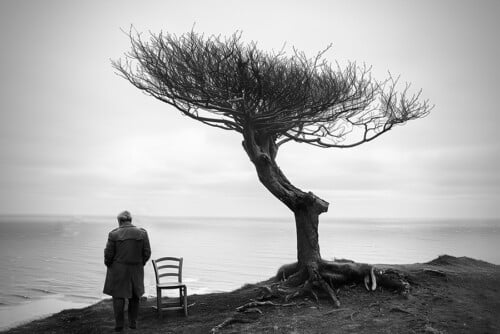
The protagonist of this The Guestbook is Valeria Dellisanti, a young photographer who, with delicacy and mastery, manages to capture small moments of intimacy. Among her projects stands out certainly “In The Rooms“, a series of shots that capture young girls inside their bedrooms, a safe place where growing up and questioning, but what captures our attention is her project “Distancing Diary” born during the quarantine, a sort of personal diary made up of small thoughts and beautiful photographs.
Curious by her style and her works, we asked Valeria a few questions and she told us how her passion was born, her projects, and much more.

Tell us how you approached the photograph. Is there a particular moment that you remember?
I would like to take advantage of this question that I often find in interviews and that is often asked to me, to make a reflection.
So I turn and rephrase the question to you and the readers of Collater.al: Who has not approached photography in the social and cultural context in which we live?
It is almost impossible in my opinion not to confront this medium in 2020. When photography became part of people’s habits, the idea of being able to take pieces of reality and of the world to be able to preserve, archive and review them whenever you want has given rise to a new mass phenomenon that has been accentuated by new technologies and social media.
Today we all produce images spontaneously, as a natural form of relationship with others and with the world. In this regard, I like to recall the words of Susan Sontag who wrote: “collecting photographs is collecting the world”.

As far as my personal experience is concerned, since I had the first mobile phone in my hand I started taking pictures, as I think everyone does. Slowly, thanks to my studies, to the stimuli of people in my life, so external and internal influences, I started to do it more and more consciously.
I don’t remember a particular moment, it was more a path.
Photography helps me to ask myself questions, to better understand who I am and who I want to be. It helps me to reflect and focus my gaze on what is happening and surrounds me, so for me it is an instrument of self-analysis.
One of your latest works is “In The Rooms“, a series of shots of girls in their bedrooms. Tell us how this idea came about and what aspects you wanted to bring out in the shots.
I’m very attached to this photo series and I’m a bit tender to look at it today.
Actually it’s a feeling that I feel a little bit for all my past works.
I started this project spontaneously, almost unconsciously.
After graduating from art high school, in 2015 I moved to Bologna to continue my studies. This change led me to relate not only to a new city but also with a totally different and autonomous lifestyle. As soon as you change the city, the first step is to find an apartment or a room to live in. So in this context your room, especially if you live in a shared house, becomes an intimate space “a glass bell”.
Beware, bell jar not understood in the meaning of Sylvia Plath “I couldn’t hear anything- sitting on the deck of a ship or in a café in Paris or Bangkok- I would be under the same bell jar, suffocating in my own sour air”. But as a space in which to feel safe and comfortable, to discover and build your own identity.
I was very fascinated by the process of personalisation of the rooms, and above all to take pictures and relate to a subject in such an intimate environment in which every day one reworks one’s identity.
Thanks to this project I found myself photographing friends, but also girls I didn’t know at all.
The series “In the Rooms” was important for me because it helped me to develop a photographic language and personality, it also allowed me to put myself on the line, to face my fears, my shyness and to confront the lives of other girls my age.

Your latest project, however, is called “Distancing Diary” and was born during and because of quarantine. What it was like to tell yourself first-hand.
It wasn’t easy to do it, especially in this context.
Photography, or creating in general, is therapeutic: the are is an instrument of self-analysis.
In this situation, creating has helped me to confront myself, it has kept me busy and productive, it has helped me to confront myself with others.
The creation of the diary has made me become aware of how changes coming from the outside pour into us.
After the publication of the project, some people contacted me and told me that they saw each other again in the pages of my diary and that in a way they felt less lonely.
I think that sharing this time in my life has helped me and others to exorcise negative feelings.
On a structural level, for the first time, I have added a textual and figurative narrative path to the images, I really enjoyed experimenting in this sense.

From a creative and working point of view, how did you experience this lockdown period?
I lived this period in alternating phases. Weeks in which I was anxious and confused, others in which I felt productive and positive. It was, and still is, a strange time.
As a photographer friend of mine told me when we met after lockdown…
“It felt like a bad dream.” What’s worrying is that, metaphorically, we haven’t come out of it yet and we haven’t recovered from this nightmare.
Hopefully I’ll be back soon to shoot and recover from the canceled shots.
What advice, both technical and practical, would you give to a young person who wants to approach photography for the first time?
I’m not good at giving hahaha advice.
But I would say… read, study and understand the work of other photographers and always question themselves.