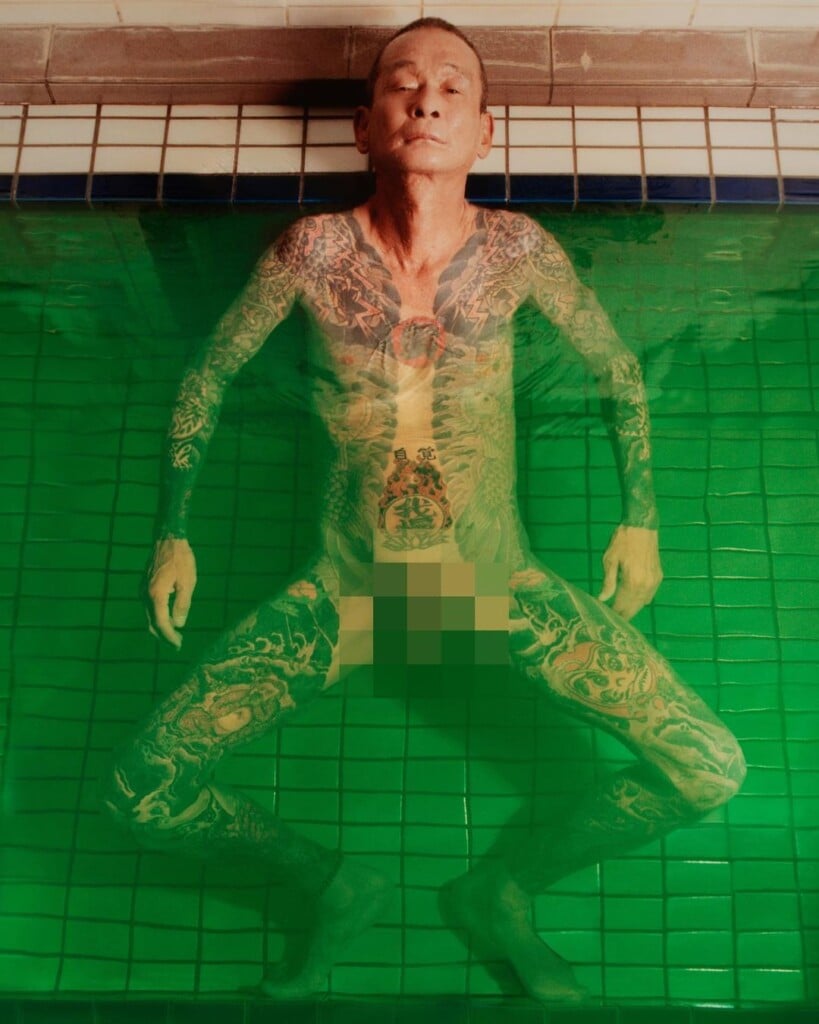
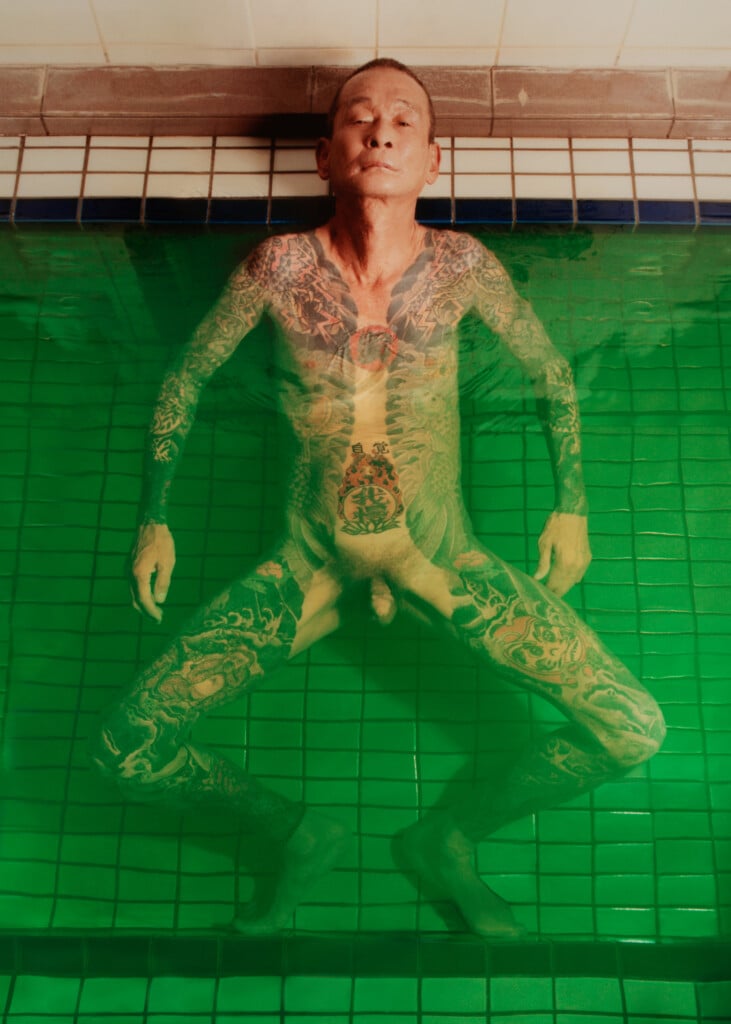
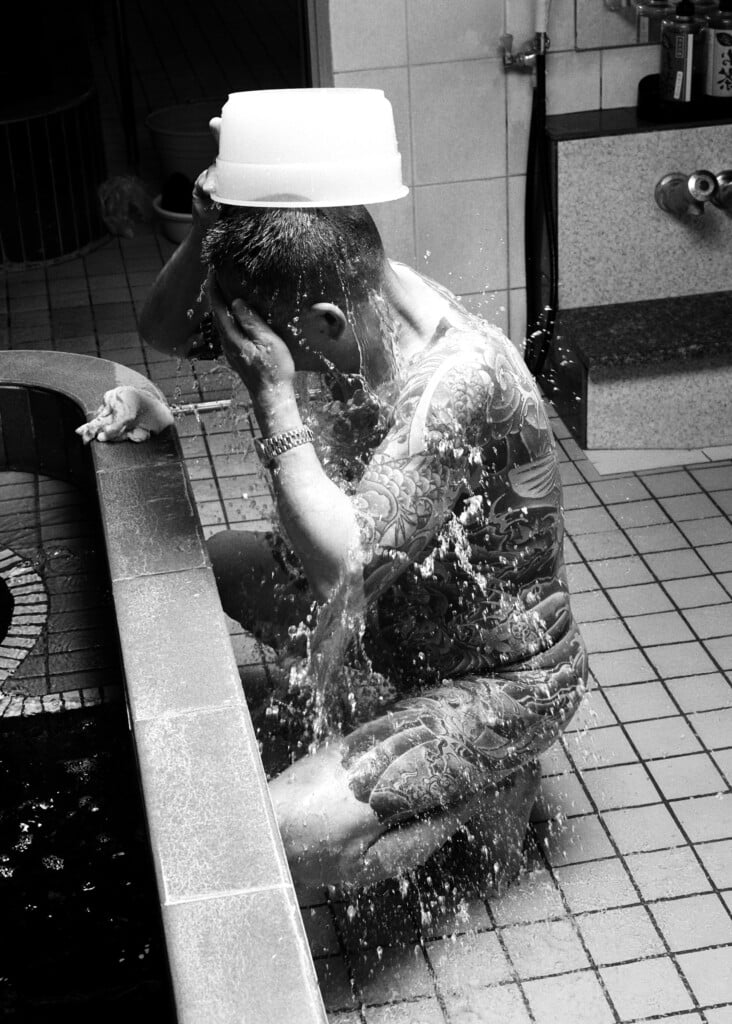
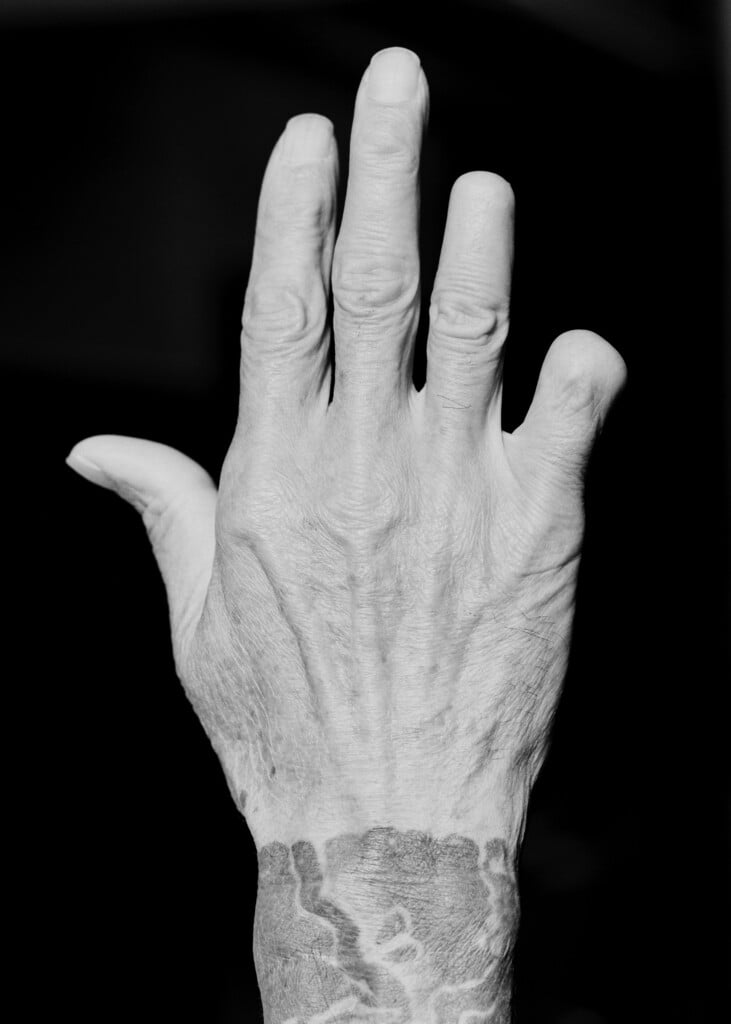
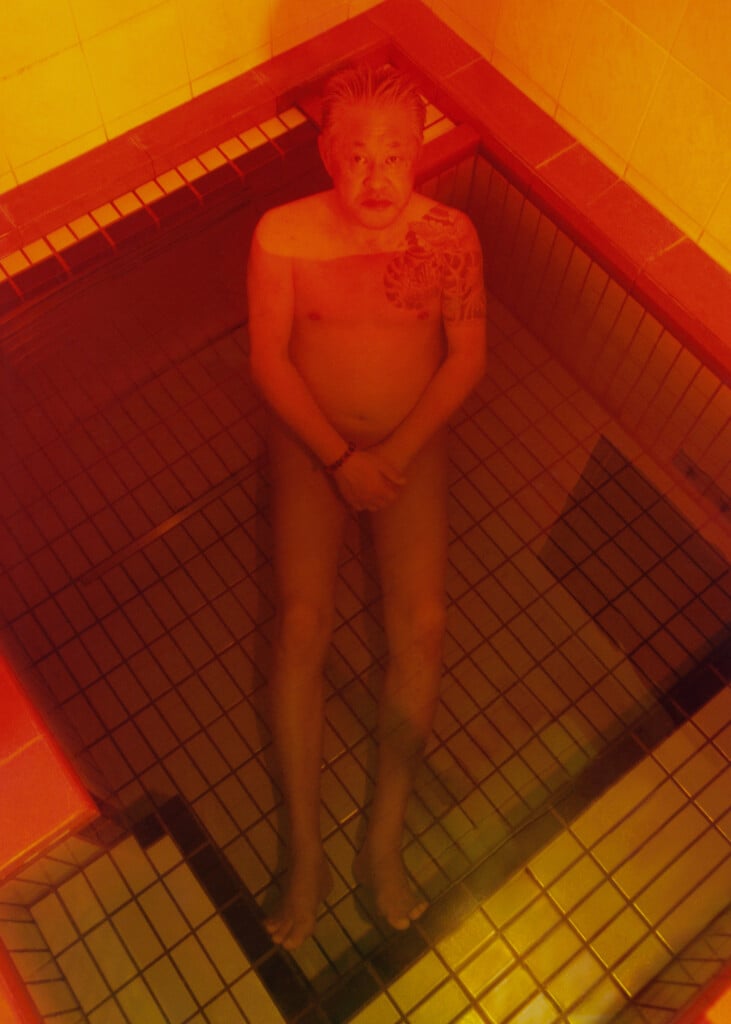
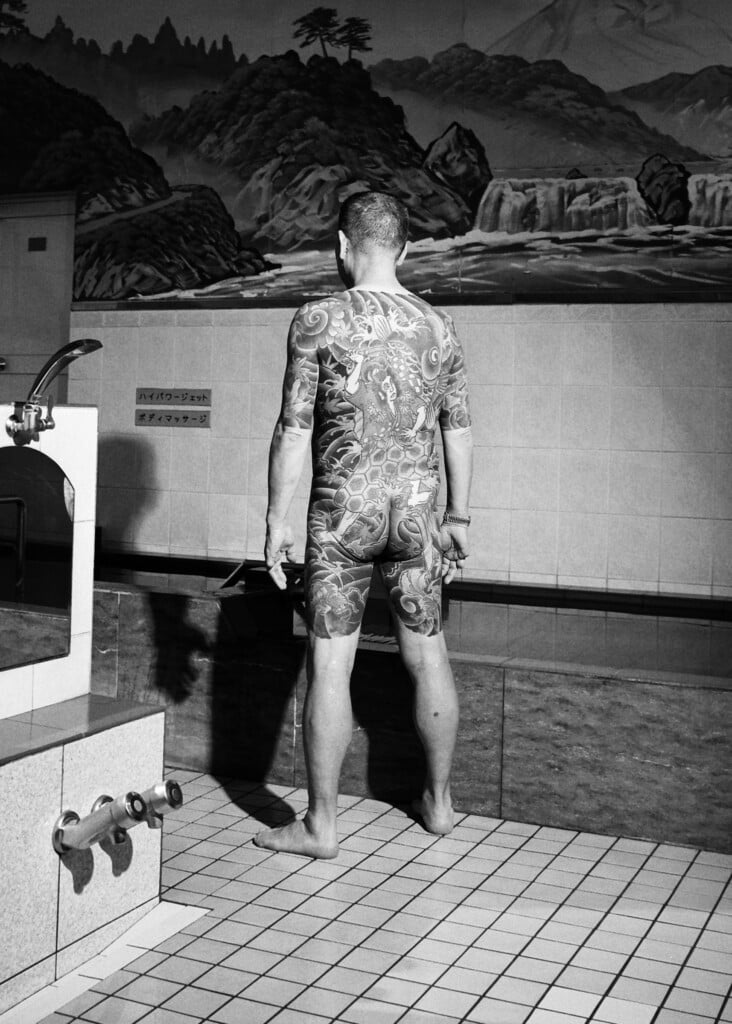
Behind the concept of mafia, especially in Italy, lie prejudices and fascinations. With photographer Theo Cottle, we delved into the lives of members of the Yakuza, the Japanese mafia. Cottle’s project began as a series of analogue shots and then became a book, all collected under the title 893 Yakuza: The Setting Sun. What immediately emerges, even from reading the title,is the concept of something going through its end. Indeed, what the project highlights is the ageing of the Yakuza, documented here during their typical ritual bathing. But how did Cottle manage to shoot them, and especially in such an intimate setting as a Japanese onsen that involves nudity? We interviewed him to discover some anecdotes and technicalities behind this project, which took place in just a few days in Tokyo.
How were you introduced to this circle and granted permission to take photos?
I made a good friend in Japan who opened some doors for me and allowed this to happen, without this I wouldn’t of been able to make the work. This took a lot of time and patience as there were a number of people communications had to go through, I was very upfront with my intentions. Things finally aligned and l was able to make this project happen a few days before my time was up in Tokyo.
Was it difficult to interact with Yakuza members? What was the shooting process like?
Everyone I shot was really respectful towards me, I was working through a translator, there was a good energy. There was a lot of planning as we only had a limited amount of time so I had to work quickly on each portrait. I sketched out a few of the shots I wanted to make before each interaction as I wanted to be very concise with the process.
– From a technical standpoint, what films did you use? How did you handle the editing process?
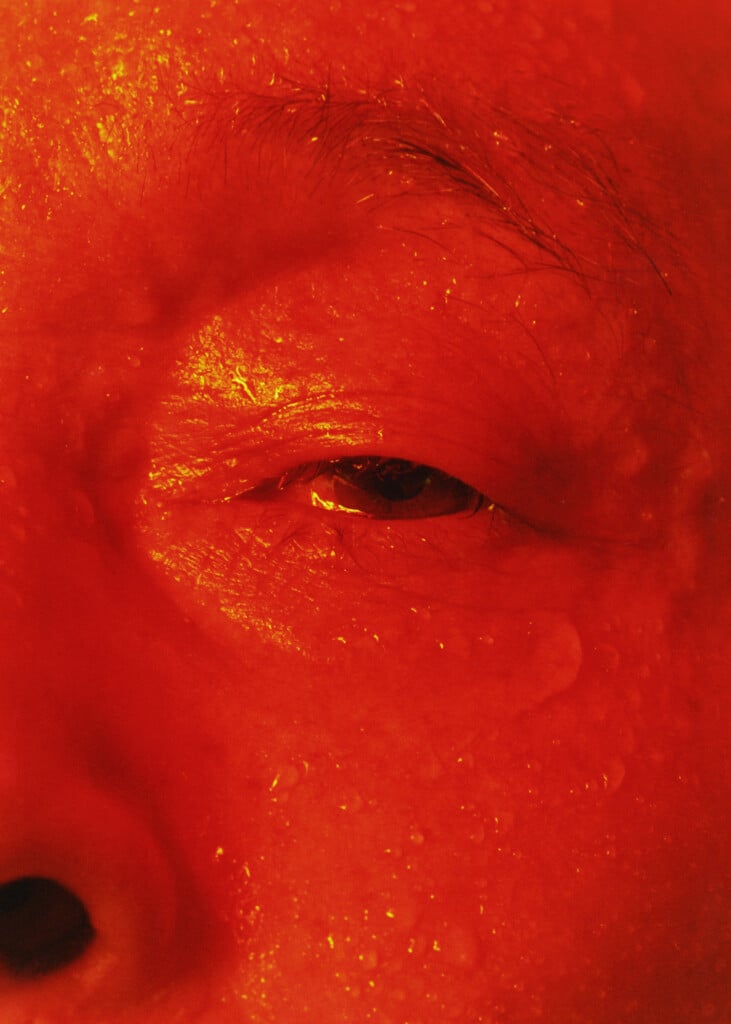
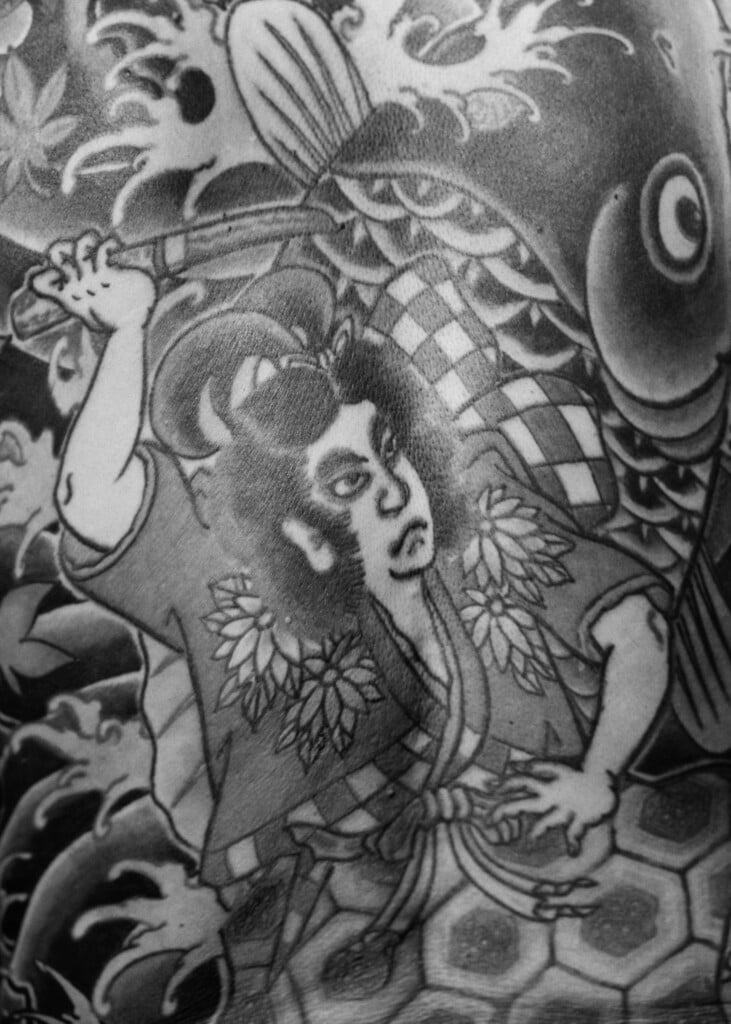
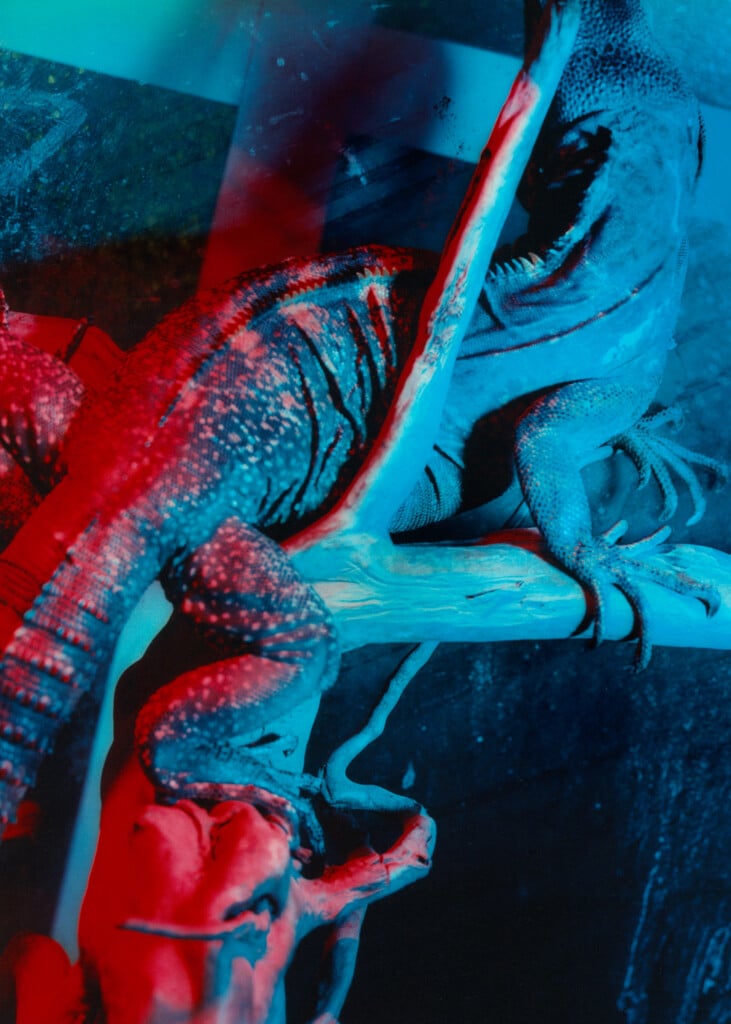
I shot this on film and used Kodak Tmax for the black and white and portra 400 for color. This was what was available locally, The shots are all 645 on a camera I got in Tokyo. The images in the book are all darkroom prints, this process has been a key part in building my aesthetic.
What were you truly seeking when you decided to undertake this project? In an interview with NOWNESS, you mentioned that a vulnerable aspect emerged in an environment where one wouldn’t expect it. How did you perceive this? What is your favourite shot?
We often have these preconceptions of gang members from films and popular culture, the reality in fact can be quite contrasting to this. My intentions were to explore another side to these people through a seemingly vulnerable state of being. There was more to this than I anticipated with this though. The shot of looking down in the green bath is an image that I think sums up the project and my intentions the most.

This is just one of your many research projects alongside commercial ones. How do you manage to balance these two aspects?
There is a distinction between working commercially and on my own personal work but I strive to marry these up where possible. Coming from a documentary background I try to inject a sense of realness into the project I working on. Personal projects largely inform my practice and help my commercial projects.
Many of your projects are done in analogue. Do you have any advice on the darkroom process?
I think its important to be patient with the process. Its greatly rewarding and nice to use a medium which is largely forgotten. It goes the opposite way in a world where everything has moved so quickly into a digital world.
Courtesy Theo Cottle