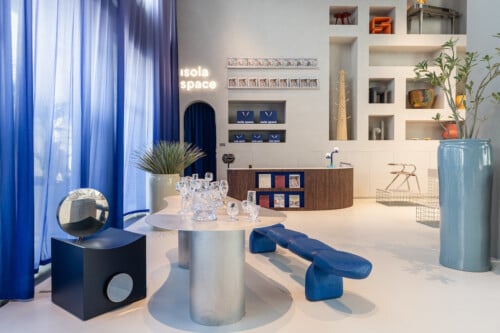
What happens when an object designed for play leaves the tennis court and enters domestic spaces? Slovak designer Lucia Kružlicová, founder of LUKRU design, starts from this question to develop TENNIS, a collection that gives a new function to used balls, turning them into furniture and lighting objects. Also presented on the Isola Design platform and ahead of her upcoming participation in Isola Design, the project explores the possibilities of a common material, often destined to be discarded, through a language that combines experimentation, functionality and a playful component.
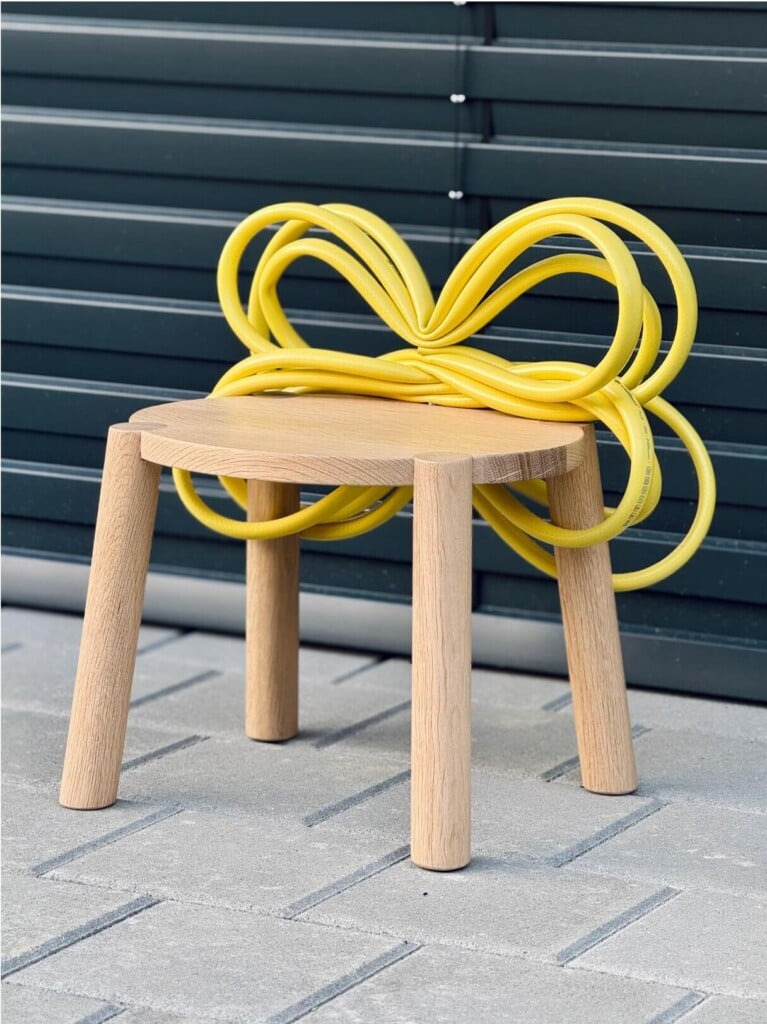
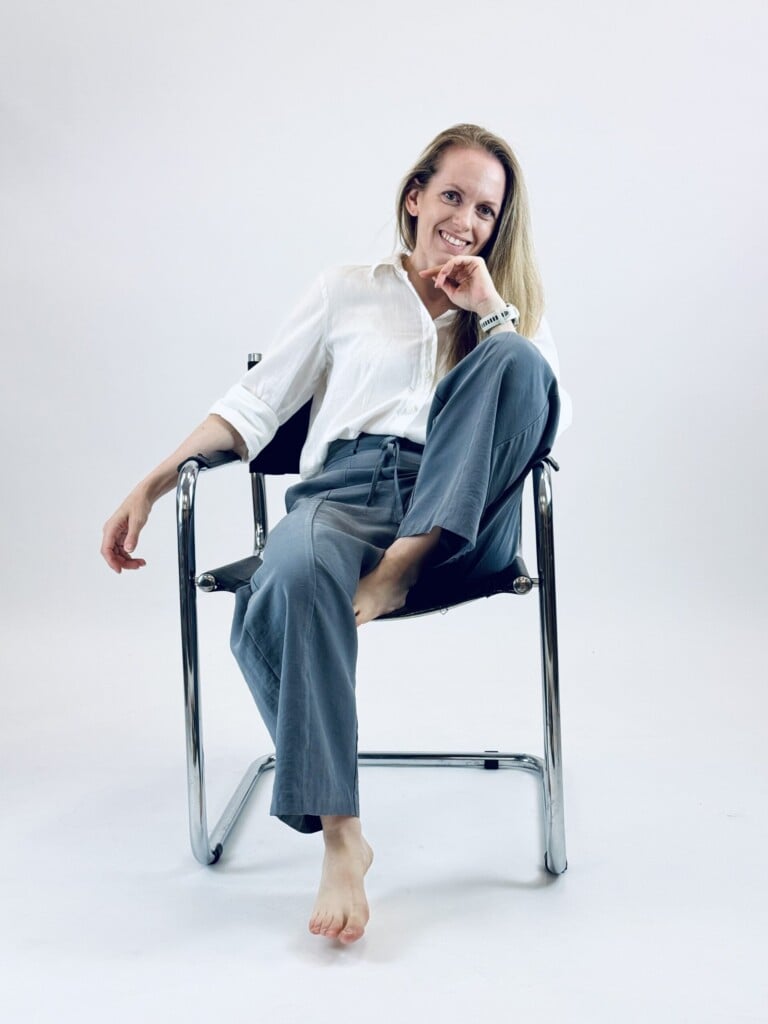
Lucia Kružlicová studied at the Technical University in Zvolen and the Slovak University of Technology in Bratislava, building a solid foundation in interior and product design. Her academic and professional path is now intertwined with research and teaching, with particular attention to emotional design and to the way the forms of objects can influence our relationship with spaces.
The collection stems from a reflection on the potential of materials that have already had a previous life. Once their sporting use is over, tennis balls retain features of real interest for design: an instantly recognizable shape, a soft surface and a color presence that catches the eye. Kružlicová chooses not to hide these qualities, but to make them the protagonists of her objects, building an aesthetic that moves away from the conventions of traditional furniture.
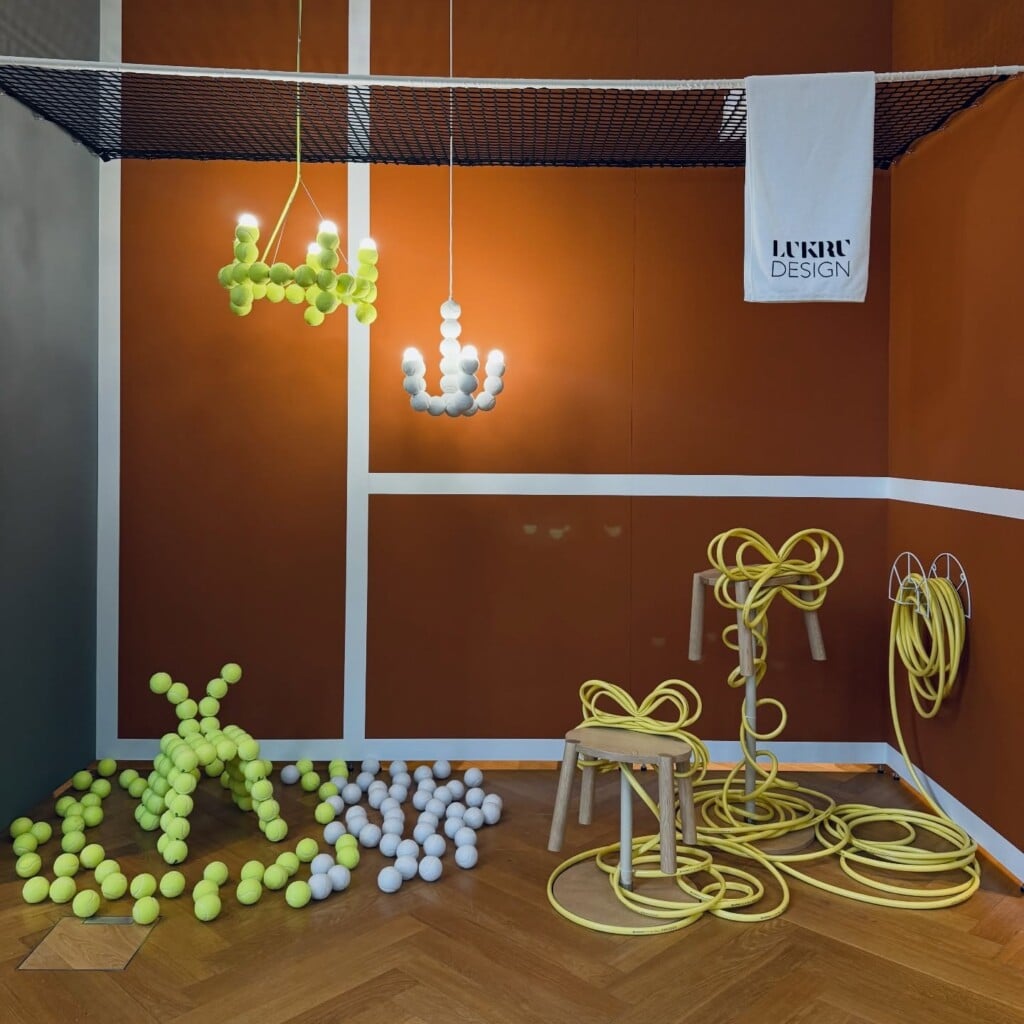
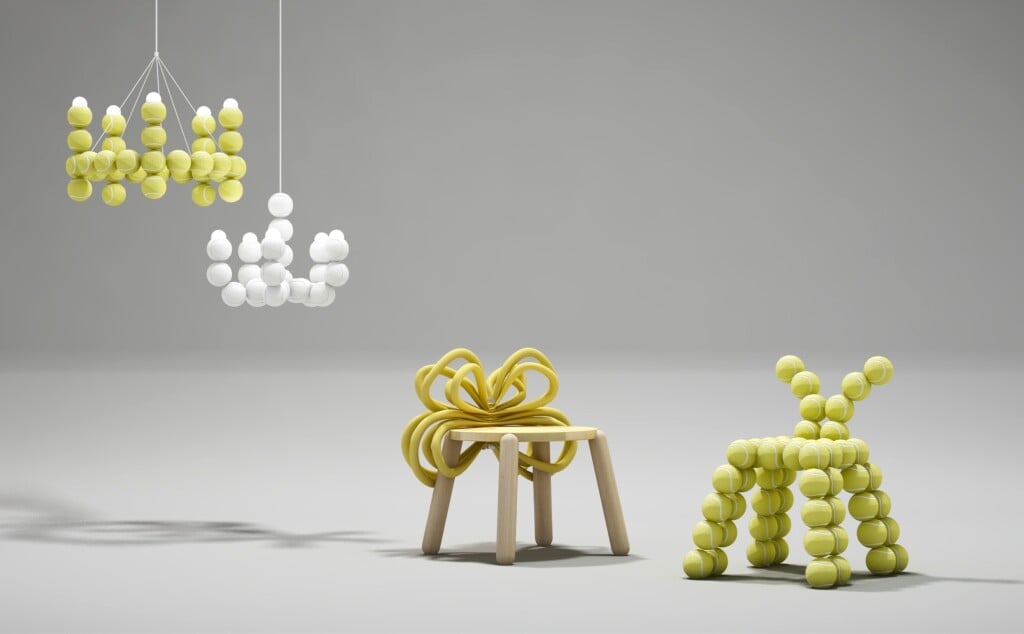
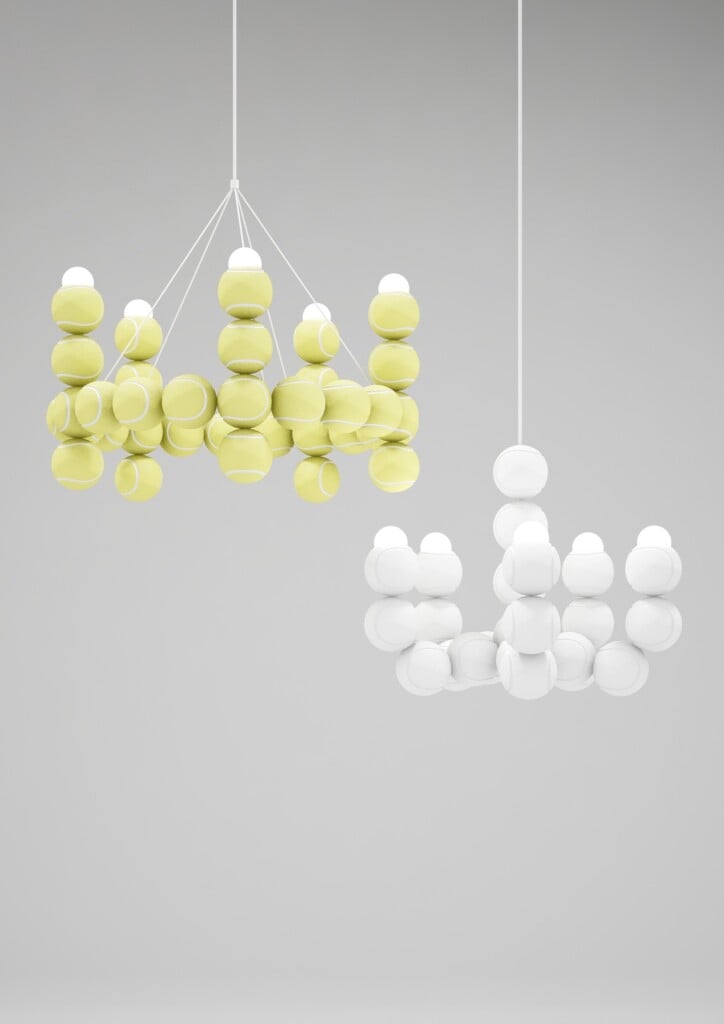
Among the projects in the collection, BALLUSTRIA is a pendant lamp that reinterprets the imagery of historic chandeliers through the use of reclaimed tennis balls. The contrast between the familiar form of a lighting object and the informal nature of the material introduces a new interpretation of elegance. The balls become both decorative and structural elements, giving life to an object in which reuse is not a secondary detail, but an integral part of the design language.
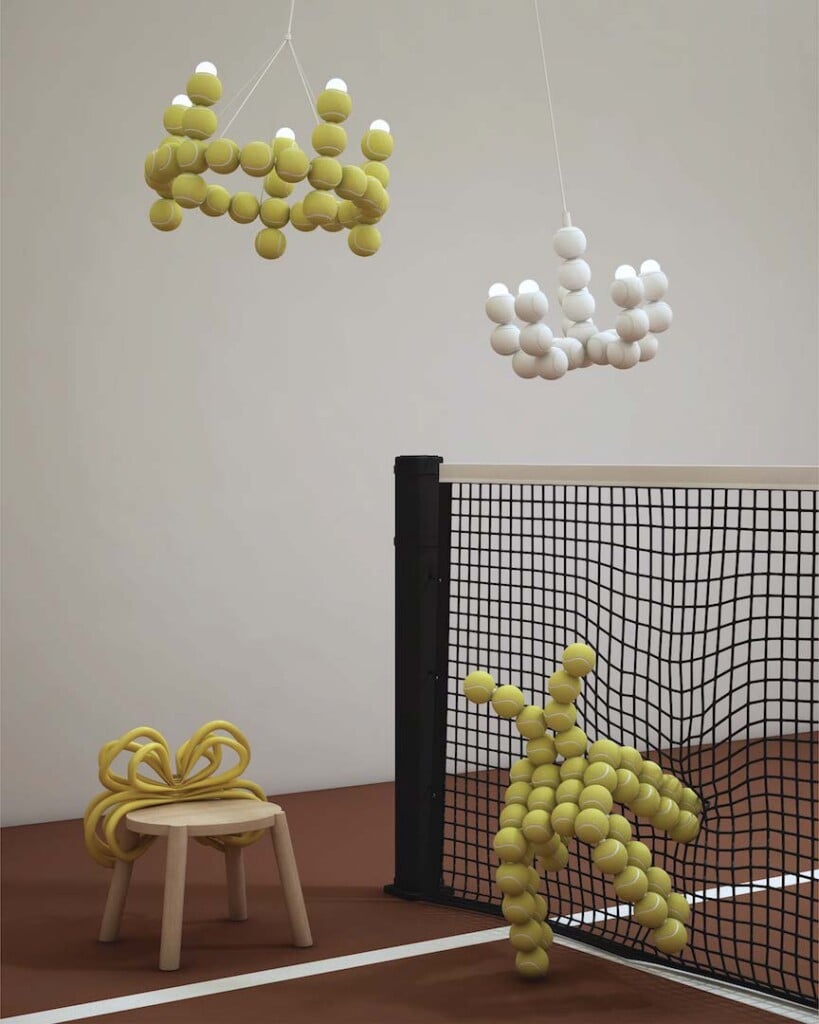
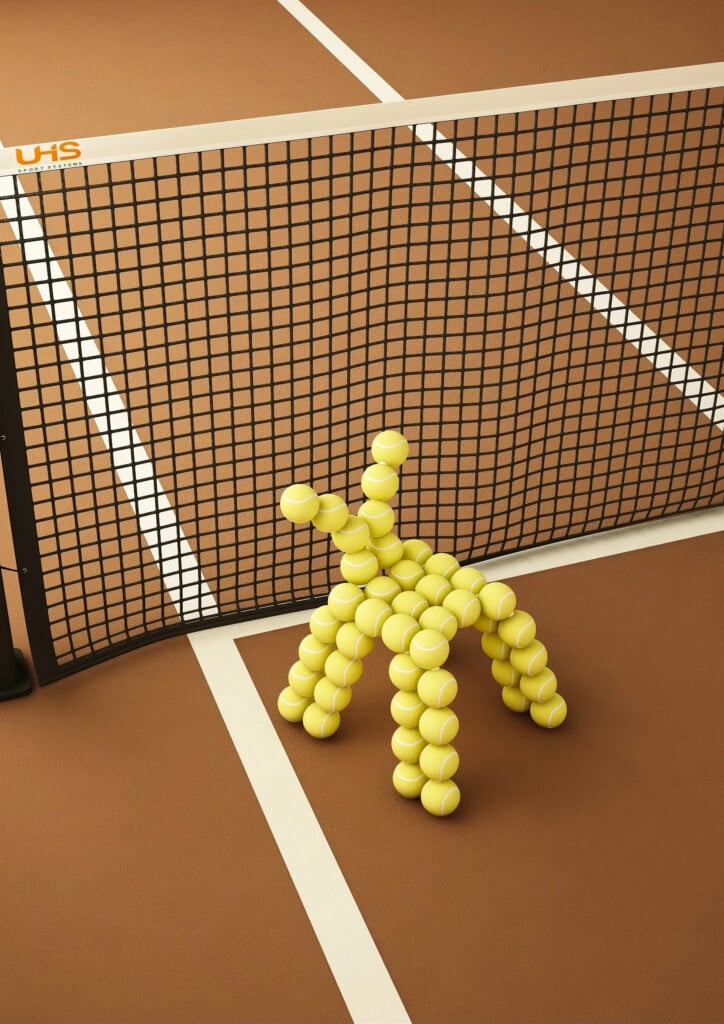
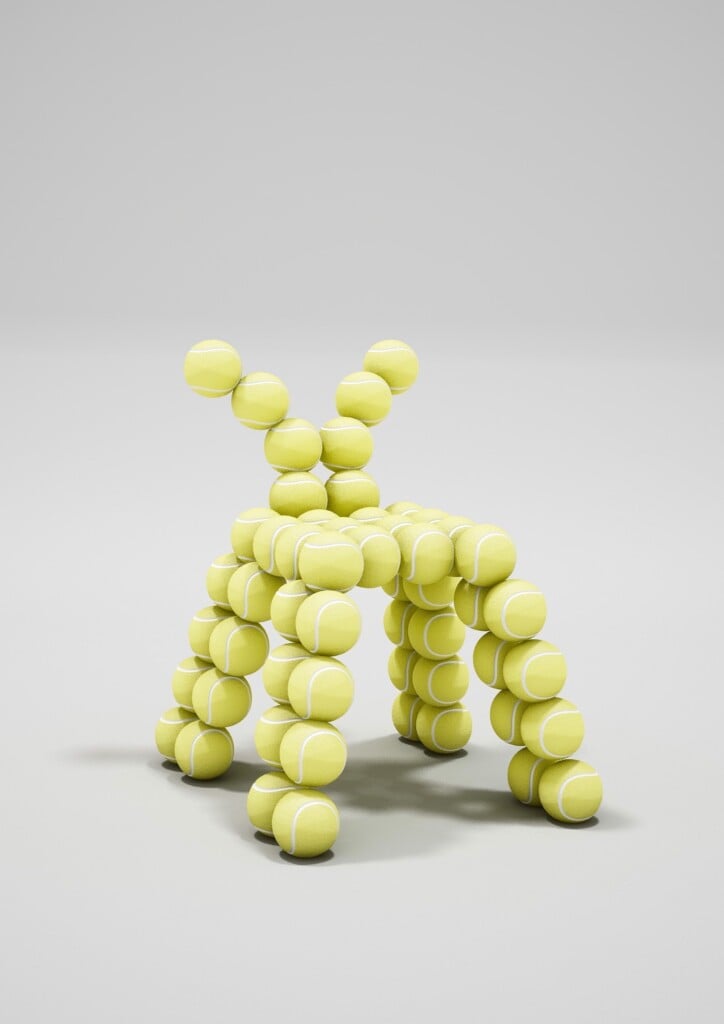
A different approach characterizes LOPPY, a children’s seat that exploits the softness and color of tennis balls to create an object with a dynamic look. Here the reclaimed material lends itself to a more immediately playful dimension: its sporting origin dialogues with the function of the furniture, creating continuity between play and everyday life. The seat thus becomes an example of how design can transform a familiar material into something unexpected, without giving up its recognizability.
Lucia Kružlicová’s research moves precisely along this boundary, where the function of an object does not necessarily coincide with its original history. The tennis balls are not simply reused, but placed in a context that changes how they are perceived. Their color, texture and shape become tools for building new relationships with space.
With TENNIS, LUKRU design offers a reflection on the value of objects we are used to considering temporary. Sustainability intertwines with the possibility of experimentation, while reuse becomes an opportunity to rethink the way we look at materials. It is a design that does not try to erase the traces of the past, but to turn them into a new starting point: because even a ball that has finished its match can find a completely different place, continuing to be part of our everyday life.