We are in the second week of quarantine, the days are still long and we must find a way to use our time constructively. So instead of watching TV shows all day, here’s a good idea.
We want to provide you with tools to interpret beauty. History and art criticism are constantly evolving subjects, always in step with the changes in society. If you are fascinated by them, if you are curious and want to deepen your knowledge, this is the list for you.
Lo potevo fare anch’io. Perché l’arte contemporanea è davvero arte – Francesco Bonami (Mondadori 2009)
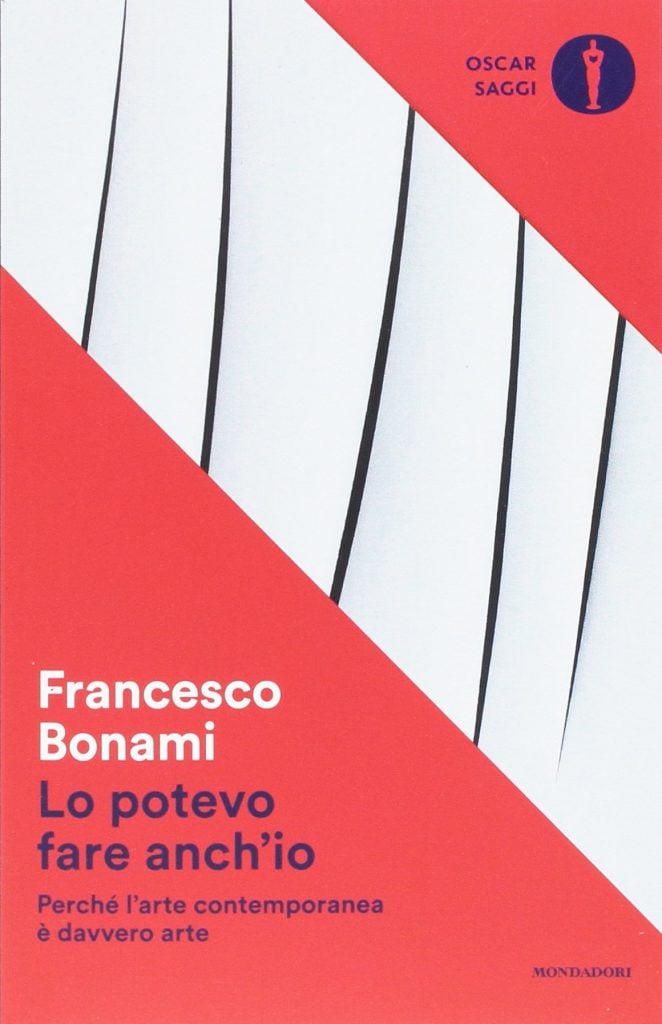
Everybody, at least once in their life, in front of a work of contemporary art we thought: “I could do that too!”. Yet critics assure us that they are masterpieces, while collectors spend dizzying amounts of money on paintings that look like dirty canvases and sculptures that look like piles of scrap. Francesco Bonami challenges us to “taste” the works without prejudice. And if it is true that in the last century art has evolved to the point of being almost unrecognizable, Bonami makes us understand once and for all why it is not true that we can do the same.
Breve ma veridica storia della pittura Italiana – Roberto Longhi (1914)
Volume remained unsurpassed even today for anyone approaching the subject. It treats Italian painting from Giotto to the Renaissance masters in an unpredictable and accurate way. The peculiarity of the volume lies in the fact that it compares the modes of criticism of the present with those of the past.

Il mistero delle cose – Massimo Recalcati (Feltrinelli 2016)

In this manual, the art is interpreted using the schemes of psychoanalysis. The author reconstructs the artistic genesis of some of the most important creators of Italian contemporary art. Submitting their works to a careful psychological analysis able to bring out the passions and disturbances that orbit behind the process of artistic creation. By virtue of this process, psychology takes on the characteristics of a cognitive tool to investigate art and its creation.
La storia dell’arte – Ernest H Gombrich (1950)
This is by far the most popular text on artistic themes. For over half a century it has been an unparalleled introduction to the subject. The work deals in a complete way, the existential parable of the relationship between human beings and art. Starting from the genesis of the artistic path, represented by the first testimonies of rock painting, it deals with the last upheavals, brought in the practical and theoretical field by contemporary experimental art.

Ricordi di un collezionista – Giuseppe Panza (2006)

Giuseppe Panza. The greatest Italian art collector. The man who first brought to our country the artists of pop art, minimalism, environmental and conceptual art. Panza’s great merit was precisely that he was the first to bring them to the great European, as well as national, attention. The text is fundamental to better understand the history of American art in the second half of the 20th century more than any other manual.
Recollections of a Picture Dealer – Vollard
It contains the memories, written in the first person, of Ambroise Vollard, the legendary merchant of the Impressionists and Picasso. Vollard, a clever businessman, brings us back to the fascinating atmosphere of the Paris of the Belle Époque, telling us a series of curious anecdotes about the most famous artists and collectors of that period. He visits Manet’s widow, and returns home with a whole collection of drawings by the master; he makes friends with Renoir, Degas and above all Pissarro. He raked Cézanne’s studio, then those of Vlaminck, Derain and Picasso; he took a courageous position in the avant-garde market by exhibiting Van Gogh and Gauguin.

Marcel Duchamp, La vita a credito – Bernard Marcadé (2007)

Marcel Duchamp has always stood out in the landscape of contemporary art. From Futurism to Cubism, from Dadaism to Surrealism, the artist has left a consistent trace in each of these artistic currents. He can give us a unique overview from the artist’s point of view, who was able to skilfully weave his art into the great aesthetic adventures of the twentieth century without ever being reduced to any of them. If Picasso insists on supporting the figure of the demiurge artist, Duchamp, thanks to the invention of the ready-made, instead embodies the model of the contemporary artist and has been recognized since the sixties as an indisputable source of inspiration by the younger generations of artists.
Arte Greca. Dal X al I secolo a.C. – Giorgio Bejor
It is one of the few texts that can provide us with an overall image of Greek art, stretching it over the various periods in which it was articulated. From Ancient works to Corinthian ones. Paying particular attention to the types of ceramics and construction techniques, whether they are modest living models for daily use or the majestic religious buildings.

Questione di sguardi. Sette inviti al vedere fra storia dell’arte e quotidianità – Johan Bergen (1972)
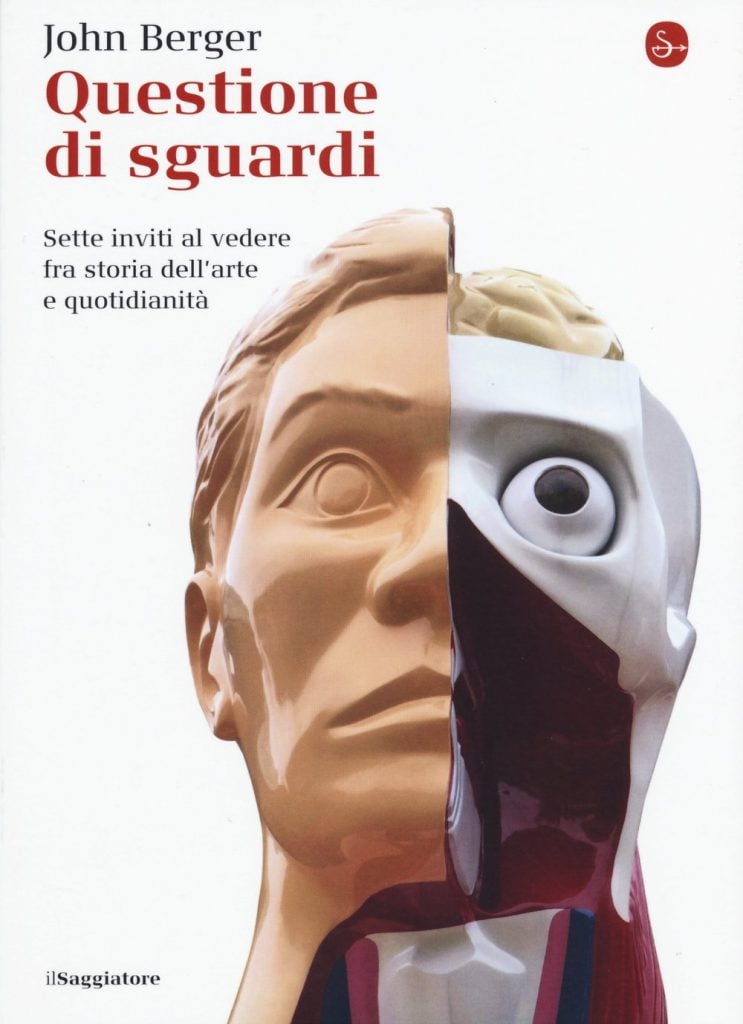
This book investigates a fundamental issue in the field of art and its use by the public. We are less and less able to see. We accept without breath the promises of advertising and we attribute to the paintings of the past a value that perhaps they do not possess. In a galaxy of works of art that can be reproduced, technically, infinitely, what remains are the images themselves: the act of seeing determines our place in the world around us. Knowing how to explain the phenomenon is always slightly insufficient compared to what we see.
Storia della bellezza – Umberto Eco (2004)
“Beauty has never been an absolute value, but it has always been linked to the historical period: it was harmonic or Dionysian, it was associated with the monstrosity in the Middle Ages and the harmony of the celestial spheres in the Renaissance; it took the form of “I don’t know what” in the Romantic period and then became artifice, joke, quotation throughout the twentieth century“.
Based on this assumption, Umberto Eco has created a book that goes beyond the novel but cannot even be considered as a manual, but rather as a true path through the history of art and culture from an iconographic and literary-philosophical point of view.