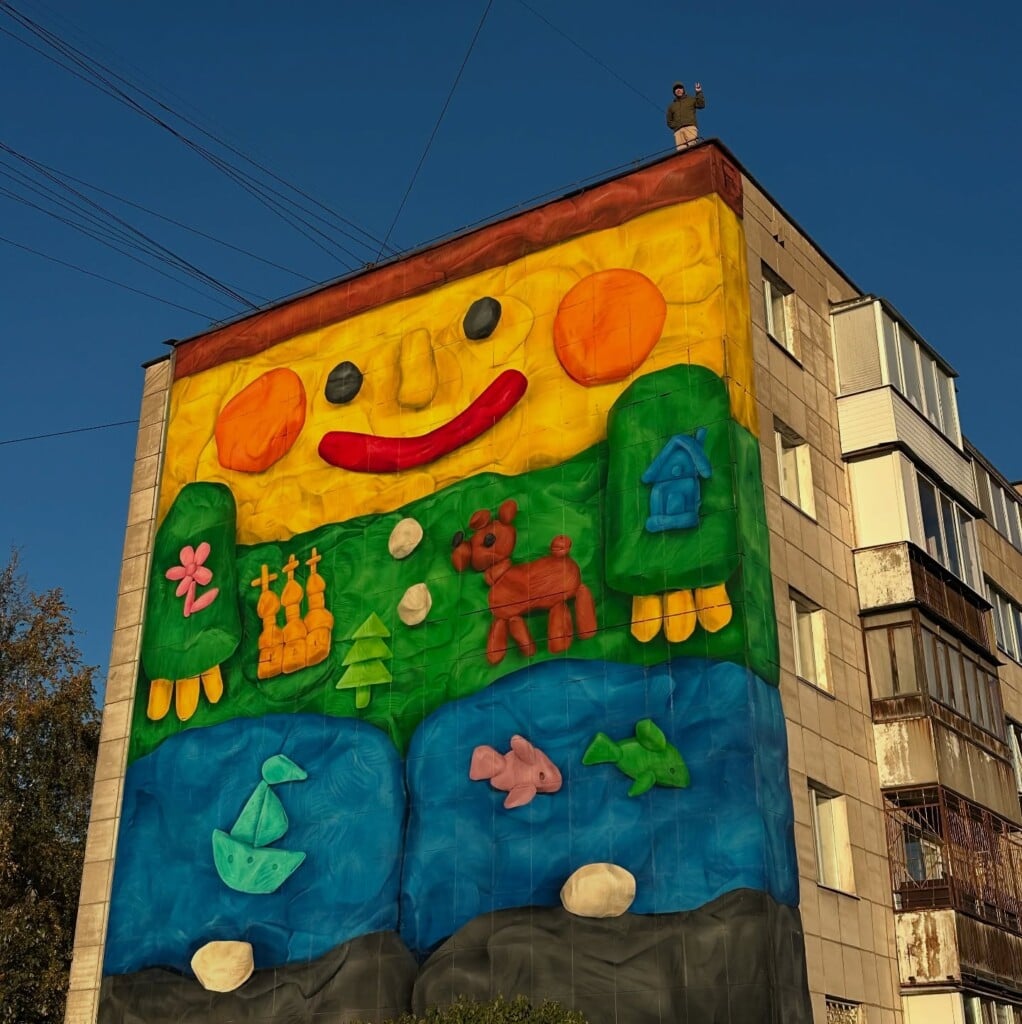
Backed by a creative universe that looks like it came out of a box of plasticine forgotten on the asphalt, Timur Fork has turned urban spaces into moldable surfaces. Born in 1986, the artist brings to walls a visual research that flips the very idea of mural painting on its head: his works don’t just occupy public space—they bend it, twist it, and make it look soft.
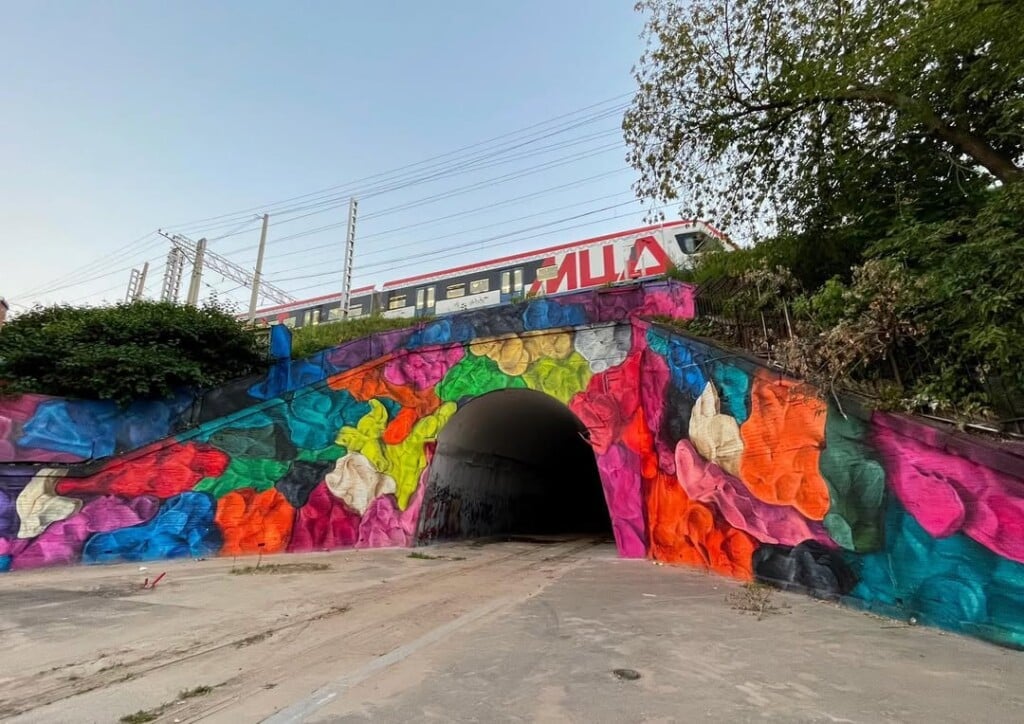
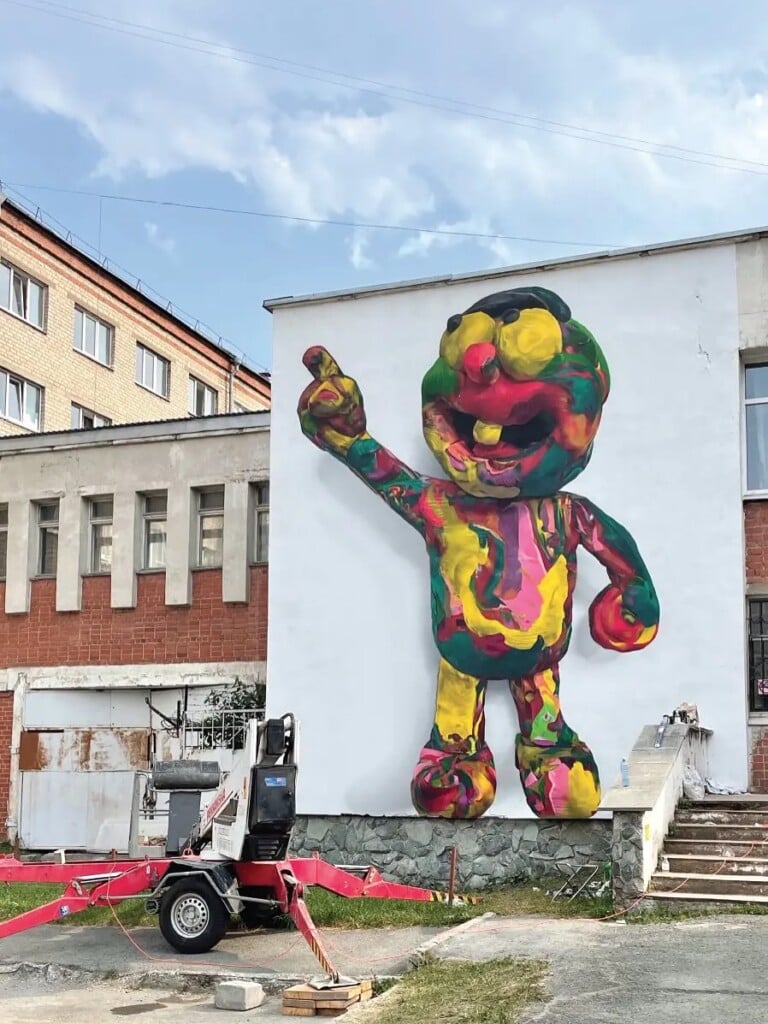
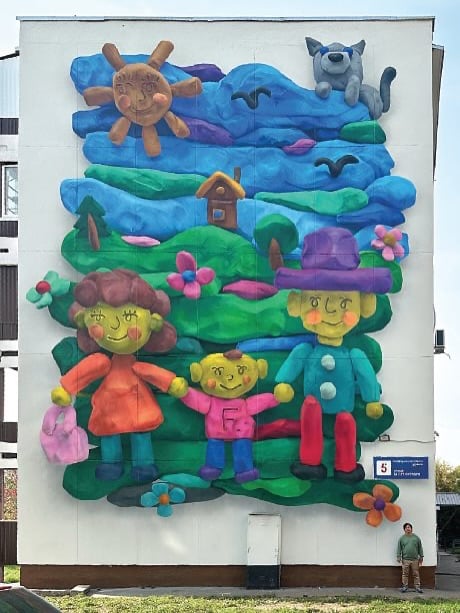
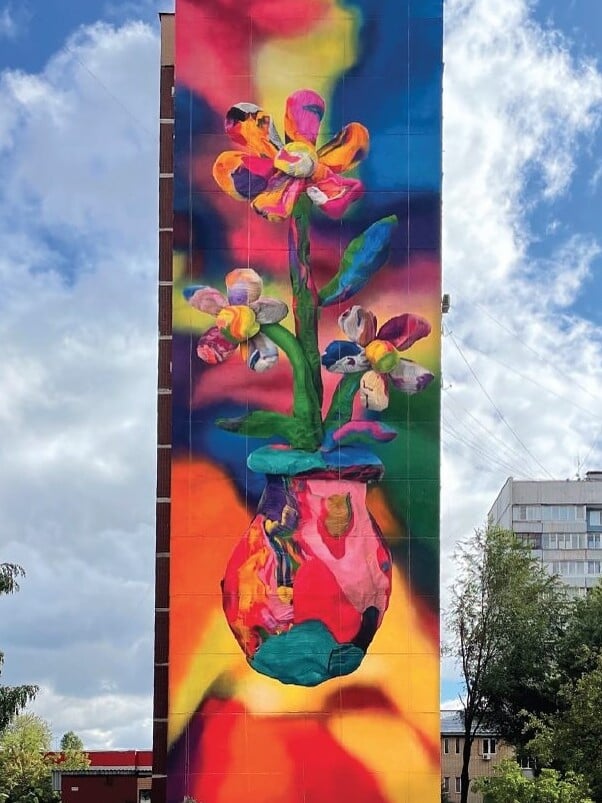
The turning point came in 2021 with Plasticine Wolf, a work that marked the beginning of a clearly defined style. From that moment on, plasticine became the code through which Fork interprets the city. His monumental animals and hyperreal portraits rise up on facades as if they were modeled directly onto still-fresh plaster. The surfaces—crossed by folds, fingerprints, and twists—mimic pliable matter with near-obsessive precision, turning the wall into a living organism.
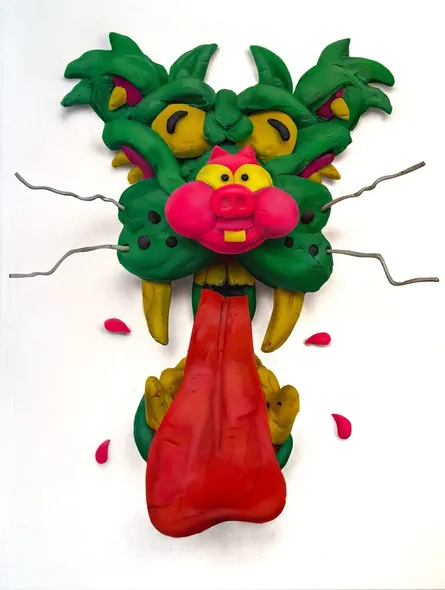
On a large scale, Fork’s murals heighten the uncanny effect of his technique. What should be solid and static appears elastic, vibrating, shot through with intense chromatic tension. The saturated colors don’t simply decorate architecture—they rewrite it, creating the illusion that the figures are emerging or melting before passersby’s eyes. The street becomes a three-dimensional laboratory where the childlike aesthetic of plasticine meets the monumentality of public art.
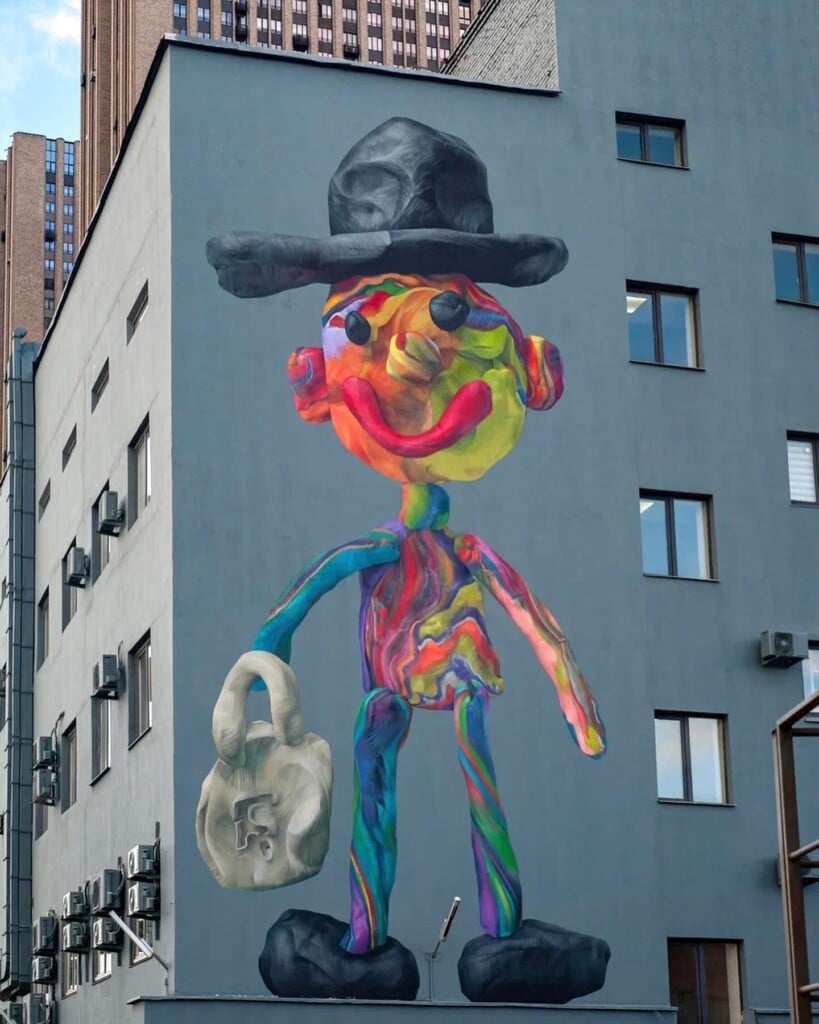
Even when he works on canvas or collaborates with international brands, it’s in urban space that his signature finds its strongest expressive power. Walls amplify the physical dimension of his images and turn the visual experience into something immediate—almost tactile. Fork doesn’t just paint the city: he shapes it, makes it soft, and charges it with a positive energy that interrupts the rigidity of concrete with a surprisingly playful gesture.
Read also: The robot bird that erases its own tracks