Tailored suits, tartan, polo shirts and outfits that evoke bourgeois elegance. These are codes we associate with a very specific idea of respectability, authority and power. Hippolyte Laporte takes them up and transforms them, introducing transparencies, lace and haute couture–inspired cuts into a wardrobe traditionally tied to heteronormative masculinity. The result is a body of research that uses fashion to question the often invisible rules that dictate how a man should dress.
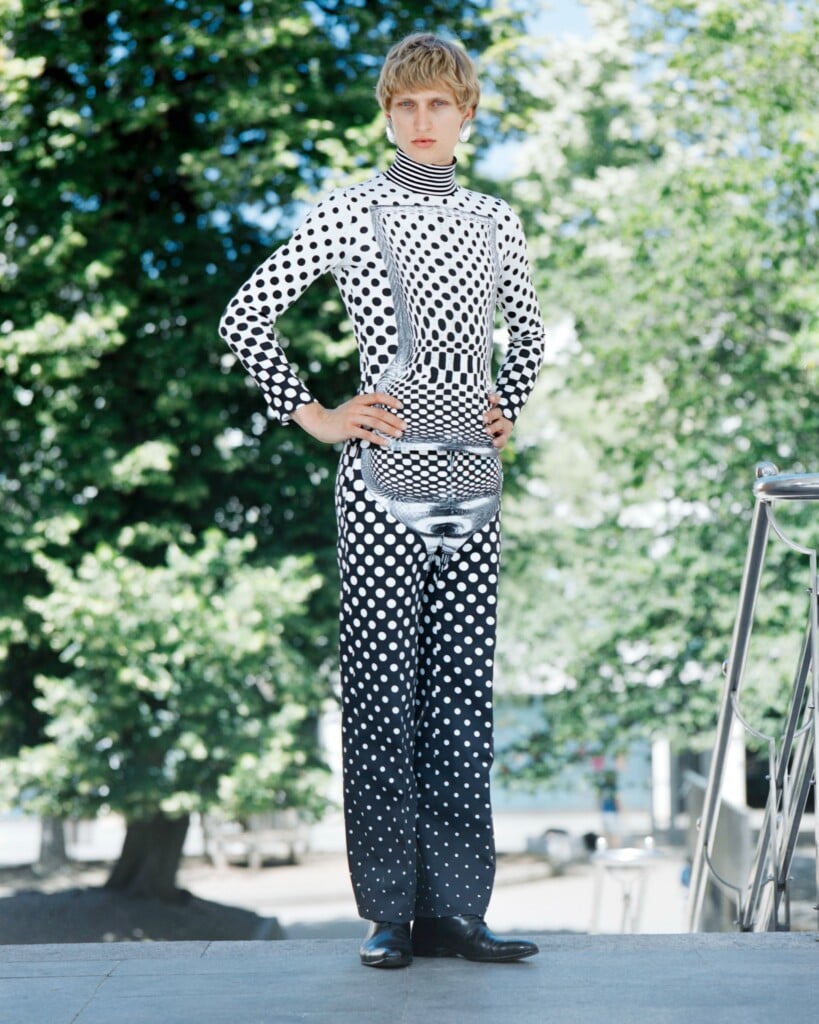
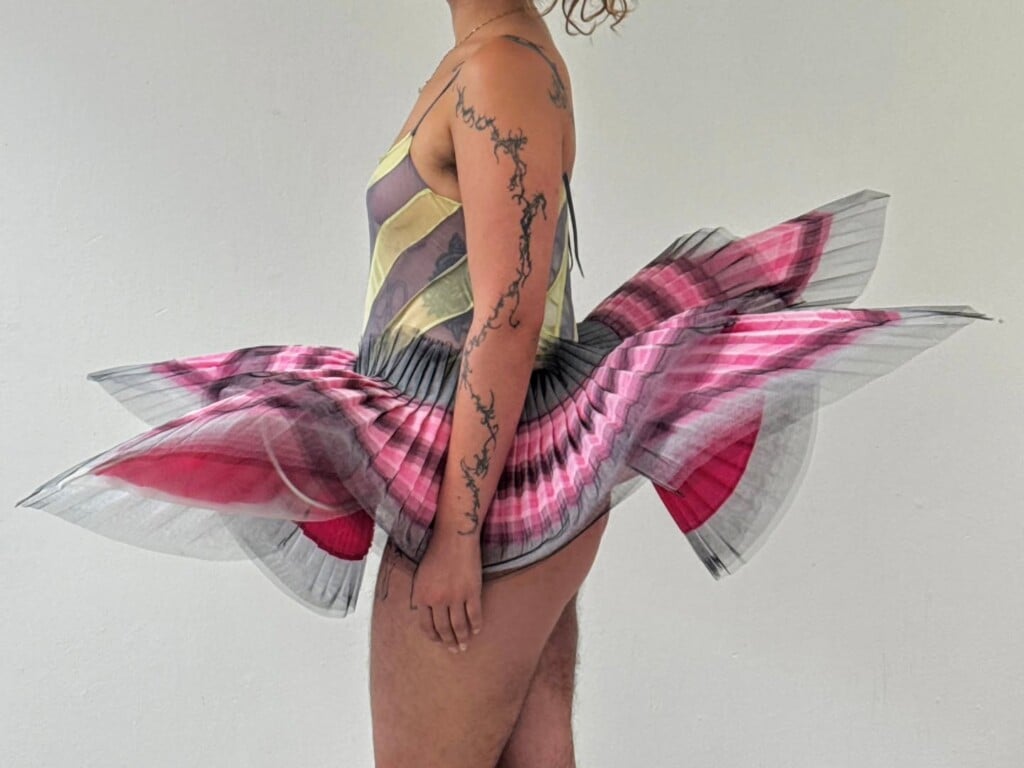
In Hippolyte Laporte’s work, fashion distances itself from the reassuring forms of the traditional wardrobe to explore what happens when gender conventions are pushed off-axis.
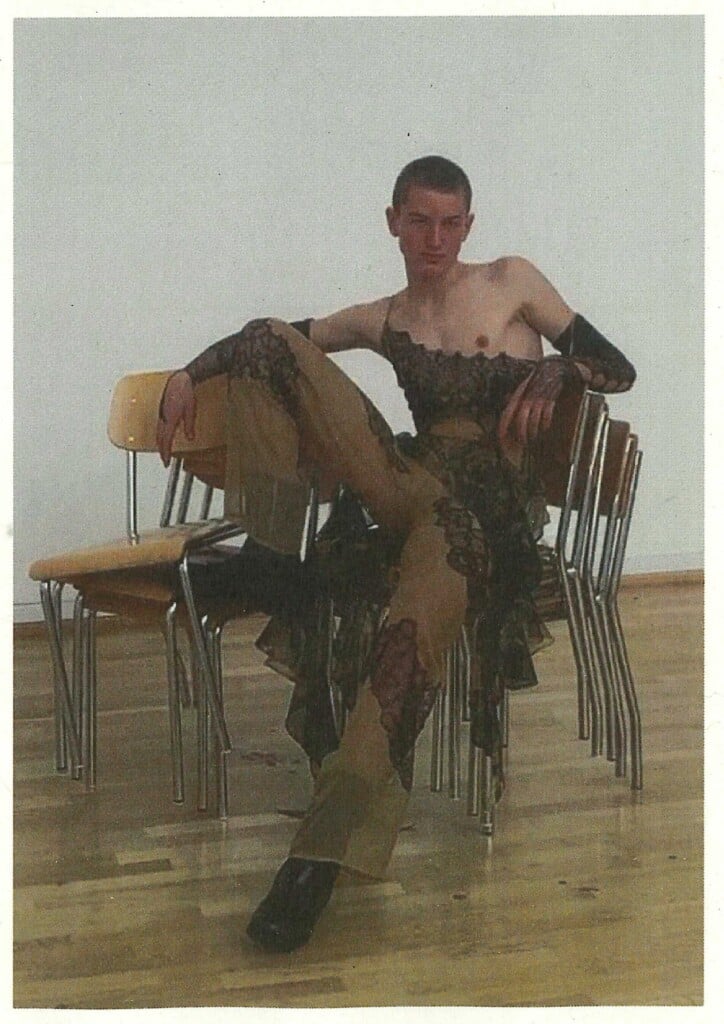
Designer trained at HEAD, Geneva, Laporte tackles the theme of masculinity through a visual language that blends bourgeois references, tailoring details and an openly theatrical aesthetic. Tartan, the jacket-and-tie suit, the polo shirt and other elements associated with a conventional image of men become the starting point for unexpected constructions. Transparencies, lace and couture-inspired cuts alter their meaning, while exaggerated proportions and tactile surfaces turn the garment into something that goes beyond its everyday function.
This research finds its first fully realized expression in Behind the Curtain, a collection presented in 2024 during the Défilé HEAD. The project grew out of a reflection on male striptease and the models of virility that this form of entertainment stages. Laporte identifies five archetypes, the biker, the soldier, the lumberjack, the businessman and the mechanic, and reworks them through elements of burlesque and female striptease. Figures traditionally associated with strength, authority and control are thus placed within a system of signs that introduces seduction, exposure and ambiguity.
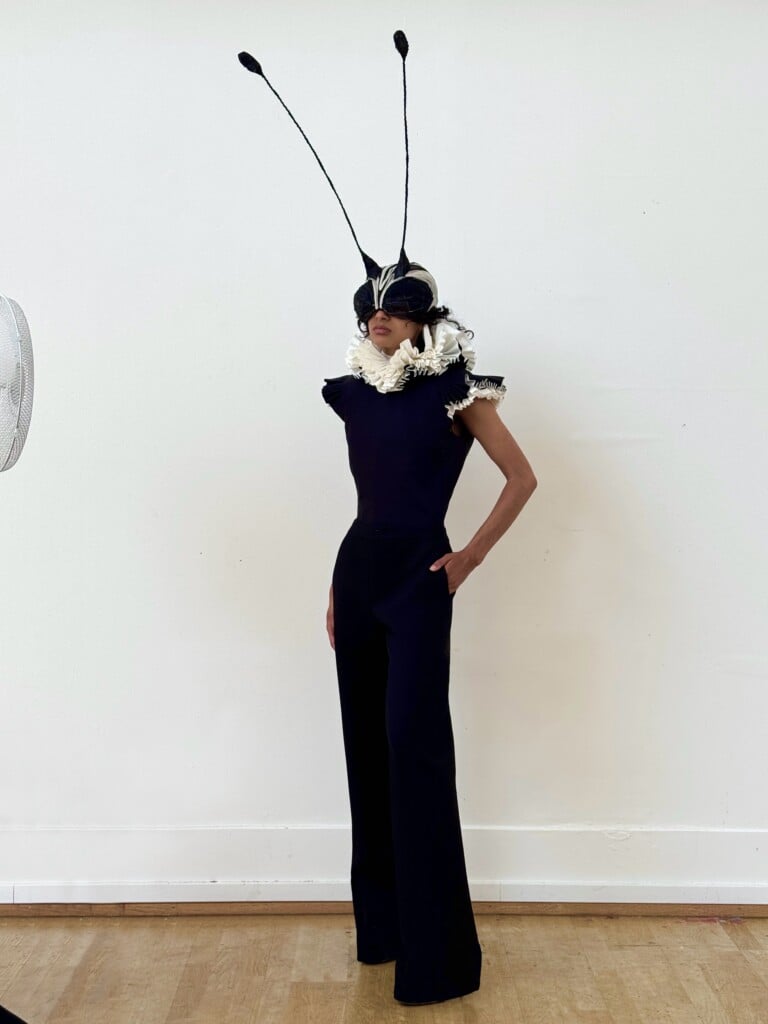

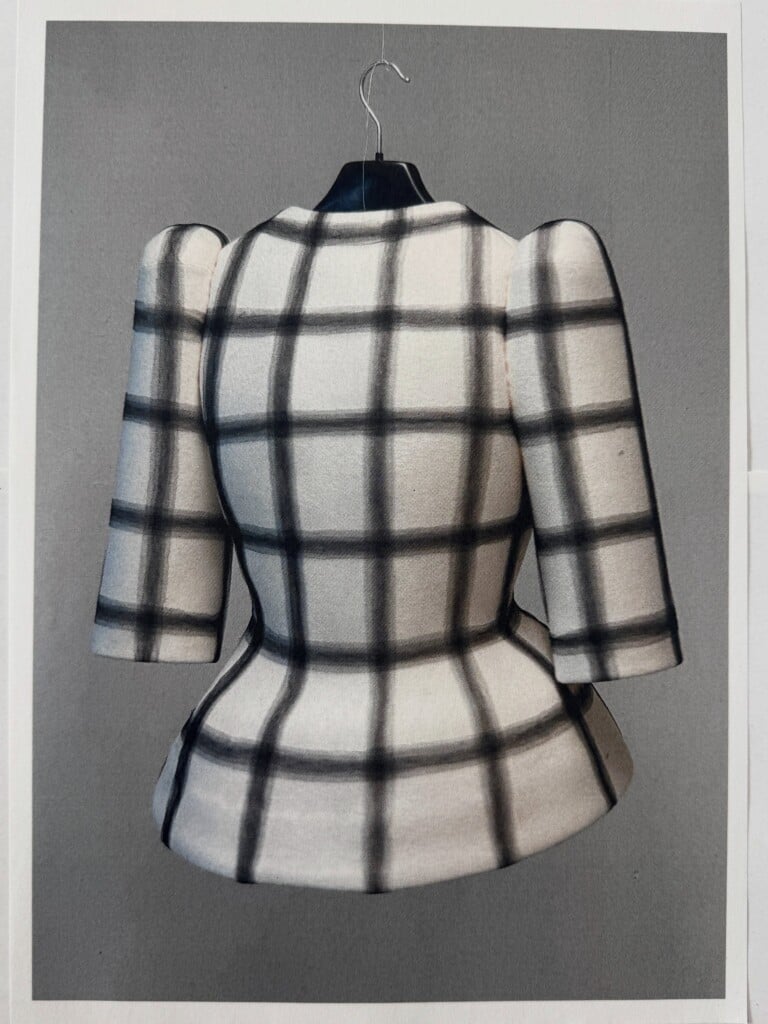
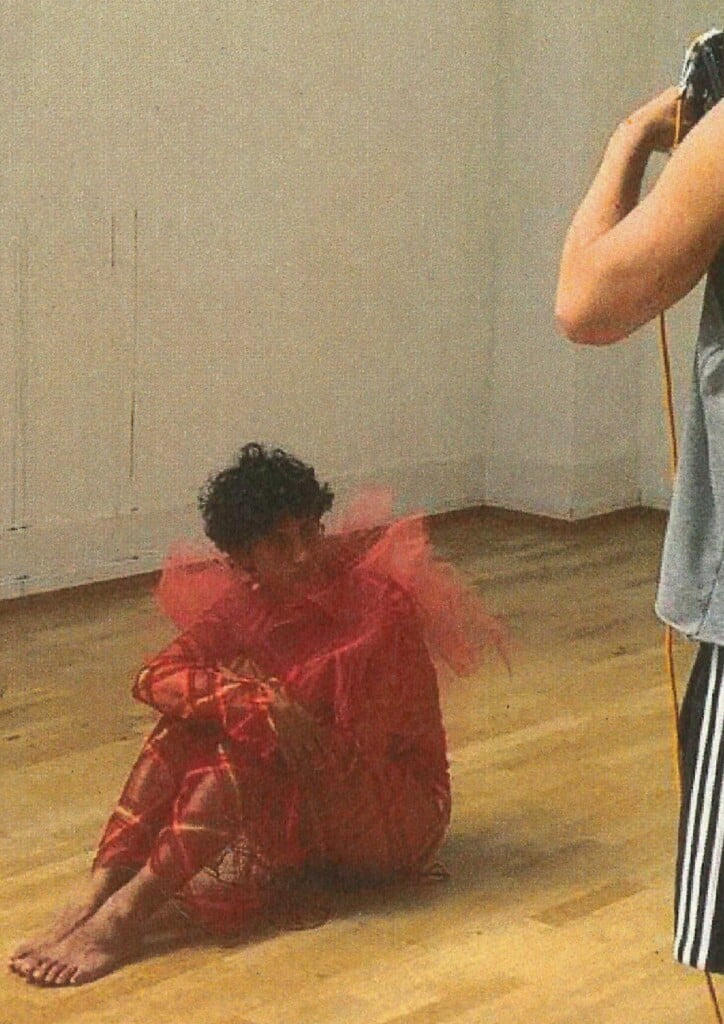
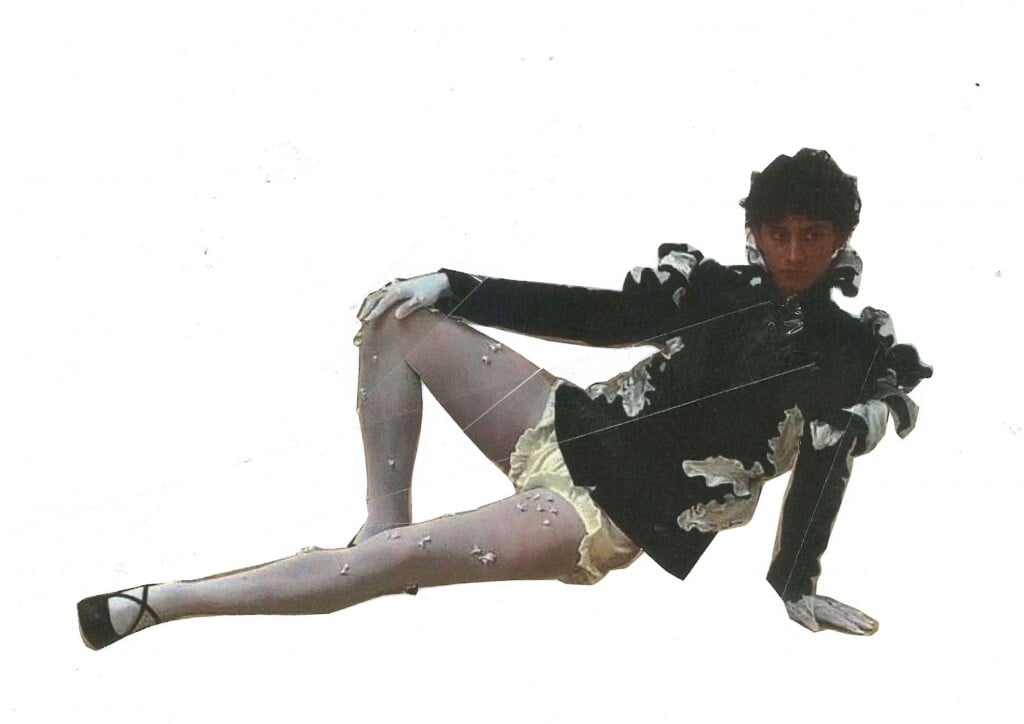
What makes his approach recognizable is above all the way he intervenes on form. In images of his work, checked fabrics take on an almost architectural presence, with lines that cut across the body and visually alter its contours. Elsewhere, the fabric gathers into twists and drapes that follow the figure, while collars and volumes around the neck become autonomous elements, able to shift attention and change the perception of the entire silhouette. Accessories also take part in this transformation: unusually shaped headwear and deliberately theatrical details make the looks appear as characters rather than simple combinations of garments.
It is an aesthetic that doesn’t necessarily seek discretion or immediate wearability. On the contrary, it seems interested in the moment when a garment stops being invisible and makes evident the rules that normally govern it. A tailored suit, for example, carries with it an imagery of respectability and power; when it is transferred onto a male body with unusual proportions, decorative details or constructions that recall a traditionally feminine wardrobe, that same association begins to waver.
Laporte has said that his research also stems from the experience of social pressure to dress in a certain way. The reflection concerns heteropatriarchy and the need, felt by straight and queer people alike, to hide or modify parts of their identity in order to conform to dominant expectations. Hence the choice to take up the clothes associated with the social groups and cultural codes that hold power, and then alter their meaning through the body that wears them.
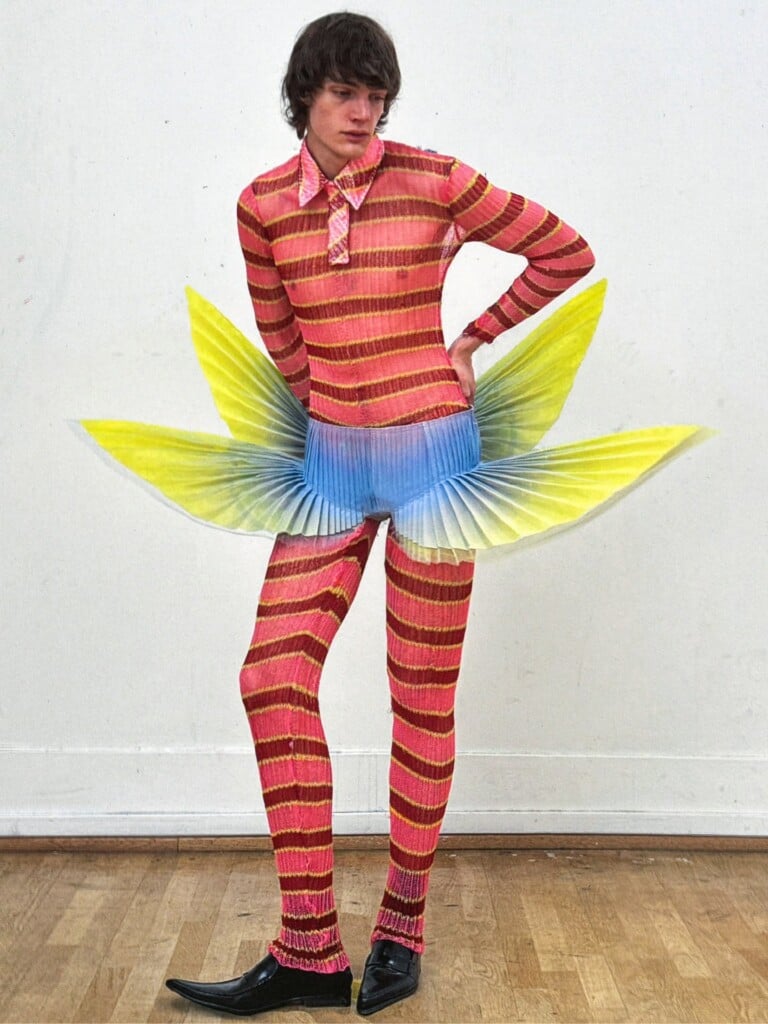
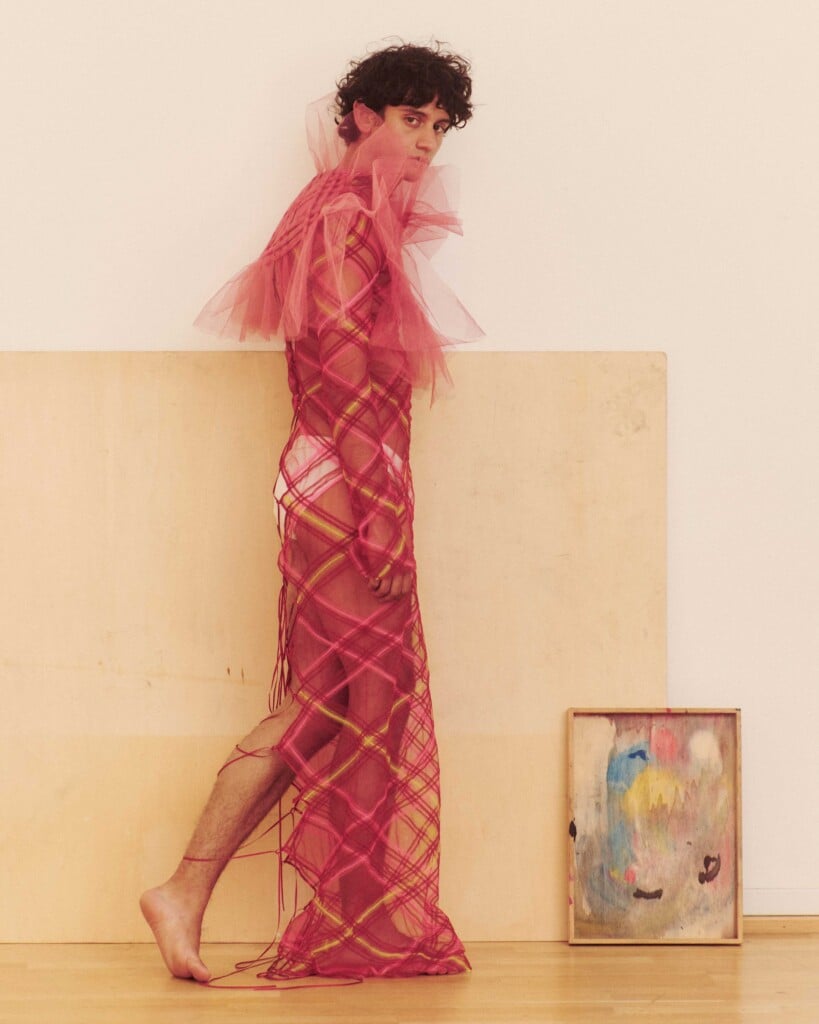
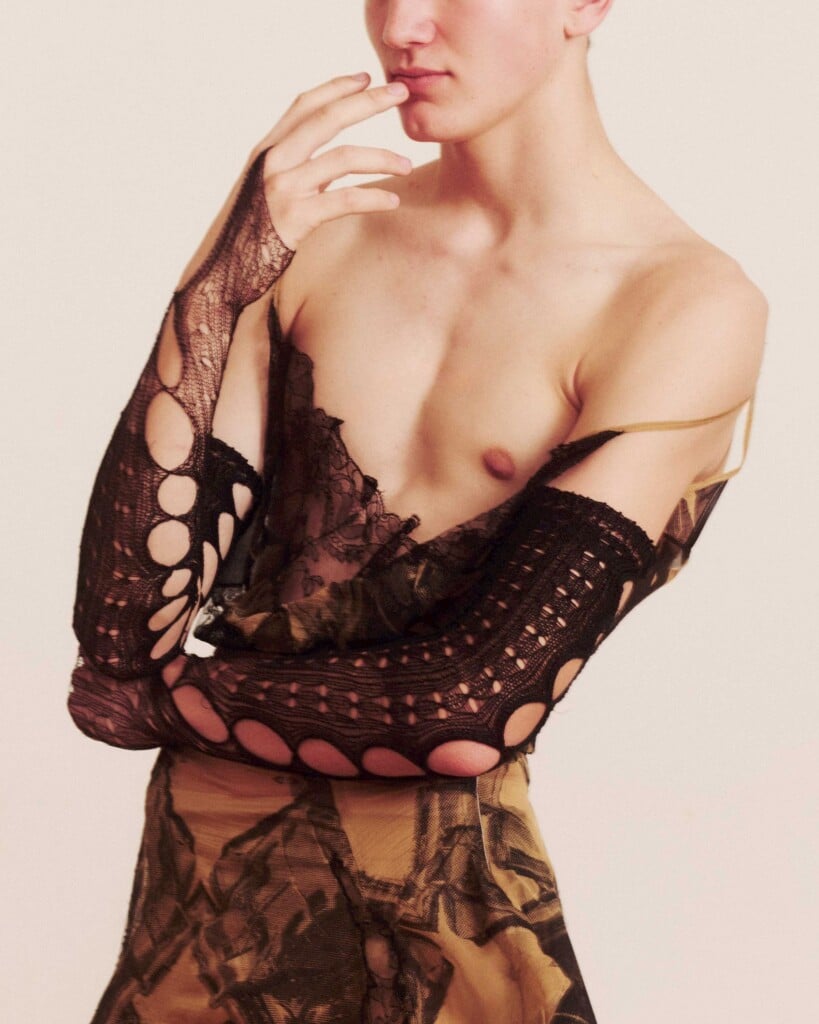
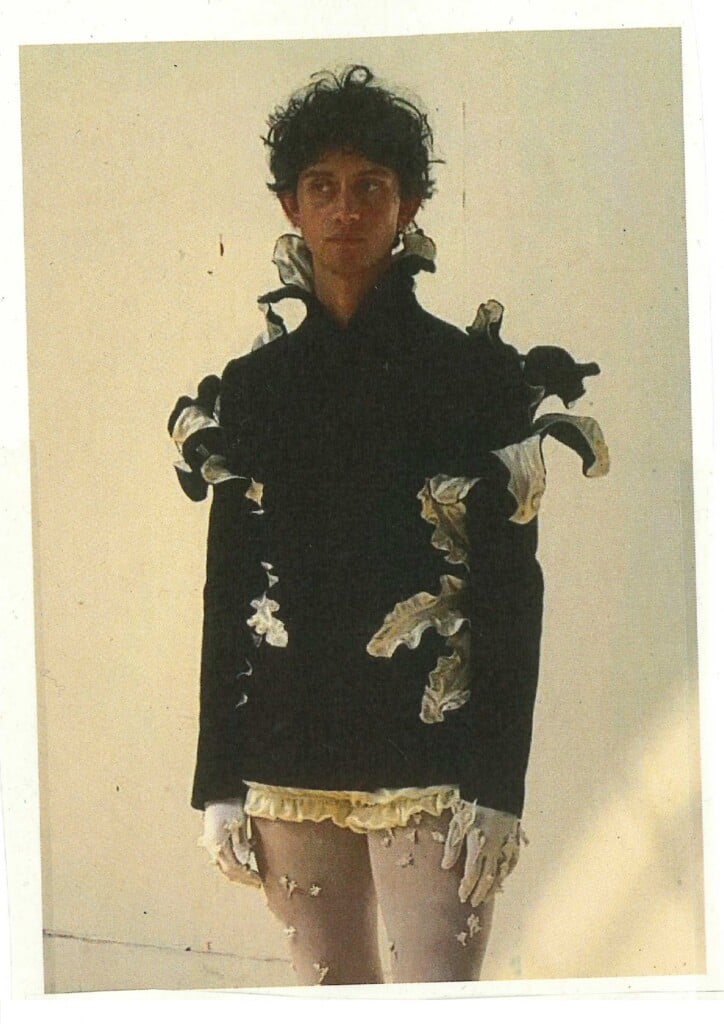
The result is not simply a masculine wardrobe made more feminine, but a reflection on how constructed the categories we use to interpret clothes really are. Lace, tartan, drapes and theatrical volumes coexist without seeking a reassuring synthesis: it is precisely their tension that makes visible the artificiality of what we consider normal. In Hippolyte Laporte’s world, getting dressed also means playing a role. And every role, once taken to the extreme, can reveal how fragile the distinction is between who we are and what we have learned to appear to be.
Fashion, from this perspective, is not just a matter of silhouettes or materials; it is a space in which to test conventions, appropriate the symbols of authority and make them negotiable again. Laporte doesn’t necessarily try to erase existing codes: he takes them out of their usual context, where they become visible precisely because they stop seeming self-evident.